








How ABA Therapy Helps Children Develop Independence
Empowering Self-Sufficiency in Children with Autism Through ABA Therapy


Understanding ABA Therapy in Fostering Independence
Applied Behavior Analysis (ABA) therapy stands out as a transformative approach for children with autism, especially when it comes to cultivating independence. By focusing on tailored strategies and evidence-based methods, ABA therapy aids in building essential life skills, planting seeds of autonomy, and nurturing a pathway towards self-sufficiency. In this narrative, we explore how ABA therapy methodically supports autistic children in developing independence, from the application of task analysis to the strategic use of positive reinforcement.
Breaking Down Complex Tasks

How does ABA therapy promote independence in children with autism?
ABA therapy promotes independence in children with autism through a variety of targeted strategies. One primary method is task analysis, which disaggregates complex skills into smaller, manageable components. This makes learning and mastering each step more straightforward for children, ensuring a clear progression toward independence.
Key strategies include:
- Communication Skills: Incorporating alternative and augmentative communication (AAC) methods strengthens self-expression.
- Visual Schedules: These tools help children understand daily activities and transition between tasks independently.
- Self-Care Skills: Teaching essential tasks like brushing teeth, dressing, and personal hygiene in smaller segments promotes autonomy.
- Household Chores: Engaging in tasks such as money management and setting the table fosters responsibility and practical life skills.
- Safety and Leisure Skills: Lessons in safety and encouraging independent play enhance a child’s ability to navigate their environment confidently.
In summary, by focusing on these foundational skills and gradually shifting responsibility to the child, ABA therapy prepares them for increased independence in various aspects of their lives, paving the way for future vocational success as they grow.
Motivation Through Positive Reinforcement

Role of Reinforcement in Learning Desired Behaviors
Positive reinforcement is at the heart of Applied Behavior Analysis (ABA) therapy. This strategy involves providing rewards such as verbal praise, tokens, or other incentives to encourage desirable behaviors in children with autism. By consistently reinforcing positive actions, children are motivated to repeat those behaviors, fostering a sense of accomplishment and autonomy.
For instance, if a child successfully brushes their teeth independently, they might receive praise or a sticker as recognition. This not only reinforces the behavior but also bolsters the child’s motivation to perform the task again in the future.
Encouraging Independence Using Positive Feedback
Through consistent application of positive reinforcement, ABA therapy aids children in developing independence in various daily tasks. The celebratory praise associated with completing tasks like dressing or preparing meals instills confidence. This boosting of self-esteem can significantly reduce anxiety, as children learn to anticipate and successfully complete routines on their own.
Moreover, the collaboration between therapists and caregivers ensures that reinforcement strategies are effectively maintained across different settings. When children experience this structured support, they are better equipped to practice and generalize their independent living skills, leading to more significant progress over time.
Reinforcement Strategy Purpose Example Verbal Praise Encourages repeated behavior "Great job putting on your shoes!" Token Reward Provides tangible incentives Earning tokens for completing tasks Visual Cues Aids understanding of routines Using a chart to track completed tasks Consistent Feedback from Caregivers Reinforces progress over time Daily check-ins to celebrate success
ABA therapy's focus on positive reinforcement not only aids in skill acquisition but also plays a crucial role in fostering an overall sense of independence for children with autism. Through the structured praise and reinforcement mechanisms, these children learn essential skills necessary for navigating daily life with confidence.
Generalization: Applying Skills Across Settings

Importance of Skill Generalization
Generalization in ABA therapy is crucial for helping children with autism transfer the skills they learn in therapy to real-world situations. When children can apply their learned skills across different environments—home, school, and community—they become more independent and are better equipped to handle daily challenges. This ability can significantly enhance their confidence and reduce anxiety as they navigate various social contexts.
Practical Applications of Learned Skills
To ensure effective generalization, ABA therapy emphasizes:
- Reinforcement: Using rewards to encourage the use of skills in different settings.
- Variety in Practice: Children are encouraged to practice skills in various locations or contexts to promote versatility in their abilities.
- Visual Supports: Tools like visual schedules help clarify routines and expectations in unfamiliar environments.
With the structured support of ABA therapy, children learn to adapt their skills, fostering resilience and independence as they grow.
Prompting and Fading Techniques

Guiding Children to Perform Tasks
Prompting techniques are essential in ABA therapy as they help guide children through complex tasks. These can include verbal cues, visual aids, or physical assistance. For instance, when teaching a child to brush their teeth, a therapist might initially demonstrate the action while providing verbal instructions. Over time, the use of these prompts decreases as the child becomes more comfortable performing the task independently.
Reducing Prompts Over Time
The process of gradually reducing prompts is known as prompt fading. This method supports the child in becoming self-sufficient by allowing them to rely less on external cues. For example, if a child is learning to dress themselves, a therapist might start with full assistance, provide verbal prompts, and then gradually shift towards less intrusive reminders. The goal is to empower children to complete tasks independently, ultimately boosting their confidence in daily routines.
Technique Description Purpose Verbal Prompt Providing spoken cues during a task Guides the child step-by-step in the task Visual Aid Using pictures or charts to illustrate steps Offers clear guidance and reduces anxiety Full Assistance Offering complete help at the start Ensures success as child begins learning Fading Prompts Gradually reducing support provided Encourages independence and builds confidence
Communication and Social Skill Development
Improving communication abilities
ABA therapy significantly enhances children's communication skills through tailored interventions. It teaches various forms of communication, including sign language and picture exchange systems. This structured approach enables children to express their needs and emotions effectively. Research indicates that such interventions can lead to marked improvements in expressive language skills and overall socialization.
The focus on communication doesn't just improve verbal abilities but also addresses non-verbal cues, thereby enriching children's interactions with others. By learning to communicate their thoughts and feelings, children can navigate their environment with increased confidence.
Building social interactions
In addition to communication skills, ABA therapy emphasizes social skills training. This includes helping children recognize social cues and engage in appropriate conversations. Role-playing and real-life practice allow children to develop turn-taking and patience in group settings.
Through these methods, children learn to build friendships and strengthen self-esteem. As they navigate social interactions more effectively, they become more confident and able to form lasting relationships. Overall, ABA therapy provides the essential skills needed to foster social independence.
Emotional Self-Regulation and Routine Independence

Does ABA therapy help with emotional regulation?
ABA therapy can significantly aid emotional regulation, particularly for children on the autism spectrum who often navigate unique emotional challenges. By providing structured coping strategies and behavioral skills, this therapy enables individuals to manage their responses to various emotional triggers, including stressors from changes in routine.
Understanding the difference between emotions and feelings plays a vital role in emotional management. ABA therapy facilitates this understanding, promoting effective emotional regulation through tailored approaches. Activities such as Feelings Bingo are effective tools used in therapy to help children identify and articulate their emotions, thereby enhancing their emotional awareness and expression.
Creating routine independence
Developing routine independence is essential for children with autism, as it empowers them to perform daily tasks with minimal assistance. Strategies include breaking down tasks into manageable steps while applying positive reinforcement, ensuring that children build their confidence and self-esteem. Using visual schedules can further clarify expectations, helping children understand their daily agendas and thereby reducing anxiety about transitions.
Maintaining open collaboration between parents and therapists is key; this not only ensures consistency in techniques but also reinforces routine independence across different settings. By creating a supportive atmosphere at home, caregivers facilitate ongoing practice of self-care and other essential tasks, ultimately leading to greater autonomy for the child.
Forging Paths to Independence
ABA therapy continues to serve as a pillar in the development of independent living skills for children with autism. Through methodical approaches such as task analysis and positive reinforcement, children learn to navigate their environments with increased confidence and self-reliance. The emphasis on skill generalization and communication enriches not only their daily routines but also prepares them for future challenges, cultivating a foundation for lifelong independence. As these essential skills become integral parts of a child's repertoire, the role of ABA therapy in shaping independent, self-assured individuals proves invaluable.
References
- How ABA therapy can help children with autism develop ...
- How ABA Therapy Helps Children Develop Essential Life Skills
- How ABA Therapy Helps Children with Autism Build Routine ...
- How ABA Therapy and Independence Go Hand in Hand
- Benefits of ABA Therapy for Children - First Step Arkansas
- How ABA Therapy Build Independences in Daily Routines
- PFA Tips: 10 Ways to Build Independence - Pathfinders for Autism
- Applied Behavior Analysis (ABA) | Autism Speaks
- Applied Behavioral Analysis (ABA) - Autism Speaks
- Expert Q&A: How ABA therapy can help with severe behaviors
Recent News
Related articles

6 Arkansas Medicaid ABA Therapy Rules Families Need to Know
Arkansas Medicaid ABA therapy has age, diagnosis and approval rules. Families can check six requirements before care.

Arizona Autism Laws for ABA Coverage and School Rights
Arizona autism laws for ABA coverage vary by plan. Families can check insurance, appeal options, and school rights.

ABA Therapist Salary in Arkansas for RBTs and BCBAs
Compare ABA therapist salary in Arkansas by role. See how paid hours and benefits affect earnings before applying.

5 Autism Support Groups and Family Resources in New Mexico
Autism support groups in New Mexico connect families. Local resources offer events, parent support, and school help.

Where to Get an Autism Evaluation in New Mexico
Autism evaluation options in New Mexico include UNM and NMSU. Age and referral details help parents prepare.

7 North Carolina Autism Resources to Contact Before ABA Therapy Starts
Autism resources North Carolina families can call for diagnosis, early intervention, rights, and parent support. Start ABA intake with Cross River.

Does Indiana Medicaid Cover ABA Therapy? A Parent Checklist
Indiana Medicaid ABA therapy may cover care for eligible children. The checklist covers coaching and renewals.
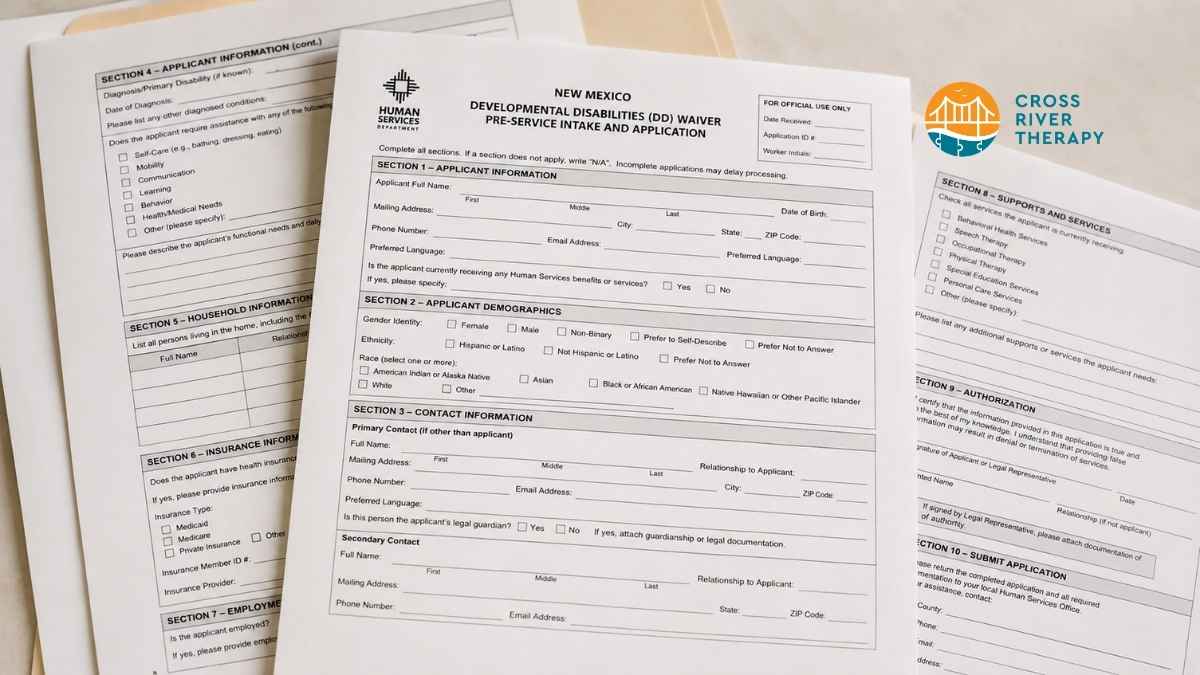
How to Apply for the New Mexico DD Waiver
Your NM DD waiver application starts with state intake. The steps cover records, submission, and enrollment.

Does Insurance Cover ABA Therapy in New Jersey?
ABA therapy insurance in New Jersey varies by plan. Learn what NJ FamilyCare covers and how to check costs.

How ABA Therapy Builds Communication for Nonverbal Children Without Forcing Speech
ABA therapy communication for nonverbal children starts with AAC, signs, and daily routines. See how kids ask, refuse, choose, and get help.

How to Start ABA Therapy in New Jersey With a Checklist
Your guide explains how to start ABA therapy in New Jersey. A first-call checklist covers records and next steps.

How to Get an Autism Evaluation in Arkansas Before Starting ABA Therapy
How to get an autism evaluation in Arkansas starts with a referral, provider choice, and key records. Use this parent checklist before ABA intake.