








How ABA Therapy Helps Children Transition Between School and Home
The Role of ABA Therapy in Smoother School-Home Transitions for Children with Autism


Understanding the Impact of ABA Therapy
Applied Behavior Analysis (ABA) therapy is a vital tool for helping children with autism spectrum disorder (ASD) navigate transitions between school and home. The structured and evidence-based approach focuses on improving socially significant behaviors, which is essential for children adapting to changing environments.
Defining ABA Therapy and Its Transitional Benefits
What is ABA therapy and how does it benefit children with autism during transitions between school and home?
ABA therapy, or Applied Behavior Analysis, is a structured, evidence-based treatment method designed to enhance social, communication, and daily living skills in children with autism spectrum disorder (ASD). This therapy plays a vital role in supporting children during pivotal transitions, particularly between home and school environments.
ABA therapy offers a consistent framework that reduces anxiety linked to change by focusing on essential skills needed for successful integration into different settings. It utilizes personalized interventions tailored to each child's unique needs, which fosters greater adaptability, ultimately making transitions smoother.
Key Benefits Include:
- Skill Development: Short-term ABA interventions target critical skills like behavioral self-regulation and effective communication, helping children express their needs effectively.
- Enhanced School Readiness: Targeted ABA programs prepare children for classroom interactions by emphasizing social skills training, enabling them to navigate peer relationships and classroom dynamics successfully.
- Structural Supports: Visual schedules and social stories provide concrete frameworks that aid children in understanding routines and expectations, which is especially beneficial during new transitions.
By incorporating these strategies, ABA therapy not only boosts a child's academic success but also enhances their overall quality of life, paving the way for independence and improved social interactions in varied environments.
In-home therapy complements this by allowing skill practice in familiar surroundings, while therapy provided in a controlled setting improves social integration. The dual approach serves to solidify learnings and ease anxiety connected to transitioning to school.
Skills and Strategies in ABA Therapy for Adaptation
What skills and strategies does ABA therapy use to assist children in adapting to different environments?
ABA therapy incorporates a range of techniques to facilitate adaptation for children with autism. One effective method is Discrete Trial Training (DTT), which breaks tasks down into smaller steps, making it easier for children to understand and master specific skills. This structured approach also allows for immediate feedback and reinforcement, essential for effective learning.
Natural Environment Teaching (NET) is another valuable strategy in ABA therapy. It promotes learning in real-life situations, aligning tasks with the child's interests to increase engagement and retention of new skills.
Reinforcement strategies play a crucial role in helping children manage transitions. Techniques such as using visual supports, including schedules and choice boards, can enhance communication. These tools not only clarify expectations but also reduce anxiety and frustration, thereby easing transitions between environments.
Moreover, social skills training is pivotal in ABA. Tools such as video modeling and role-playing empower children to practice and develop appropriate interactions. By simulating social scenarios, children can strengthen their ability to navigate social dynamics at school and home.
In essence, ABA therapy is highly tailored to the individual needs of each child. It emphasizes behavior modification, communication skills, and flexibility, equipping them with essential tools for successful adaptation across various environments.
Enhancing School Readiness and Social Success
How does ABA therapy contribute to improving school readiness and social success for children with autism?
ABA therapy significantly enhances school readiness and social success for children with autism through a structured teaching approach. By focusing on critical skills such as communication, social interaction, and following instructions, children become better equipped to navigate the demands of a classroom environment.
Key components of ABA therapy include:
- Behavior Management: Tailored interventions help children develop coping strategies to manage classroom challenges and sensory overstimulation.
- Social Skills Training: Programs emphasize developing skills essential for interaction, including sharing, making eye contact, and respecting personal space.
- Communication Skills: Functional Communication Training (FCT) teaches alternative communication methods, reducing frustration and boosting social engagement.
Personalized plans, created from initial assessments of a child's strengths and weaknesses, keep track of progress. This ensures each child develops essential skills needed for school success. Involvement from parents further boosts learning by reinforcing these skills at home.
Additionally, ABA therapy incorporates practical strategies like familiarizing children with school routines, practicing skills, and participating in summer camps, which greatly assist in easing transitions.
Through these targeted efforts, ABA therapy effectively prepares children with autism for a successful academic experience and fosters positive social interactions.
Practices for Transitioning from Therapy to School

What effective practices and steps can support children's transitions from therapy to school settings?
Effective practices to facilitate smooth transitions from therapy to school settings are essential, especially for children with autism spectrum disorder. Here are several steps involved in this process:
- Establish Routines: Creating consistent daily routines helps children feel secure and can ease their anxiety around changes.
- Explore Schools Early: Families should engage with potential schools well ahead of time to understand the special education services available.
- Collaborative IEP Development: Working together on an Individualized Education Program (IEP) that reflects the child’s needs ensures personalized support and can be adjusted as necessary.
How can visual supports and positive reinforcement assist in the transition?
Utilizing visual supports, such as schedules and social stories, is an effective way to familiarize children with new environments. These tools help children grasp the school routines, making transitions smoother. Additionally, applying positive reinforcement encourages adaptability and builds confidence in handling new experiences.
What role do parents and educators play in this transition?
Ongoing communication and collaboration between therapists, parents, and educators are vital for a successful transition. Parents should maintain an enthusiastic and positive outlook toward the upcoming school year, which helps instill excitement in the child. Educators, on the other hand, can implement strategies that uphold the skills learned in therapy, ensuring a supportive learning environment.
Effective Skill Development and Behavior Management
Individualized Programs
ABA therapy stands out for its highly personalized approach. Each child’s program is tailored, considering their unique strengths and weaknesses. This individualized planning includes ongoing assessments to monitor progress and adapt strategies. Families collaborate closely with ABA providers to set goals that align with the child's needs and prepare for school settings. Parents play a vital role, as their involvement reinforces learning at home and enhances the child’s preparedness for school transitions.
Behavioral Interventions
Behavioral interventions are a fundamental aspect of ABA therapy, targeting skills that directly impact a child’s success across different environments. Through techniques such as Functional Communication Training (FCT), children learn alternative ways to communicate their needs, reducing frustration and enhancing interaction with peers and teachers. Furthermore, these interventions help instill essential daily living skills alongside social skills like sharing and making eye contact, crucial for adapting to classroom dynamics. By providing one-on-one support, ABA therapy fosters independence and competence, paving the way for smoother transitions and overall personal growth.
Transition Planning
Effective transition planning within ABA programs prepares children and families for school changes, helping mitigate anxiety. Strategies may include familiarization visits, structured summer routines, or practice of school-related tasks. These proactive measures ensure children are equipped with the social and behavioral skills needed for classroom success, making the shift from therapy to school a supportive and manageable experience.
Family Involvement and Home Reinforcement
Parent Training Programs
ABA therapy emphasizes the importance of involving parents in the therapeutic process. Parent training programs equip caregivers with strategies and tools to reinforce learning that occurs during therapy sessions. These programs help parents understand their child’s unique needs and progress, making it easier for them to implement techniques at home that align with their child’s goals.
By learning specific behavioral interventions, parents can effectively support their child’s communication and social skills, reinforcing the progress made in therapy. Regular meetings with the ABA provider before school starts ensure that parents can voice their concerns and collaboratively set educational goals, providing a united front in their child’s development.
Home Environment Reinforcement
Creating a supportive home environment is crucial in solidifying the skills learned through ABA therapy. Maintaining a structured schedule during breaks helps children retain what they have learned, boosting their readiness for the school year.
Parents can facilitate this by practicing school routines at home, such as using a backpack or adjusting to an earlier morning schedule. Moreover, engaging children with activity workbooks keeps them mentally stimulated and reinforces essential skills, ensuring continuity in learning.
Summer camps or extended school programs provide additional opportunities for social interaction, helping children adapt to the structured environments they will encounter in school. Through these family-involvement strategies, a stronger foundation is laid for a successful transition into the school setting.
Long-term Benefits and Future Success

Building Independence
ABA therapy not only helps children with autism develop essential skills but also fosters independence that can carry into adulthood. By targeting communication, social, and daily living skills, children learn to navigate their environments more effectively. This foundation supports them as they step into more autonomous roles, whether at school, in the workplace, or in their communities.
Quality of Life Improvements
The long-term benefits of ABA therapy extend to improvements in a child's overall quality of life. Enhanced academic achievement and better social relationships contribute significantly to their emotional well-being. As children gain communication skills and learn to regulate their behavior, they experience increased confidence, leading to a more fulfilling life. Over time, these gains can pave the way for success in various life domains, including personal relationships and career opportunities.
Benefit Description Long-term Impact Independence Development of skills necessary for self-sufficiency in daily tasks. Greater autonomy in adulthood Quality of Life Improved social relationships and emotional well-being. Enhanced life satisfaction
Conclusion: Bridging the Path Between Home and School
ABA therapy plays an integral role in supporting children with autism during their crucial transitions between school and home. Through structured programs that focus on skill development, behavior management, and collaboration between educators and families, ABA therapy not only facilitates smoother transitions but also lays the groundwork for a lifetime of learning and interaction. With the right strategies and support, children with autism can achieve greater independence and success in all aspects of their lives.
References
- ABA Therapy vs School: Making the Right Choice For Your Child
- Improve School Readiness: How ABA Prepares Your Child for ...
- How to Successfully Transition From ABA Therapy to School
- ABA Vs. School: What is Best for My Child? - EB Pediatric Resources
- ABA Therapy In-Home vs At a Center: 5 Key Differences
- Children, Autism, and Change: Tips to Make Transition Easier
- Benefits of In-Home Therapy - Advanced Behavioral Therapy
Recent News
Related articles

6 Arkansas Medicaid ABA Therapy Rules Families Need to Know
Arkansas Medicaid ABA therapy has age, diagnosis and approval rules. Families can check six requirements before care.

Arizona Autism Laws for ABA Coverage and School Rights
Arizona autism laws for ABA coverage vary by plan. Families can check insurance, appeal options, and school rights.

ABA Therapist Salary in Arkansas for RBTs and BCBAs
Compare ABA therapist salary in Arkansas by role. See how paid hours and benefits affect earnings before applying.

5 Autism Support Groups and Family Resources in New Mexico
Autism support groups in New Mexico connect families. Local resources offer events, parent support, and school help.

Where to Get an Autism Evaluation in New Mexico
Autism evaluation options in New Mexico include UNM and NMSU. Age and referral details help parents prepare.

7 North Carolina Autism Resources to Contact Before ABA Therapy Starts
Autism resources North Carolina families can call for diagnosis, early intervention, rights, and parent support. Start ABA intake with Cross River.

Does Indiana Medicaid Cover ABA Therapy? A Parent Checklist
Indiana Medicaid ABA therapy may cover care for eligible children. The checklist covers coaching and renewals.
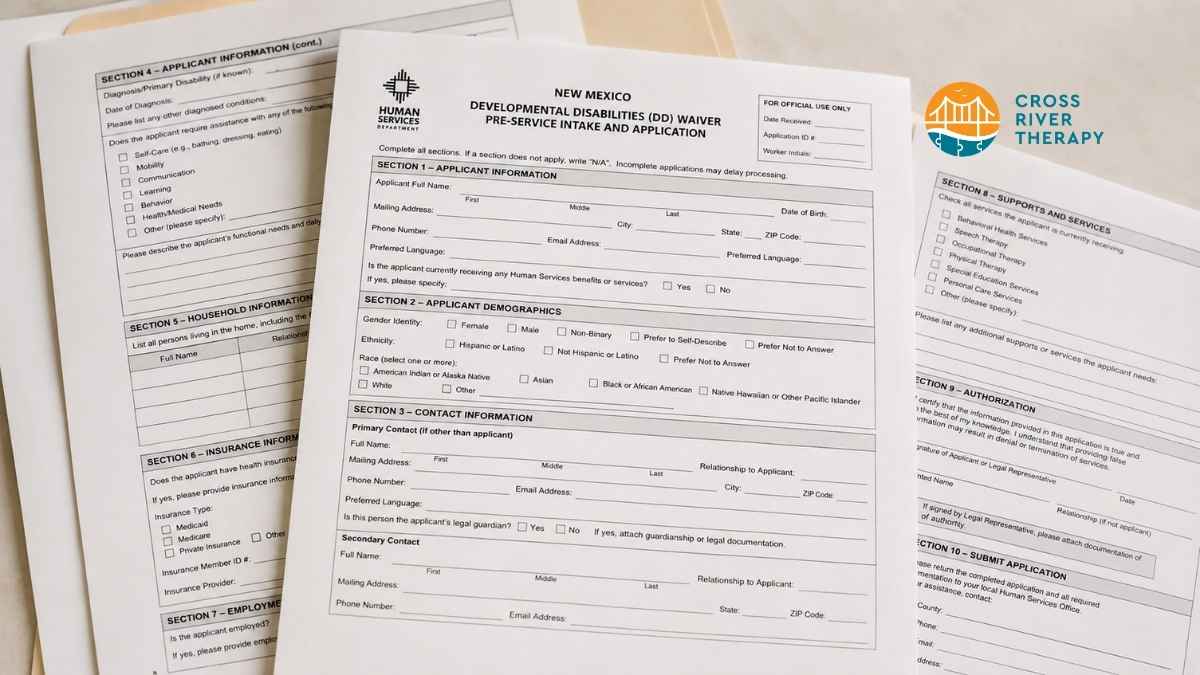
How to Apply for the New Mexico DD Waiver
Your NM DD waiver application starts with state intake. The steps cover records, submission, and enrollment.

Does Insurance Cover ABA Therapy in New Jersey?
ABA therapy insurance in New Jersey varies by plan. Learn what NJ FamilyCare covers and how to check costs.

How ABA Therapy Builds Communication for Nonverbal Children Without Forcing Speech
ABA therapy communication for nonverbal children starts with AAC, signs, and daily routines. See how kids ask, refuse, choose, and get help.

How to Start ABA Therapy in New Jersey With a Checklist
Your guide explains how to start ABA therapy in New Jersey. A first-call checklist covers records and next steps.

How to Get an Autism Evaluation in Arkansas Before Starting ABA Therapy
How to get an autism evaluation in Arkansas starts with a referral, provider choice, and key records. Use this parent checklist before ABA intake.