








How ABA Therapy Helps Children with Autism Build Emotional Regulation Skills
Exploring ABA's Role in Emotional Self-Regulation for Autistic Kids


Understanding the Need for Emotional Regulation Skills in Children with Autism
Children with autism often face challenges in emotional regulation—a crucial skill for managing their feelings, particularly during social interactions. Emotional regulation skills enable them to process emotions such as anger or frustration constructively, fostering better social integration and personal success. This piece delves into how Applied Behavior Analysis (ABA) therapy aids in enhancing these skills, thus playing a pivotal role in autistic children’s emotional and social development.
The Significance of Self-Regulation in Autism Development
What is the significance of self-regulation in children with autism, and how does it affect their development?
Self-regulation plays a pivotal role in the overall development of children with autism. It encompasses emotional, sensory, and cognitive regulation, which are essential for adapting to various environments. Many children with autism face challenges in managing their emotions effectively. This difficulty can lead to increased anxiety, emotional outbursts, and hinder their ability to form meaningful friendships.
By teaching self-regulation skills, such as recognizing their emotions and employing coping strategies, children can significantly improve their capacity to process and navigate social situations. For instance, emotional self-regulation enables them to manage frustration or anger, enhancing their interactions with others.
Moreover, fostering self-regulation is linked to improved academic success. When children are better equipped to focus and stay on task, they engage more fully in the classroom, leading to better learning outcomes.
Emotional, sensory, and cognitive regulation in autism
Developing effective self-regulation strategies impacts not just emotional stability but also cognitive and sensory processing. Children who successfully manage their emotional responses experience reduced stress, which promotes better mental well-being. This holistic approach helps children adapt to changes in routine, face overwhelming situations, and communicate their feelings more effectively.
Importance of teaching self-regulation
Implementing techniques such as predictable routines, social narratives, and mindfulness exercises creates a structured learning environment. Activities that promote physical engagement also channel their energy positively, aiding in self-regulation and focus. Strategies like breaking tasks into smaller, manageable steps or using stories for discussing emotions bolster their confidence and coping mechanisms.
Impact on social connections and academic success
Ultimately, effective self-regulation not only enhances a child's capacity to navigate social settings but also fortifies their learning experiences. Improved self-regulation fosters connections with peers, curbs loneliness, and promotes a better understanding of their emotions, leading to a more fulfilling school life and interactions.
Strategies Used in ABA Therapy for Emotional Regulation
How does Applied Behavior Analysis (ABA) therapy help children with autism develop emotional regulation skills?
Applied Behavior Analysis (ABA) therapy is a structured approach helping children with autism enhance their emotional regulation skills. One of the core aspects of ABA is the recognition and understanding of emotions. By integrating positive reinforcement, ABA encourages children to adopt healthy responses to negative emotions, facilitating the learning of effective coping strategies.
In ABA, various methods are employed:
- Visual Supports and Modeling: Children benefit significantly from visual aids, like emotion cards or charts, that help them identify and label emotions. Caregivers and therapists model appropriate emotional responses, creating clear examples for children to learn from during interactions. This modeling can take place in real-life scenarios or through role-playing, providing a safe space for practice.
- Positive Reinforcement: Reinforcing positive behaviors is crucial. When a child effectively utilizes a coping strategy, such as deep breathing in a stressful situation, praise or rewards encourage them to repeat this behavior in the future, strengthening their emotional regulation skills.
- Co-regulation Support from Caregivers: Caregivers play an essential role in teaching emotional self-regulation. They provide a supportive environment for children to experiment with self-soothing techniques, such as sensory-based calming activities. This co-regulation helps children feel secure and understood, essential for their emotional growth.
Collectively, strategies in ABA therapy empower children with autism to recognize their emotions and navigate social situations with enhanced confidence and stability.
Effective Techniques for Emotional Self-Regulation
Using Emotional Levels Chart and Zones of Regulation
One effective way to teach emotional regulation skills to autistic children is through visual supports. An emotional levels chart can help children identify and label their feelings. This chart categorizes emotions into levels, making it easier for children to express how they are feeling at any moment. Similarly, the Zones of Regulation framework helps kids understand their emotional state and the expected behavior in each zone, providing a clear pathway for managing their feelings appropriately.
Teaching Interoceptive Awareness
Recognizing physical sensations linked to emotions is crucial for self-regulation. Teaching interoceptive awareness enables children to connect their body signals to their emotions. For instance, if a child feels their heart racing, they can learn to associate that with feelings of anxiety or excitement. This understanding aids them in anticipating and coping with their emotions before they escalate.
Role-Play and Calming Routines
Role-playing various scenarios related to emotional situations provides a safe space for children to practice their emotional responses and enhance their problem-solving skills. Pairing these activities with calming routines such as deep breathing exercises or counting can further solidify healthy coping mechanisms. Establishing a consistent calming space where children can go when they're feeling overwhelmed is also beneficial, as it reinforces feelings of safety and control.
Strategy Type Description Benefits Emotional Levels Chart Visual tool to identify and express emotions. Enhances emotional vocabulary and expression. Zones of Regulation Framework Categorizes emotions to aid understanding of appropriate responses. Facilitates emotional awareness and management. Interoceptive Awareness Helps children recognize physiological signals related to emotions. Improves emotional foresight and regulation. Role-Playing Practice scenarios for managing emotions and behavior. Builds confidence and problem-solving skills. Calming Techniques Activities like deep breathing to manage overwhelming feelings. Provides immediate coping mechanisms.
Benefits of Improved Emotional Regulation in Children with Autism
What are the benefits of enhancing emotional regulation in children with autism?
Enhancing emotional regulation in children with autism can lead to a range of significant benefits. Firstly, it is instrumental in improving social interactions and reducing behavioral issues. Children who struggle with self-regulation often face misunderstandings, where their emotional outbursts may be misinterpreted as defiance. By developing emotional regulation skills, these children can navigate social situations more effectively and exhibit fewer tantrums and disruptive behaviors.
Reduction of anxiety and depression
Additionally, children with better emotional regulation tend to experience lower levels of anxiety and depression. This is crucial since emotional dysregulation often contributes to heightened stress and feelings of overwhelm. Through targeted interventions such as cognitive-behavioral therapy and practical tools like emotion charts, children can learn to identify their feelings and develop healthy coping strategies. This not only supports their mental health but also enhances their overall quality of life.
Facilitation of independence
Moreover, developing emotional regulation skills fosters greater independence. By equipping children with the tools to manage their emotions effectively, they can handle stress and frustration across various environments without relying heavily on adult support. This independence is vital as it builds confidence and allows them to contribute more actively to their surroundings.
Benefit Description Strategies for Development Improved Social Interactions Reduces tantrums and enhances communication skills Role-playing scenarios, modeling behavior Reduced Anxiety and Depression Lowers levels of stress and overwhelm Mindfulness exercises, cognitive-behavioral therapy Greater Independence Helps children navigate challenges on their own Structured routines, emotion identification tools
Overall, fostering emotional regulation is a key component in supporting children with autism, enhancing both their social development and well-being.
Evidence Supporting ABA Therapy's Efficacy in Autism
What evidence supports the efficacy of ABA therapy in improving emotional self-regulation for children with autism?
Numerous studies and clinical reviews have established the effectiveness of Applied Behavior Analysis (ABA) therapy in enhancing emotional self-regulation among children with autism. Research indicates that children actively engaged in ABA therapy often show remarkable improvements in managing their emotions, alongside a decrease in stress-related behaviors.
Key findings include:
- Emotional Recognition: ABA therapy helps children identify their emotions and the triggers behind them, fostering a deeper understanding of their emotional landscape.
- Coping Strategies: Techniques taught through ABA, such as using emotion cards, empower children to articulate their feelings and implement coping strategies effectively.
Longitudinal Study Results
A significant longitudinal study demonstrated that approximately 90% of children who underwent intensive ABA therapy exhibited considerable improvement in emotional regulation. These participants not only improved in identifying their emotions but also began applying learned strategies in various situations, showing how the therapy supports generalization of skills.
Moreover, individualized treatment plans crafted in ABA therapy ensure that skills learned are sustainable and applicable in daily life, making it a reliable choice for promoting self-regulation and emotional well-being in children with autism. Integrating structured routines and consistency, the therapy plays a pivotal role in enhancing flexibility and communication skills, which are often challenging for children in this spectrum.
Therapeutic Approaches to Emotional Management in Autistic Children
What are some therapeutic approaches, including ABA, that are used to improve emotional management in autistic children?
Therapeutic approaches such as Applied Behavior Analysis (ABA), Cognitive Behavioral Therapy (CBT), mindfulness practices, and occupational therapy play significant roles in enhancing emotional management for autistic children.
Applied Behavior Analysis (ABA) focuses on teaching essential communication and social skills while using data-driven methods to address challenging behaviors. This therapy employs strategies like emotion cards, which help children identify and label their emotions, enhancing their emotional vocabulary and expression.
Cognitive Behavioral Therapy (CBT) assists children in identifying and modifying negative thought patterns. It teaches coping strategies that help manage anxiety and emotional distress, empowering children to respond more positively to overwhelming situations.
Incorporating mindfulness techniques, such as deep breathing exercises and body scans, fosters self-awareness and emotional regulation. These practices help children to connect their physical sensations with emotional states, promoting calmness and focus.
Occupational therapy also contributes to emotional management by employing sensory strategies that cater to individual needs. This approach can include structured routines and sensory breaks, essential for reducing dysregulation during transitions or changes in one's environment.
Therapy TypeFocus AreaTools/Techniques Used Applied Behavior Analysis (ABA) Communication, behavior management Emotion cards, social narratives Cognitive Behavioral Therapy (CBT) Thought patterns, coping skills Cognitive restructuring, exposure techniques Mindfulness Practices Self-awareness, emotional balance Deep breathing, meditation exercises Occupational Therapy Sensory integration, routine-building Sensory strategies, calm-down corners
These therapeutic methods collectively enhance emotional regulation and awareness in autistic children, enabling them to navigate their feelings and interactions more effectively.
Practical Advice for Fostering Emotional Regulation
Consistency and Patience in Engaging Children
Fostering emotional regulation in children with autism requires a consistent and patient approach. Parents and caregivers should model positive behaviors regularly, creating an environment that emphasizes emotional awareness. Acknowledging a child’s feelings and ensuring they feel heard are essential first steps in this journey.
Creating Safe Spaces for Emotional Exploration
Providing safe spaces where children can express their feelings without judgment encourages their emotional growth. Role-playing scenarios can be particularly effective, allowing children to navigate social situations and practice responses. Calm, structured routines are crucial as well, helping children feel secure and more equipped to handle emotional fluctuations.
Importance of Tailored Approaches
Every child with autism is unique, highlighting the need for personalized strategies that fit their emotional responses. Tools like emotion charts and the 'Zones of Regulation' system can guide children in identifying and managing emotions. Break tasks into manageable steps and introduce creative storytelling to discuss emotions adequately, facilitating understanding and development of emotional regulation skills.
Harnessing ABA Therapy for Emotional Growth
ABA therapy, with its structured strategies and positive reinforcement, provides a reliable framework for helping autistic children develop emotional regulation skills. By embedding emotional awareness and self-regulation within a nurturing environment, children can grow to manage their feelings more independently, leading to improved well-being and social success. Engaging consistently in these therapeutic practices not only aids in emotional development but also equips children with vital life skills for better interaction with their world.
References
- Children with Autism: The Importance of Self-Regulation ...
- How to Develop Emotional Intelligence With ABA Therapy
- Emotional Regulation: 25 Ways to Help Your Autistic Child
- Strategies for Teaching Emotion Regulation Skills to Children
- Emotional Regulation Strategies
- How to Improve Emotional Self-Regulation Among Children ...
- Expert Q&A: Understanding autism emotional regulation
Recent News
Related articles

6 Arkansas Medicaid ABA Therapy Rules Families Need to Know
Arkansas Medicaid ABA therapy has age, diagnosis and approval rules. Families can check six requirements before care.

Arizona Autism Laws Every Parent Should Know Before Starting ABA Therapy
Autism laws Arizona parents should know cover ABA insurance, AHCCCS appeals, IEPs, and Section 504 rights. Check ABA coverage with Cross River.

ABA Therapist Salary in Arkansas: What BCBAs and RBTs Actually Earn in 2026
ABA therapist salary Arkansas figures compare RBT and BCBA rates, benefits, guaranteed hours, and contract terms. Explore careers at Cross River.

5 Autism Support Groups and Family Resources in New Mexico Alongside ABA Therapy
Autism support groups New Mexico families can use offer peer support, local events, and school help. Cross River can explain ABA therapy options.

Where to Get an Autism Evaluation in New Mexico Before Starting ABA Therapy
Autism evaluation New Mexico options include UNM, NMSU, FIT, and private providers. Compare providers, records, and ABA steps with Cross River.

7 North Carolina Autism Resources to Contact Before ABA Therapy Starts
Autism resources North Carolina families can call for diagnosis, early intervention, rights, and parent support. Start ABA intake with Cross River.

Does Indiana Medicaid Cover ABA Therapy? A Step-by-Step Eligibility Checklist for Parents
Medicaid ABA therapy Indiana covers eligible children under 21 with prior authorization. Your five-step coverage review can start with Cross River.
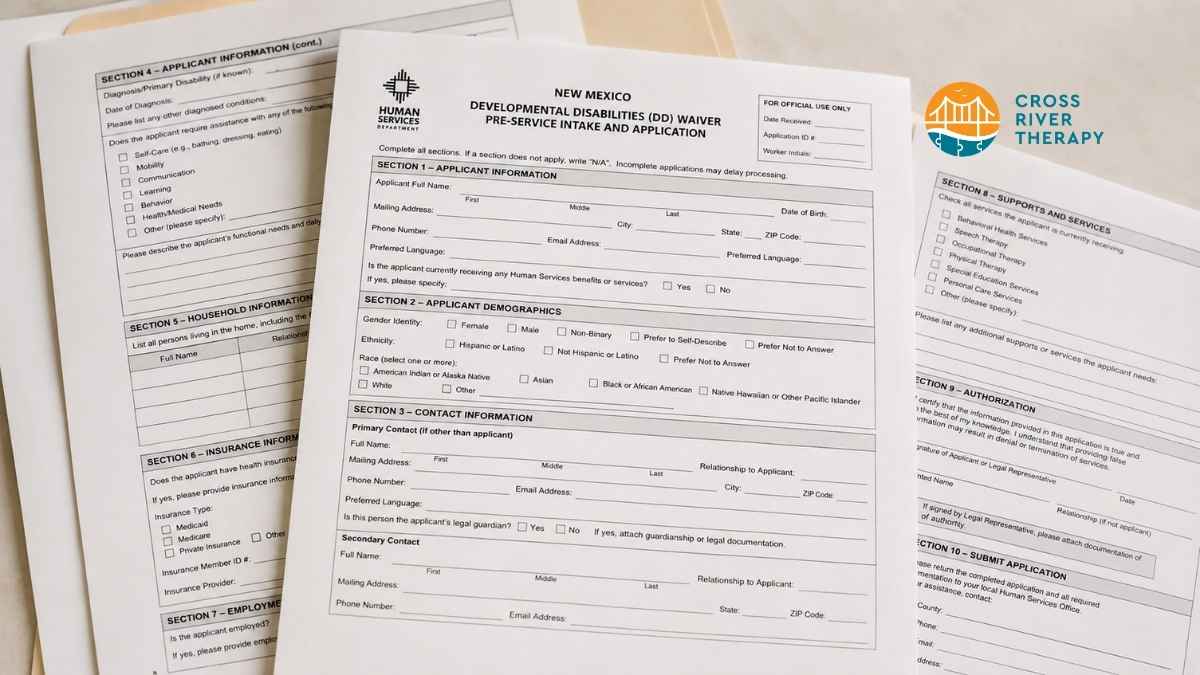
How to Apply for New Mexico’s DD Waiver While Starting ABA Therapy
Autism waiver New Mexico applications need DD Waiver records and proof of daily support needs. Your next step is to start ABA intake with Cross River.

Is ABA Therapy Covered by Insurance in New Jersey? What Every Parent Should Know
ABA therapy insurance New Jersey may cover medically necessary care based on plan type, network, and authorization. Verify benefits with Cross River.

How ABA Therapy Builds Communication for Nonverbal Children Without Forcing Speech
ABA therapy communication for nonverbal children starts with AAC, signs, and daily routines. See how kids ask, refuse, choose, and get help.

How to Start ABA Therapy in New Jersey With a First-Call Checklist
How to start ABA therapy in New Jersey begins with records, insurance details, and intake questions. Use this first-call checklist before you call.

How to Get an Autism Evaluation in Arkansas Before Starting ABA Therapy
How to get an autism evaluation in Arkansas starts with a referral, provider choice, and key records. Use this parent checklist before ABA intake.