








How ABA Therapy Helps Children with Autism Improve Focus and Attention
Transformative Impact of ABA Therapy on Autistic Children’s Focus and Attention


Exploring ABA Therapy's Role in Autism
In the quest to improve focus and attention in children with autism, Applied Behavior Analysis (ABA) therapy stands out as one of the most effective interventions. This article delves into how ABA therapy supports autistic children by employing evidence-based strategies to enhance their concentration and focus, essential skills for their development.
The Essence of ABA Therapy
What is the purpose of ABA therapy?
The purpose of ABA therapy, or Applied Behavior Analysis therapy, is to enhance the lives of individuals, especially children with autism spectrum disorder (ASD). This method focuses on teaching essential skills while simultaneously reducing harmful behaviors. Through structured, evidence-based approaches, ABA aims to improve aspects of communication, social skills, self-control, and daily living abilities.
At the core of ABA therapy is the technique of positive reinforcement. Therapists reward desirable behaviors, encouraging clients to associate their actions with positive outcomes. This strategy not only boosts their motivation but also allows them to connect behaviors with their consequences.
One of the hallmarks of ABA therapy is its adaptability. The therapy is tailored to meet the individual needs and objectives of each child, incorporating their specific strengths and challenges. This personalized approach is vital for promoting greater independence and improving overall quality of life for those facing behavioral challenges.
Overall goals for individuals with autism
The primary goals of ABA therapy extend beyond mere behavioral adjustments. They include increasing language and communication skills, enhancing attention and focus, and improving social interaction capabilities amongst children with autism. Therapists employ a variety of strategies to achieve these goals:
- Personalized Strategies: By using tailored lesson plans, therapists motivate improvement and engage families in the learning process, which is crucial for overall success.
- Social Skills Development: ABA emphasizes teaching effective interpersonal interactions, addressing areas like eye contact, sharing, and emotional connections.
- Communicative Enhancement: It also focuses on improving language use for both verbal and non-verbal communicators, ensuring a broader communication skill set.
- Behavioral Modification: ABA identifies triggers for challenging behaviors and aims to replace them with more appropriate responses, fostering a more conducive learning environment.
Ultimately, the structured nature of ABA therapy enables ongoing progress tracking and strategy adjustments, ensuring that each child's development remains on a positive trajectory.
Mechanisms of ABA Therapy in Enhancing Focus and Attention

What strategies and techniques does ABA therapy use to improve focus and attention in children with autism?
ABA therapy employs various strategies to enhance focus and attention among children with autism. Here are some of the core techniques:
- Positive Reinforcement: Rewarding desirable behaviors increases the likelihood of them being repeated. This not only boosts motivation but also encourages children to concentrate on tasks.
- Engaging Activities: Selecting activities that captivate a child's interest is crucial. When children are genuinely engaged, they are more likely to sustain their attention over longer periods.
- Structured Learning: ABA uses structured and predictable routines to help children understand what is expected, reducing anxiety and distractions that can affect focus.
- Modeling and Role-Playing: By demonstrating appropriate behaviors and social interactions, therapists can show children real-world applications, which enhances learning and attention.
- Comprehensive Feedback: Utilizing Discrete Trial Training, therapists provide immediate feedback on tasks. This allows children to adjust their attention and focus in real-time, leading to better retention and understanding.
- Environmental Adjustments: Creating tailored learning environments that minimize distractions while fostering engagement is essential. Visual supports and prompts can help maintain attention during activities.
Specific ABA methods used
ABA therapy incorporates specific methods to tackle attention development:
Method Description Goals Discrete Trial Training Short, structured opportunities with clear beginnings and ends to maintain focus. Enhance attention through task clarity. Naturalistic Teaching Incorporates skills into daily activities, helping children generalize attention in real-life. Promote skill application outside therapy. Shaping and Fading Gradual increase of expectations regarding attention duration, starting from minimal requirements. Build sustained attention over time. Visual Modeling Using visual cues to prompt attention; research supports that children with autism respond well to structured visual aids. Improve comprehension and task engagement. Mindfulness Practices Integrating mindfulness exercises helps enhance overall attention and reduces stress. Support self-regulation and concentration skills.
By combining these techniques and methods, ABA therapy creates a robust framework focused on enhancing focus and attention among children with autism, ensuring tailored support to meet each child’s unique needs.
ABA Therapy’s Core Techniques
How does ABA therapy help children with autism?
ABA therapy assists children with autism by employing behavioral science principles to cultivate positive behaviors while minimizing negative ones. This structured approach focuses on enhancing vital skills such as communication, social interactions, and academic performance. Qualified behavior analysts create customized programs tailored to the individual needs of each child, ensuring personalized attention.
Positive reinforcement is fundamental to ABA therapy, encouraging the repetition of desired behaviors through rewards. This might involve praising a child when they achieve eye contact or successfully complete a task, making them more likely to engage in those behaviors again.
What methods are used in ABA therapy?
Two prominent methods used in ABA therapy include:
- Discrete Trial Training (DTT): This technique involves short, structured learning opportunities that provide immediate feedback. DTT breaks down tasks into manageable steps, enabling children to focus better and track progress effectively.
- Naturalistic Teaching: This method integrates skills into everyday situations, allowing children to practice eye contact and other social skills in real-life contexts.
These strategies work together to strengthen skills while promoting sustained attention, ultimately leading to improved focus and engagement in children with autism. Engaging family members also reinforces learning at home, showcasing how ABA principles can be seamlessly woven into daily activities.
Addressing High-Functioning Autism with ABA Therapy

What are the goals of ABA therapy for high-functioning autism?
The goals of ABA therapy for individuals with high-functioning autism center around enhancing vital skills while minimizing challenging behaviors. Specifically, ABA therapy seeks to improve social communication by helping children to understand social cues and engage in conversations. Each child's treatment begins with a detailed assessment conducted by Board Certified Behavior Analysts (BCBAs), which informs the development of a personalized plan tailored to their unique strengths and weaknesses.
In addition to social communication, ABA therapy emphasizes the enhancement of emotional regulation. Children learn techniques to manage their emotions and cope with stressful situations, which supports overall functioning.
The approach is systematic, beginning with targeted, individualized goals. These goals are monitored continuously to ensure progress is being made, and caregiver involvement is key for reinforcement in everyday settings.
Techniques for social and emotional skills
ABA therapy employs various effective techniques for improving social and emotional skills in children with high-functioning autism:
- Positive Reinforcement: This method rewards desirable behaviors, encouraging children to keep using their new skills.
- Role-Playing: Engaging in role-playing scenarios helps children practice social interactions in a controlled environment.
- Naturalistic Teaching: Skills are integrated into daily routines to help children generalize their learning.
- Shaping Techniques: Gradually increasing the complexity of tasks aids in developing confidence and competence in social settings.
These methods collectively help children not only develop essential skills but also ensure that they can apply them in real-world situations.
Understanding the Attention Function in ABA Therapy
What is the attention function in ABA?
The attention function in Applied Behavior Analysis (ABA) is crucial for understanding how children with autism seek social interaction. It encompasses behaviors aimed at gaining attention, which may include crying, tantrums, or other disruptive actions. Recognizing these behaviors is essential for developing strategies that reduce negative attention-seeking while promoting more appropriate social interactions.
Children often exhibit attention-seeking behaviors because they want a response from caregivers or peers. Therefore, ABA therapy focuses on identifying and modifying these behaviors. Educators and therapists can foster positive interactions by understanding the underlying motivations behind these actions. Immediate feedback through positive reinforcement encourages constructive responses, thereby enhancing the child's ability to engage effectively.
By employing techniques such as ignoring undesirable behaviors and rewarding positive ones, therapists help children learn healthier ways to seek attention. This framework ensures that attention-seeking behaviors are redirected, allowing for the introduction of more beneficial actions in social settings.
Behavioral management in ABA
Behavioral management in ABA uses structured approaches to promote desirable behaviors while minimizing disruptive ones. Strategies such as breaking down complex skills into manageable tasks help children focus their attention more effectively.
Strategies for enhancing attention include:
Strategy Description Purpose Positive Reinforcement Rewarding desired behaviors to increase their occurrence To motivate and encourage focused engagement in tasks Discrete Trial Training Short, structured learning opportunities with immediate feedback To refine attention skills through practice and progression Naturalistic Teaching Incorporating learning into daily routines To generalize attention skills across real-life situations Visual Modeling Using visual cues to reinforce learning To enhance understanding and maintain focus during tasks
In summary, the attention function in ABA is fundamental for supporting children with autism in achieving better social interactions and focus. By implementing effective behavioral management strategies, therapists aid in developing skills that improve both attention and socialization.
Role of Behavior Analysts in Focus Improvement
What does a behavior analyst do?
A behavior analyst plays a crucial role in improving attention and focus among children with autism spectrum disorder (ASD) through applied behavior analysis (ABA). They conduct comprehensive assessments to identify individual strengths, weaknesses, and unique challenges related to attention. This information forms the basis for personalized intervention plans that target specific learning and behavioral goals.
Daily responsibilities include collecting and analyzing data on behavior, which helps in tracking progress and making necessary adjustments to strategies. A behavior analyst uses various techniques, such as positive reinforcement, to encourage the repetition of desirable behaviors. By implementing the ABC model (Antecedent-Behavior-Consequence), they effectively facilitate positive behavior changes in various settings, including home and school.
How does personalized intervention work?
Personalized interventions are pivotal in ABA therapy. Behavior analysts tailor their strategies to meet each child's unique needs. This may involve:
- Breaking down tasks into manageable steps, making complex skills more achievable.
- Using engaging teaching methods that fit the child's preferred learning style, whether visual, auditory, or kinesthetic.
- Setting individualized goals to gradually improve focus and attention duration, ensuring the child feels motivated and supported.
Involving parents in the process is also essential. Behavior analysts provide training and strategies so that families can reinforce the skills being taught in therapy, thereby creating a comprehensive support system that extends learning beyond the therapy room.
Practical Applications of ABA Techniques
Techniques to improve focus and concentration
To enhance a child's focus and concentration using ABA techniques, several effective strategies can be employed. First, engaging activities with clear endpoints—like games or structured tasks—can capture the child's interest, making it easier for them to concentrate.
Providing clear and effective instructions is crucial. Breaking down tasks into simpler steps can help the child understand expectations clearly. Moreover, repeating key phrases helps reinforce critical information, maintaining their focus on the task.
Another beneficial approach is visual modeling, where tasks are demonstrated visually. This method provides a clear example of the expected behavior, enhancing understanding. To aid transitions between activities, using visual supports can set expectations, creating a structured environment that reduces anxiety and maintains focus.
Finally, incorporating mindfulness practices can significantly assist children in focusing on the present moment. Techniques like deep breathing or short meditation can train children to manage distractions and enhance attention skills.
Engaging parents in focus improvement
Engaging parents is vital in reinforcing focus improvement strategies at home. ABA therapy offers guidance and training to families, empowering them to implement effective techniques. Collaboration between therapists and parents ensures consistent practice of focus-enhancing strategies in everyday situations.
By encouraging parents to use the same positive reinforcement techniques at home, such as praising successful focus or task completion, families can create a supportive environment that aligns with therapeutic goals. This integrated approach not only fosters the child’s attention skills in therapy but also encourages generalization of these skills to real-life scenarios, resulting in improved outcomes.
Concluding Thoughts on ABA Therapy's Impact
ABA therapy has emerged as a beacon of hope for many families, offering well-researched and effective strategies for improving key developmental skills in children with autism. Its focus on individualized treatment plans and evidence-based interventions not only supports increased focus and attention but also enhances the overall quality of life for these children, fostering greater independence and smoother social interactions. As ABA therapy continues to be a cornerstone of autism treatment, its positive outcomes underline the importance of tailored approaches and collaborative efforts between therapists, families, and educators.
References
- Applied Behavior Analysis (ABA) | Autism Speaks
- Benefits of ABA Therapy | Helping Hands Family
- ABA Therapy and Attention Span: Key Benefits Explained
- How Can Applied Behavior Analysis Increase Eye Contact in ...
- ABA therapy for autism: What is it and how does it help autistic ...
- Proud Moments: In-Home and Clinic-Based ABA Services / Home ...
- Applied Behavior Analysis (ABA) | Autism Speaks
- ABA and other therapies | Autism Speaks
Recent News
Related articles

6 Arkansas Medicaid ABA Therapy Rules Families Need to Know
Arkansas Medicaid ABA therapy has age, diagnosis and approval rules. Families can check six requirements before care.

Arizona Autism Laws Every Parent Should Know Before Starting ABA Therapy
Autism laws Arizona parents should know cover ABA insurance, AHCCCS appeals, IEPs, and Section 504 rights. Check ABA coverage with Cross River.

ABA Therapist Salary in Arkansas: What BCBAs and RBTs Actually Earn in 2026
ABA therapist salary Arkansas figures compare RBT and BCBA rates, benefits, guaranteed hours, and contract terms. Explore careers at Cross River.

5 Autism Support Groups and Family Resources in New Mexico Alongside ABA Therapy
Autism support groups New Mexico families can use offer peer support, local events, and school help. Cross River can explain ABA therapy options.

Where to Get an Autism Evaluation in New Mexico Before Starting ABA Therapy
Autism evaluation New Mexico options include UNM, NMSU, FIT, and private providers. Compare providers, records, and ABA steps with Cross River.

7 North Carolina Autism Resources to Contact Before ABA Therapy Starts
Autism resources North Carolina families can call for diagnosis, early intervention, rights, and parent support. Start ABA intake with Cross River.

Does Indiana Medicaid Cover ABA Therapy? A Step-by-Step Eligibility Checklist for Parents
Medicaid ABA therapy Indiana covers eligible children under 21 with prior authorization. Your five-step coverage review can start with Cross River.
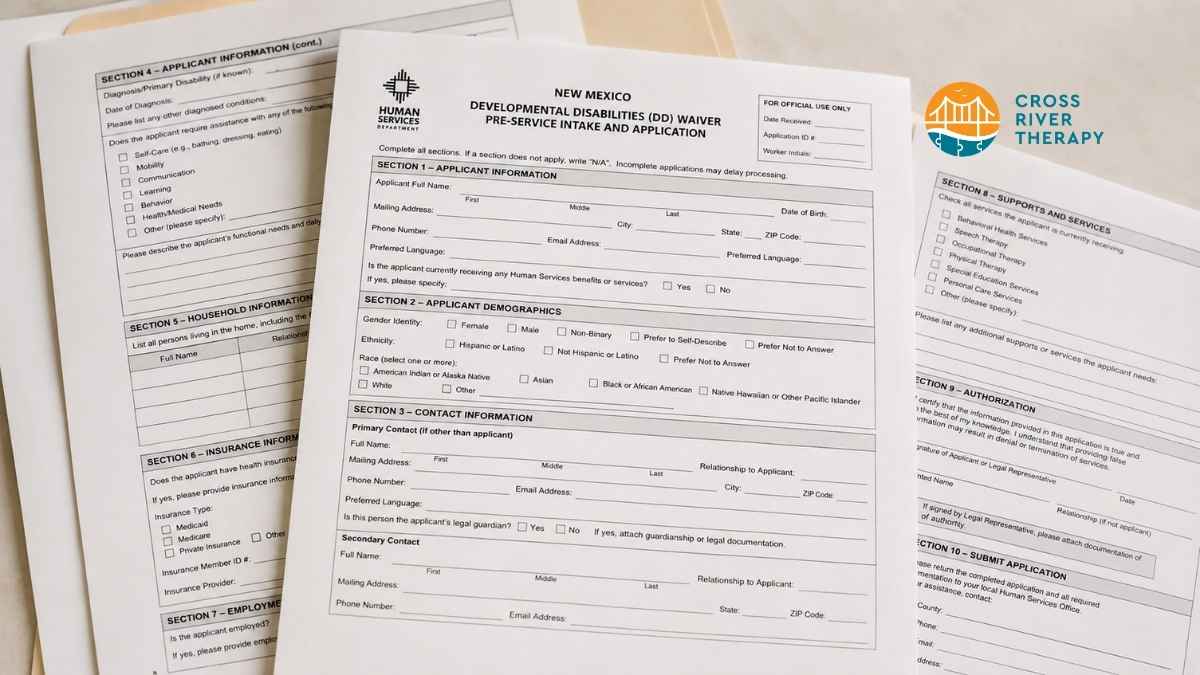
How to Apply for New Mexico’s DD Waiver While Starting ABA Therapy
Autism waiver New Mexico applications need DD Waiver records and proof of daily support needs. Your next step is to start ABA intake with Cross River.

Is ABA Therapy Covered by Insurance in New Jersey? What Every Parent Should Know
ABA therapy insurance New Jersey may cover medically necessary care based on plan type, network, and authorization. Verify benefits with Cross River.

How ABA Therapy Builds Communication for Nonverbal Children Without Forcing Speech
ABA therapy communication for nonverbal children starts with AAC, signs, and daily routines. See how kids ask, refuse, choose, and get help.

How to Start ABA Therapy in New Jersey With a First-Call Checklist
How to start ABA therapy in New Jersey begins with records, insurance details, and intake questions. Use this first-call checklist before you call.

How to Get an Autism Evaluation in Arkansas Before Starting ABA Therapy
How to get an autism evaluation in Arkansas starts with a referral, provider choice, and key records. Use this parent checklist before ABA intake.