








How ABA therapy improves group participation for children
Unlocking Social Success: ABA Therapy's Role in Enhancing Group Participation for Children


Understanding ABA Therapy and Its Impact on Group Participation
Applied Behavior Analysis (ABA) therapy is a scientifically validated approach used extensively to support children with autism in acquiring critical social and communication skills. This article explores how ABA therapy not only fosters individual skill development but also significantly enhances children's ability to participate effectively in group settings. By examining the principles, providers, techniques, and benefits of ABA, we uncover the ways in which this therapy promotes meaningful social interactions and group inclusion.
What Is ABA Therapy and Its Role in Autism Treatment?
What is Applied Behavior Analysis (ABA) therapy and how is it used in autism treatment?
Applied Behavior Analysis (ABA) therapy is a scientifically supported behavioral treatment designed to increase helpful behaviors and decrease harmful ones, particularly in children with autism. Rooted in the science of learning and behavior, ABA uses principles such as positive reinforcement and the antecedent-behavior-consequence (A-B-C) model to understand and modify behaviors effectively.
Scientific Basis and History
Since the 1960s, ABA has been extensively studied and applied to help children with autism acquire skills in diverse areas. This long-standing research foundation underpins its status as an evidence-based best practice treatment, recognized by organizations like the US Surgeon General and the American Psychological Association.
Core Principles: A-B-C Model and Positive Reinforcement
Central to ABA is the A-B-C model, which examines the antecedents — what happens before a behavior — the behavior itself, and its consequences. This approach informs customized strategies to encourage positive behaviors. Positive reinforcement, where rewards are given to encourage desired behaviors, is a fundamental technique that drives learning and behavior change in ABA therapy.
Individualized and Flexible Nature of Treatment
ABA programs are highly individualized, crafted by qualified Board Certified Behavior Analysts (BCBAs) based on comprehensive assessments. These programs are flexible and adaptable to the needs of each child, making it possible to implement therapy at home, school, or in the community. Therapy sessions often involve breaking down complex skills into manageable steps, systematically teaching and reinforcing them.
Settings for Therapy Delivery
ABA therapy can be delivered across varied environments to maximize generalization of skills. Whether in a child’s home, classroom, or community settings, therapists tailor techniques and goals to fit the setting while emphasizing natural, positive social interactions and enjoyable learning experiences.
Skill Areas Targeted
The therapy focuses on a wide range of skills crucial for daily life. These include communication skills like eye contact and joint attention, social skills such as turn-taking and group participation, self-care routines, play skills, motor and academic abilities, and behavioral responses. The ultimate aim is to enhance independence and social functioning, helping children better engage with those around them.
ABA therapy's comprehensive, individualized, and evidence-based approach makes it a foundational treatment in helping children with autism develop essential skills and thrive in their everyday lives.
Qualified Providers and Multidisciplinary Delivery of ABA Therapy

Who typically provides autism therapies such as ABA?
Autism therapies like ABA are delivered by a team of trained and qualified professionals to ensure effective treatment. Primary providers include Board Certified Behavior Analysts (BCBAs), who design and oversee individualized therapy plans based on comprehensive assessments. Registered Behavior Technicians (RBTs) and other trained therapists implement these plans through direct therapy sessions under the supervision of BCBAs.
What is involved in assessment and individualized plan development?
Qualified behavior analysts conduct detailed evaluations using tools such as the ABLLS (Assessment of Basic Language and Learning Skills) and VB-MAPP (Verbal Behavior Milestones Assessment and Placement Program). These assessments guide the creation of customized goals targeting communication, social interaction, self-care, and behavioral improvements.
Why is parent and family involvement important?
Families play a crucial role in the success of ABA therapy. Parent training empowers caregivers to apply intervention strategies at home and in everyday situations, reinforcing skills learned during therapy. This collaboration enhances consistency and generalization of skills across environments.
How does the team approach support therapy delivery?
ABA therapy is most effective when delivered through a multidisciplinary team approach. This includes BCBAs, RBTs, psychologists, special educators, and paraprofessionals, who work together to address various developmental domains. The team regularly communicates to adjust plans and ensure cohesive support for the child.
What about supervision and training of therapists?
Supervision and ongoing training are integral to maintaining high-quality ABA services. BCBAs provide regular oversight of RBTs and therapy assistants to ensure fidelity to treatment protocols. Continuous professional development helps therapists stay informed on the latest evidence-based practices and techniques.
| Role | Responsibility | Contribution to ABA Therapy |
|---|---|---|
| BCBA | Assessment and plan development, supervision | Designs individualized programs, oversees implementation |
| RBT | Direct therapy delivery | Implements daily therapy sessions under supervision |
| Psychologist/Special Educator | Supports developmental and educational goals | Provides complementary expertise within the multidisciplinary team |
| Parent/Caregiver | Reinforces learning at home | Ensures skill generalization and consistent practice |
| Paraprofessional/Support Staff | Assists therapy delivery | Helps maintain one-on-one instruction and behavior support |
Core ABA Techniques That Encourage Social Interaction and Group Participation
What is positive reinforcement and what role does it play in ABA therapy?
Positive reinforcement is a fundamental technique in ABA therapy, involving rewarding desired behaviors to increase their occurrence. When a child exhibits a helpful behavior, such as making eye contact or sharing toys, immediate positive feedback like praise or small rewards encourages repetition of that behavior. This method fosters a positive learning environment and motivates children to acquire new skills.
How does Discrete Trial Training (DTT) support skill acquisition?
Discrete Trial Training is a structured teaching method where skills are broken down into small, manageable steps. Each trial includes a clear instruction, the child's response, and immediate feedback or reinforcement. DTT is highly effective for teaching foundational social skills such as turn-taking and communication by offering repetitive practice in a controlled setting.
What is Natural Environment Teaching (NET) and its benefits?
Natural Environment Teaching takes learning into everyday settings like home, school, or community, where social interactions naturally occur. By embedding teaching moments in real-life situations, NET promotes generalization of skills such as joint attention and cooperative play. This approach makes learning enjoyable and relevant, encouraging positive social engagement.
How are social stories and video modeling used in ABA?
Social stories describe social situations and appropriate responses in simple language to help children understand expectations. Video modeling involves watching videos of desired behaviors to learn through observation. Both methods enhance comprehension of social cues and emotional responses, vital for participating effectively in group activities.
What is peer-mediated instruction and why is it important?
Peer-mediated instruction involves training typically developing peers to interact and facilitate learning opportunities for children with autism. This technique promotes natural social interactions and helps children practice skills such as problem-solving and cooperative play within group settings.
How does ABA therapy break down skills for teaching?
ABA systematically analyzes complex behaviors by breaking them into smaller steps, making learning more accessible. Therapists teach each step through repetition and reinforcement, gradually building toward independent skill demonstration. This stepwise approach is crucial for mastering social interactions and participating successfully in group activities.
Enhancing Social Skills and Group Participation Through ABA
What social skills does ABA therapy target?
ABA therapy focuses on developing essential social skills such as eye contact, turn-taking, and joint attention. These foundational skills help children with autism interact more effectively with peers and adults.
How does ABA teach emotional understanding and response?
ABA uses structured methods, including social stories and video modeling, to help children recognize and respond appropriately to different emotions. This enhances their ability to connect and communicate in social settings.
In what ways are play skills and cooperative behaviors developed?
Play and cooperative behaviors are encouraged through natural environment teaching (NET) and peer-mediated instruction. These strategies promote positive social interactions and enjoyable learning experiences.
How does ABA support problem-solving within social contexts?
ABA techniques guide children in understanding social cues and resolving conflicts, fostering independence and confidence in group activities.
What role do natural and planned settings play in ABA therapy?
Therapy occurs both in structured sessions and everyday environments like home, school, and community. This flexibility ensures children practice social skills across various real-life situations to improve generalization.
Through these combined approaches, ABA therapy helps children with autism build meaningful social participation and stronger relationships.
Scientific Evidence Supporting ABA’s Effectiveness in Improving Group Participation
What are the key benefits of therapy based on behavioral analysis for individuals with autism?
Therapy grounded in behavioral analysis, particularly ABA, provides significant benefits for those with autism. It fosters development in communication, social interaction, and daily living skills, which are essential for increased independence. ABA uses positive reinforcement and customized interventions to reduce challenging behaviors and encourage adaptive ones.
Numerous research studies have demonstrated ABA's effectiveness in improving social functioning among children with autism. For example, more than 20 studies show gains in intellectual ability, language skills, and social participation following ABA therapy.
How does long-term intensive ABA therapy influence outcomes?
Long-term, intensive ABA programs—commonly involving 25 to 40 hours per week—are associated with the best outcomes. Research indicates that 85-95% of children receiving these programs see meaningful benefits. These benefits include improved social skills such as eye contact, joint attention, turn-taking, and communication, which enhance their ability to participate in group settings.
Which health authorities recognize ABA therapy?
ABA therapy is acknowledged as an evidence-based best practice by major health authorities, including the US Surgeon General and the American Psychological Association (APA). Their recognition is grounded in extensive scientific research validating ABA's impact on social, cognitive, and behavioral development.
What is the impact of early intervention?
Early intervention—ideally before the age of six and sometimes starting as young as 2 to 3 years old—can significantly improve developmental trajectories. Early ABA therapy helps children develop social skills and adaptive behaviors that promote better group participation and overall functioning throughout life.
These findings highlight how ABA therapy is a scientifically validated, effective approach to enhancing social skills and group interaction for individuals with autism, leading to improved quality of life and increased community involvement.
Adapting ABA Strategies in Group Environments: School, Community, and Home
Using ABA Techniques to Improve Peer Interactions in Schools
ABA therapy is often adapted for school settings to enhance peer interactions and social skills. Techniques such as peer-mediated instruction and social stories help children with autism learn to take turns, share attention, and participate in group learning activities. Positive reinforcement encourages these social behaviors, making interactions enjoyable and motivating for the child.
Community Participation and Social Inclusion
In community settings, ABA supports social inclusion by teaching children how to navigate group activities, respond to emotions, and solve social problems. Natural Environment Teaching (NET) is used here to embed learning in real-life scenarios, making community participation a practical and enjoyable experience.
Parent Training for Home-Based Reinforcement
Parents play a crucial role in generalizing ABA skills at home. Under BCBA guidance, parents learn to implement reinforcement strategies to encourage eye contact, joint attention, and communication during everyday routines. This consistent reinforcement in a familiar environment promotes skill maintenance and growth.
Addressing Antecedents and Consequences in Group Settings
Understanding the antecedent-behavior-consequence (A-B-C) model helps professionals and parents identify triggers and outcomes of behaviors in group contexts. This knowledge allows for strategic adjustments to the environment and responses, minimizing challenging behaviors and reinforcing positive ones.
Examples of Structured Group Activities Enhanced by ABA
ABA techniques enhance structured group activities such as cooperative play, turn-taking games, and peer-led discussions. For instance, Discrete Trial Training (DTT) can break down social skills into teachable steps within group settings, supported by positive reinforcement to encourage participation and engagement.
Future Directions: Integrating ABA with Peer and Community Support to Maximize Social Inclusion
Role of Peer-Mediated Instruction in Sustaining Social Gains
Peer-mediated instruction is an innovative ABA technique that involves training typically developing peers to support social interactions with children with autism. This method encourages natural social exchanges and helps sustain behavioral improvements by embedding learning within real-life contexts.
Incorporating Technology and Video Modeling
Technology is increasingly leveraged in ABA therapy through video modeling, where children observe and imitate behaviors displayed in videos. This approach enhances understanding of social cues and appropriate responses, making learning engaging and accessible across various environments.
Building Natural Social Networks
By focusing on creating supportive social circles outside therapy sessions, ABA aims to foster lasting relationships. Encouraging interactions in community and school settings helps children generalize social skills, promoting inclusion and reducing feelings of isolation.
Empowering Children to Generalize Skills Beyond Therapy
Generalization is a central goal in ABA, where children are guided to apply learned behaviors in diverse settings and with different people. Strategies include practicing skills in natural environments and reinforcing spontaneous social behaviors, which enhances independence.
Collaborative Efforts Among Educators, Therapists, and Families
Maximizing social inclusion requires coordinated collaboration among behavior analysts, educators, therapists, and families. Sharing goals and strategies ensures consistent support, reinforcing progress and adapting interventions to each child's evolving needs throughout various daily contexts.
The Transformative Impact of ABA Therapy on Children's Group Participation
ABA therapy serves as a vital framework that not only enhances individual skill sets but also empowers children with autism to engage more fully in group environments. Through scientifically supported methods and dedicated professionals, ABA addresses social challenges by teaching essential interpersonal and communication skills tailored to each child's needs. The therapy’s flexibility in various settings—from homes to classrooms and community spaces—ensures that children can practice and generalize their skills, leading to improved group participation. Backed by robust research and clinical expertise, ABA remains a cornerstone intervention that fosters inclusion, independence, and social success for children with autism.
References
- Applied Behavior Analysis (ABA)
- ABA Therapy for Enhancing Social Skills in Children with Autism
- Does ABA therapy work for children with autism?
- How ABA Therapy Can Improve Your Child's Life
- Applied Behavior Analysis (ABA)
- The Top 10 Reasons Children With Autism Deserve ABA
- Applied Behavior Analysis (ABA)
- 6 Benefits of ABA Therapy for Children with Autism
- The effectiveness of applied behavior analysis program ...
- Applied Behavior Analysis (ABA)
Recent News
Related articles

ABA Therapist Salary in Arkansas: What BCBAs and RBTs Actually Earn in 2026
ABA therapist salary Arkansas figures compare RBT and BCBA rates, benefits, guaranteed hours, and contract terms. Explore careers at Cross River.

5 Autism Support Groups and Family Resources in New Mexico Alongside ABA Therapy
Autism support groups New Mexico families can use offer peer support, local events, and school help. Cross River can explain ABA therapy options.

Where to Get an Autism Evaluation in New Mexico Before Starting ABA Therapy
Autism evaluation New Mexico options include UNM, NMSU, FIT, and private providers. Compare providers, records, and ABA steps with Cross River.

7 North Carolina Autism Resources to Contact Before ABA Therapy Starts
Autism resources North Carolina families can call for diagnosis, early intervention, rights, and parent support. Start ABA intake with Cross River.

Does Indiana Medicaid Cover ABA Therapy? A Step-by-Step Eligibility Checklist for Parents
Medicaid ABA therapy Indiana covers eligible children under 21 with prior authorization. Your five-step coverage review can start with Cross River.
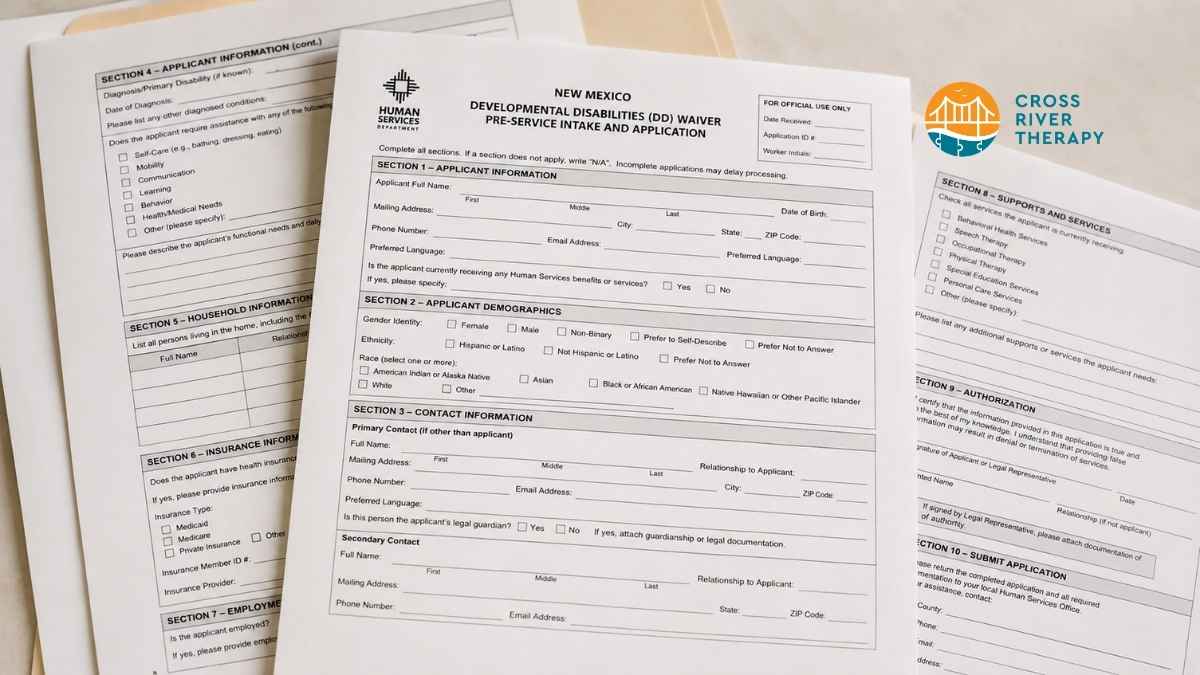
How to Apply for New Mexico’s DD Waiver While Starting ABA Therapy
Autism waiver New Mexico applications need DD Waiver records and proof of daily support needs. Your next step is to start ABA intake with Cross River.

Is ABA Therapy Covered by Insurance in New Jersey? What Every Parent Should Know
ABA therapy insurance New Jersey may cover medically necessary care based on plan type, network, and authorization. Verify benefits with Cross River.

How ABA Therapy Builds Communication for Nonverbal Children Without Forcing Speech
ABA therapy communication for nonverbal children starts with AAC, signs, and daily routines. See how kids ask, refuse, choose, and get help.

How to Start ABA Therapy in New Jersey With a First-Call Checklist
How to start ABA therapy in New Jersey begins with records, insurance details, and intake questions. Use this first-call checklist before you call.

How to Get an Autism Evaluation in Arkansas Before Starting ABA Therapy
How to get an autism evaluation in Arkansas starts with a referral, provider choice, and key records. Use this parent checklist before ABA intake.

Center-Based vs In-Home vs School-Based ABA Therapy and How to Choose the Right Fit
Center-based, in-home, and school-based ABA therapy each fit different goals, routines, and settings. Compare options before your intake call.

Early Signs of Autism: A Guide for North Carolina Parents
Early signs of autism North Carolina parents notice can include speech, play, sensory, or skill loss patterns. See what to track before screening.