








How ABA Therapy Prepares Children for Kindergarten
Building Foundations for Future Success: The Role of ABA in Kindergarten Readiness


Preparing Children for a Seamless Transition into School Life
For children with autism, the transition to kindergarten can present unique challenges but also unique opportunities. ABA therapy has emerged as a powerful, evidence-based approach that equips children with essential skills to navigate their new school environment confidently. This article explores how ABA therapy supports formulating a strong foundation in communication, social skills, self-regulation, and independence — all critical for a child's successful start in kindergarten.
Understanding ABA Therapy and Its Principles

What is ABA therapy and how does it work?
ABA, or Applied Behavior Analysis, is a scientific approach used to help children with autism develop essential skills. It focuses on behavior modification through principles of learning—using positive reinforcement, repetition, and structured lessons to encourage good behaviors and reduce challenging ones. Treatment plans are customized for each child, made by certified behavior analysts (BCBAs), ensuring that interventions are focused and effective.
This method emphasizes small, manageable steps to teach new skills, making learning gradual and consistent. By reinforcing desired behaviors, children experience increased confidence and independence, laying a strong foundation for future growth.
How does ABA develop skills relevant to school success?
ABA therapy targets a broad range of skills necessary for kindergarten and beyond. It helps children improve communication—both speaking and understanding—and social skills like sharing, taking turns, and recognizing social cues.
In addition, ABA supports emotional regulation, helping children cope with frustration and adapt to changes smoothly. It also promotes independence in daily routines such as dressing, hygiene, and classroom tasks, which are vital for a successful school experience.
Furthermore, ABA teaches pre-academic skills like following directions, attending to tasks, and using classroom tools. These foundational abilities prepare children to participate fully and confidently in academic settings, facilitating smoother transitions into school life.
How do ABA principles and techniques support learning?
ABA uses evidence-based strategies such as positive reinforcement to shape behavior positive. Techniques like visual schedules and role-playing help children manage transitions and routines, reducing anxiety.
Customized programs and ongoing collaboration with families and educators ensure that skills learned in therapy are practiced consistently across environments. This consistency helps children attain the skills needed for school readiness and lifelong learning.
Aspect Focus Area Implementation Strategies Outcomes Behavior Shaping Basic skills development Positive reinforcement, task analysis Increased independence and participation Social Skills Relationship building Role-playing, social cues training Better interaction and collaboration Communication Expressive and receptive language Repetition, visual aids Improved understanding and expression Self-Regulation Emotional control Strategies for stress management Emotional resilience and self-control Academic Prep School routines Following instructions, task breakdown Academic success and confidence
ABA therapy is a comprehensive approach that equips children with autism with the skills necessary for a successful and fulfilling educational journey.
Core Skills Developed Through ABA Supporting School Readiness

What key skills does ABA foster for school readiness?
Applied Behavior Analysis (ABA) therapy targets essential skills that set the foundation for successful entry into school. These include effective communication—both verbal, like speaking and listening, and non-verbal, such as gestures and eye contact.
ABA also emphasizes social skills like turn-taking, sharing, and understanding social cues, which help children interact positively with teachers and classmates. Additionally, self-regulation techniques are incorporated to help children manage emotions, handle stress, and stay calm amid routines and transitions.
Independence is another crucial area, with ABA teaching children how to dress, practice hygiene, and navigate daily routines. The therapy's structured and personalized approach ensures that children develop these skills at a comfortable pace, fostering confidence and autonomy.
How do these skills facilitate a smoother transition into kindergarten?
When children gain strong communication abilities, they find it easier to follow instructions, participate in class discussions, and develop relationships with peers and teachers. Social skills like sharing and understanding social cues enable meaningful interactions, making group activities more productive and enjoyable.
Self-regulation strategies empower children to handle the emotional and behavioral demands of a classroom, reducing frustration and shy behaviors. Their growing independence allows them to manage routines such as dressing and toileting without excessive adult support.
This combination of skills minimizes anxiety and builds a positive attitude toward school. Children arrive more prepared and confident, ready to participate actively, which ultimately supports their academic progress and social integration throughout their kindergarten year.
Strategies and Techniques in ABA to Enhance School Readiness

ABA therapy utilizes a variety of strategies to prepare children with autism for the challenges of kindergarten and beyond.
One prominent approach is Discrete Trial Training (DTT), which involves breaking down skills into small, manageable steps. This structured method uses repetition and positive reinforcement to teach foundational skills like following instructions, verbal communication, and social behaviors.
Complementing DTT is Natural Environment Teaching (NET), where learning occurs in real-life settings. This naturalistic approach helps children generalize skills such as turn-taking, sharing, and engaging in group activities. By practicing these skills in familiar contexts, children become more confident and adaptable.
Visual supports are also crucial in ABA-based interventions. Visual schedules and pictures help children understand daily routines and expectations, reducing anxiety around transitions. Timers and visual cues guide them through tasks like dressing, cleaning up, or transitioning between activities.
Reinforcement techniques like praise, tokens, or preferred activities motivate children to acquire new skills and maintain positive behaviors. Prompting strategies, such as gestural or verbal cues, support skill acquisition and ensure children can successfully learn and apply new behaviors. These prompts are gradually faded as independence grows.
Overall, these ABA techniques foster understanding of routines, increase engagement, and develop skills necessary for successful school adaptation. They help children recognize classroom expectations, manage transitions smoothly, and participate actively, laying a strong foundation for academic and social success.
Technique Purpose Application Examples Additional Details Discrete Trial Training (DTT) Break down skills into small steps with repetition Teaching following directions, asking questions Utilizes reinforcement to encourage correct responses Natural Environment Teaching (NET) Teaching in real-life settings for generalization Playing, snack time, assembly routines Promotes spontaneous use of skills across different settings Visual Supports Aid understanding of routines and social cues Visual schedules, picture communication boards Reduce anxiety and improve transition management Prompting and Reinforcement Support skill acquisition and behavior management Hand-over-hand guidance, praise, tokens Fades over time to promote independence
Implementing these approaches in a consistent and collaborative manner ensures children develop the skills they need for a successful start in school, making the transition less stressful and more productive.
Addressing Behavioral Challenges and Promoting Positive Behaviors

How does ABA address behavioral challenges in school preparation?
ABA therapy uses proven techniques to manage and reduce challenging behaviors in children with autism. By conducting functional behavior assessments (FBA), therapists identify the causes of problematic behaviors such as aggression, noncompliance, or tantrums. They then implement reinforcement strategies that reward positive behaviors, encouraging children to adopt more appropriate responses. Systematic prompting and consistent routines help children understand expectations and develop better self-control, making them more prepared to handle the demands of the classroom.
In what ways does ABA foster behaviors that support learning and socialization?
ABA promotes the development of adaptive social responses like sharing, taking turns, and understanding social cues. Through modeling, reinforcement, and role-playing activities, children learn cooperation and compliance—skills essential for a successful kindergarten experience. These interventions encourage active participation, rule-following, and positive peer interactions, laying a foundation for meaningful social relationships and effective learning.
How do tailored interventions in ABA benefit children transitioning to kindergarten?
Individualized ABA programs focus on each child's unique needs, targeting skills such as following instructions, managing emotions, and social communication. By breaking down these skills into manageable steps and practicing them consistently, children gain confidence and independence. Additionally, ABA therapies include strategies for managing transitions—like visual schedules and timers—reducing anxiety and promoting smooth adaptation to new routines.
How does collaboration enhance behavioral outcomes?
Collaboration among therapists, families, and educators ensures consistency in applying behavioral strategies across settings. This teamwork reinforces desired behaviors, helps generalize skills beyond therapy sessions, and creates a supportive environment as children transition to kindergarten.
Aspect Details Additional Notes Behavior management techniques Functional assessments, reinforcement, prompting Focused on reducing problematic behaviors Promoting positive behaviors Modeling, reinforcement, social skills training Encourages cooperation, social engagement Transition strategies Visual schedules, timers, role-playing Eases adjustment, reduces anxiety Family and school collaboration Consistent strategies, shared goals Enhances skill generalization
This integrated approach allows children with autism to build stronger social, communication, and behavioral skills, setting a solid foundation for school success and positive lifelong development.
Collaborative Efforts for Effective Implementation
What role do families and educators play in ABA's effectiveness?
Families and educators are essential partners in the success of ABA therapy. They help reinforce the skills children learn during therapy sessions across home and school settings, ensuring consistent experiences. When families are involved, they can practice behavioral techniques and communication strategies at home, which boosts the child's confidence and accelerates progress. Similarly, educators can incorporate ABA methods into classroom routines, facilitating better social integration and academic success. To achieve this, parent training and ongoing collaboration with teachers create a unified approach tailored to each child's unique needs.
How is professional guidance provided to maximize outcomes?
Professional oversight is a cornerstone of effective ABA therapy. Qualified Behavior Analysts, often BCBA-certified, develop individualized treatment plans that target specific skills and behaviors. They supervise therapy sessions directly or through trained therapists and provide ongoing training and support to families and educators. This supervision ensures interventions are precise, consistent, and adaptable to the child's developmental changes. By closely monitoring progress, Behavior Analysts can modify strategies promptly, thereby maximizing developmental gains and promoting smoother transitions into everyday routines.
The importance of teamwork and professional support
The combined efforts of families, teachers, and professionals create a powerful support network. Regular communication and shared goals help maintain consistency, which is vital for skill generalization. These collaborative efforts ensure that children with autism receive comprehensive, tailored interventions that foster social, communication, and behavioral growth.
Aspect Description Additional Details Family Involvement Reinforces learning, supports generalization Parent training, home practice Educator Role Applies ABA strategies in school Classroom routines, peer interactions Professional Guidance Develops and supervises plans Customized interventions, progress monitoring Collaboration Benefits Enhances consistency Smooths transition, improves outcomes
This multidisciplinary approach underscores the importance of teamwork in maximizing the impact of ABA therapy, ultimately setting children on a strong path toward greater independence and success in both school and social environments.
Long-term Benefits of ABA for School and Beyond
What are the long-term benefits of ABA therapy in educational settings?
ABA therapy offers lasting improvements that extend well beyond initial intervention. Children who undergo ABA often develop stronger communication abilities, improved social interaction skills, and better self-regulation. These foundational skills are vital for academic success, enabling children to follow directions, participate actively in class, and work collaboratively with peers.
Through consistent reinforcement and structured learning, children learn to manage their emotions and behaviors more effectively. This enhanced emotional resilience and independence prepare them for ongoing educational challenges and social situations, setting a positive trajectory for lifelong learning and personal growth.
How does early intervention impact future success?
Starting ABA therapy early makes a significant difference in a child's developmental path. Early intervention can lead to better adaptation to school routines, fewer behavioral issues, and higher confidence levels. This proactive approach helps children build essential skills that serve as a strong foundation for future learning and social integration.
Children who begin ABA at a young age tend to show improved academic performance, stronger peer relationships, and greater independence as they grow. The early focus on communication, social skills, and self-regulation fosters healthier development, helping children with autism reach their full potential and enjoy a more inclusive, rewarding life.
Aspect Long-term Impact Additional Note Academic Skills Improved reading, writing, following instructions, and task completion. Builds a solid base for ongoing education. Social Interactions Better ability to share, take turns, understand social cues, and form friendships. Facilitates smoother social integration in various settings. Independence and Emotional Resilience Increased self-help skills, emotional control, and ability to adapt to new routines and environments. Promotes self-confidence and stress management capabilities.
ABA therapy’s proven effectiveness hinges on its evidence-based strategies, such as positive reinforcement and personalized planning. When implemented early and consistently, it not only improves immediate classroom performance but also equips children with the skills necessary for lifelong success, independence, and well-being.
For further insight, exploring the long-term outcomes of ABA in autism reveals a consistent pattern of improved quality of life and greater social participation as children grow into adolescence and adulthood.
Accessing ABA Services: Focus on Local Resources and Support
Where can families find ABA services for their children?
Families in Atlanta seeking support for children with autism can find ABA therapy through several local providers. These programs are designed to be accessible, offering personalized approaches that cater to each child's specific needs. Many centers emphasize family involvement, ensuring parents remain active participants in the therapy process.
Therapists at these centers work closely with schools and educators to create a seamless support system. This collaboration helps children develop essential skills such as communication, social interaction, and independence, which are fundamental for kindergarten readiness and beyond.
Why is personalized and collaborative care important?
Every child with autism is unique, so tailored interventions are crucial for meaningful progress. Personalized programs are designed to target the specific goals of each child, whether developing speech, managing emotions, or building social skills.
Collaboration among therapists, families, and educators strengthens this approach. When all parties share strategies and communicate regularly, children benefit from consistent support across different environments. This teamwork maximizes the effectiveness of ABA therapy, easing transitions into school and fostering confidence.
Support networks for families
Support networks play a vital role in helping families navigate ABA services. Local parent groups, workshops, and community organizations provide valuable resources, shared experiences, and emotional support.
Many Atlanta-based providers also offer guidance and training for parents, empowering them to reinforce therapy techniques at home. This consistent reinforcement enhances learning and ensures children receive comprehensive support, setting a strong foundation for future success.
You can explore "ABA therapy providers in Atlanta for autism" to find specific programs offering these vital services. Accessing high-quality, collaborative ABA care helps children develop the skills they need to thrive in school and social settings.
Empowering Children for Academic and Social Success
ABA therapy is a vital tool in preparing children with autism for the challenges and opportunities of kindergarten. By fostering communication, social skills, independence, and emotional regulation, ABA creates a supportive foundation that not only facilitates a smooth transition but also promotes long-term success. Through individualized programs, family involvement, and professional collaboration, ABA therapy empowers children to participate actively in their learning journey, setting the stage for a confident, capable, and socially adept future.
References
- How ABA Therapy Prepares Kids for Life Experiences
- How ABA Can Prepare Your Child With Autism for ...
- How ABA Therapy Prepares Children for School Success
- How ABA Therapy Supports School Readiness for Child ...
- Kindergarten Preparation for Kids With Autism Through ABA!
- School-Based ABA Therapy
- ABA Therapy Services & Programs for Children and Teens
Recent News
Related articles

6 Arkansas Medicaid ABA Therapy Rules Families Need to Know
Arkansas Medicaid ABA therapy has age, diagnosis and approval rules. Families can check six requirements before care.

Arizona Autism Laws Every Parent Should Know Before Starting ABA Therapy
Autism laws Arizona parents should know cover ABA insurance, AHCCCS appeals, IEPs, and Section 504 rights. Check ABA coverage with Cross River.

ABA Therapist Salary in Arkansas: What BCBAs and RBTs Actually Earn in 2026
ABA therapist salary Arkansas figures compare RBT and BCBA rates, benefits, guaranteed hours, and contract terms. Explore careers at Cross River.

5 Autism Support Groups and Family Resources in New Mexico Alongside ABA Therapy
Autism support groups New Mexico families can use offer peer support, local events, and school help. Cross River can explain ABA therapy options.

Where to Get an Autism Evaluation in New Mexico Before Starting ABA Therapy
Autism evaluation New Mexico options include UNM, NMSU, FIT, and private providers. Compare providers, records, and ABA steps with Cross River.

7 North Carolina Autism Resources to Contact Before ABA Therapy Starts
Autism resources North Carolina families can call for diagnosis, early intervention, rights, and parent support. Start ABA intake with Cross River.

Does Indiana Medicaid Cover ABA Therapy? A Step-by-Step Eligibility Checklist for Parents
Medicaid ABA therapy Indiana covers eligible children under 21 with prior authorization. Your five-step coverage review can start with Cross River.
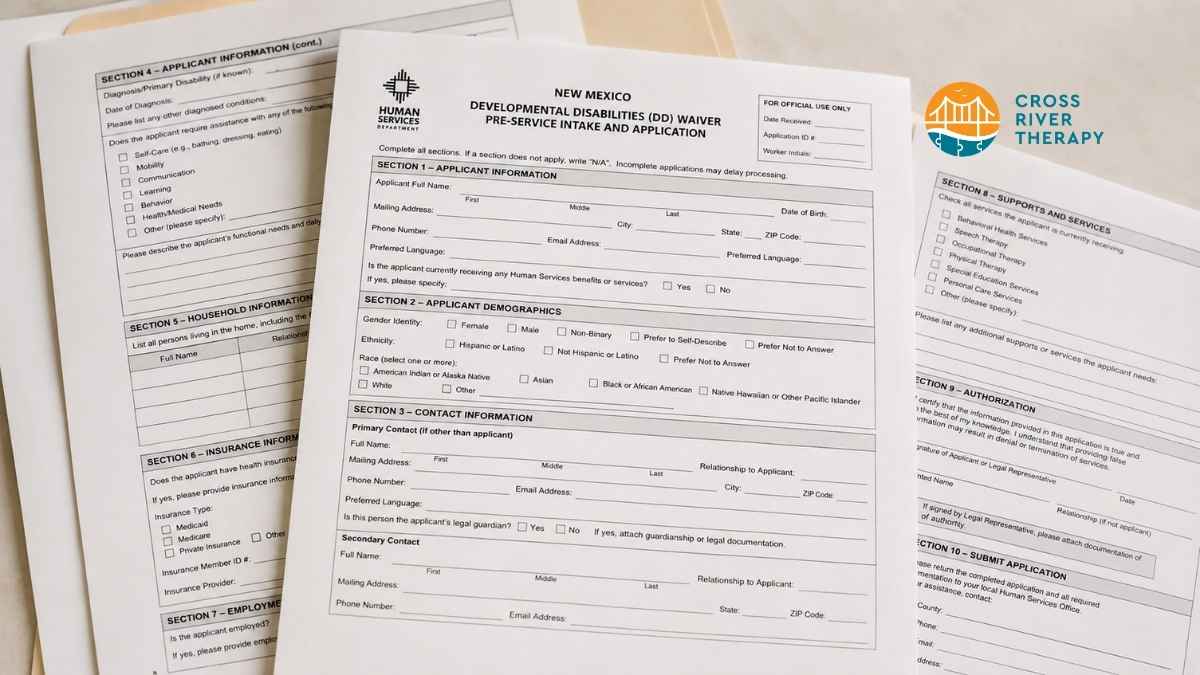
How to Apply for New Mexico’s DD Waiver While Starting ABA Therapy
Autism waiver New Mexico applications need DD Waiver records and proof of daily support needs. Your next step is to start ABA intake with Cross River.

Is ABA Therapy Covered by Insurance in New Jersey? What Every Parent Should Know
ABA therapy insurance New Jersey may cover medically necessary care based on plan type, network, and authorization. Verify benefits with Cross River.

How ABA Therapy Builds Communication for Nonverbal Children Without Forcing Speech
ABA therapy communication for nonverbal children starts with AAC, signs, and daily routines. See how kids ask, refuse, choose, and get help.

How to Start ABA Therapy in New Jersey With a First-Call Checklist
How to start ABA therapy in New Jersey begins with records, insurance details, and intake questions. Use this first-call checklist before you call.

How to Get an Autism Evaluation in Arkansas Before Starting ABA Therapy
How to get an autism evaluation in Arkansas starts with a referral, provider choice, and key records. Use this parent checklist before ABA intake.