








How ABA Therapy Supports Kids
Unlocking Potential: The Impact of ABA Therapy on Children's Development


Understanding How ABA Therapy Can Transform Children's Lives
Applied Behavior Analysis (ABA) is a scientifically supported approach that effectively helps children with autism acquire new skills, improve communication, and build independence. By focusing on individual needs and utilizing evidence-based techniques, ABA therapy not only reduces challenging behaviors but also fosters meaningful progress across various developmental domains. This article explores how ABA therapy works, its benefits, techniques, and the vital role of families, highlighting its importance in preparing children for school and life.
What Is ABA Therapy and How Does It Function?
What is ABA therapy and how does it function?
ABA therapy, or Applied Behavior Analysis, is a scientifically backed approach designed to help children with autism and other developmental challenges. It uses principles of learning and behavior science to teach new skills and reduce problematic behaviors.
The therapy is centered on understanding the connections between what happens before a behavior (antecedents), the behavior itself, and what comes after (consequences). This understanding helps therapists develop personalized plans that promote positive change.
ABA employs a variety of techniques, including positive reinforcement—rewarding desirable behaviors to encourage their recurrence. Common methods include Discrete Trial Training, which involves structured and repetitive teaching, and more naturalistic strategies like Pivotal Response Treatment that focus on key behaviors to influence broader skill development.
Assessment is the first step in ABA, where behavior analysts evaluate a child's strengths, challenges, and needs. Based on this, they set specific, measurable goals tailored to each child. These goals may focus on communication, social skills, self-care, or reducing behaviors like aggression.
Once goals are set, therapists create individualized treatment plans and use data collection to track progress. Regular monitoring allows for adjustments to strategies, ensuring that each child receives the most effective support.
Typically delivered by a Board Certified Behavior Analyst (BCBA), ABA involves ongoing assessment, training, and progress review. Its focus on scientific methods and personalized interventions has been proven effective in helping children improve essential skills and adapt better to their environments.
The Numerous Benefits of ABA Therapy for Children with Autism
What are the benefits of ABA therapy for children with autism?
ABA therapy provides many positive outcomes for children on the autism spectrum. It helps children develop crucial skills in communication and social interaction, making it easier for them to connect with family, friends, and peers.
Children trained with ABA techniques also see improvements in academic and daily living skills. Tasks such as dressing, grooming, asking for help, and participating in classroom activities become more manageable.
A primary aim of ABA is to reduce problem behaviors like tantrums or aggression. It does so by understanding what triggers these behaviors and introducing reinforcement strategies that promote positive alternatives.
Independence and emotional regulation are vital outcomes of ABA. Children learn to regulate their emotions, cope with transitions, and build resilience, which helps them adapt better to new environments and routines.
Early and tailored intervention, often extensive in hours weekly, can significantly boost developmental outcomes. Many children achieve enough skills through ABA that they can participate in mainstream settings, boosting their confidence and self-esteem.
Overall, ABA therapy is a scientifically validated approach designed to facilitate meaningful improvements that meet each child's unique needs, supporting their journey toward independence and social success.
Techniques and Methods Used in ABA Therapy
ABA therapy uses various techniques and methods to help children develop skills and reduce challenging behaviors. One common approach is positive reinforcement, which encourages desirable behaviors by rewarding them with praise, privileges, or tangible rewards like stickers or special activities.
Discrete Trial Training (DTT) is a structured method involving short, repeated teaching sessions where a specific skill is broken down into small steps. The therapist presents a clear instruction, waits for the child's response, and then provides reinforcement. This repetition and reinforcement help the child learn new skills effectively.
Naturalistic teaching methods focus on teaching skills in everyday settings through play and routine activities. These methods are less structured and allow children to learn in more natural and motivating situations, fostering social and communication skills.
Modeling, prompting, and fading are techniques that guide children to imitate behaviors. A therapist models the desired behavior, prompts the child to perform it, and gradually fades the prompts as the child gains independence. This process helps solidify new skills.
Behavior chaining involves teaching a sequence of behaviors by linking smaller steps into a complete task. Functional communication training (FCT) teaches children to express their needs and wants effectively, replacing problematic behaviors with appropriate communication.
Visual supports like picture schedules, charts, and social stories help children understand routines and expectations. Video modeling shows children videos of others performing targeted behaviors, which they can imitate afterward.
All these methods are tailored to each child's needs and are supported by evidence. When combined, they create a comprehensive program to enhance communication, social skills, and independence while reducing harmful behaviors.
Supporting Communication and Social Skills Development through ABA
How does ABA therapy support communication and social skills development?
ABA therapy plays a vital role in helping children enhance their communication and social abilities through personalized, evidence-based methods. It encourages expanding vocabulary and verbal skills by using visual aids, modeling behaviors, and engaging in social scenarios designed to teach practical language use. Children learn to build sentences and develop verbal operants, such as requests (mands) and labeling (tacts), which are essential for meaningful interaction.
To improve understanding of social cues and non-verbal communication, ABA utilizes social stories, role-playing, and video modeling. These techniques help children recognize body language, facial expressions, and social gestures, making them more aware of others’ feelings and intentions.
Reinforcing social behaviors like sharing, turn-taking, and making eye contact is a core part of ABA programs. Positive reinforcement encourages children to practice these skills regularly, promoting their use across different environments. This consistent practice helps children generalize these behaviors to school, home, and community settings.
Family participation is also crucial in ABA, as caregivers are taught strategies to reinforce social skills outside of therapy sessions. This ongoing involvement ensures that children can transfer learned skills to real-world situations, fostering independence and confidence. Overall, ABA supports the development of social competence, helping children build strong, positive relationships and navigate social interactions more effectively.
Building Independence and Emotional Regulation with ABA
In what ways does ABA therapy foster independence and emotional regulation?
ABA therapy plays a significant role in helping children develop essential skills for independence and emotional control. It starts with teaching daily living skills such as dressing, grooming, and eating, breaking these tasks into manageable steps and using positive reinforcement to encourage mastery. Through individualized programs, children learn routines and behaviors that promote autonomy.
To support emotional regulation, ABA incorporates visual supports like schedules, social stories, and visual cues that help children recognize and manage their feelings. Sensory strategies, such as calming activities or sensory diets, are also employed to help children regulate sensory input and reduce overwhelm.
ABA encourages self-management by teaching goal setting, self-monitoring, and problem-solving techniques. These skills enable children to recognize triggers, plan appropriate responses, and navigate challenges more effectively. For example, children might learn to use timers or visual aids to transition smoothly between activities.
Addressing challenging behaviors is another critical aspect of ABA. By understanding the causes of behaviors through functional assessment, therapists develop strategies that include relaxation techniques and sensory accommodations to promote emotional well-being. This comprehensive approach fosters resilience,allowing children to handle stress, adapt to new situations, and develop greater independence.
Overall, ABA's adaptable and personalized interventions empower children with autism to function more independently, regulate their emotions, and build lasting skills that support their growth and well-being.
Scientific Evidence Supporting ABA's Effectiveness

Numerous research studies and meta-analyses have established that ABA therapy is a scientifically supported approach for children with autism spectrum disorder (ASD). These studies highlight consistent improvements in social skills, communication abilities, and reduction in problematic behaviors following ABA intervention.
Research demonstrates that the benefits of ABA often become apparent after 12 to 24 months of consistent therapy. For many children, longer treatment durations correlate with more noticeable progress. Children starting with lower initial adaptive skills tend to show the greatest improvements, making ABA particularly effective for those with more significant developmental challenges.
Methodologically rigorous research, including randomized controlled trials and single-case experimental designs, underlines ABA's positive impact on various domains such as social participation, emotional regulation, and cognitive development. While outcomes related to core ASD symptoms may vary, the overall body of evidence supports ABA as an effective intervention, especially for fostering functional communication and social interaction.
Long-term studies further suggest that early intervention with ABA can lead to better developmental trajectories. The science behind ABA emphasizes targeted, data-driven strategies that adapt to individual needs, which is why it remains a preferred and validated approach endorsed by major health organizations.
For more detailed scientific findings, you can explore research by searching "Research on ABA therapy effectiveness." This body of evidence continues to validate ABA as an essential tool in improving quality of life and developmental outcomes for children with ASD.
The Role of Families and Caregivers in ABA Therapy

What is the role of family and caregivers in ABA therapy?
Families and caregivers are fundamental partners in ABA therapy. Their active involvement ensures that skills learned during sessions are practiced consistently across different settings, such as at home, school, and in community activities. By participating in therapy planning and implementation, they help foster natural environments where children can generalize new behaviors.
Training and educating caregivers about ABA principles empower them to support their child's developmental journey effectively. This knowledge allows them to reinforce positive behaviors, implement strategies, and respond appropriately to challenges.
Supporting children outside therapy sessions enhances progress. Caregivers help children practice communication skills, emotional regulation, and daily living routines, leading to more robust and lasting improvements.
Collaboration is vital. Regular communication between families and professionals ensures that interventions are tailored to each child's needs. When families provide feedback and share insights, therapists can adapt plans to maximize outcomes.
Active participation by families not only improves the child's skill acquisition but also promotes stronger family relationships and a sense of collective achievement. Involving caregivers in therapy helps set realistic goals, track progress, and celebrate successes, ultimately leading to more meaningful and sustainable development for children with autism.
Preparing Children for School and Everyday Life with ABA
How does ABA therapy prepare children with autism for school and life experiences?
ABA therapy plays a vital role in equipping children with autism for the challenges of school and daily life. It focuses on teaching communication, social, and self-care skills through evidence-based methods like positive reinforcement and personalized routines.
Children learn to express themselves, understand social cues, and perform everyday tasks such as dressing, eating, and grooming. These skills enable them to participate actively in classrooms and community settings.
ABA also helps manage behavioral challenges, improving emotional regulation and coping strategies. By addressing sensory sensitivities and promoting self-regulation, children can better handle transitions, new environments, and unexpected changes.
Early and individualized intervention builds a strong foundation for academic success and social integration. Programs involve families and educators, ensuring that learned skills are practiced across home, school, and community environments. This consistent reinforcement helps children generalize their skills, boosting their confidence and independence.
Ultimately, ABA prepares children with autism to navigate life with greater competence, resilience, and enjoyment—setting the stage for a more inclusive and supportive future.
Empowering Children Through Science-Based Approaches
ABA therapy stands as a proven, effective way to support children with autism in developing critical skills, reducing problematic behaviors, and gaining independence. The personalized, data-driven nature of ABA ensures that each child's unique strengths and challenges are addressed, maximizing developmental progress. With ongoing family involvement and collaboration among professionals, ABA not only fosters immediate improvements but also prepares children for a future of growth, learning, and social connection. Embracing this scientifically supported approach offers hope and tangible benefits to children and their families, paving the way for fuller participation in everyday life.
References
- Applied Behavior Analysis (ABA) | Autism Speaks
- How ABA Therapy Can Improve Your Child's Life
- How Can ABA Therapy Help a Child With Autism? | UTBS
- 5 Ways ABA Therapy Supports Children With Autism - PediaPlex
- 7 Surprising Benefits of ABA Therapy for Kids You Need to Know
- How ABA Therapy Prepares Kids for Life Experiences
- 5 Signs Your Child Needs ABA Therapy Support
- Applied Behaviour Analysis (ABA) and autistic children
- How ABA Therapy Can Support Your Child's Development
Recent News
Related articles

6 Arkansas Medicaid ABA Therapy Rules Families Need to Know
Arkansas Medicaid ABA therapy has age, diagnosis and approval rules. Families can check six requirements before care.
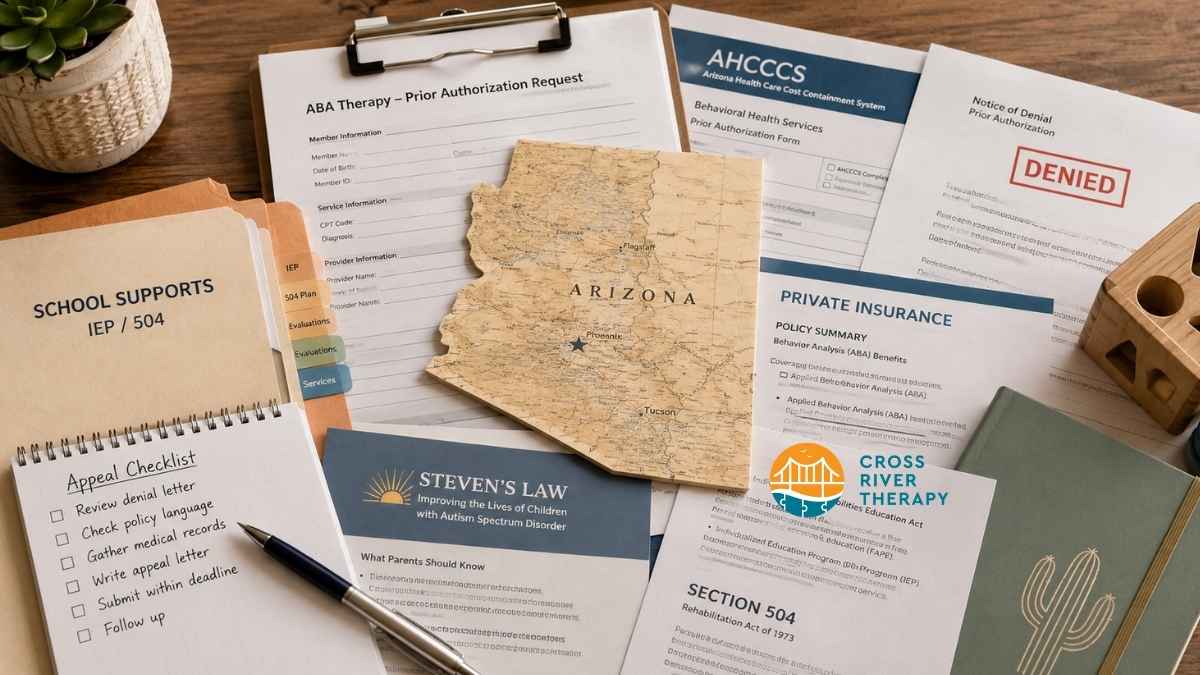
Arizona Autism Laws for ABA Coverage and School Rights
Arizona autism laws for ABA coverage vary by plan. Families can check insurance, appeal options, and school rights.

ABA Therapist Salary in Arkansas for RBTs and BCBAs
Compare ABA therapist salary in Arkansas by role. See how paid hours and benefits affect earnings before applying.

5 Autism Support Groups and Family Resources in New Mexico
Autism support groups in New Mexico connect families. Local resources offer events, parent support, and school help.

Where to Get an Autism Evaluation in New Mexico
Autism evaluation options in New Mexico include UNM and NMSU. Age and referral details help parents prepare.

7 North Carolina Autism Resources to Contact Before ABA Therapy Starts
Autism resources North Carolina families can call for diagnosis, early intervention, rights, and parent support. Start ABA intake with Cross River.

Does Indiana Medicaid Cover ABA Therapy? A Parent Checklist
Indiana Medicaid ABA therapy may cover care for eligible children. The checklist covers coaching and renewals.
How to Apply for the New Mexico DD Waiver
Your NM DD waiver application starts with state intake. The steps cover records, submission, and enrollment.

Does Insurance Cover ABA Therapy in New Jersey?
ABA therapy insurance in New Jersey varies by plan. Learn what NJ FamilyCare covers and how to check costs.

How ABA Therapy Builds Communication for Nonverbal Children Without Forcing Speech
ABA therapy communication for nonverbal children starts with AAC, signs, and daily routines. See how kids ask, refuse, choose, and get help.

How to Start ABA Therapy in New Jersey With a Checklist
Your guide explains how to start ABA therapy in New Jersey. A first-call checklist covers records and next steps.

How to Get an Autism Evaluation in Arkansas Before Starting ABA Therapy
How to get an autism evaluation in Arkansas starts with a referral, provider choice, and key records. Use this parent checklist before ABA intake.