








How Center-Based ABA Therapy Addresses Behavioral Challenges
Understanding the Impact of Center-Based ABA Therapy on Autism


An Overview of ABA Therapy's Role in Behavioral Management
Applied Behavior Analysis (ABA) therapy is renowned for its structured, evidence-based approach to addressing the behavioral challenges associated with Autism Spectrum Disorder (ASD). As a scientifically-backed method, ABA therapy focuses on both reducing maladaptive behaviors and promoting adaptive ones through individualized treatment plans. In recent years, the center-based paradigm of ABA therapy has gained traction due to its inherently structured environment that facilitates enhanced learning and development. This article aims to delineate how center-based ABA therapy effectively addresses behavioral challenges in children with autism.
Customizing Interventions for Individual Needs
How does ABA therapy help with behavior problems?
ABA therapy assists in managing behavior problems through a structured and evidence-based framework. By focusing on replacing maladaptive behaviors with more adaptive ones, it utilizes comprehensive strategies tailored specifically for each child with autism.
Key Components of ABA Therapy:
- Comprehensive Assessments: Initial evaluations identify specific behaviors needing attention.
- Personalized Behavior Intervention Plans (BIPs): Tailored strategies are developed based on individual assessments.
- Step-by-Step Goals: These plans outline clear, achievable objectives that resonate with the child’s strengths and preferences.
Integrating structured ABA techniques into daily routines allows children to practice skills in real-life contexts, reinforcing learning and leading to improvement in overall behavior. Moreover, the emphasis on parental involvement is crucial; caregivers are coached to implement strategies at home, enhancing consistency in support and practice.
The Importance of Customizing ABA Therapy
Customizing ABA therapy is essential for success. Each child comes with unique challenges and strengths, which is why individualized treatment plans are vital. This approach not only addresses the child's specific behaviors but also incorporates their interests, promoting engagement and motivation during sessions.
Benefits of Customization in ABA Therapy:
- Focused Attention: Tailored goals ensure that interventions are relevant and effective.
- Enhanced Outcomes: Children are more likely to succeed when strategies resonate with their daily experiences.
- Behavioral Insights: Understanding each child’s triggers helps therapists create targeted interventions that are functional and impactful.
Benefits of the Structured Center Environment
What are the benefits of center-based ABA therapy?
Center-based ABA therapy offers a unique environment for children to learn and grow. One of the primary advantages is the reduction of distractions. The structured setting minimizes external stimuli, allowing children to focus better on their developmental goals. This environment is designed to provide consistency and predictability, which is especially beneficial for children with Autism Spectrum Disorder (ASD).
Another significant benefit is the opportunity for peer interactions in ABA. In a center, children can engage with their peers, playing games and participating in group activities that enhance their social skills. This interaction not only fosters communication and relationship-building but also aids in developing emotional intelligence, as children learn to navigate social dynamics.
The role of Board Certified Behavior Analysts (BCBAs) and Registered Behavior Technicians (RBTs) is also crucial within this environment. These trained professionals ensure personalized, evidence-based interventions that are tailored to each child's needs. With the focused attention from specialists, children receive intensive, individualized therapy designed to yield the best outcomes.
In summary, center-based ABA therapy creates an engaging atmosphere that combines structured learning, peer interactions, and expert guidance, making it a highly effective treatment option for children with ASD.
Incorporating ABA in Educational Settings

How is ABA used in classroom practices to address behavior?
ABA techniques are frequently integrated into classroom practices to effectively manage behavior and enhance learning experiences. One foundational strategy is Positive Reinforcement, which encourages desirable behaviors by providing rewards or benefits when students meet specific expectations. This approach can significantly improve the classroom atmosphere, fostering a productive learning environment.
Another notable method is Discrete Trial Teaching (DTT). This technique breaks down complex skills into smaller, more manageable tasks, making learning less daunting for students. This is especially beneficial for children with Autism Spectrum Disorder (ASD) and can be used to teach academic, social, or life skills.
Naturalistic Teaching integrates learning into everyday situations by focusing on students’ interests, further enhancing engagement. This method helps students apply learned behaviors in real-world scenarios, promoting generalization of skills.
Additional ABA Techniques in the Classroom
- Pivotal Response Treatment (PRT) emphasizes critical aspects such as motivation and social interactions, improving communication skills among students.
- Token Economies are utilized to establish a system of rewards for positive behavior, enhancing motivation and engagement among students.
- Contingent Observation allows for teaching appropriate social behaviors through observation, enabling students to learn by watching others.
These methods not only benefit students with autism but also support those with a range of behavioral challenges, including ADHD and OCD, creating a nurturing and structured classroom environment.
Strategies for Addressing Challenging Behaviors

How does ABA therapy address challenging behavior?
ABA therapy employs a structured approach to understand and address challenging behavior by focusing on its underlying causes. The process begins with a Functional Behavior Assessment (FBA), which identifies the triggers and motivations behind specific behaviors. This assessment helps therapists gain insights to tailor interventions effectively.
Once the reasons for challenging behaviors are understood, Behavioral Skills Training (BST) comes into play. BST involves teaching alternative, desired behaviors systematically. Therapists break down targeted behaviors into smaller, manageable steps. They provide prompts and cues, guiding the individual in learning these new skills. Positive reinforcement is then leveraged to encourage the adoption of these behaviors, effectively reducing instances of the challenging behavior over time.
Another key aspect of ABA therapy is the implementation of positive reinforcement techniques. By rewarding desirable behaviors, therapists can increase the likelihood that these behaviors will recur. This method not only promotes a more positive behavioral change but also enhances the child's motivation to engage in learned skills.
Table: Strategies in ABA Therapy for Challenging Behaviors
Strategy Description Goal Functional Behavior Assessment (FBA) Analyzes the reasons behind challenging behaviors by identifying triggers and maintainers. To understand behavior dynamics. Behavioral Skills Training (BST) Teaches alternative behaviors through step-by-step interventions and prompts. To promote desired behaviors. Positive Reinforcement Techniques Rewards targeted behaviors to encourage their recurrence. To increase motivation and reduce challenging behaviors.
Family Involvement and its Role in ABA Success
How Does Family Training Enhance ABA Therapy?
Family training is an essential component of Applied Behavior Analysis (ABA) therapy. It equips families with the skills and strategies needed to support their child’s progress. By involving family members in training sessions, ABA therapists ensure that everyone understands the goals of the therapy and how to reinforce techniques at home. This consistency across environments enhances the effectiveness of the therapy.
How Can Families Reinforce Positive Behaviors at Home?
Parents and caregivers play a crucial role in reinforcing the positive behaviors learned during therapy. Simple strategies such as acknowledging and rewarding desired behaviors at home can greatly extend the learning process. Families are encouraged to use the same vocabulary and reinforcement strategies used in therapy sessions, promoting generalization of skills.
Why Is a Holistic Approach Important?
A holistic approach to autism care emphasizes the integration of all aspects of a child's life – including health, education, and family dynamics. By working collaboratively, families can develop a deeper understanding of their child’s needs, which is vital for long-term development. This approach also fosters a supportive environment that helps children thrive both in therapy and daily life, leading to better outcomes.
Aspect Importance Contributions to Success Family Training Empowers families for effective roles Ensures consistency in therapy techniques Reinforcement at Home Supports skill generalization Promotes engagement and motivation Holistic Care Approach Integrates various life aspects Enhances overall development and support
Comparing Center-Based and In-Home ABA Therapy
Environment Comparison
When considering Applied Behavior Analysis (ABA) therapy, the environment plays a crucial role. Center-based ABA therapy takes place in a structured setting designed to minimize distractions. This setting promotes a stable routine that helps children with Autism Spectrum Disorder (ASD) better focus on learning objectives. In contrast, in-home ABA therapy occurs within the child’s familiar surroundings, which can significantly reduce anxiety, making skill generalization easier in real-life situations.
Individual Needs Assessment
ABA therapy begins with a comprehensive assessment to create personalized treatment plans. Center-based therapy benefits from focused attention provided by a team of specialized staff, such as Board Certified Behavior Analysts (BCBAs) and Registered Behavior Technicians (RBTs). These professionals tailor interventions based on ongoing evaluations and data-driven insights. On the other hand, in-home therapy emphasizes immediate application, with therapists working closely with families to adapt strategies that fit seamlessly into daily routines.
Family Preferences
Family involvement is essential in both settings. In-home ABA allows for real-time observation and direct participation, fostering closer relationships and support. Center-based therapy typically involves structured communication with professionals, where parents receive updates on progress and strategies to reinforce learning at home. Ultimately, the choice between these therapies should reflect the child’s unique needs, goals, and family dynamics to ensure the most effective support.
Center-Based ABA: Emphasizing Skill Development
Social Skills Training
Center-based ABA therapy provides a structured environment that promotes social skills development among children with Autism Spectrum Disorder (ASD). In this setting, children have the opportunity to interact with their peers, practicing important skills such as sharing, taking turns, and effective communication. These interactions not only enhance their social intelligence but also build relationships, which are essential for overall social integration.
Communication Enhancements
Communication skills are a critical focus of center-based ABA therapy. Therapists employ various techniques to help children learn how to express their wants and needs, ask questions, and follow directions. By using positive reinforcement, children receive immediate feedback for their communication attempts, which encourages further engagement. This personalized coaching in a distraction-free environment facilitates faster learning and mastery of necessary communication skills.
Executive Function Improvement
Another essential area addressed in center-based ABA therapy is executive functioning. This includes skills like planning, organization, and task completion. Through structured routines and step-by-step guidance, children learn how to break down larger tasks into manageable components. By mastering these skills, they become more independent and capable of navigating daily challenges effectively.
Focus Area Description Benefits Social Skills Training Peer interactions for practicing sharing and communication Enhances friendships and emotional intelligence Communication Enhancements Techniques for expressing wants, needs, and following directions Improves engagement and effective communication Executive Function Improvement Strategies for planning, organization, and task completion Increases independence and daily living skills
Collaborative Practices in ABA Therapy

Multidisciplinary Approach
Applied Behavior Analysis (ABA) therapy thrives on a collaborative, multidisciplinary approach. This involves professionals from various fields working together to create a comprehensive treatment plan tailored to an individual’s needs. By integrating insights from specialists such as speech therapists, occupational therapists, and educators, ABA practitioners can address a wider range of behavioral and developmental challenges associated with Autism Spectrum Disorder (ASD).
Role of Therapists and Educators
In ABA therapy, therapists play a crucial role by implementing evidence-based strategies and monitoring progress. Board Certified Behavior Analysts (BCBAs) and Registered Behavior Technicians (RBTs) are equipped to analyze behaviors and adapt interventions as necessary. Working closely with educators, they ensure that behavior goals are aligned with academic objectives, allowing for a seamless integration of behavioral techniques into classroom settings. This collaboration facilitates the reinforcement of skills learned during therapy and enhances the educational experience for children with ASD.
Creating Individualized Education Plans
One of the key outcomes of this collaborative effort is the development of Individualized Education Plans (IEPs). These plans are designed to set specific, measurable goals tailored to the child’s unique learning style and needs. By engaging with families during this process, practitioners can incorporate insights about the child's preferences and strengths, leading to more effective interventions. IEPs not only guide academic instruction but also ensure that behavioral goals are addressed in a structured and meaningful way, fostering overall development and promoting independence.
Conclusion: The Comprehensive Approach of Center-Based ABA Therapy
The structured and supportive environment of center-based ABA therapy promotes significant positive outcomes for children with autism, addressing behavioral challenges effectively. Through individualized treatment plans, collaborative efforts, and active family involvement, ABA therapy has proven to be a cornerstone in autism care, enhancing communication, social skills, and independence. As families evaluate therapy options, understanding the strengths and methodologies of center-based ABA therapy can be crucial in making informed decisions that best meet their child's needs.
References
- Impact of Center-Based ABA Therapy Curriculum
- Center-Based ABA Therapy | Applied Behavioral Analysis
- Applied Behavior Analysis (ABA) | Autism Speaks
- What Challenges Can ABA Therapy Address in Autism Spectrum ...
- Choosing Between Home-Based and Center-Based ABA
- Center-Based vs. In-Home ABA Therapy - Lighthouse Autism Center
- ABA Therapy In-Home vs At a Center: 5 Key Differences
- The Role of ABA Therapy in Treating Challenging Behaviors
- Hello Center Based ABA Therapy - Peak Behavioral Services
Recent News
Related articles

6 Arkansas Medicaid ABA Therapy Rules Families Need to Know
Arkansas Medicaid ABA therapy has age, diagnosis and approval rules. Families can check six requirements before care.

Arizona Autism Laws for ABA Coverage and School Rights
Arizona autism laws for ABA coverage vary by plan. Families can check insurance, appeal options, and school rights.

ABA Therapist Salary in Arkansas for RBTs and BCBAs
Compare ABA therapist salary in Arkansas by role. See how paid hours and benefits affect earnings before applying.

5 Autism Support Groups and Family Resources in New Mexico
Autism support groups in New Mexico connect families. Local resources offer events, parent support, and school help.

Where to Get an Autism Evaluation in New Mexico
Autism evaluation options in New Mexico include UNM and NMSU. Age and referral details help parents prepare.

7 North Carolina Autism Resources to Contact Before ABA Therapy Starts
Autism resources North Carolina families can call for diagnosis, early intervention, rights, and parent support. Start ABA intake with Cross River.

Does Indiana Medicaid Cover ABA Therapy? A Parent Checklist
Indiana Medicaid ABA therapy may cover care for eligible children. The checklist covers coaching and renewals.
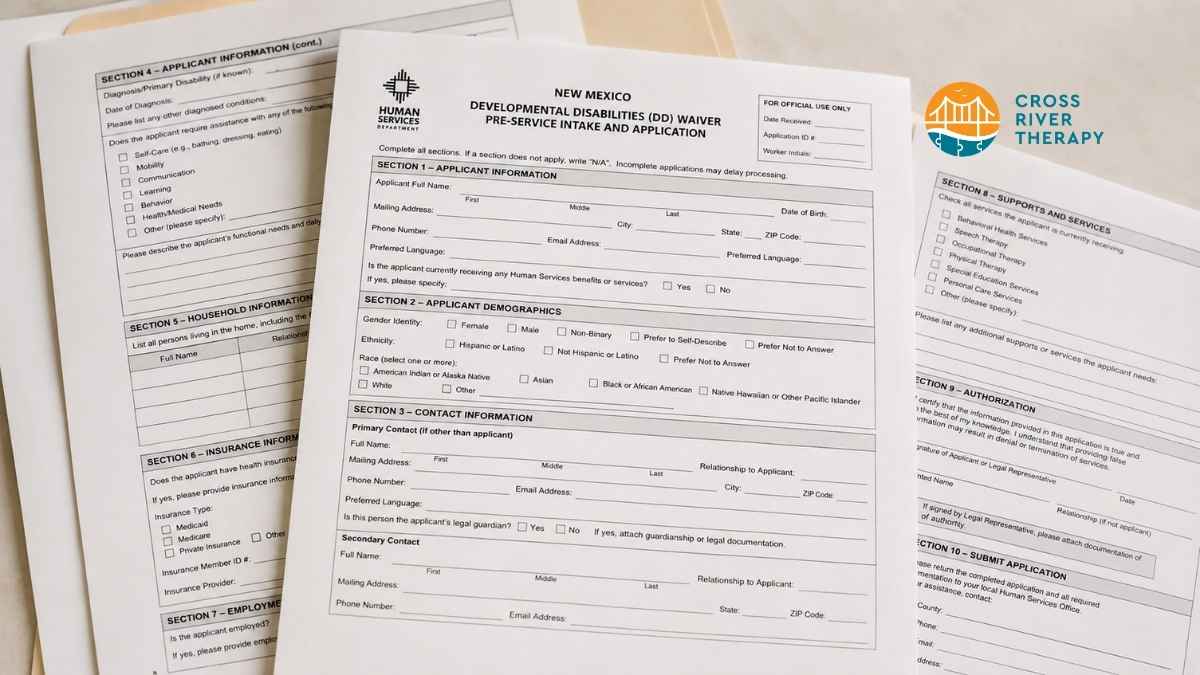
How to Apply for the New Mexico DD Waiver
Your NM DD waiver application starts with state intake. The steps cover records, submission, and enrollment.

Does Insurance Cover ABA Therapy in New Jersey?
ABA therapy insurance in New Jersey varies by plan. Learn what NJ FamilyCare covers and how to check costs.

How ABA Therapy Builds Communication for Nonverbal Children Without Forcing Speech
ABA therapy communication for nonverbal children starts with AAC, signs, and daily routines. See how kids ask, refuse, choose, and get help.

How to Start ABA Therapy in New Jersey With a Checklist
Your guide explains how to start ABA therapy in New Jersey. A first-call checklist covers records and next steps.

How to Get an Autism Evaluation in Arkansas Before Starting ABA Therapy
How to get an autism evaluation in Arkansas starts with a referral, provider choice, and key records. Use this parent checklist before ABA intake.