







How Center-Based ABA Therapy Helps with Social Skills Development
Unlocking Social Potential Through Center-Based ABA Therapy


Introduction to Center-Based ABA Therapy
Applied Behavior Analysis (ABA) therapy has become a cornerstone in assisting children with autism in acquiring vital social skills. Specifically, center-based ABA therapy presents a unique opportunity for enhancing these skills through tailored interventions in a structured setting. In this article, we explore how this environment promotes social development by providing children with diverse social interactions, trained therapist supervision, and intensive learning opportunities.
The Role of ABA Therapy in Social Skills Development

How does ABA therapy improve social skills?
ABA therapy plays a vital role in enhancing social skills by establishing a structured learning environment that focuses on effective communication and appropriate behaviors. This therapy incorporates various methodologies to target essential social skills, including:
- Conversational Skills: Children learn how to initiate and maintain conversations, allowing them to build connections with peers.
- Understanding Social Cues: ABA therapy helps children recognize non-verbal communication, such as body language and facial expressions, through techniques like video modeling.
- Social Interaction: Structured group activities promote turn-taking, participation, and overall engagement, which are essential for successful peer relationships.
What methodologies does ABA therapy employ?
ABA therapy utilizes several effective methodologies for social skills development:
- Role-Playing: Children practice real-life scenarios in a controlled setting, enhancing their confidence in social interactions.
- Positive Reinforcement: Therapists provide immediate praise or rewards when children exhibit appropriate social behaviors, reinforcing their motivation to engage.
- Comprehensive Assessments: Individualized programs are based on thorough evaluations which focus on each child's unique areas of strength and challenge, allowing tailor-made learning experiences.
How does the therapy impact communication and social interactions?
The impact of ABA therapy extends to various facets of communication and interaction:
- Enhanced Verbal and Non-Verbal Skills: Children gain the capacity to express their thoughts and emotions clearly, which fosters meaningful connections.
- Improved Emotional Intelligence: Strategies taught in ABA therapy enable children to identify and manage their emotions, promoting well-being and reducing social anxiety.
- Generalization of Skills: Skills acquired in therapy settings can be applied in different environments, ensuring children can successfully interact across various social contexts.
Through these methodologies, ABA therapy effectively supports children, especially those on the autism spectrum, to navigate social interactions and build strong relationships.
Advantages of Choosing Center-Based ABA Therapy
What are the benefits of center-based ABA therapy?
Center-based ABA therapy offers several compelling advantages for children, especially in cultivating essential social and communication skills. The structured learning environment is tailored to minimize distractions, enabling children to focus intensely on skill development. Sessions are designed to enhance interaction through group activities, where children learn critical skills like turn-taking and participation while engaging with peers.
Structured Learning Environment
In a center setting, children benefit from a controlled space that fosters emotional and social intelligence. By interacting with various peers and therapists, children practice sharing, communication, and problem-solving in real-time. The consistency of interactions and behavioral strategies leads to enhanced learning outcomes, as research shows children master significantly more skills in a center environment compared to home settings.
Access to Specialized Facilities and Equipment
The center provides specialized facilities equipped for various therapeutic activities. Children have access to diverse tools and resources designed to promote social interactions. This includes structured activities and role-playing scenarios that not only address their immediate social skill needs but also prepare them for real-life situations.
Intensive Interventions Compared to Home-Based Treatments
Intensive and focused interventions characterize center-based therapy. With tailored, one-on-one support alongside group sessions, children receive personalized attention aimed at their unique challenges. This intensity boosts motivation and accelerates skill acquisition, leading to greater success in emotional well-being and peer relationships.
Overall, center-based ABA therapy stands as a pivotal choice for families seeking robust, high-quality support for their children, capitalizing on the structured advantages it offers.
Comparing ABA Therapy to Other Therapeutic Approaches
How does ABA therapy compare to other therapies in improving social skills for autistic individuals?
ABA therapy stands out due to its systematic approach to behavioral reinforcement. This therapy utilizes evidence-based practices to break down social skills into smaller, manageable components, facilitating more effective learning. Fundamental to its success is the use of positive reinforcement, where immediate praise or rewards motivate children to practice and repeat appropriate social behaviors.
In contrast, Cognitive Behavioral Therapy (CBT) targets cognitive factors, helping children with social anxiety or negative thought patterns. While CBT is beneficial for addressing broader psychological issues, ABA focuses specifically on observable behaviors and social skills, providing children with practical tools for interaction.
What interactive strategies can complement ABA therapy?
Innovative strategies can further enrich the social skills training experience within ABA therapy. Some interactive methods include:
- Emotion Charades: A fun game that teaches children to recognize and express various emotions through gestures and role-playing.
- Social Storytelling: Narrative techniques that help children understand social scenarios and expected interactions.
- Role-playing exercises: Practicing dialogue in a safe environment helps children gain confidence in real-life situations.
Additionally, joining clubs and practicing conversational techniques outside of therapy sessions provides opportunities for real-world application. By combining ABA with these interactive strategies, caregivers can create a supportive environment that enhances social interaction and engagement in children, enabling them to build friendships and feel a sense of belonging.
Implementing Social Skills Training in Center-Based ABA Therapy
What specific strategies does center-based ABA therapy use to enhance social skills?
Center-based ABA therapy employs a combination of strategies to develop children's social skills effectively.
- Group Activities: Activities are organized to encourage turn-taking, participation, and social interaction with peers. This structure promotes not only teamwork but also the development of conversation skills and an understanding of social cues. These group sessions provide a platform for children to engage in active play, reinforcing their communication and sharing abilities.
- One-on-One Tailored Sessions: Individual sessions with a technician allow for personalized attention to target specific skill deficits. These sessions focus on practicing communication skills and leisure activities, ensuring each child's unique needs are addressed.
- Therapist-Driven Evaluations: Regular assessments are conducted to create individualized treatment plans. This comprehensive approach targets each child’s challenges, enabling targeted instruction based on their strengths and development needs.
The structured and distraction-free environment of center-based therapy is crucial, as it helps maintain focus during role-playing scenarios and social stories while also facilitating skill generalization in real-life contexts.
Strategy Focus Area Description Group Activities Interaction Skills Encourage turn-taking and teamwork among peers. One-on-One Sessions Tailored Skill Development Personalized attention to practice specific skills. Evaluations Individualized Treatment Plans Comprehensive assessments that guide targeted learning.
Ultimately, these methods foster emotional intelligence, conflict resolution, and cooperative learning among preschoolers, laying a strong foundation for future academic and social success.
Case Studies and Real-World Outcomes of Center-Based ABA
How effective is center-based ABA therapy in enhancing children's social skills?
Center-based ABA therapy has shown remarkable efficacy in improving children's social skills through structured, intensive programs that encourage interaction in controlled environments. Research indicates that children engage more effectively with peers in these settings, mastering skills at a rate significantly higher than in home environments. For instance, a 2017 study by the National Institute of Health found that children mastered 100% more skills per hour in center settings, showcasing the advantages of focused social skills training.
Peer interaction is a cornerstone of this therapy. Group activities, such as turn-taking exercises and collaborative projects, not only promote communication but also foster problem-solving skills. Children learn to engage in conversations, practice parallel play, and understand important social cues—key aspects of successful peer engagement.
Documented improvements in social skills
Many case studies underscore the success of center-based ABA in enhancing social skills among preschoolers. For example:
ChildInitial ChallengesOutcome Child A Difficulty initiating conversations Improved initiation and response Child B Struggled with turn-taking Mastered sharing and group play
These documented improvements demonstrate the significant gains children can achieve when given the right environment and structured support.
Long-term impact of early intervention
The long-term impact of early intervention through center-based ABA therapy is profound. Children are not only able to improve their immediate social skills but also develop foundational skills that support their emotional well-being and future relationships. As they progress in therapy, they learn to manage emotions, engage in cooperative learning, and follow directions, all of which contribute to their success in academic settings and social contexts.
Center-based ABA therapy equips children with essential social strategies, highlighting the importance of negotiation, compromise, and conflict resolution, which leads to healthier peer interactions as they grow.
Conclusion
Center-based ABA therapy represents a comprehensive approach to nurturing social skills in children with autism. By embracing structured methodologies, peer interactions, and personalized sessions, it offers an effective framework for addressing social challenges. The controlled environment and access to specialized resources provide a significant advantage in achieving better developmental outcomes. As such, center-based ABA therapy continues to be a leading option for families seeking to empower their children to thrive socially and academically.
References
- What to Expect from Center-Based ABA Therapy for Autism
- Why Center-Based ABA? - Behavior Matters LLC
- Developing Social Skills Through ABA Therapy for Autism
- Center-Based Benefits - Ally Behavior Centers
- Center-Based vs. In-Home ABA Therapy - Lighthouse Autism Center
- Building Social Skills Through Clinic-Based ABA Therapy: A Focus ...
- Powerful Social Skills: Effective Strategies for Stronger Connections
- 12 Simple Ways to Develop & Improve Your Social Skills - wikiHow
- Improve Your Social Skills with Professional Therapy
- research findings in depression, anxiety and other clinical challenges
Recent News
Related articles

6 Arkansas Medicaid ABA Therapy Rules Families Need to Know
Arkansas Medicaid ABA therapy has age, diagnosis and approval rules. Families can check six requirements before care.
Arizona Autism Laws for ABA Coverage and School Rights
Arizona autism laws for ABA coverage vary by plan. Families can check insurance, appeal options, and school rights.

ABA Therapist Salary in Arkansas for RBTs and BCBAs
Compare ABA therapist salary in Arkansas by role. See how paid hours and benefits affect earnings before applying.

5 Autism Support Groups and Family Resources in New Mexico
Autism support groups in New Mexico connect families. Local resources offer events, parent support, and school help.

Where to Get an Autism Evaluation in New Mexico
Autism evaluation options in New Mexico include UNM and NMSU. Age and referral details help parents prepare.

7 North Carolina Autism Resources to Contact Before ABA Therapy Starts
Autism resources North Carolina families can call for diagnosis, early intervention, rights, and parent support. Start ABA intake with Cross River.

Does Indiana Medicaid Cover ABA Therapy? A Parent Checklist
Indiana Medicaid ABA therapy may cover care for eligible children. The checklist covers coaching and renewals.
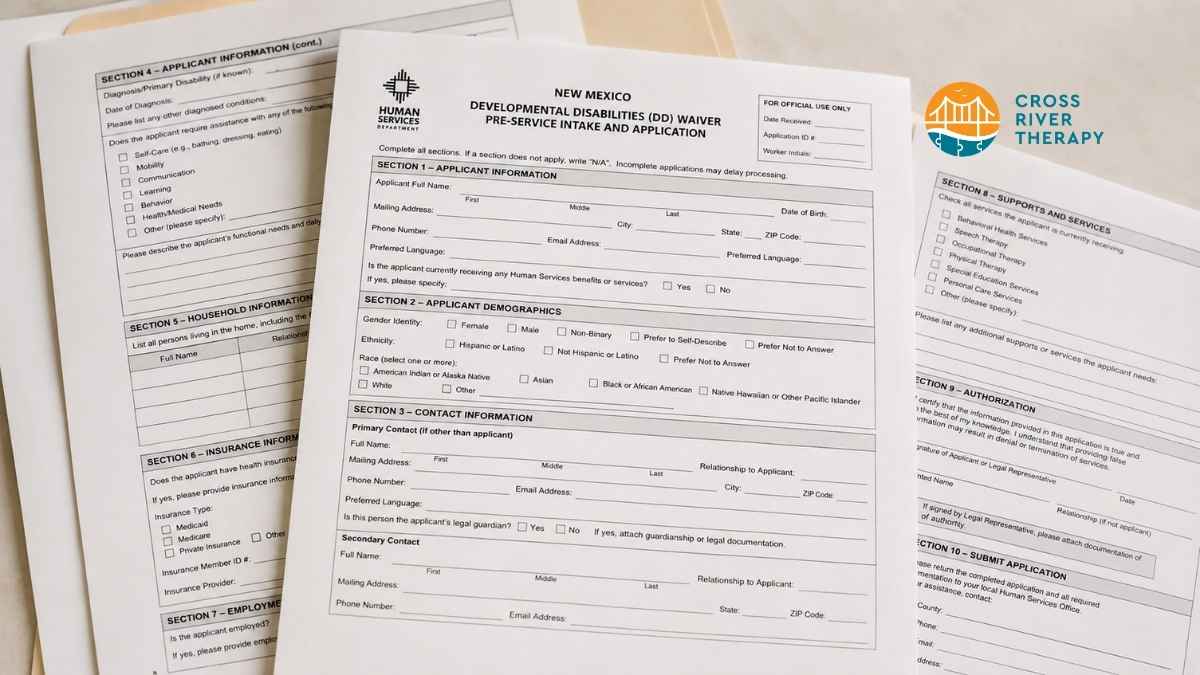
How to Apply for the New Mexico DD Waiver
Your NM DD waiver application starts with state intake. The steps cover records, submission, and enrollment.

Does Insurance Cover ABA Therapy in New Jersey?
ABA therapy insurance in New Jersey varies by plan. Learn what NJ FamilyCare covers and how to check costs.

How ABA Therapy Builds Communication for Nonverbal Children Without Forcing Speech
ABA therapy communication for nonverbal children starts with AAC, signs, and daily routines. See how kids ask, refuse, choose, and get help.

How to Start ABA Therapy in New Jersey With a Checklist
Your guide explains how to start ABA therapy in New Jersey. A first-call checklist covers records and next steps.

How to Get an Autism Evaluation in Arkansas Before Starting ABA Therapy
How to get an autism evaluation in Arkansas starts with a referral, provider choice, and key records. Use this parent checklist before ABA intake.