








How Parents Can Reinforce ABA Therapy Techniques at Home
Empowering Parents to Support ABA Therapy at Home


Introduction: The Role of Parents in ABA Therapy
Applied Behavior Analysis (ABA) therapy is a well-established approach for supporting individuals with Autism Spectrum Disorder (ASD) by improving behaviors and teaching new skills. While professional ABA sessions are crucial, the reinforcement of these techniques at home is equally important. This article explores practical ways parents can integrate ABA therapy techniques into their daily routines, providing their children with a structured environment that supports learning and development. By engaging in this collaborative effort, parents can enhance the effectiveness of ABA therapy and promote their child's progress.
Can Parents Conduct ABA Therapy at Home?

Effectiveness of Parental Involvement in ABA Therapy
Parents play a crucial role in the effectiveness of ABA therapy. By being actively involved, they can create a structured environment that mirrors therapy sessions. This helps to maintain consistency, a vital component for skill generalization. The strategies learned during therapy can be seamlessly integrated into daily routines, enhancing the learning process for their child.
Strategies for Reducing Challenging Behaviors
To mitigate challenging behaviors, parents can implement several strategies:
- Positive Reinforcement: Offering rewards like praise, tokens, or extra playtime immediately after a desired behavior.
- Visual Supports: Using visual schedules can help children understand and anticipate activities, reducing anxiety.
- Task Analysis: Breaking down complex tasks into smaller, manageable steps can make everyday chores feel less overwhelming.
Use of Telehealth Options
Telehealth options are increasingly available to support parents in conducting ABA therapy at home. Through virtual consultations, parents can receive valuable training from ABA professionals, enabling them to apply techniques effectively. This remote support ensures that parents can make informed decisions and adapt strategies to fit their child’s needs, ensuring continuous progress.
With a structured approach and parental involvement, conducting ABA therapy at home can be not only effective but also a rewarding experience for families.
Implementing ABA Therapy Techniques at Home

How can parents implement ABA therapy techniques at home?
Parents can effectively implement ABA therapy techniques in their daily routines by focusing on several essential strategies. A cornerstone of these strategies is positive reinforcement. This method involves rewarding desired behaviors, boosting the likelihood they will be repeated. Rewards can range from verbal praise to tangible incentives, like tokens or extra playtime. Identifying specific behaviors to encourage is crucial, as consistency in rewarding these actions helps reinforce them.
How to create a structured environment with visual aids?
A structured environment significantly benefits children with ASD. Parents should establish a consistent daily schedule, integrating visual aids such as charts or schedules to help children anticipate and understand their daily activities. These tools act as reminders and provide clarity, making it easier for children to follow routines and reducing anxiety.
How to model behaviors and track progress?
Modeling desired behaviors is another effective technique. By demonstrating actions or skills, parents can show their children what is expected, allowing them to learn through observation. Alongside modeling, tracking progress is vital. Parents should regularly assess how well these strategies are working, noting successes or challenges. This can involve keeping a simple log of behaviors and using progress monitoring tools, enabling adjustments to be made as necessary to foster ongoing growth.
Understanding and Utilizing Reinforcement in ABA Therapy

What types of reinforcement are beneficial for parents to use in ABA therapy?
In ABA therapy, various types of reinforcement are invaluable tools for parents aiming to motivate and help their children succeed.
- Social Reinforcement: This includes verbal praise, smiles, and physical affection. Not only does social reinforcement foster strong emotional connections, but it also enhances motivation by making children feel valued and understood.
- Tangible Reinforcers: Rewards such as toys or treats serve as incentives for positive behavior. These items can be used strategically to encourage children to engage in desired behaviors.
- Token Reinforcers: Employing behavior charts where children earn tokens for achievements provides a visual representation of success. This method can motivate children by turning abstract goals into tangible rewards that they can exchange for something they enjoy.
Timely and specific feedback is vital to maximizing the effectiveness of these reinforcements. For instance, instead of a general comment like “good job,” saying “I love how you shared your toys” reinforces the exact behavior desired.
Importance of consistency and timing
Consistency in reinforcement is crucial; children may become confused if rewards are given inconsistently. Using the 5 Steps Model of ABA, parents are encouraged to provide immediate reinforcements after the desired behavior occurs. This timing solidifies the connection between the action and its reward, helping children internalize positive behaviors.
Strengthening parent-child relationships
Positive reinforcement not only encourages children to repeat desired behaviors but also plays a significant role in strengthening parent-child relationships. Through consistent praise and rewards, parents build emotional intelligence and self-esteem in their children, paving the way for a more trusting and positive dynamic.
Overall, effectively utilizing reinforcement strategies in ABA therapy creates a supportive environment conducive to growth and learning for children.
Finding and Utilizing ABA Therapy Training Resources

Where can parents find ABA therapy training?
Parents looking for ABA therapy training have several resources at their disposal. Numerous online programs provide training specifically tailored for families. These platforms offer courses that cover foundational principles and practical techniques of Applied Behavior Analysis (ABA). Training may include methods to enhance behavior, communication, and social skills in children with Autism Spectrum Disorder (ASD).
Training programs vary widely in terms of cost. Many online resources offer free materials, while more comprehensive courses may charge fees. Completion times also differ, ranging from a few days for introductory content to several months or even a year for in-depth training. Additionally, structured resources can be found in the ABA Parent Training Plan, which helps parents integrate ABA strategies into daily routines effectively.
Benefits of training for family life
Implementing ABA methods can significantly enhance family dynamics. Training empowers parents with knowledge and techniques to foster their child's skill development. This not only facilitates better behavior management but also improves communication within the family. As parents gain confidence in applying ABA strategies, they contribute more meaningfully to their child's growth, ultimately leading to a positive impact on the overall quality of family life. Such collaborative approaches can reduce stress and create a nurturing environment conducive to learning.
ABA Therapy Tips for Parents

What are some ABA therapy tips for parents?
Here are some practical ABA therapy tips for parents to help facilitate their child’s learning and development at home:
- Use Reinforcement Techniques
Implement consistent reinforcement strategies, both positive and negative. Positive reinforcement—such as verbal praise, allowing extra playtime, or tokens that can be exchanged for rewards—can motivate children to repeat desired behaviors. Negative reinforcement can also be applied judiciously to reduce undesirable behaviors by removing an unpleasant stimulus. - Incorporate Video Modeling and Prompting
Video modeling can be especially effective for visual learners. By watching scenarios that demonstrate appropriate behaviors, children can better understand expectations. Additionally, use prompting techniques, such as physical or verbal cues, to assist your child in completing tasks or instructions effectively. Gradual fading of these prompts can encourage independence. - Maintain Communication with Therapists
Open lines of communication with your ABA therapist are crucial. Regularly discuss your child's progress and any challenges faced. This collaboration helps tailor strategies to meet specific needs and ensure goals are aligned. Collect data to track progress and adjust techniques as necessary. - Establish a Structured Routine
Consistency is vital in ABA therapy. A structured daily schedule mirrored with ABA sessions can help provide predictability, minimizing anxiety and promoting better compliance. Visual schedules also aid in easing transitions and preventing tantrums, creating a more supportive learning environment. - Practice Patience and Self-Care
Supporting a child through ABA therapy can be challenging. It's vital to practice patience and prioritize self-care, allowing you to be a positive and supportive presence in your child's development. Celebrate small successes and maintain a positive atmosphere during both learning and play.
Creating a Structured Home Environment
How Can a Structured Home Environment Reinforce ABA Techniques?
A structured home environment can significantly reinforce ABA techniques by providing consistency and predictability. This stability is crucial for children with autism, who often thrive when they know what to expect. By establishing clear routines and designated learning spaces, caregivers can greatly reduce distractions and anxiety, enhancing focus during therapy sessions.
Visual supports play a vital role in this structured environment. Tools like daily schedules and visual prompts allow children to anticipate their activities. When they know what comes next, learning becomes more straightforward and manageable.
Importance of Routine for Children with ASD
Creating and adhering to a consistent daily routine is key for children with ASD. A predictable schedule helps them understand their environment and what is expected of them, which can lead to better compliance and reduced anxiety.
Use of Visual Supports and Reinforcement
Visual aids are effective in making the abstract concept of time more tangible. Parents can employ tools such as:
- Visual schedules for daily tasks.
- Charts for tracking progress and rewards.
- Color-coded systems for different activities.
Integrating positive reinforcement into these routines can further encourage desired behaviors. Simple rewards, whether through praise or tokens, help children associate good behavior with positive outcomes.
Enhancing Independence and Skill Generalization
To build independence, parents should break tasks into smaller, manageable steps. This approach helps children master activities gradually, such as daily chores or self-care routines.
Opportunities for skill generalization can be developed by encouraging children to practice newly learned skills across different settings, like using social skills during playdates or chores. This multifaceted practice helps solidify their understanding and application of these skills in various situations.
A well-organized, structured home environment tailored to a child’s unique needs fosters their independence and confidence in learning.
Conclusion: The Path Forward
Parents play a pivotal role in the success of ABA therapy by integrating its principles into the home environment. By actively participating in training, employing positive reinforcement, and maintaining a structured environment, they can significantly enhance the learning experiences of their children with ASD. Collaboration with professionals and continuous adaptation of strategies further bolster the efficacy of these efforts. Ultimately, parents who embrace their role in their child's ABA therapy journey foster a nurturing environment that not only supports developmental progress but also empowers their children to thrive in various life situations.
References
- How to Incorporate ABA Therapy at Home - Surpass Behavioral Health
- 7 Ways Families Can Reinforce ABA Therapy at Home
- Home-based ABA Therapy: A Comprehensive Guide
- Continuing ABA Therapy and Autism Therapy at Home as a Parent
- What Parents Do During In-Home ABA Therapy: Insights & Tips
- ABA Therapy Strategies to Use at Home - MySpot
- Effective ABA Therapy Activities to do at Home
- Parental Role in ABA Therapy - Reinforcing Progress at Home
Recent News
Related articles

6 Arkansas Medicaid ABA Therapy Rules Families Need to Know
Arkansas Medicaid ABA therapy has age, diagnosis and approval rules. Families can check six requirements before care.

Arizona Autism Laws for ABA Coverage and School Rights
Arizona autism laws for ABA coverage vary by plan. Families can check insurance, appeal options, and school rights.

ABA Therapist Salary in Arkansas for RBTs and BCBAs
Compare ABA therapist salary in Arkansas by role. See how paid hours and benefits affect earnings before applying.

5 Autism Support Groups and Family Resources in New Mexico
Autism support groups in New Mexico connect families. Local resources offer events, parent support, and school help.

Where to Get an Autism Evaluation in New Mexico
Autism evaluation options in New Mexico include UNM and NMSU. Age and referral details help parents prepare.

7 North Carolina Autism Resources to Contact Before ABA Therapy Starts
Autism resources North Carolina families can call for diagnosis, early intervention, rights, and parent support. Start ABA intake with Cross River.

Does Indiana Medicaid Cover ABA Therapy? A Parent Checklist
Indiana Medicaid ABA therapy may cover care for eligible children. The checklist covers coaching and renewals.
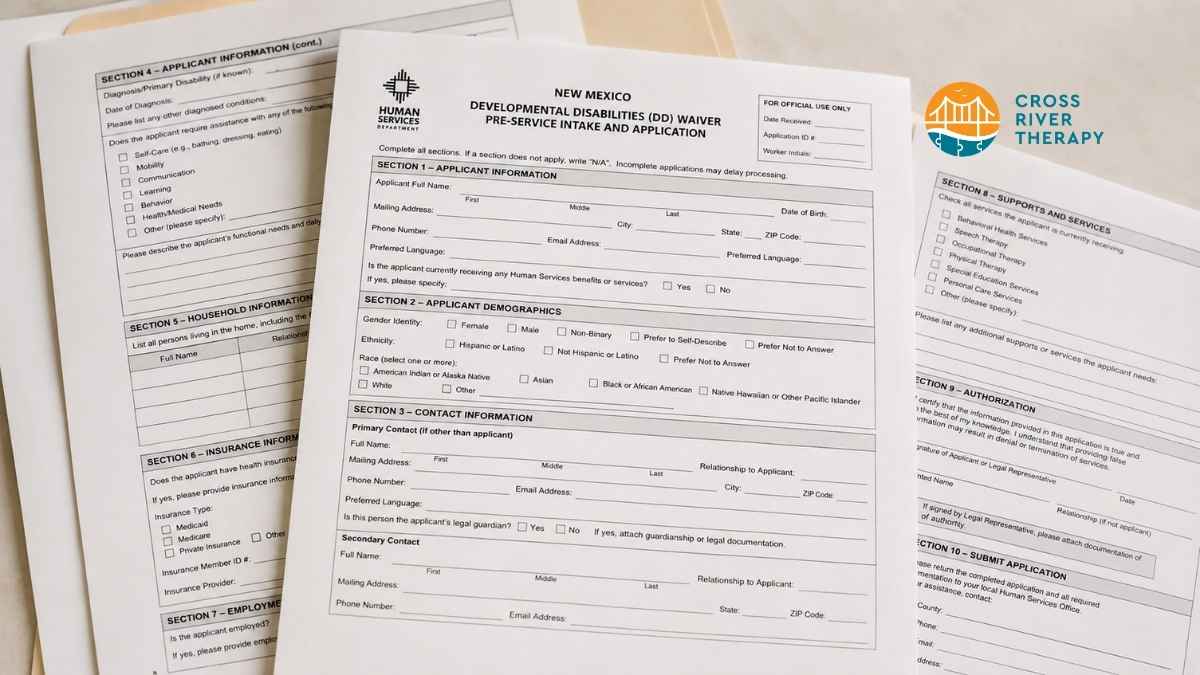
How to Apply for the New Mexico DD Waiver
Your NM DD waiver application starts with state intake. The steps cover records, submission, and enrollment.

Does Insurance Cover ABA Therapy in New Jersey?
ABA therapy insurance in New Jersey varies by plan. Learn what NJ FamilyCare covers and how to check costs.

How ABA Therapy Builds Communication for Nonverbal Children Without Forcing Speech
ABA therapy communication for nonverbal children starts with AAC, signs, and daily routines. See how kids ask, refuse, choose, and get help.

How to Start ABA Therapy in New Jersey With a Checklist
Your guide explains how to start ABA therapy in New Jersey. A first-call checklist covers records and next steps.

How to Get an Autism Evaluation in Arkansas Before Starting ABA Therapy
How to get an autism evaluation in Arkansas starts with a referral, provider choice, and key records. Use this parent checklist before ABA intake.