








How School-Based ABA Therapy Helps Students Thrive
Unleashing Potential: The Role of ABA in Educational Success


Introduction to ABA in Schools
Applied Behavior Analysis (ABA) therapy is increasingly being integrated into school settings to support students, especially those with Autism Spectrum Disorder (ASD). This therapeutic approach helps in addressing both academic and social challenges by modifying behavior through evidence-based strategies. By focusing on enhancing communication, social skills, and behavior management, ABA therapy aims to foster a supportive and inclusive learning environment for all students.
Understanding School-Based ABA Therapy
What does ABA therapy look like in a school setting?
ABA therapy in a school setting is tailored for children with autism spectrum disorder (ASD) to provide individualized support throughout their academic day. This therapy employs evidence-based strategies designed to enhance academic performance, social interactions, and behavioral skills.
Trained professionals, such as Board Certified Behavior Analysts (BCBAs) and Registered Behavior Technicians (RBTs), work directly within the classroom. They assess students' needs through Functional Behavior Assessments (FBAs) to develop targeted interventions. Key concepts of these interventions include breaking down tasks, using visual aids, and implementing structured behavior management techniques.
Moreover, therapists use methods like role-playing and peer modeling to enhance communication and relationship-building skills in students. For instance, they might facilitate peer interactions to foster natural social engagement.
Role of professionals in ABA therapy
The professionals involved in ABA therapy play a crucial role in ensuring effective implementation. Their responsibilities include:
- Behavior Assessments: Conducting FBAs to identify challenges.
- Individualized Plans: Collaborating with teachers to design customized behavior intervention plans.
- Monitoring Progress: Utilizing measurable outcomes to track student progress.
- Training: Educating teachers and parents on ABA techniques to support continued learning.
This collaboration creates a supportive environment where interventions can be seamlessly integrated into daily routines, including transitioning between activities.
Collaboration with teachers and parents
Collaboration is essential for the success of ABA therapy in schools. Teachers and parents become integral partners, ensuring that support strategies are consistent and effective. This teamwork helps in:
- Monitoring Behaviors: Observing and reporting on student progress across different settings.
- Continuity of Care: Aligning therapeutic strategies between home and school.
- Training and Education: Participating in training programs that equip families and educators with the necessary skills to reinforce learned behaviors.
Through this unified effort, students benefit from an inclusive education that promotes independence and fosters a successful learning experience.
How ABA Therapy Supports Student Development
How does ABA therapy support student development in academic and social contexts?
ABA therapy helps students excel in academic and social arenas through a personalized approach tailored to each child's needs. By implementing Functional Behavior Assessments (FBAs), educators can identify specific behaviors that may impede learning. These assessments allow for the creation of individualized behavior intervention plans, which address unique challenges and promote positive behavioral changes.
Elevated academic success is achieved through techniques like breaking down tasks, using visual aids, and applying structured behavior management strategies. Such measures enhance student engagement and help them focus better, thus facilitating academic progress. Furthermore, targeted social skills interventions—including role-playing activities and peer modeling—enhance students' abilities to communicate and build relationships with their classmates.
Collaboration among educators, therapists, and families plays a crucial role in this process. It ensures that strategies applied in therapy are consistent with those in the classroom, creating a cohesive learning environment. With ABA therapists consulting educators, the integration of therapeutic practices into daily routines empowers children with autism to thrive academically and socially.
In conclusion, ABA therapy enriches students' learning experiences by enhancing their communication, social interactions, and behavior management skills. This comprehensive support not only promotes independence but also prepares them for future educational opportunities.
Goals and Objectives of School-Based ABA Therapy
What are the goals of school-based ABA therapy?
The primary objectives of school-based Applied Behavior Analysis (ABA) therapy are to support students, particularly those with autism, in achieving academic, behavioral, and social success. This therapy targets behaviors crucial for the school environment, providing individualized support across various settings. The goals include:
- Improving Academic Performance: By focusing on task completion and engagement strategies, ABA therapy aids in academic progress.
- Enhancing Social Skills: Techniques like role-playing and modeling promote communication and peer interactions.
- Encouraging Independence: Students are taught to manage their own learning and behaviors, fostering self-regulation.
- Developing Life Skills: Therapy helps in preparing students for future opportunities by building essential everyday skills.
Strategies and tools used in ABA therapy.
ABA therapy implements several techniques and tools to achieve its goals:
- Positive Reinforcement: Encourages desirable behaviors by rewarding successes.
- Functional Behavior Assessments (FBAs): Identify triggers for challenging behaviors, allowing for tailored intervention plans.
- Task Breakdown and Visual Aids: These strategies simplify learning processes, aiding comprehension and task management.
- Collaboration with Educators: Ensures that intervention strategies integrate smoothly into classroom dynamics.
Training for educators in ABA techniques.
Educator training is vital for the effective implementation of ABA strategies. Training programs enable teachers to:
- Understand Individual Needs: By learning about autism and its impact on learning, teachers can provide better support.
- Implement Behavior Management Techniques: Strategies learned can help minimize disruptive behaviors in the classroom.
- Collaborate Effectively: Working alongside ABA therapists enhances the consistency of interventions across environments.
Overall, school-based ABA therapy not only addresses immediate academic and behavioral challenges but also emphasizes long-term development, contributing to a more inclusive educational experience.
Empowering Students through ABA Techniques

How does ABA help students?
Applied Behavior Analysis (ABA) assists students, particularly those with Autism Spectrum Disorder (ASD), in mastering critical skills for everyday life and social interactions. The therapy systematically breaks down complex behaviors into smaller, manageable steps. By implementing a reward system, it reinforces positive behaviors and learning experiences, accommodating each child's individual pace.
Research highlights that the earlier the intervention—ideally between ages 2 and 6—the more effective ABA is in enhancing communication skills and the ability to follow directions. ABA methodologies integrate structured work time with play activities, ensuring a balanced learning environment.
Family involvement is a cornerstone of effective ABA programs, with techniques such as Discrete Trial Training and Pivotal Response Training employed to foster learning. Continuous data collection allows educators to monitor progress meticulously and make necessary adjustments, ensuring that interventions are consistently tailored to meet each student's unique needs.
Additional Benefits of ABA
Benefits of ABA Covered Description Impact on Students Behavior Modification Uses positive reinforcement to encourage desirable behaviors. Improved engagement in classroom activities. Skill Acquisition Teaches critical life skills and social interactions through personalized techniques. Enhanced ability to communicate and build relationships. Parental Involvement Involves families in the learning process for consistent reinforcement at home and school. Encouraged skill generalization across environments.
These structured ABA techniques not only empower students academically but also cultivate their social skills, fostering a more inclusive learning atmosphere.
Navigating School Transitions with ABA Support
What role does ABA play in managing school transitions?
ABA therapy plays a crucial role in helping children with autism effectively transition into new school environments. By focusing on strategies that enhance predictability, ABA can significantly reduce anxiety surrounding these transitions.
Early intervention through ABA sets a solid foundation for success, fostering essential developmental skills and enhancing communication capabilities. This is often supplemented by speech therapy, ensuring children can express their needs and navigate social interactions.
Collaboration is vital when creating a tailored transition plan. Families, educators, and ABA professionals work together to familiarize the child with their new setting. Activities may include visiting the school, meeting teachers, and practicing routines.
Transition strategies
Moreover, ABA employs structured behavior management techniques, emphasizing the importance of consistent routines and expectations. Practicing these skills at home allows children to become more comfortable with school demands. For instance, role-playing can mimic classroom situations, easing anxiety and reinforcing learning, which facilitates smoother transitions.
Reducing anxiety
To further alleviate anxiety, ABA strategies utilize visuals aids and coping mechanisms. These tools equip children with the means to manage stress effectively, allowing them to adapt to changes in a supportive manner.
Role of collaboration
Ultimately, the success of ABA during transitions hinges on effective collaboration among parents, educators, and therapists, ensuring that support aligns with the child’s educational journey. This cooperative approach not only helps children adjust to new routines but also reinforces skills learned throughout therapy, preparing them for future opportunities.
Holistic Development and Future Opportunities through ABA

What are the long-term benefits of ABA therapy?
School-based ABA therapy supports students with autism not just in their immediate academic pursuits, but also promotes their long-term development. By fostering skills such as emotional regulation and effective communication, students are better prepared for future interactions in both social and professional settings.
How does ABA contribute to life skills development?
ABA therapy emphasizes crucial life skills that are foundational for independent living. Students learn:
- Self-regulation: Managing emotions and behaviors in various situations.
- Task completion: Following through on responsibilities, whether in school or at home.
- Social skills: Developing healthy relationships and enjoying peer interactions.
In what ways does ABA promote social and emotional growth?
By incorporating social skills interventions like role-playing and peer modeling, ABA helps children understand social cues and engage meaningfully with others. These interactions enhance their confidence and emotional intelligence, creating resilient individuals adept at navigating various environments. Overall, these improvements contribute to a more inclusive and supportive atmosphere for all students.
Conclusion: Embracing ABA for a Better Educational Experience
School-based ABA therapy is a powerful tool for unlocking students' potential, particularly for those with autism. By emphasizing individualized interventions, collaboration among professionals, and family involvement, ABA therapy creates a supportive environment that encourages academic success and social inclusion. The positive impacts are profound, equipping students with crucial skills for their educational journey and beyond, ensuring they are prepared for future opportunities and life challenges.
References
- School-Based ABA Therapy: Boosting Learning and Behavior
- ABA Therapy in Schools: School-Based ABA Services
- ABA Therapy: Helping Kids with Autism Thrive at School
- School-Based ABA Services - Behavioral & Academic Support
- ABA Therapy at School: A Game-Changer for Children with Autism
- ABA Therapy in Schools: School-Based ABA Services
- ABA Services: Autism Therapy Services for Children
Recent News
Related articles

6 Arkansas Medicaid ABA Therapy Rules Families Need to Know
Arkansas Medicaid ABA therapy has age, diagnosis and approval rules. Families can check six requirements before care.
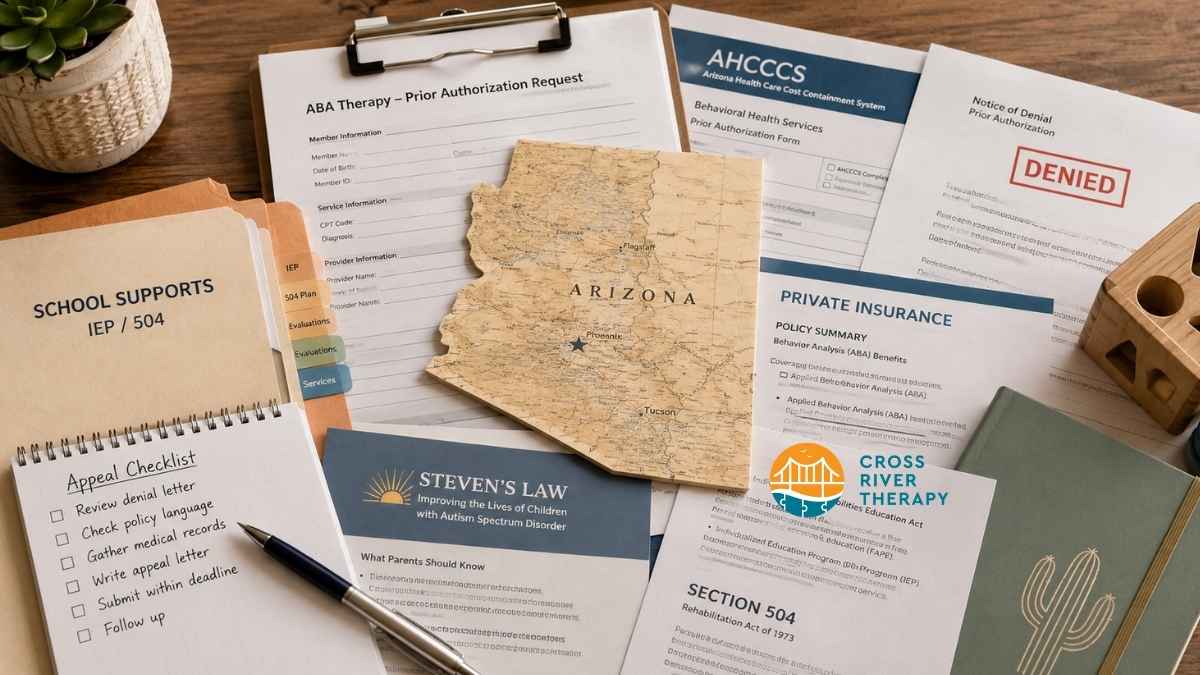
Arizona Autism Laws Every Parent Should Know Before Starting ABA Therapy
Autism laws Arizona parents should know cover ABA insurance, AHCCCS appeals, IEPs, and Section 504 rights. Check ABA coverage with Cross River.

ABA Therapist Salary in Arkansas: What BCBAs and RBTs Actually Earn in 2026
ABA therapist salary Arkansas figures compare RBT and BCBA rates, benefits, guaranteed hours, and contract terms. Explore careers at Cross River.

5 Autism Support Groups and Family Resources in New Mexico Alongside ABA Therapy
Autism support groups New Mexico families can use offer peer support, local events, and school help. Cross River can explain ABA therapy options.

Where to Get an Autism Evaluation in New Mexico Before Starting ABA Therapy
Autism evaluation New Mexico options include UNM, NMSU, FIT, and private providers. Compare providers, records, and ABA steps with Cross River.

7 North Carolina Autism Resources to Contact Before ABA Therapy Starts
Autism resources North Carolina families can call for diagnosis, early intervention, rights, and parent support. Start ABA intake with Cross River.

Does Indiana Medicaid Cover ABA Therapy? A Step-by-Step Eligibility Checklist for Parents
Medicaid ABA therapy Indiana covers eligible children under 21 with prior authorization. Your five-step coverage review can start with Cross River.

How to Apply for New Mexico’s DD Waiver While Starting ABA Therapy
Autism waiver New Mexico applications need DD Waiver records and proof of daily support needs. Your next step is to start ABA intake with Cross River.

Is ABA Therapy Covered by Insurance in New Jersey? What Every Parent Should Know
ABA therapy insurance New Jersey may cover medically necessary care based on plan type, network, and authorization. Verify benefits with Cross River.

How ABA Therapy Builds Communication for Nonverbal Children Without Forcing Speech
ABA therapy communication for nonverbal children starts with AAC, signs, and daily routines. See how kids ask, refuse, choose, and get help.

How to Start ABA Therapy in New Jersey With a First-Call Checklist
How to start ABA therapy in New Jersey begins with records, insurance details, and intake questions. Use this first-call checklist before you call.

How to Get an Autism Evaluation in Arkansas Before Starting ABA Therapy
How to get an autism evaluation in Arkansas starts with a referral, provider choice, and key records. Use this parent checklist before ABA intake.