








How social validity is measured in ABA therapy
Assessing the Impact of ABA Therapy Through Social Validity


Understanding Social Validity within ABA Therapy
Applied Behavior Analysis (ABA) therapy is a cornerstone approach in autism treatment, aiming to improve social, communication, and adaptive skills. However, its effectiveness goes beyond clinical outcomes; measuring social validity—the acceptance and meaningfulness of treatment goals and methods by individuals and their caregivers—ensures that therapy truly benefits those it serves. This article explores how social validity is measured in ABA therapy and its critical role in shaping treatment success.
Defining Behavioral Analysis Therapy for Autism
What is social validity in behavior analysis?
Social validity in behavior analysis refers to the importance and acceptability of treatment goals, methods, and outcomes from a social perspective. It ensures that the behaviors targeted for change are meaningful and valuable to the individual and their community, and that the procedures used are both respectful and effective.
Why involve individuals and caregivers in treatment goals?
The involvement of individuals receiving therapy and their caregivers in setting treatment goals is essential to ensure social validity. When people have a say in what behaviors are targeted and how progress is measured, the treatment aligns better with their values and everyday life. This collaboration increases motivation and the likelihood that positive changes will be maintained.
How are assessments adapted to enhance social validity?
Functional analysis (FA) assessments, which identify the causes of problem behaviors, can be adapted to occur in natural settings rather than clinical environments. This naturalistic approach makes assessments more relevant to the individual's daily life, improving the accuracy of identifying behavioral functions and ultimately leading to more socially valid interventions.
What treatments support social validity?
Treatments based on the results of FA, such as functional communication training (FCT), are effective in reducing problem behaviors. These interventions teach alternative communication skills that replace challenging behaviors, and they are generally preferred by both clients and caregivers because they improve quality of life.
How is generalization and caregiver training important?
Maximizing social validity also involves ensuring that treatment effects generalize to real-world environments beyond the therapy setting. Training caregivers to implement procedures helps maintain progress over time and supports consistent use of effective strategies, thereby enhancing the acceptability and practical impact of the interventions.
Who Provides Behavioral Analysis Therapy for Autism?
Qualified Professionals Delivering ABA
Behavioral analysis therapy for autism is usually provided by professionals who have specialized training in applied behavior analysis (ABA). Board Certified Behavior Analysts (BCBAs) are among the most common providers. These experts design and implement treatment plans based on detailed assessments of each individual's behaviors. Licensed therapists with ABA training also deliver these services.
Settings Where ABA is Provided
ABA therapy can happen in various environments including clinics, schools, and the individual's home. This flexibility allows treatment to be adapted to natural settings, making the interventions more relevant and effective.
Role of Caregivers and Families
Caregivers and family members play a vital role in ABA therapy. They are often involved in setting treatment goals to ensure that interventions are meaningful and socially acceptable. Training caregivers to implement ABA techniques at home supports generalization of skills and maintains treatment gains.
Insurance and Accessibility Considerations
Many insurance plans and Medicaid programs cover ABA therapy when it is deemed medically necessary. Families seeking services often work with healthcare providers to find qualified professionals, ensuring access to effective and evidence-based treatments.
| Aspect | Details | Notes |
|---|---|---|
| Providers | BCBAs, licensed therapists | Specialized ABA training required |
| Settings | Clinics, schools, home | Enables treatment in naturalistic environments |
| Family Role | Collaborate on goals, implement treatments | Enhances social validity and generalization |
| Insurance Coverage | Often covered by insurance and Medicaid | Coverage depends on medical necessity and location |
How ABA Therapy Supports Individuals with Autism
How does behavioral analysis therapy help individuals with autism?
Behavioral analysis therapy, particularly Applied Behavior Analysis (ABA), plays a crucial role in helping individuals with autism by promoting positive behavior change and skill development. ABA uses systematic, evidence-based interventions designed to increase useful behaviors and decrease problematic ones.
Positive behavior change through ABA
ABA therapy helps reduce challenging behaviors by identifying their causes using techniques like functional analysis (FA). This process evaluates behaviors in natural settings, ensuring treatments address real-life situations. Treatments derived from FA, such as functional communication training (FCT), teach alternative ways to communicate, improving social acceptability and reducing unwanted behaviors.
Skill building and communication improvement
ABA focuses on enhancing communication, social skills, and daily living abilities. By involving individuals and their caregivers in setting goals, therapy ensures that objectives are meaningful and socially relevant. This collaborative approach increases the chances of successful skill acquisition and real-world application.
Individualized treatment benefits
Each ABA program is tailored to an individual's unique needs. Careful assessment guides personalized interventions, which are more likely to be effective and accepted by both clients and caregivers. Preferences and cultural values are taken into account to maximize treatment acceptability.
Settings and consistency for therapy delivery
Transporting treatment gains into everyday environments is essential. Providing training to caregivers and integrating therapy into natural contexts support the generalization of skills. Consistency across home, school, and community settings reinforces learning and functional independence.
Long-term impact of ABA
Over time, ABA therapy can lead to significant improvements in cognitive, language, and social domains. With treatments that are socially valid—appraised for their acceptability and meaningfulness—individuals with autism gain enhanced independence and improved quality of life.
| Topic | Description | Importance |
|---|---|---|
| Functional Analysis (FA) | Assesses reasons behind behaviors in natural settings | Ensures targeted and effective interventions |
| Functional Communication Training | Teaches alternative communication methods to replace problem behavior | Preferred by clients and caregivers; reduces negative behaviors |
| Caregiver Involvement | Includes caregivers in goal-setting and implementation | Boosts treatment relevance and social validity |
| Generalization of Skills | Practice of skills across multiple natural environments | Promotes sustained and functional improvements |
| Individualized Approaches | Treatment plans tailored to unique needs and preferences | Enhances effectiveness and social acceptability |
Understanding Social Validity in Behavior Analysis
What is Social Validity in Behavior Analysis?
Social validity in behavior analysis measures how meaningful and acceptable the treatment goals, procedures, and results are to everyone involved. It focuses on ensuring that interventions are not only effective but also socially important and embraced by clients and caregivers.
Why is Social Validity Important in ABA Therapy?
In Applied Behavior Analysis (ABA), social validity ensures that the behavior change efforts align with what clients and their caregivers find valuable and acceptable. It helps increase engagement and satisfaction with interventions, making them more likely to be maintained over time.
What Are the Components of Social Validity?
Social validity involves three main components:
- Goals: The objectives of treatment should reflect what matters most to the client and family.
- Procedures: The methods used should be suitable and manageable within the client's everyday environment.
- Outcomes: The results should show meaningful improvement and be appreciated by all parties.
Emphasizing these components leads to more successful and ethically sound behavior interventions.
The Role of Social Importance in Measurement of ABA Outcomes

Evaluating social importance of treatment goals
In Applied Behavior Analysis (ABA), a crucial factor is ensuring that treatment goals hold real-world value. This means goals are not just clinically effective but also meaningful and acceptable to individuals receiving treatment and their caregivers. Including these stakeholders in setting goals helps tailor interventions that resonate socially and personally, enhancing the relevance of the therapy.
Ensuring treatment procedures align with social norms
Treatment procedures must be designed to fit seamlessly within natural environments and everyday life, respecting social norms and cultural contexts. Adapting assessments like functional analysis to naturalistic settings supports this alignment by providing insights into behavior functions as they occur in day-to-day situations. This approach bolsters the social acceptability of interventions.
Outcome acceptability to clients and caregivers
Effective treatments stemming from these socially valid assessments—such as functional communication training—often lead to noticeable reductions in problem behavior. These interventions are typically preferred by clients and caregivers, as they not only improve behavior but also are acceptable and desired. Moreover, generalizing treatment effects back to natural environments and training caregivers to carry out procedures contribute significantly to maintaining socially valid outcomes over time.
Involving Individuals and Caregivers in Goal Setting for ABA
Collaborative treatment goal development
In applied behavior analysis (ABA), involving both individuals receiving treatment and their caregivers in the development of treatment goals is crucial. This collaboration helps ensure that the goals are meaningful and relevant to the individual's daily life. When treatment goals are set together, they are more likely to reflect the true needs and priorities of those affected, which enhances the overall effectiveness and acceptance of the intervention.
Ensuring relevance and acceptance of objectives
When treatment goals align with the values and expectations of individuals and their caregivers, the social validity of the behavioral intervention improves significantly. Social validity refers to how socially important and acceptable the treatment goals, procedures, and outcomes are to stakeholders. Including caregivers and individuals in the goal-setting process helps to avoid interventions that might be seen as intrusive or irrelevant, thus increasing the likelihood that the treatment will be embraced and supported.
Benefits of caregiver input in social validity
Caregivers offer valuable perspectives about daily routines, challenges, and strengths that professionals might not fully observe during clinical sessions. Their input can guide the selection of goals that address real-world challenges, making interventions more practical and sustainable. Additionally, when caregivers participate in setting goals, they tend to be more committed to implementing treatment strategies, facilitating the generalization of learned skills to everyday environments. This engagement ultimately maximizes treatment success and improves long-term outcomes.
Utilizing Functional Analysis to Enhance Social Validity
What is Functional Analysis (FA) and What Is Its Purpose?
Functional Analysis (FA) is an assessment tool used in behavior analysis to identify the specific reasons or functions behind problem behaviors. By determining the cause, it helps in designing effective, individualized interventions. The purpose of FA is to uncover what consequences are maintaining the behavior, which can then inform targeted treatment strategies.
How Is Functional Analysis Adapted in Naturalistic Settings?
Traditional FA methods occur in controlled environments, but adapting FA to naturalistic settings enhances its relevance. Conducting FA in the person’s typical environment, such as home or school, allows for a more accurate evaluation of behaviors within the natural context. This approach increases social validity by ensuring that assessment conditions are realistic and meaningful to the individual and their caregivers.
How Does Functional Analysis Help Evaluate Specific Functions of Problem Behaviors?
Through FA, behavior analysts can identify whether a problem behavior is used to gain attention, escape demands, access tangibles, or fulfill sensory needs. Understanding these specific functions enables tailored treatment plans, such as using Functional Communication Training (FCT) to teach appropriate ways to communicate needs. This leads to better outcomes because interventions directly address the underlying reasons for behaviors, making goals and procedures more acceptable and effective for those involved.
Translating FA Results into Effective, Socially Valid Treatments
How is Functional Analysis (FA) used to tailor interventions?
Functional Analysis (FA) is a valuable assessment tool in behavior analysis that identifies the specific function of problem behaviors. By conducting FA in naturalistic settings, clinicians can observe the context and triggers of challenging behaviors, ensuring that the results are applicable and relevant to the individual's everyday environment. This approach enhances the social validity of subsequent interventions by aligning treatment strategies with real-life situations and needs.
What is Functional Communication Training (FCT) and how does it relate to FA?
Functional Communication Training (FCT) is a treatment developed from FA outcomes. Once the function of a behavior is identified—such as gaining attention or escaping a demand—FCT teaches the individual a socially acceptable way to communicate the same need. For instance, a person might learn to use words, gestures, or assistive technology to express their desires instead of engaging in problem behavior. This method directly addresses the underlying cause of the behavior, promoting more effective and humane interventions.
How effective is FCT, and what are the preferences of clients and caregivers?
Research shows that treatments like FCT effectively reduce problem behaviors by replacing them with functional communication. Importantly, clients and caregivers tend to prefer these methods because they are respectful, practical, and lead to meaningful improvements in daily living. Such treatments are not only successful in behavior change but also uphold the social acceptability and importance of the goals, procedures, and outcomes, fostering positive engagement from all involved parties.
Generalization of Treatment Effects to Natural Environments
Why Is It Important to Apply Treatment Beyond Clinical Settings?
Applying behavior analysis treatments beyond controlled clinical or laboratory settings is essential to ensuring their effectiveness in real-world situations. When treatment results only appear in a clinical environment, they may not reflect improvements in everyday life, limiting the overall benefit. Generalization means that the positive behavior changes continue across various settings, times, and people, making the intervention meaningful and socially valid.
What Strategies Promote Generalization?
Several strategies help promote treatment generalization in behavior analysis:
- Involving caregivers and natural support systems: Training caregivers to implement procedures increases the chances that beneficial behaviors are reinforced consistently.
- Using naturalistic assessments: Adapting methods like functional analysis to real-life settings helps ensure interventions are relevant and effective.
- Designing treatments that encourage natural communication: For example, functional communication training (FCT) promotes socially acceptable ways to replace problem behaviors.
- Programming for multiple settings and stimuli: Introducing behaviors across different environments and situations helps the behavior maintain outside the clinical context.
How Does Generalization Enhance Social Validity of ABA Outcomes?
Generalization directly supports the social validity of applied behavior analysis (ABA) by ensuring the treatment goals and outcomes are meaningful and accepted in everyday life. When behaviors improve consistently in natural environments, clients and caregivers perceive the treatment as effective and beneficial. This responsiveness to real-world functioning builds confidence in the chosen interventions, making the process more collaborative and impactful.
Training Caregivers to Implement ABA Procedures
Empowering Caregivers in Therapy Delivery
Training caregivers to carry out Applied Behavior Analysis (ABA) procedures is essential for empowering them to actively participate in treatment. When caregivers understand the rationale behind interventions and acquire practical skills, they become confident collaborators in the therapeutic process.
Consistency Across Settings
Caregiver involvement ensures consistency of interventions across different environments such as home or community settings. This consistent application helps maintain the treatment's effectiveness when outside of clinical sessions, promoting stronger and more stable behavior change.
Impact on Social Validity and Outcomes
Involving caregivers in implementing procedures increases the social validity of treatments because goals and methods better align with the family's needs and preferences. Furthermore, when caregivers are trained effectively, interventions like functional communication training (FCT) are more likely to be generalized and sustained over time, leading to improved outcomes and greater satisfaction for clients and families alike.
Measuring Acceptance and Satisfaction in ABA Therapy
Methods to Gauge Client and Caregiver Satisfaction
Assessing acceptance and satisfaction in Applied Behavior Analysis (ABA) therapy is essential for ensuring that treatment remains socially valid. One effective method involves actively involving clients and caregivers in setting treatment goals. This collaborative approach ensures that the interventions are relevant and acceptable to those directly impacted.
Feedback Tools and Interviews
Standardized feedback tools, such as questionnaires and rating scales, are frequently used to collect information from clients and caregivers about their experiences. Additionally, interviews allow therapists to explore deeper insights into preferences and concerns, facilitating a more personalized treatment plan.
Integration of Satisfaction Data into Treatment Planning
The data collected from feedback mechanisms are integrated into ongoing treatment planning. For instance, treatments developed based on functional analyses—like functional communication training (FCT)—tend to be preferred by clients and caregivers because they directly address problem behaviors in socially acceptable ways. Moreover, ensuring treatment generalizes to natural environments and training caregivers to implement procedures further enhances acceptance and satisfaction.
By combining these methods, ABA practitioners can effectively measure and respond to the social importance and acceptability of their interventions, aligning therapy with client and caregiver values and preferences.
Data Collection and Continuous Monitoring for Social Validity
Why is ongoing assessment important during therapy?
Continuous assessment during behavioral therapy is essential to ensure that the treatment remains socially valid. Ongoing data collection allows therapists and caregivers to track the progress of behaviors targeted for change. By regularly evaluating behavior in naturalistic settings, clinicians can verify that interventions are effective and align with the individual's and caregivers' values and expectations.
How is data used to adjust treatment goals and procedures?
Data collected throughout treatment serve as a critical tool to refine both goals and techniques. If progress data indicate certain procedures are not working or are not acceptable to the client or caregivers, adjustments can be made promptly. For example, adapting a functional analysis to better match real-world conditions can provide more accurate insights into behavior functions, leading to more acceptable and effective interventions like functional communication training.
How does linking data to social acceptability support treatment success?
By explicitly connecting behavioral data to social validity considerations, therapists ensure treatments are socially important and acceptable. This alignment enhances the likelihood of treatment uptake, continued use, and generalization to natural environments. Training caregivers using data-driven methods empowers them to implement procedures confidently, fostering a socially valid approach that integrates into daily life seamlessly.
Ethical Considerations in Social Validity Measurement
Respecting Individual Preferences and Dignity
Social validity in behavior analysis hinges on respecting the preferences and dignity of individuals receiving treatment. It is essential to engage both the individual and their caregivers collaboratively in setting treatment goals. This involvement ensures that the interventions reflect their values and needs, fostering acceptance and willingness to participate.
Avoiding Coercive or Aversive Methods
Ethical social validity measurement demands that behavior analysts avoid coercive or aversive treatment methods. Selecting procedures that are not only effective but also non-intrusive and agreeable to participants is crucial. Treatments derived from functional analysis results, such as functional communication training, exemplify this by focusing on teaching alternative communication rather than employing punishment.
Ensuring Culturally Sensitive Practices
Cultural sensitivity is pivotal when measuring social validity. Treatments and their objectives should be tailored to fit the cultural context of the individual and family. Understanding cultural values helps prevent misunderstandings and promotes procedures that are socially acceptable and meaningful within the individual's environment.
Adhering to these ethical considerations helps maximize the social importance of behavioral interventions while maintaining the dignity and respect of all involved.
Challenges in Measuring Social Validity in ABA
Variability in Individual and Caregiver Perspectives
Social validity depends heavily on the views of both the individual receiving treatment and their caregivers. These perspectives can vary widely based on personal values, cultural background, and experiences. This variability makes it challenging for behavior analysts to establish universally accepted treatment goals and procedures that satisfy all parties involved.
Difficulties in Quantifying Acceptability
Another major hurdle is the inherently subjective nature of social acceptability. Unlike measurable outcomes such as reduction in problem behaviors, social acceptability involves feelings and opinions that are difficult to quantify. Tools and assessments, such as functional analysis adaptations, try to incorporate naturalistic factors to gauge social validity better, but measuring acceptability remains complex.
Balancing Clinical Effectiveness and Social Preferences
ABA treatments must strike a balance between clinical effectiveness and social preferences. For instance, functional communication training based on functional analysis results is effective and preferred by many clients and caregivers. However, what is clinically effective may not always align with individual or caregiver expectations, requiring ongoing collaboration to adjust goals and procedures to maintain social validity.
Ensuring treatment generalizes to natural environments and empowering caregivers to implement procedures further complicate this balance. These steps are integral to promoting social validity but require additional resources and training.
Overall, challenges in measuring social validity stem from diverse perspectives, the subjective nature of acceptability, and the need to balance effectiveness with social desires, highlighting the importance of continuous stakeholder involvement and flexible treatment planning.
Social Validity as a Predictor of Treatment Success
How Does Social Validity Correlate with Treatment Outcomes?
Social validity measures how meaningful and acceptable treatment goals, methods, and outcomes are to the people directly involved, including individuals and their caregivers. When treatment goals align with their values and daily lives, outcomes tend to be more positive. For instance, interventions tailored through functional analysis (FA) that address specific behaviors in natural settings demonstrate higher social relevance and effectiveness.
In What Ways Does Social Validity Influence Treatment Adherence and Engagement?
Engaging individuals and caregivers in setting goals empowers them and promotes commitment to therapy. When clients perceive a treatment as suitable and beneficial, they are more likely to adhere to procedures. Caregivers trained to implement strategies such as functional communication training (FCT) feel competent and confident, which boosts consistent treatment application and acceptance.
What Are the Implications of Social Validity for Long-Term Therapy Effectiveness?
Sustaining treatment gains requires generalization to everyday environments. Socially valid treatments consider this by involving caregivers and focusing on naturalistic settings, ensuring that improvements persist beyond clinical contexts. Ultimately, prioritizing social validity enhances the practicality and longevity of behavioral interventions, making therapy more successful over time.
Case Studies Highlighting Social Validity in ABA
Examples of social validity application
In applied behavior analysis (ABA), social validity is demonstrated through treatment goals and procedures that are meaningful and acceptable to those involved. For example, case studies often highlight how involving individuals receiving services and their caregivers in setting treatment goals leads to outcomes that are more relevant and culturally sensitive. Collaboration ensures that interventions address behaviors that matter most to the client’s everyday functioning.
Improved outcomes through collaboration and adjustment
One case study showed that adapting functional analysis (FA) to naturalistic settings allowed therapists to better understand the purpose of problem behaviors in the individual’s real-life context. This adjustment improved the accuracy of behavioral assessments and helped tailor interventions like functional communication training (FCT). When treatments are based on FA results, clients and caregivers typically prefer these methods because they effectively reduce challenging behaviors and support communication skills.
Lessons learned from real-world instances
Real-world applications underline that training caregivers to implement ABA procedures is vital for sustaining treatment benefits and promoting generalization to everyday environments. Case reports emphasize that ensuring procedures are feasible for families enhances social validity and long-term success. Overall, these examples demonstrate that considering social validity not only improves acceptance but also clinical outcomes in ABA therapy.
Advancements in Social Validity Measurement Techniques
New Assessment Tools and Methodologies
Recent progress in behavior analysis has introduced innovative tools to measure social validity more effectively. These tools build on traditional practices, such as functional analysis (FA), by adapting assessments to naturalistic environments. This shift allows for a more accurate understanding of problem behavior functions in everyday contexts, ensuring that treatment goals and methods align closely with the social realities faced by individuals and their caregivers.
Incorporating Technology and Behavioral Analytics
Technology has become integral to advancing social validity measurement. Behavioral analytics software can track treatment outcomes across various settings, providing data that highlight whether interventions are socially acceptable and effective. Mobile apps and digital platforms enable caregivers and clients to provide real-time feedback on treatment goals and procedures, fostering collaborative adjustments that enhance acceptability and relevance.
Trends in ABA Research Focusing on Social Validity
Current research trends emphasize involving all stakeholders—individuals, families, and caregivers—in defining treatment priorities. Studies explore the impact of functional communication training (FCT) grounded in FA results, noting its preference among clients and caregivers due to its effectiveness and social acceptability. Additionally, research underscores the importance of generalization strategies and caregiver training to ensure treatment gains transfer seamlessly to natural settings, thereby boosting long-term social validity.
Future Directions for Enhancing Social Validity in ABA Therapy
Integrating broader stakeholder input
Involving a wider range of stakeholders—clients, caregivers, educators, and clinicians—in the decision-making process is essential for improving social validity. Including their perspectives during goal-setting and treatment planning ensures that interventions align with the values and priorities of those directly impacted.
Developing standardized measures
To reliably assess social validity, there is a growing need for standardized tools that can evaluate the acceptability and social importance of treatment goals, procedures, and outcomes. Such measures would support consistency across clinical settings and promote data-driven adjustments.
Fostering inclusive and person-centered approaches
Enhancing social validity requires tailoring interventions to individual needs and cultural contexts. Person-centered therapy, which respects individual preferences and encourages caregiver involvement, ensures that treatments are meaningful and sustainable.
Together, these directions pave the way for behavior analysis to maintain relevance and effectiveness by embracing diverse voices and emphasizing naturalistic, acceptable practices.
Balancing Clinical Effectiveness and Social Acceptability
Navigating tensions between data-driven approaches and client preferences
Balancing clinical effectiveness with social acceptability involves recognizing the potential tension between strictly data-driven treatment plans and the preferences of clients and caregivers. While functional analysis (FA) provides objective data about the causes of problem behavior, incorporating feedback from individuals and caregivers ensures that treatment goals are meaningful and socially relevant.
Adjusting protocols without compromising results
Adjustments to treatment protocols may be necessary to respect client preferences and social norms. For example, functional communication training (FCT), which is derived from FA results, can be tailored to fit the naturalistic environment, reducing problem behaviors while aligning with what clients and caregivers find acceptable. These adaptations help maintain treatment effectiveness without sacrificing social validity.
Personalizing interventions for maximal social validity
Personalizing interventions by involving stakeholders in goal setting enhances the relevance and acceptability of treatments. Training caregivers to implement and generalize procedures in everyday settings ensures that treatment gains persist outside clinical environments. This collaborative approach optimizes both clinical outcomes and social validity, creating interventions that are effective, respectful, and sustainable.
The Impact of Social Validity on Caregiver Empowerment
How does caregiver involvement help maintain therapy gains?
Involving caregivers directly in setting treatment goals ensures that the therapy aligns with the family's values and daily routines. This personal investment encourages caregivers to consistently apply therapeutic strategies, making it more likely that positive changes persist beyond clinical settings.
In what ways does social validity foster caregiver confidence?
When treatments are socially valid—that is, when goals, procedures, and outcomes are accepted and considered meaningful by families—caregivers feel more confident and motivated. Knowing that interventions reflect their priorities supports their active participation and commitment.
How does social validity improve the quality of life for families?
Treatments developed with social validity in mind focus not only on reducing problematic behaviors but also on enhancing meaningful communication and interactions. This leads to better generalization of skills in natural environments, easing family stress and promoting a more harmonious household.
By assessing behaviors in natural settings with adapted functional analyses, caregivers receive practical strategies like functional communication training (FCT), which they prefer and can implement themselves. This empowerment bridges the gap between clinical success and everyday effectiveness, ultimately improving family well-being.
Naturalistic Teaching and Social Validity in ABA
Using play-based, natural environments for learning
Naturalistic teaching methods emphasize learning within play-based, everyday environments. This approach aligns treatment with the social contexts and routines familiar to the individual, making learning experiences more meaningful and relevant. By embedding skill development into natural activities, the therapy feels less intrusive and more engaging for both the individual and those involved in their daily lives.
Enhancing acceptance of therapy routines
When therapy occurs in natural settings, involving individuals and caregivers in establishing goals, treatment procedures, and expectations becomes easier. This collaboration ensures the treatment aligns with social values and preferences, increasing acceptance and participation. Treatments are adjusted to be consistent with the person’s lifestyle and caregiver capabilities, which fosters a cooperative atmosphere and sustains commitment to the intervention.
Connection to social validity outcomes
Naturalistic teaching enhances the social validity of behavior analytic interventions by focusing on socially important goals and procedures that are acceptable to all stakeholders. For example, assessments such as functional analysis (FA) can be adapted to natural environments, pinpointing the specific functions of problem behaviors in real-life contexts. Treatments like functional communication training (FCT), derived from these naturalistic assessments, have demonstrated effectiveness in reducing problem behaviors and are often preferred by individuals and caregivers alike.
Moreover, promoting generalization to everyday settings and training caregivers to implement procedures further maximizes the treatment's social importance and maintainability. This comprehensive approach ensures that the behavioral improvements are meaningful, sustainable, and readily embraced within the social environment.
Maintaining Social Validity Across Developmental Stages
Adjusting treatment goals as individuals grow
As individuals develop, their needs and contexts evolve, making it essential to revisit and adjust treatment goals. Involving both the individual and their caregivers in this process ensures that the goals remain meaningful and socially acceptable over time. This collaborative approach respects the person’s changing preferences and abilities.
Ensuring continued relevance and acceptability
Continuation of social validity requires that treatment procedures and outcomes align consistently with the individual’s daily environment and social expectations. Functional analyses (FA) tailored to naturalistic settings help identify behaviors' functions in real-life contexts. This adaptation supports treatments, such as functional communication training (FCT), which are preferred by clients and caregivers due to their practical and socially acceptable nature.
Supporting lifelong skill maintenance
Generalization plays a crucial role in maintaining social validity across developmental stages. Ensuring that treatment effects transfer to natural environments is vital for sustainability. Training caregivers to implement procedures facilitates ongoing support and reinforces learned skills, promoting lifelong independence and social integration. This comprehensive focus enhances the social acceptability and effectiveness of interventions throughout an individual's life.
Role of Feedback Loops in Sustaining Social Validity
Why is regular communication with clients and caregivers important?
Regular communication with clients and caregivers plays a vital role in maintaining the social validity of behavior analytic interventions. By consistently engaging in dialogue, practitioners ensure that treatment goals and procedures remain aligned with the needs and preferences of those involved. This ongoing interaction fosters trust and understanding, helping to identify any concerns or changes in priorities early on.
How does using feedback help refine treatment?
Feedback from clients and caregivers provides valuable insights that can guide the refinement of treatment plans. For example, if a caregiver notices that a particular procedure is difficult to implement or is not producing the desired outcomes in everyday settings, this information can prompt adjustments to improve effectiveness and feasibility. Incorporating real-world observations helps tailor interventions to be more acceptable and meaningful.
What role does collaborative decision-making play in social validity?
Collaborative decision-making encourages active participation of clients and caregivers in setting and modifying treatment goals. This inclusive approach ensures that interventions reflect their values and expectations, increasing the likelihood of adherence and success. It also empowers stakeholders by giving them a voice in the treatment process, which strengthens commitment and satisfaction.
Together, these feedback loops — regular communication, responsive adjustment through feedback, and collaborative decision-making — create a dynamic framework that supports socially valid, person-centered behavior analysis.
Comparing Social Validity Assessment Tools in ABA Therapy
Overview of common tools and scales used
Social validity assessment in Applied Behavior Analysis (ABA) therapy involves various tools designed to gauge the social importance and acceptability of the treatment goals, procedures, and outcomes. Commonly used tools include caregiver and client rating scales, structured interviews, and direct observation methods. Rating scales often capture the perspectives of those involved in therapy on whether goals are meaningful and procedures are practical. Structured interviews provide qualitative insights about the acceptability and perceived effectiveness of interventions.
Strengths and limitations of each method
Rating scales are straightforward and quick, making them useful for ongoing monitoring; however, they may be subject to bias or lack depth. Structured interviews offer rich detail and can uncover nuanced concerns but require more time and skill to conduct effectively. Direct observations, particularly when assessing generalization to natural environments, provide objective data on treatment implementation but may not fully reflect subjective satisfaction.
Choosing appropriate tools for individual cases
Selecting the right social validity assessment tool depends on the context and stakeholders involved. For example, in cases where caregiver involvement is pivotal, interviews paired with rating scales can ensure their goals and preferences shape the therapy. When treatments are adapted based on functional analysis results, direct observation in naturalistic settings can confirm that the behaviors targeted are genuinely impactful and that treatment effects are meaningful outside clinical settings. Incorporating multiple methods often leads to a comprehensive understanding of social validity, ultimately enhancing treatment acceptability and success.
Addressing Cultural Considerations in Social Validity
Customization of Goals and Methods for Diverse Backgrounds
In behavior analysis, it is essential to tailor treatment goals and procedures to fit the unique cultural backgrounds of individuals receiving therapy. This customization ensures that the interventions are meaningful and relevant to clients' daily lives, increasing the likelihood of acceptance and success. Collaborating closely with individuals and their caregivers allows for goals that reflect culturally specific priorities and values.
Respecting Cultural Values and Norms
Respecting cultural values is fundamental to fostering social validity. Therapists must be aware of and sensitive to cultural norms that influence how behaviors are perceived and what outcomes are desirable. For example, some behaviors considered problematic in one culture might be acceptable or even encouraged in another. Recognizing these differences helps prevent conflicts and resistance to treatments.
Enhancing Social Validity Through Cultural Sensitivity
Incorporating cultural sensitivity into behavioral assessments and interventions improves social validity by making treatments more acceptable and effective. Methods such as functional analysis can be adapted to naturalistic settings that reflect clients’ cultural environments. Additionally, involving caregivers in treatment planning and training respects their cultural perspectives and promotes better generalization of treatment effects. This collaborative approach strengthens trust and ensures that behavior change is socially meaningful within the individual's cultural context.
Social Validity's Role in Policy and Insurance Coverage
How does social validity influence guidelines and reimbursement?
Social validity significantly shapes policy decisions and insurance reimbursement in behavior analysis. When treatment goals, procedures, and outcomes align with what individuals and their caregivers find important and acceptable, these interventions gain stronger support and legitimacy. Insurance providers increasingly require evidence that behavior interventions not only reduce problem behaviors but also improve socially meaningful outcomes. Demonstrating social validity helps justify the inclusion of specific treatments, such as functional communication training (FCT), in coverage plans.
Why is demonstrating meaningful impact beyond clinical data important?
Beyond statistical measures and controlled settings, policies often demand proof that treatments have real-world relevance. Social validity emphasizes the importance of involving clients and caregivers in setting and evaluating treatment goals, ensuring that interventions produce outcomes that enhance everyday functioning and quality of life. For instance, treatments supported by functional analysis (FA) that are adaptable to natural environments encourage meaningful improvements, which can be documented to influence insurance acceptance and ongoing funding.
How does social validity advocate for patient-centered standards?
By centering the experiences and preferences of individuals receiving treatment and those caring for them, social validity advocates a patient-centered approach within policy frameworks. This ensures that behavioral services meet actual needs rather than only theoretical or research-based criteria. Training caregivers to implement interventions effectively and promoting generalization of treatment effects increase both acceptance and satisfaction, thereby strengthening arguments for policies that prioritize patient-focused standards and comprehensive coverage.
Summary of Best Practices for Measuring Social Validity in ABA Therapy
Engagement and collaboration with stakeholders
Involving individuals receiving treatment and their caregivers in setting treatment goals is essential. This collaborative approach ensures that the goals are meaningful and acceptable to those directly affected, increasing the social validity of behavioral interventions.
Multi-method assessment approaches
Employing varied assessment methods enhances the evaluation of social validity. For example, adapting functional analysis (FA) to naturalistic settings helps identify the specific causes of problem behaviors in real-life contexts, providing more relevant information for treatment planning.
Continuous adaptation to maximize therapy benefit
Treatments like functional communication training (FCT), guided by FA results, effectively reduce problem behaviors and are typically preferred by clients and caregivers. Ensuring treatment effects generalize to natural environments, alongside training caregivers to implement procedures, further supports acceptance and sustained success.
Implementing these practices promotes socially valid interventions that are both effective and meaningful to clients and their support networks.
The Crucial Role of Social Validity in ABA Therapy Success
Measuring social validity is vital to ensuring that Applied Behavior Analysis therapy is not only effective but meaningful and accepted by individuals with autism and their caregivers. By involving stakeholders in goal setting, utilizing functional analysis to tailor interventions, and promoting generalization and caregiver training, ABA practitioners can enhance the social relevance and long-term success of treatments. Continued innovation in assessment methods and sensitivity to cultural and individual differences will further strengthen social validity, ultimately empowering those served by ABA to lead fuller, more autonomous lives.
References
- Increasing the Social Validity of Function-Based ...
- Indiana's Applied Behavior Analysis Therapy Work Group
- Applied Behavior Analysis (ABA)
- Applied Behavior Analysis (ABA)
- The Controversy Around ABA
- Applied Behavior Analysis (ABA)
- Treatment and Intervention for Autism Spectrum Disorder
- Applied Behavior Analysis (ABA)
- The Top 10 Reasons Children With Autism Deserve ABA
- 6 Benefits of ABA Therapy for Children with Autism
Recent News
Related articles

6 Arkansas Medicaid ABA Therapy Rules Families Need to Know
Arkansas Medicaid ABA therapy has age, diagnosis and approval rules. Families can check six requirements before care.

Arizona Autism Laws for ABA Coverage and School Rights
Arizona autism laws for ABA coverage vary by plan. Families can check insurance, appeal options, and school rights.

ABA Therapist Salary in Arkansas for RBTs and BCBAs
Compare ABA therapist salary in Arkansas by role. See how paid hours and benefits affect earnings before applying.

5 Autism Support Groups and Family Resources in New Mexico
Autism support groups in New Mexico connect families. Local resources offer events, parent support, and school help.
Where to Get an Autism Evaluation in New Mexico
Autism evaluation options in New Mexico include UNM and NMSU. Age and referral details help parents prepare.

7 North Carolina Autism Resources to Contact Before ABA Therapy Starts
Autism resources North Carolina families can call for diagnosis, early intervention, rights, and parent support. Start ABA intake with Cross River.

Does Indiana Medicaid Cover ABA Therapy? A Parent Checklist
Indiana Medicaid ABA therapy may cover care for eligible children. The checklist covers coaching and renewals.
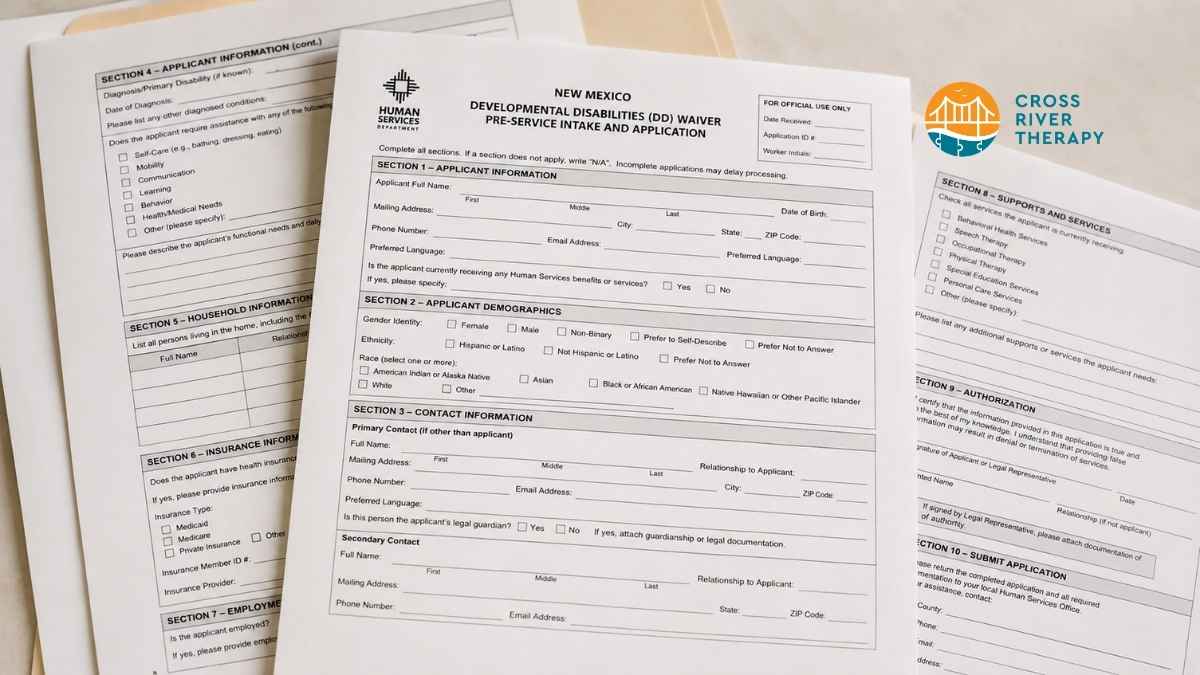
How to Apply for the New Mexico DD Waiver
Your NM DD waiver application starts with state intake. The steps cover records, submission, and enrollment.

Does Insurance Cover ABA Therapy in New Jersey?
ABA therapy insurance in New Jersey varies by plan. Learn what NJ FamilyCare covers and how to check costs.

How ABA Therapy Builds Communication for Nonverbal Children Without Forcing Speech
ABA therapy communication for nonverbal children starts with AAC, signs, and daily routines. See how kids ask, refuse, choose, and get help.

How to Start ABA Therapy in New Jersey With a Checklist
Your guide explains how to start ABA therapy in New Jersey. A first-call checklist covers records and next steps.

How to Get an Autism Evaluation in Arkansas Before Starting ABA Therapy
How to get an autism evaluation in Arkansas starts with a referral, provider choice, and key records. Use this parent checklist before ABA intake.