







How to Effectively Communicate with a Child Undergoing ABA Therapy
Mastering Communication: Strategies for Engaging Children in ABA Therapy

Understanding the Foundations of Communication in Autism Spectrum Disorder
Effective communication is a cornerstone of development for children with autism undergoing ABA therapy. This article explores a comprehensive range of techniques, tools, and strategies that caregivers, educators, and therapists can employ to support and enhance communication skills. By integrating evidence-based methods with practical approaches, we aim to empower those involved in the child's growth to foster meaningful interactions, reduce frustration, and promote independence.
Supporting Communication Development in Children with Autism
How can parents and caregivers support communication development in children with autism?
Supporting communication growth involves a combination of practical strategies and professional guidance. Parents and caregivers are encouraged to use clear, simple language, adapting their speech to be easily understandable. Incorporating gestures, such as pointing or waving, along with sustained eye contact, can help children interpret and respond more effectively.
Visual aids play a crucial role; tools like picture exchange communication systems (PECS), emotion cards, or visual schedules can make abstract language more concrete. When routines are predictable and consistent, children feel secure and better able to focus on learning communication skills. Giving extra time for the child to process questions or instructions reduces frustration and promotes successful interactions.
Engaging in activities like reading aloud, singing nursery rhymes, and narrating what the child is doing can enrich vocabulary and context understanding. It’s also essential to consult with speech and language therapists or autism assessment teams. They can recommend targeted programs such as Signalong, Makaton, or PECS, which are evidence-based methods to enhance communication.
Creating a patient, supportive environment where the child feels comfortable experimenting with language fosters natural development. This includes being attentive to non-verbal cues and practicing consistent, positive reinforcement. Overall, personalized, professional strategies combined with a nurturing atmosphere can significantly improve communication abilities in children with autism.
Strategies for Effective Communication During ABA Therapy
How can using simple language and visual aids improve communication?
Using clear, easy-to-understand words helps children process and imitate language more effectively. Short phrases or single words often make it easier for children to respond. Visual supports like picture exchange communication systems (PECS), flashcards, and communication boards serve as visual cues that reinforce understanding. These tools provide concrete references for abstract language and can reduce frustration. Incorporating visual stories and charts into daily routines further enhances comprehension.
Why are gestures and eye contact important, and how should they be used?
Nonverbal cues such as gestures and eye contact are fundamental in beginning communication skills. Modeling exaggerated gestures, such as pointing or waving, helps children associate actions with meanings. Maintaining eye contact reinforces engagement and attentiveness, making it easier for children to focus on communication cues. Using a child's name to gain attention before speaking builds familiarity and trust, encouraging responsive interaction.
What role does patience, routines, and personalized tools play?
Patience is essential; giving children extra time to process questions or cues prevents frustration. Establishing consistent routines creates a predictable environment that reduces anxiety and helps children anticipate their daily activities. Personalized tools, like tailored visual supports or familiar objects, specifically meet each child's interests and needs. These individualized strategies foster comfort, build trust, and promote spontaneous communication.
Strategy Description Benefit Simple Language Use short words and phrases for easier imitation Enhances understanding and encourages speech practice Visual Supports Picture exchange systems, charts, social stories Clarifies meaning, reduces confusion Gestures & Eye Contact Use exaggerated gestures, maintain eye contact Supports non-verbal communication, engagement Patience & Routines Allow extra response time, maintain consistent routines Builds trust, reduces anxiety Personalized Tools Tailored visual aids and familiar objects Increases comfort, aligns with child's interests
These strategies collectively create an effective communication environment within ABA therapy. By combining visual supports, expressive gestures, patience, and personalized approaches, caregivers and therapists can significantly improve interactions and learning outcomes for children with autism.
Methods to Support Communication in ABA Therapy

What are the methods used in ABA therapy to support communication skill development?
ABA therapy employs multiple techniques designed to improve how children and individuals with autism communicate. One primary approach is Functional Communication Training (FCT). FCT teaches alternative ways to express needs and feelings, such as using gestures, sign language, pictures, or speech-generating devices. This method helps reduce frustration and problematic behaviors by providing effective communication options.
In addition to FCT, visual supports like picture exchange systems are widely used. The Picture Exchange Communication System (PECS) allows non-verbal children to initiate communication by exchanging pictures that represent words or demands. Speech devices and augmentative and alternative communication (AAC) tools, such as communication apps or speech-generating devices, are also common to support expressive communication.
Reinforcement strategies play a vital role. By rewarding appropriate communication—whether verbal or through gestures—therapists and caregivers encourage ongoing use. Positive reinforcement, such as praise or tangible rewards, significantly motivates children to adopt and practice new communication skills.
Modeling and imitation are additional methods used in ABA. Therapists demonstrate desired behaviors, encouraging children to imitate these actions. This imitation fosters language acquisition and social interaction.
Overall, ABA integrates visual supports, technology, modeling, and reinforcement to tailor communication interventions suited to each individual's needs. These methods work together to promote both understanding and expressive language, supporting children’s social development and independence.
Addressing Speech and Language Development in ABA Therapy
How does ABA therapy address the development of speech and language skills in children with autism?
Applied Behavior Analysis (ABA) therapy focuses on systematically teaching communication behaviors to children with autism. This is achieved through evidence-based techniques such as prompting, reinforcement, and regular data collection to monitor progress.
One common method used in ABA is Discrete Trial Training (DTT). This structured approach involves repeated practice of specific language skills, allowing children to learn new words, phrases, and social communication routines in a controlled environment.
In addition to DTT, ABA emphasizes Natural Environment Teaching (NET). This approach allows children to practice and generalize communication skills in real-world settings, which helps make language use more functional and relevant to daily life.
Therapists also target core language components such as requesting, labeling, and engaging in social interactions. Teaching these skills enhances the child's ability to express needs, share observations, and participate in conversations.
Reinforcement plays a vital role in encouraging further communication. Positive feedback, tangible rewards, or tokens motivate children to imitate words or gestures and engage more actively in social exchanges.
Overall, ABA combines structured and naturalistic strategies to increase both the frequency and quality of speech and language behaviors. This comprehensive approach helps children with autism develop better expressive and receptive communication skills, supporting their independence and social participation.
Supporting Nonverbal Children with Autism
What approaches can be used to teach nonverbal children with autism?
Children with autism who are nonverbal may face unique communication challenges. However, there are several effective methods to support their learning and expression.
One widely used approach is the Picture Exchange Communication System (PECS). PECS involves teaching children to exchange pictures to communicate needs or desires, helping them develop functional communication skills in everyday situations.
Sign language is another valuable tool. Basic sign language gestures can provide children with an alternative way to express themselves, especially in early stages of speech development.
Communication boards and visual supports, such as charts and pictures, can also facilitate understanding. These tools help children associate symbols with words or concepts, making communication more manageable.
Speech-generating devices, including tablets with specialized apps, can empower children to produce speech digitally. These devices are especially useful for children who have limited verbal output but can learn to navigate the technology.
Focusing on functional communication is crucial. This means teaching children to communicate needs and intentions that are useful and relevant to their daily lives. Tailored interventions that incorporate these methods can significantly improve their ability to interact socially and participate actively in their environment.
In summary, strategies like PECS, sign language, communication devices, and visual aids, combined with a focus on functional communication, provide a comprehensive approach to helping nonverbal children on the autism spectrum build vital communication skills.
Impact of ABA on Communication and Beyond

How does ABA therapy improve social, daily living, and cognitive skills?
ABA (Applied Behavior Analysis) therapy focuses on practical and structured methods to develop a child's communication abilities. It teaches children to use words, gestures, and alternative systems such as picture cards or speech devices to express themselves. Through techniques like modeling, imitation, and positive reinforcement, children learn to initiate conversations, respond appropriately, and engage with peers.
Beyond communication, ABA therapy enhances social skills by teaching children how to share attention, follow social cues, and participate in group activities. Daily living skills such as dressing, eating, and grooming are integrated into therapy plans, promoting independence.
Cognitive development is also supported through tasks that stimulate problem-solving, reasoning, and understanding. As a result, children often experience gains in overall thinking skills, which further reinforce their ability to communicate and function in various environments.
What are the long-term benefits and research findings?
Research shows that children undergoing intensive ABA intervention often show significant and lasting improvements. Long-term studies reveal that around 63%-88% of children demonstrate progress in language, social interactions, and adaptive behaviors.
Notably, early, sustained ABA treatment can lead to remarkable outcomes such as increased vocabulary, better comprehension, and improved social independence. Some children reach milestones comparable to peers without autism.
However, studies also highlight the importance of comprehensive and ongoing intervention. While many results are positive, some research points to methodological limitations in existing studies, emphasizing the need for more large-scale, long-term research.
Overall, the evidence supports ABA as an effective approach that can significantly impact communication abilities and broader developmental areas, contributing to improved quality of life for children with autism.
Aspect Findings Additional Notes Language Development 63%-88% show improvement Rich in structured teaching and reinforcement Social Skills Enhanced social interactions Focus on joint attention and play Adaptive Behavior Increased independence Role in daily routines and self-care Cognitive Skills Gains in reasoning and problem-solving Long-term benefits documented in research Research Limitations Need for more extensive studies Highlights importance of personalized programs
The Role of Visual Supports and Routine in Communication
Use of visual aids, charts, and picture schedules
Visual supports are essential tools in helping children with autism understand and communicate effectively. These can include picture cards, charts, and schedules that visually depict routines, activities, or concepts.
Picture exchange communication systems (PECS) allow non-verbal children to express their needs and wants by exchanging images. Similarly, visual charts and emotion cards help children interpret their feelings and social cues.
Using these visual tools can reduce frustration by making expectations clear and providing concrete references for learning new words and behaviors.
Consistency in routines and expectations
Children on the autism spectrum thrive on predictability. Maintaining consistent routines helps them feel secure and understand what to expect.
Structured routines, supported by visual schedules, encourage independence and reduce anxiety related to transitions or unfamiliar activities.
Clear expectations, reinforced regularly, foster better social interactions and communication skills, as children learn to anticipate and participate in daily activities.
Combining visual supports with routine consistency forms a foundation that promotes effective communication, enhances understanding, and encourages positive behavior.
Visual Supports Routines Goals Achieved Additional Details Picture cards Visual schedules Improved understanding of daily activities Helps non-verbal children communicate needs Emotion cards Consistent routines Reduced anxiety, greater independence Supports emotional recognition and regulation Charts and graphs Predictable transitions Better behavior management Reinforces routine expectations
Using visual aids alongside a structured routine creates a predictable environment where children are supported in building communication skills and navigating daily life more effectively.
Professional Guidance and Parental Involvement
How can parents and caregivers support communication development in children with autism?
Parents and caregivers play a vital role in fostering communication skills in children with autism. Using clear and simple language helps the child understand and imitate speech more easily. Incorporating gestures, maintaining eye contact, and using visual cues such as pictures or symbols provide additional support for understanding.
It's beneficial to consult with an autism assessment team or a speech and language therapist to identify suitable programs like Signalong, Makaton, or PECS, which are designed to enhance communication skills through visual supports. Establishing consistent routines and giving the child extra time to process information can significantly improve interactions.
Engaging in activities like reading aloud, singing nursery rhymes, and storytelling can further promote language development. A patient, supportive environment, combined with professional guidance and tailored strategies, can make meaningful progress in a child's ability to communicate.
What are effective strategies to communicate with children undergoing ABA therapy?
When working with children in ABA therapy, using straightforward, clear language is essential. Complementing spoken words with visual supports such as picture exchange communication systems (PECS), communication boards, and sign language facilitates understanding.
Incorporating gestures, making eye contact, and addressing the child by name can help maintain engagement. Patience is crucial; giving the child additional time to process questions or instructions reduces frustration and supports learning.
Routine and predictability, along with visual aids like social stories, help children feel secure and promote communication. Collaborative efforts between caregivers and professionals, including training on specific strategies, ensure that communication approaches are effective and personalized to each child's needs.
Maintaining consistency and utilizing evidence-based methods foster better social interactions, reduce challenging behaviors, and support overall development.
Fostering Growth Through Structured and Compassionate Communication
Supporting children with autism in developing effective communication skills requires a multifaceted approach that combines evidence-based ABA techniques, visual supports, and active collaboration between caregivers, educators, and therapists. Tailoring strategies to meet each child's unique needs promotes faster learning, reduces frustration, and encourages social interaction. Patience, consistency, and a positive reinforcement system are central to nurturing a child's confidence and independence in expression. As research continues to evolve, ongoing professional guidance and active parental involvement remain critical in achieving meaningful communication development for children with autism.
References
- Teaching nonverbal autistic children to talk - Autism Speaks
- Enhancing Communication Skills With ABA Therapy
- Applied Behavior Analysis in Children and Youth with Autism ...
- Communicating with Children with Autism: Effective Strategies
- Addressing Speech Delays with ABA Therapy - ABA Therapist Jobs
- How ABA Therapy Can Improve Communication Skills in Children
- How to help your autistic child with day-to-day life - NHS
- Autism and everyday life - NHS
Recent News
Related articles

6 Arkansas Medicaid ABA Therapy Rules Families Need to Know
Arkansas Medicaid ABA therapy has age, diagnosis and approval rules. Families can check six requirements before care.

Arizona Autism Laws for ABA Coverage and School Rights
Arizona autism laws for ABA coverage vary by plan. Families can check insurance, appeal options, and school rights.

ABA Therapist Salary in Arkansas for RBTs and BCBAs
Compare ABA therapist salary in Arkansas by role. See how paid hours and benefits affect earnings before applying.

5 Autism Support Groups and Family Resources in New Mexico
Autism support groups in New Mexico connect families. Local resources offer events, parent support, and school help.

Where to Get an Autism Evaluation in New Mexico
Autism evaluation options in New Mexico include UNM and NMSU. Age and referral details help parents prepare.

7 North Carolina Autism Resources to Contact Before ABA Therapy Starts
Autism resources North Carolina families can call for diagnosis, early intervention, rights, and parent support. Start ABA intake with Cross River.
Does Indiana Medicaid Cover ABA Therapy? A Parent Checklist
Indiana Medicaid ABA therapy may cover care for eligible children. The checklist covers coaching and renewals.
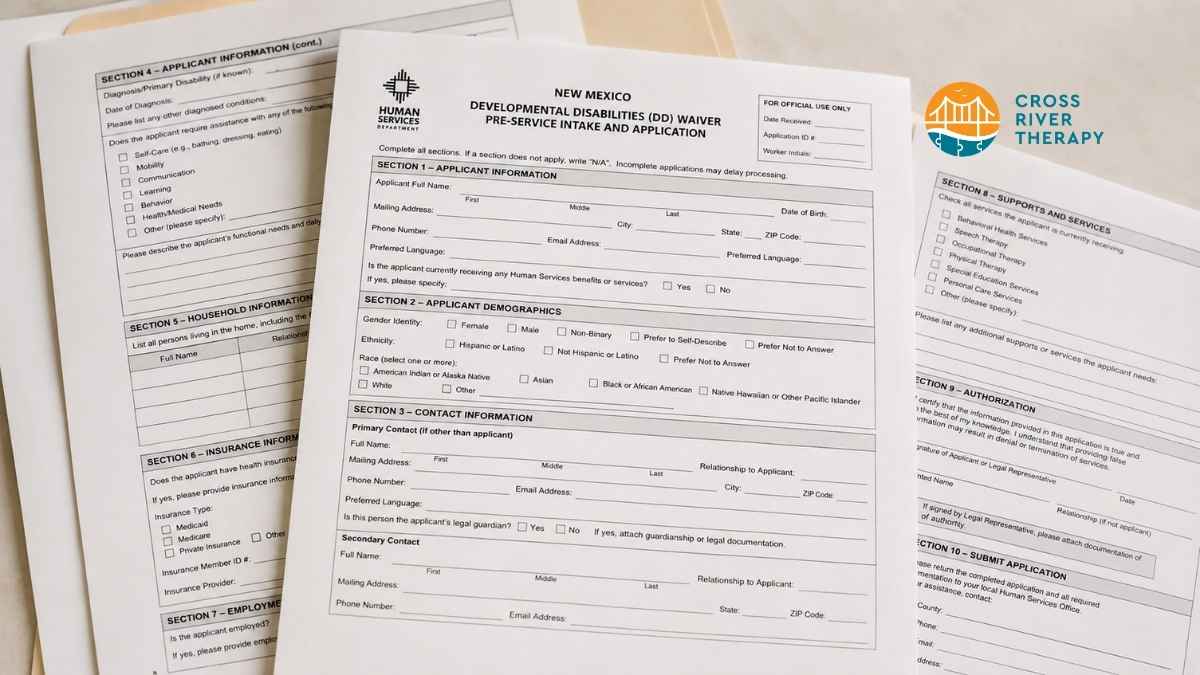
How to Apply for the New Mexico DD Waiver
Your NM DD waiver application starts with state intake. The steps cover records, submission, and enrollment.

Does Insurance Cover ABA Therapy in New Jersey?
ABA therapy insurance in New Jersey varies by plan. Learn what NJ FamilyCare covers and how to check costs.

How ABA Therapy Builds Communication for Nonverbal Children Without Forcing Speech
ABA therapy communication for nonverbal children starts with AAC, signs, and daily routines. See how kids ask, refuse, choose, and get help.

How to Start ABA Therapy in New Jersey With a Checklist
Your guide explains how to start ABA therapy in New Jersey. A first-call checklist covers records and next steps.

How to Get an Autism Evaluation in Arkansas Before Starting ABA Therapy
How to get an autism evaluation in Arkansas starts with a referral, provider choice, and key records. Use this parent checklist before ABA intake.