








How to Foster Cooperation Between Parents and ABA Therapists
Enhancing Collaboration for Better ABA Therapy Outcomes


Introduction
The synergy between parents and ABA therapists is a cornerstone for unlocking a child's potential in therapy. When parents and therapists work hand in hand, children are more likely to achieve significant milestones in communication, social skills, and behavioral regulation. This article explores how to forge strong collaboration efforts, emphasizing strategies and benefits of cooperative action.
Understanding ABA Therapy: A Parent's Perspective

How can ABA therapy be explained to parents?
Applied Behavior Analysis (ABA) therapy is an evidence-based approach designed to improve behaviors, especially for children with Autism Spectrum Disorder (ASD). The main goal is to promote desirable behaviors and reduce harmful ones. To achieve this, ABA focuses on enhancing communication and social skills, along with academic performance.
The process typically starts with a thorough assessment conducted by a Board Certified Behavior Analyst (BCBA). This includes personalized goal-setting, where parents can provide valuable input about their child's unique needs. Techniques employed in ABA therapy include positive reinforcement, prompting, and task analysis, all intended to foster skill development.
Importance of early intervention
Early intervention plays a crucial role in ABA therapy. Research shows that children who receive therapy at a young age tend to achieve significantly better outcomes, progressing towards greater independence and improved behavioral regulation. Early support allows parents to implement strategies at home, reinforcing what is learned during therapy sessions.
Selecting the right ABA therapist
Choosing the right ABA therapist is vital. Parents should look for BCBAs with relevant qualifications, experience, and a therapeutic approach that emphasizes family involvement. Regular communication between parents and therapists ensures that therapeutic strategies are consistently applied at home and outside, fostering a nurturing environment for the child.
Ultimately, a collaborative relationship can enhance the effectiveness of ABA therapy, promoting learning and positive behavior restructuring.
Parents: The Unsung Heroes in ABA Therapy

What roles do parents play in a child's ABA therapy program?
Parents are critical to the success of a child's ABA (Applied Behavior Analysis) therapy program. Acting as partners in therapy, they enhance learning by creating a structured environment at home. This environment, characterized by consistent routines, allows children to practice and generalize skills learned during therapy sessions.
Parents also play key roles in reinforcing desired behaviors, using techniques such as positive reinforcement at home. This consistency fosters better outcomes as children spend more time with parents than with therapists.
Regular collaboration with Board Certified Behavior Analysts (BCBAs) is essential. By providing feedback on observed behaviors and attending training sessions, parents deepen their understanding of therapeutic objectives and strategies tailored to their child's needs. This partnership ensures that both the parents and therapists are aligned in their approach, making interventions more effective.
Creating structured environments
Creating a structured home environment mirrors the routines used in therapy, which helps reduce anxiety for children with autism. Visual supports, such as picture schedules, clarify expectations and help children navigate daily activities. By emphasizing a consistent approach across all areas of a child's life—home, school, and community—parents can significantly impact their child's ability to learn and apply new skills.
Skill generalization
Skill generalization is a primary goal of ABA therapy. It involves helping children apply skills from therapy to real-world situations. Parents facilitate this process by actively using ABA techniques within daily routines. For example, they can model desired behaviors, implement prompting strategies, and celebrate milestones achieved at home. Such consistent reinforcement and opportunities for practice lead to more substantial progress in the child's development, ensuring that therapy benefits extend beyond individual sessions.
Building Effective Communication Channels
How can communication between parents and ABA therapists be improved?
Improving communication between parents and ABA therapists is essential for effective therapy. One effective strategy is to use straightforward language and relatable analogies to ensure parents fully grasp the treatment process. Open communication is vital; therapists should provide regular updates on changes and actively listen to parents’ concerns to make them feel valued and involved.
Incorporating parents’ insights and goals into the therapy plan can significantly enhance their commitment and ability to support their child's development. This collaboration ensures a more tailored and effective approach.
Strategies for clear communication
Engaging in parent coaching that focuses on one goal at a time can help prevent overwhelm. This targeted approach promotes the use of effective strategies at home. Additionally, teaching parents about reinforcement strategies is crucial; they can learn the importance of positive reinforcement to motivate desired behaviors, which is a key component of ABA therapy. Role-playing scenarios can further aid parents in understanding and implementing behavior changes effectively.
Parental insights and involvement in therapy
Parental involvement is paramount in ABA therapy. Parents are encouraged to provide valuable insights regarding their child's routines and preferences. They play a key role in observing their child's progress and noting any behavioral changes, which helps therapists adjust their strategies accordingly. Collaboration in goal setting can also lead to more personalized therapy plans, ultimately enhancing the outcomes of ABA interventions.
By establishing these effective communication channels, the collaborative efforts between parents and therapists significantly improve the overall success of therapy.
Overcoming Barriers to Accessing ABA Therapy
What are barriers to accessing ABA therapy?
Barriers to accessing ABA therapy for children with autism spectrum disorder (ASD) encompass a variety of factors. Socioeconomic influences play a significant role; families with lower income or education levels tend to receive fewer ABA services. Moreover, caregivers often encounter long wait times and face confusion over initiating therapy, alongside navigating complex insurance coverage policies.
Additional challenges
Many caregivers may also harbor skepticism regarding ABA treatment's effectiveness, affecting their willingness to pursue these necessary interventions. These combined barriers can delay, or even prevent, access to essential therapy for children with ASD, resulting in missed opportunities for support and development.
Barrier Type Examples Impact on ABA Access Socioeconomic factors Income levels, caregiver education Lower likelihood of receiving services Insurance and policy challenges Complexity of coverage, lack of awareness Delays in therapy initiation Caregiver beliefs Skepticism about ABA effectiveness Reduced pursuit of therapy services
The Importance of Parent Training in ABA Therapy
Why is parent training important in ABA therapy?
Parent training is essential in ABA therapy as it equips parents with the skills and strategies required to reinforce positive behaviors consistently in their children. The training focuses on managing challenging behaviors and enhancing communication and social skills, which significantly improves family dynamics and overall quality of life.
Effective training promotes a stronger emotional bond between parents and their children by encouraging open communication and collaboration. Parents not only gain insights into behavioral techniques but also learn how to implement these strategies in their daily lives. This fosters an active participation approach where families feel empowered to influence their child’s progress in therapy.
Consistency in enforcing behaviors
One of the main benefits of parent training is the consistency it brings in applying behavioral strategies both at home and in therapy settings. Parents are encouraged to use techniques such as positive reinforcement and task analysis, ensuring that their child receives a unified approach. This consistency is crucial for generalizing skills learned during therapy, helping children demonstrate appropriate behaviors across various environments like home, school, and community.
Enhancing family dynamics through training
Training not only supports the child’s behavioral development but also enriches family dynamics. By learning about their child’s needs and behavioral plans, parents can work together to create a structured environment that reflects therapeutic strategies. This holistic approach fosters a nurturing atmosphere in which families can celebrate milestones and support each other, ultimately leading to better outcomes in ABA therapy. The integration of these strategies into daily routines enhances the effectiveness of ABA, making parent training a vital component for effective therapy engagement.
Conclusion
The partnership in ABA therapy between parents and therapists is not just beneficial – it's essential. By improving communication, understanding the therapeutic process, overcoming barriers, and engaging in comprehensive parent training, parents can significantly influence the success of their child’s therapy. Through continued cooperation, this collaborative approach stands to enhance the therapeutic outcomes for children, enriching their lives both within and outside the therapy setting.
References
- Collaborating with ABA Therapists: A Guide for Parents ... - Able Kids
- Working with Parents As a BCBA - How to ABA
- Collaborating with ABA Therapists: How Parents Can Support...
- ABA Therapy Techniques for Parents - Empower Behavioral Health
- The Parent's Role in ABA Therapy: Essential Involvement
- Parent Involvement in ABA Therapy - Surpass Behavioral Health
- The Role of Family in ABA Therapy: Tips for Parents
- How Parents Can Support ABA Therapy From Home
Recent News
Related articles

ABA Therapist Salary in Arkansas: What BCBAs and RBTs Actually Earn in 2026
ABA therapist salary Arkansas figures compare RBT and BCBA rates, benefits, guaranteed hours, and contract terms. Explore careers at Cross River.

5 Autism Support Groups and Family Resources in New Mexico Alongside ABA Therapy
Autism support groups New Mexico families can use offer peer support, local events, and school help. Cross River can explain ABA therapy options.

Where to Get an Autism Evaluation in New Mexico Before Starting ABA Therapy
Autism evaluation New Mexico options include UNM, NMSU, FIT, and private providers. Compare providers, records, and ABA steps with Cross River.

7 North Carolina Autism Resources to Contact Before ABA Therapy Starts
Autism resources North Carolina families can call for diagnosis, early intervention, rights, and parent support. Start ABA intake with Cross River.

Does Indiana Medicaid Cover ABA Therapy? A Step-by-Step Eligibility Checklist for Parents
Medicaid ABA therapy Indiana covers eligible children under 21 with prior authorization. Your five-step coverage review can start with Cross River.
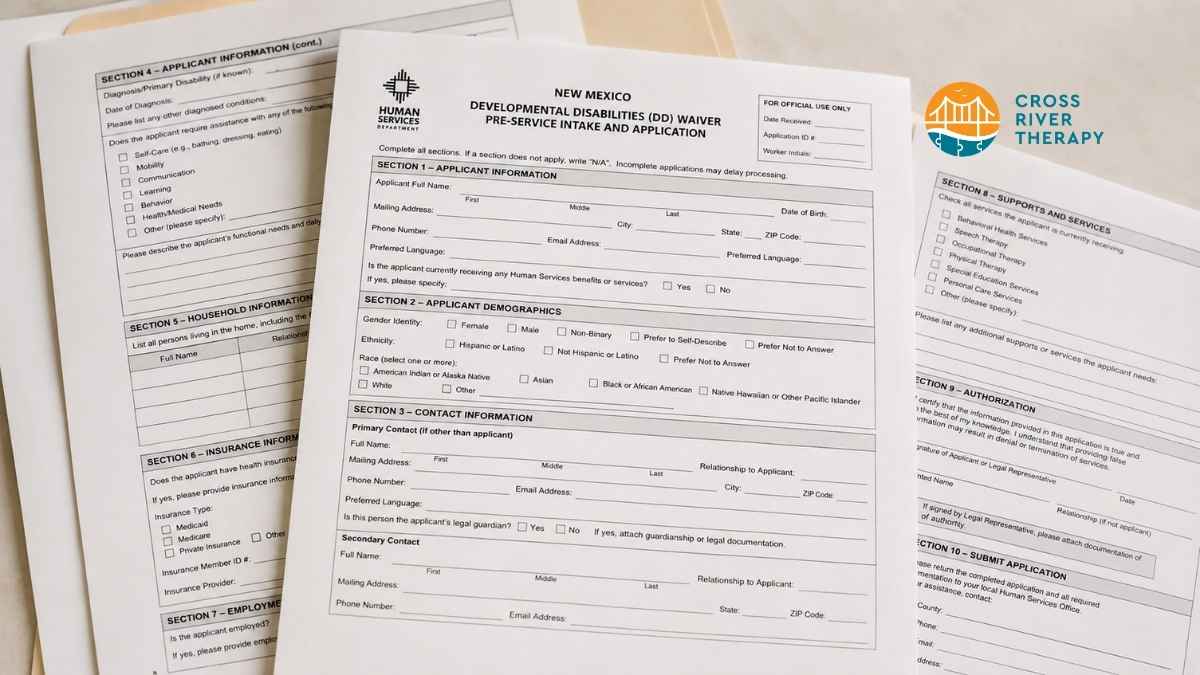
How to Apply for New Mexico’s DD Waiver While Starting ABA Therapy
Autism waiver New Mexico applications need DD Waiver records and proof of daily support needs. Your next step is to start ABA intake with Cross River.

Is ABA Therapy Covered by Insurance in New Jersey? What Every Parent Should Know
ABA therapy insurance New Jersey may cover medically necessary care based on plan type, network, and authorization. Verify benefits with Cross River.

How ABA Therapy Builds Communication for Nonverbal Children Without Forcing Speech
ABA therapy communication for nonverbal children starts with AAC, signs, and daily routines. See how kids ask, refuse, choose, and get help.

How to Start ABA Therapy in New Jersey With a First-Call Checklist
How to start ABA therapy in New Jersey begins with records, insurance details, and intake questions. Use this first-call checklist before you call.

How to Get an Autism Evaluation in Arkansas Before Starting ABA Therapy
How to get an autism evaluation in Arkansas starts with a referral, provider choice, and key records. Use this parent checklist before ABA intake.

Center-Based vs In-Home vs School-Based ABA Therapy and How to Choose the Right Fit
Center-based, in-home, and school-based ABA therapy each fit different goals, routines, and settings. Compare options before your intake call.

Early Signs of Autism: A Guide for North Carolina Parents
Early signs of autism North Carolina parents notice can include speech, play, sensory, or skill loss patterns. See what to track before screening.