








How to prepare for IEP meetings with ABA data
Mastering Your IEP Strategy with ABA Data


Getting Ready for a Successful IEP Meeting
Preparing for an IEP (Individualized Education Program) meeting can feel overwhelming, especially when incorporating ABA (Applied Behavior Analysis) data. When done effectively, ABA data can be a powerful tool to advocate for your child's needs, track progress, and collaborate with educational professionals. This guide breaks down essential steps—from gathering comprehensive data to presenting it convincingly—so you can approach your child's IEP meeting with confidence and clarity.
Gather Comprehensive ABA Data and Collaborate with Experts

How can I effectively prepare for IEP meetings using ABA data?
To make the most of IEP meetings, parents and educators should be well-prepared with up-to-date and comprehensive ABA data. This involves collecting various types of behavioral and performance information, such as charts, graphs, session notes, and anecdotal records that clearly demonstrate the child's current progress.
Collaborating with a Board Certified Behavior Analyst (BCBA) is essential for analyzing this data. The BCBA can help interpret patterns, set realistic and measurable goals, and develop targeted interventions aligned with the child's needs. Together, they can craft SMART objectives—Specific, Measurable, Achievable, Relevant, and Time-bound—that provide clear benchmarks for progress.
Reviewing Functional Behavior Assessments (FBAs) and Behavior Intervention Plans (BIPs) is also vital. These tools identify the root causes of behaviors and outline strategies to support appropriate responses. Including this information in the IEP discussion ensures that behavior support strategies are evidence-based and tailored.
During the meeting, it's important to present concrete examples of progress, supported by data. Sharing visuals like graphs or data summaries can make these findings more accessible and persuasive. Be ready to discuss how current data informs ongoing interventions and any needed adjustments.
After the meeting, maintain ongoing communication with the school team and ABA professionals. Continually update and review behavioral data to monitor progress. Utilizing the expertise of a BCBA ensures that interventions remain effective and aligned with the child's evolving needs.
Effective preparation hinges on thorough data collection, expert collaboration, and clear communication of progress. This approach helps to advocate for appropriate support and ensures the child's educational and behavioral goals are being actively pursued.
Organize and Present ABA Data Effectively

What strategies can I use to organize and present ABA data effectively during IEP meetings?
Presenting ABA data in a clear and compelling way is crucial for making informed decisions about a child's educational services. One effective approach is to incorporate visual aids, such as charts, graphs, and progress monitoring sheets. These tools help to illustrate behavioral trends and intervention impacts over time, making complex data more accessible for everyone involved.
Highlighting specific data points is essential. For example, including ABC (Antecedent-Behavior-Consequence) data helps to identify the function of behaviors and evaluate the effectiveness of strategies. When discussing progress toward IEP goals, use data to show measurable improvements, whether in communication, social skills, or adaptive behaviors.
Align your data presentation with ABA principles. This means explaining how reinforcement, behavioral objectives, and data collection methods relate to the child's progress. Emphasize how interventions are based on functional behavior assessments (FBAs) and how they support the child's educational development.
Prepare to explain the significance of the data in simple terms, focusing on evidence-based results. For instance, illustrate how consistent data collection and analysis have led to refined interventions that meet the child's evolving needs.
How can I organize and present ABA data effectively during IEP meetings?
Organizing ABA data for IEP meetings requires a strategic approach. Keep data and visual summaries up to date and easy to navigate. Use tables to compare baseline data with current progress, and organize reports chronologically if multiple data points are available.
During the presentation, start with an overview of the child's behavioral goals and then walk through the data, emphasizing positive changes and areas needing further support. Be prepared to provide concrete examples from session notes, behavior logs, and progress reports.
Sharing a summary sheet that encapsulates key data points can facilitate discussion. This sheet should include:
| Data Type | Description | Example / Notes |
|---|---|---|
| ABC Data | Function-based behavior analysis | Reduction in tantrums from 4/week to 1/week |
| Frequency Counts | How often behaviors occur | Increased initiation of communication from 2 to 8 times per session |
| Skill Acquisition Data | Progress in targeted skills | Achieved initial phase of vision schedule for communication |
How do ABA principles inform data presentation?
Understanding how ABA principles guide data collection and interpretation is essential. ABA emphasizes observable, measurable behaviors and relies on data to inform intervention adjustments.
Data should reflect the function of behaviors. For example, if a child's tantrum is reinforced by attention, data should track instances of attention-seeking behaviors and response patterns.
Reinforcement strategies are monitored through data showing increases in desirable behaviors. Analyzing data to confirm that reinforcement is effective helps clinicians and educators decide whether to maintain, modify, or change interventions.
In summary, presenting ABA data effectively involves using visual representations, highlighting progress meaningful to the child's goals, and grounding explanations in ABA theory. This cohesive approach helps team members understand the child's development and guides future planning to support learning and behavior management.
Develop and Review Goals Using ABA Data
How can ABA principles and data best support the development and review of IEP goals?
ABA (Applied Behavior Analysis) principles offer a strong foundation for creating effective and meaningful IEP (Individualized Education Program) goals. Because ABA emphasizes measurable outcomes and data-driven decision-making, it allows educators and parents to develop goals that are both specific and realistic for the child.
One of the main strengths of ABA is its focus on collecting detailed behavioral data. This information helps teams identify the child’s current skills, strengths, and areas needing support. Using this data, educators can craft goals that are tailored to the child's unique needs, ensuring that each objective is relevant and achievable.
For example, if a child with autism is working on communication skills, ABA data might show progress in requesting objects with minimal prompts. Based on this, a SMART (Specific, Measurable, Achievable, Relevant, Time-bound) goal could be set to increase spontaneous requests from once per session to five times over a semester.
ABA also informs the development of goals by guiding the selection of appropriate reinforcement strategies and prompting techniques. These methods reinforce positive behaviors and skill acquisition, making goals more attainable and sustainable.
Regular collection and analysis of data allow for continuous review and updating of goals. If progress is slow, team members can adjust strategies or set more attainable goals. Conversely, when a child demonstrates mastery in a skill, goals can be expanded to promote further growth.
Creating SMART goals based on ABA data
| Step | Description | Example | Additional Notes | |---------|--------------|---------|------------------| | Specific | Clearly define the behavior or skill |
Review, Contribute, and Advocate Using ABA Data
Reviewing ABA session reports and behavioral data
Effective involvement in IEP meetings requires careful review of ABA session reports and behavioral data. Parents and team members should become familiar with how ABA providers collect and analyze data, including charts, frequency counts, and functional behavior assessments. This information offers insight into the child's progress toward behavioral goals and helps identify areas where adjustments may be needed.
When reviewing data, focus on objective, measurable information that reflects actual behaviors and improvements. Supporting data with visual aids or graphs can make it easier to understand progress over time. This detailed review strengthens your ability to participate actively in goal setting and intervention planning.
Sharing progress data with the team
Sharing detailed progress reports with the entire team is vital for coordinated supports. Well-organized, clear data allows everyone—from educators to therapists—to understand how the child's ABA interventions are impacting learning and behavior.
During IEP meetings, parents can present recent ABA data to illustrate progress or highlight concerns. Providing concrete examples, such as behavior frequency reductions or communication improvements, supports data-driven decisions.
Accessible data sharing also enables team members to evaluate whether current strategies are effective or need refinement. Consistent data exchange fosters trust and ensures that interventions are seamless across home, school, and community environments.
Advocating for ABA services and accommodations
Using ABA data effectively enhances advocacy efforts for appropriate services and accommodations. Parents can request specific supports, such as visual schedules, sensory tools, or additional behavioral interventions, grounded in the child's current progress and needs.
Presenting well-documented ABA data during IEP meetings demonstrates the necessity of these supports. For example, if data shows frequent tantrums reducing with a specific sensory strategy, parents can advocate for sensory accommodations within the classroom.
Advocating also involves requesting behavioral interventions like Functional Behavior Assessments (FBAs) and Behavior Intervention Plans (BIPs). These tools, supported by ABA data, help develop tailored strategies to address behaviors impacting learning.
How do ABA principles support the IEP framework?
The alignment between ABA and IEPs is natural due to their shared focus on measurable objectives, ongoing data collection, and progress monitoring.
| Aspect | ABA Approach | IEP Framework | Explanation |
|---|---|---|---|
| Goals | Based on observable behaviors and data | SMART (Specific, Measurable, Achievable, Relevant, Time-bound) | Both rely on clear, measurable targets to assess progress |
| Progress Monitoring | Continuous data collection | Regular review through progress reports | Ensures progress is tracked systematically |
| Interventions | Structured, evidence-based strategies | Supports individual needs through accommodations | Promotes effective, targeted support |
Building confidence and approaching IEPs prepared with ABA data
To confidently participate in IEP meetings, parents should thoroughly review all relevant behavioral data beforehand. Understanding the types of assessments used—such as checklists, video recordings, or functional analyses—helps in grasping the child's strengths and challenges.
Practice summarizing data in simple, clear terms. Highlight progress on SMART goals, using concrete examples like increased communication attempts or decreased disruptive behaviors. Collaborate with ABA providers or BCBAs prior to the meeting to discuss interpretations and next steps, forming a unified approach.
Being well-prepared with data, insights, and specific questions puts parents in a strong position to advocate effectively. It also fosters a collaborative atmosphere where team members can rely on shared evidence to make informed decisions.
How can ongoing collaboration and data sharing foster better outcomes?
Ongoing communication between parents, ABA therapists, and school staff ensures consistency across settings. Regularly sharing current ABA progress reports helps monitor whether interventions continue to be effective and are being implemented as planned.
Documenting ABA-related notes, progress data, and behavioral plans supports advocacy efforts and serves as a reference for future meetings. Maintaining transparency and open dialogue contributes to the development of an IEP that is responsive to the child's evolving needs.
In summary, reviewing, sharing, and advocating based on ABA data are essential practices for parents aiming to ensure their child receives appropriate, effective support in school. With careful preparation and collaboration, families can make meaningful contributions to the IEP process, fostering positive developmental outcomes.
Empowering Your Child’s Educational Journey with Data-Driven Strategies
Proactively preparing for IEP meetings with well-organized ABA data not only enhances your advocacy efforts but also ensures that your child's special education program is tailored effectively. Staying informed about ABA principles, engaging with behavioral data, and collaborating closely with the school team empowers you to champion your child's needs confidently. Remember, your active participation and understanding of data-driven goals can make a significant difference in shaping a supportive and progress-oriented educational environment.
References
- ABA and IEPs: Parent Guide for Productive School Meetings
- Title: Navigating the IEP Process: Tips for ABA Parents
- How to Prepare for a Client's IEP Meeting - A Guide ...
- 9 Ultimate Tips for Effective IEP Meetings: SpEd Parents
- How Your BCBA Can Participate in Your Child's IEP Meeting
- How to Prepare for a Client's IEP Meeting - A Guide ...
- Title: Navigating the IEP Process: Tips for ABA Parents
Recent News
Related articles

ABA Therapist Salary in Arkansas: What BCBAs and RBTs Actually Earn in 2026
ABA therapist salary Arkansas figures compare RBT and BCBA rates, benefits, guaranteed hours, and contract terms. Explore careers at Cross River.

5 Autism Support Groups and Family Resources in New Mexico Alongside ABA Therapy
Autism support groups New Mexico families can use offer peer support, local events, and school help. Cross River can explain ABA therapy options.

Where to Get an Autism Evaluation in New Mexico Before Starting ABA Therapy
Autism evaluation New Mexico options include UNM, NMSU, FIT, and private providers. Compare providers, records, and ABA steps with Cross River.

7 North Carolina Autism Resources to Contact Before ABA Therapy Starts
Autism resources North Carolina families can call for diagnosis, early intervention, rights, and parent support. Start ABA intake with Cross River.

Does Indiana Medicaid Cover ABA Therapy? A Step-by-Step Eligibility Checklist for Parents
Medicaid ABA therapy Indiana covers eligible children under 21 with prior authorization. Your five-step coverage review can start with Cross River.
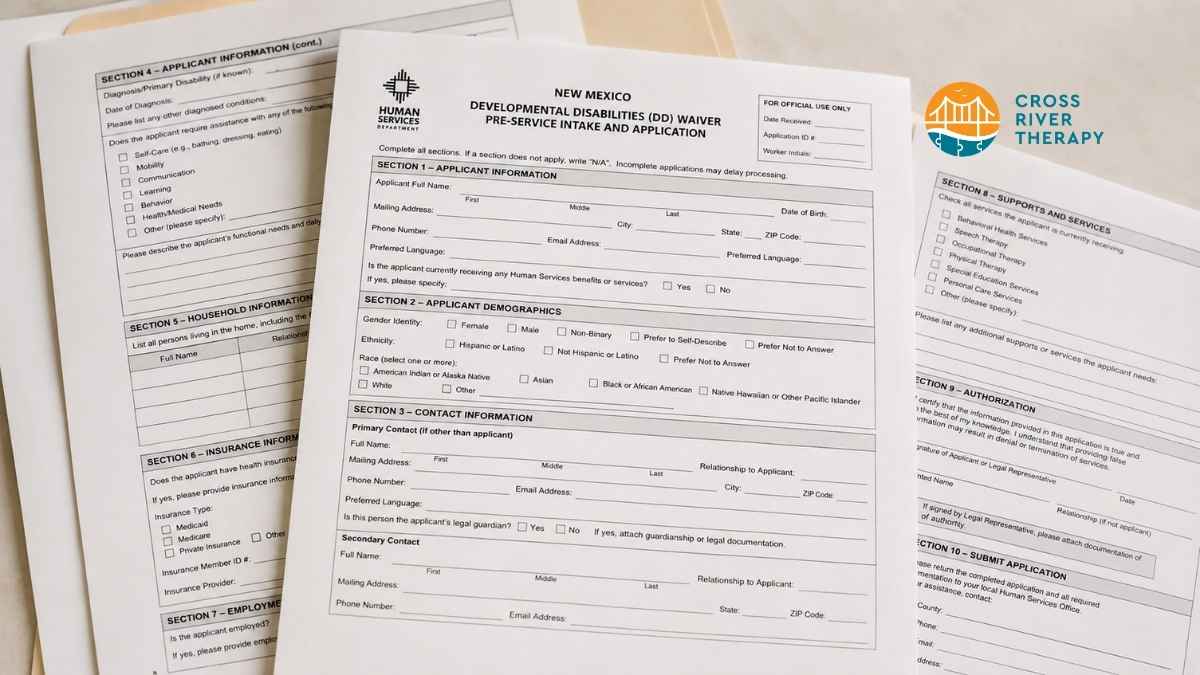
How to Apply for New Mexico’s DD Waiver While Starting ABA Therapy
Autism waiver New Mexico applications need DD Waiver records and proof of daily support needs. Your next step is to start ABA intake with Cross River.

Is ABA Therapy Covered by Insurance in New Jersey? What Every Parent Should Know
ABA therapy insurance New Jersey may cover medically necessary care based on plan type, network, and authorization. Verify benefits with Cross River.

How ABA Therapy Builds Communication for Nonverbal Children Without Forcing Speech
ABA therapy communication for nonverbal children starts with AAC, signs, and daily routines. See how kids ask, refuse, choose, and get help.

How to Start ABA Therapy in New Jersey With a First-Call Checklist
How to start ABA therapy in New Jersey begins with records, insurance details, and intake questions. Use this first-call checklist before you call.

How to Get an Autism Evaluation in Arkansas Before Starting ABA Therapy
How to get an autism evaluation in Arkansas starts with a referral, provider choice, and key records. Use this parent checklist before ABA intake.

Center-Based vs In-Home vs School-Based ABA Therapy and How to Choose the Right Fit
Center-based, in-home, and school-based ABA therapy each fit different goals, routines, and settings. Compare options before your intake call.

Early Signs of Autism: A Guide for North Carolina Parents
Early signs of autism North Carolina parents notice can include speech, play, sensory, or skill loss patterns. See what to track before screening.