








How to reduce hyperactivity with structured ABA routines
Unlocking Calm: How Structured ABA Routines Can Tame Hyperactivity


Understanding the Power of ABA for Hyperactivity Control
Hyperactivity, especially in children with neurodevelopmental challenges such as autism spectrum disorder (ASD) or attention-deficit/hyperactivity disorder (ADHD), can disrupt daily life and learning. Applied Behavior Analysis (ABA) therapy offers a structured, evidence-based framework to reduce hyperactivity and improve focus through individualized routines and positive reinforcement. This article unpacks how ABA employs tailored strategies to help children gain control over impulsivity and increase independence in daily activities, benefitting both children and their families.
What is Applied Behavior Analysis (ABA) Therapy and Its Role in Managing Hyperactivity?
What is Applied Behavior Analysis (ABA) therapy and how does it help individuals with autism?
Applied Behavior Analysis (ABA) therapy is a scientifically grounded approach that focuses on modifying behavior through learning principles such as reinforcement and conditioning. It is widely recognized as an effective treatment for individuals with autism spectrum disorder (ASD).
ABA therapy helps by increasing valuable skills, including communication, social interaction, and daily living abilities. It reduces challenging behaviors by breaking them down into manageable components and teaching appropriate alternatives. Therapists develop individualized plans based on thorough assessments, targeting each child’s unique needs.
The therapy uses strategies like task analysis, positive reinforcement, and visual schedules to encourage independence and reduce stress. It can be delivered in various settings—clinics, schools, or homes—and often involves caregivers to ensure consistency and generalization.
How does ABA therapy assist individuals with ADHD and hyperactivity?
ABA is also effective for managing ADHD symptoms by focusing on behavior modification to improve executive functioning. It targets skills such as attention, impulse control, organization, and task completion.
Through structured routines, visual aids, and reinforcement strategies like token systems or specific praise, ABA builds practical skills step-by-step. Techniques such as differential reinforcement and task analysis help teach children how to sustain focus, control impulses, and improve social interactions.
The method emphasizes observable behavior changes, supported by data collection to track progress and adapt plans accordingly. Parent training and collaboration with educators enhance the therapy’s effectiveness by promoting consistent approaches across environments.
What makes ABA therapy effective for behavioral modification?
ABA’s strength lies in its reliance on positive reinforcement—rewarding desired behaviors to increase their occurrence while reducing problematic ones without punishment. This approach builds confidence and motivation in children, with measurable improvements in daily functioning.
Whether addressing autism or ADHD, ABA therapy is customized, respects the child’s autonomy, and involves families, making it an ethical and compassionate treatment option.
What improvements does ABA therapy aim to bring?
- Increased independence in routine tasks
- Enhanced social skills and communication
- Improved focus and impulse control
- Reduced anxiety and behavioral challenges
- Greater flexibility and adaptability in daily routines
By supporting these areas, ABA therapy helps individuals with autism and ADHD engage more fully with their environment and improve overall quality of life.
Harnessing Structure to Improve Lives
Structured ABA routines provide a robust framework for reducing hyperactivity by breaking behaviors into manageable tasks and reinforcing positive conduct. By tailoring interventions to each child's unique needs and involving families and educators, ABA facilitates meaningful improvements in attention, impulse control, and overall daily functioning. While challenges remain in accessing consistent therapy, the proven benefits underscore the importance of expanding availability and awareness. The journey toward managing hyperactivity is complex but made achievable through patient, structured behavioral analysis that empowers children and supports their growth across environments.
References
- How ABA Therapy Helps with Daily Routines
- Behavioral Interventions for Autism Spectrum Disorder
- Understanding ABA Therapy for ADHD Treatment Options
- Top Benefits of ABA Therapy for ADHD
- Applied Behavior Analysis (ABA)
- The Controversy Around ABA
- Applied behavior analysis
- How to Become an ABA Therapist - School of Education
Recent News
Related articles

ABA Therapist Salary in Arkansas: What BCBAs and RBTs Actually Earn in 2026
ABA therapist salary Arkansas figures compare RBT and BCBA rates, benefits, guaranteed hours, and contract terms. Explore careers at Cross River.

5 Autism Support Groups and Family Resources in New Mexico Alongside ABA Therapy
Autism support groups New Mexico families can use offer peer support, local events, and school help. Cross River can explain ABA therapy options.

Where to Get an Autism Evaluation in New Mexico Before Starting ABA Therapy
Autism evaluation New Mexico options include UNM, NMSU, FIT, and private providers. Compare providers, records, and ABA steps with Cross River.

7 North Carolina Autism Resources to Contact Before ABA Therapy Starts
Autism resources North Carolina families can call for diagnosis, early intervention, rights, and parent support. Start ABA intake with Cross River.

Does Indiana Medicaid Cover ABA Therapy? A Step-by-Step Eligibility Checklist for Parents
Medicaid ABA therapy Indiana covers eligible children under 21 with prior authorization. Your five-step coverage review can start with Cross River.
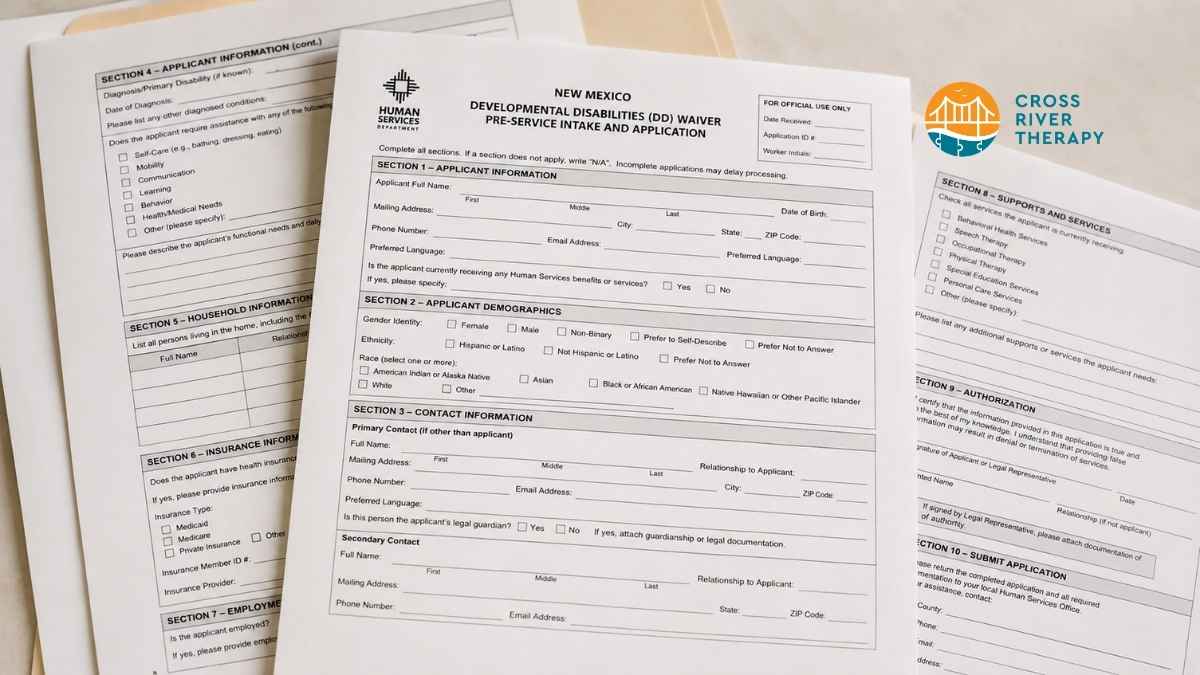
How to Apply for New Mexico’s DD Waiver While Starting ABA Therapy
Autism waiver New Mexico applications need DD Waiver records and proof of daily support needs. Your next step is to start ABA intake with Cross River.

Is ABA Therapy Covered by Insurance in New Jersey? What Every Parent Should Know
ABA therapy insurance New Jersey may cover medically necessary care based on plan type, network, and authorization. Verify benefits with Cross River.

How ABA Therapy Builds Communication for Nonverbal Children Without Forcing Speech
ABA therapy communication for nonverbal children starts with AAC, signs, and daily routines. See how kids ask, refuse, choose, and get help.

How to Start ABA Therapy in New Jersey With a First-Call Checklist
How to start ABA therapy in New Jersey begins with records, insurance details, and intake questions. Use this first-call checklist before you call.

How to Get an Autism Evaluation in Arkansas Before Starting ABA Therapy
How to get an autism evaluation in Arkansas starts with a referral, provider choice, and key records. Use this parent checklist before ABA intake.

Center-Based vs In-Home vs School-Based ABA Therapy and How to Choose the Right Fit
Center-based, in-home, and school-based ABA therapy each fit different goals, routines, and settings. Compare options before your intake call.

Early Signs of Autism: A Guide for North Carolina Parents
Early signs of autism North Carolina parents notice can include speech, play, sensory, or skill loss patterns. See what to track before screening.