








Physical Therapy For Autism: 9 Benefits
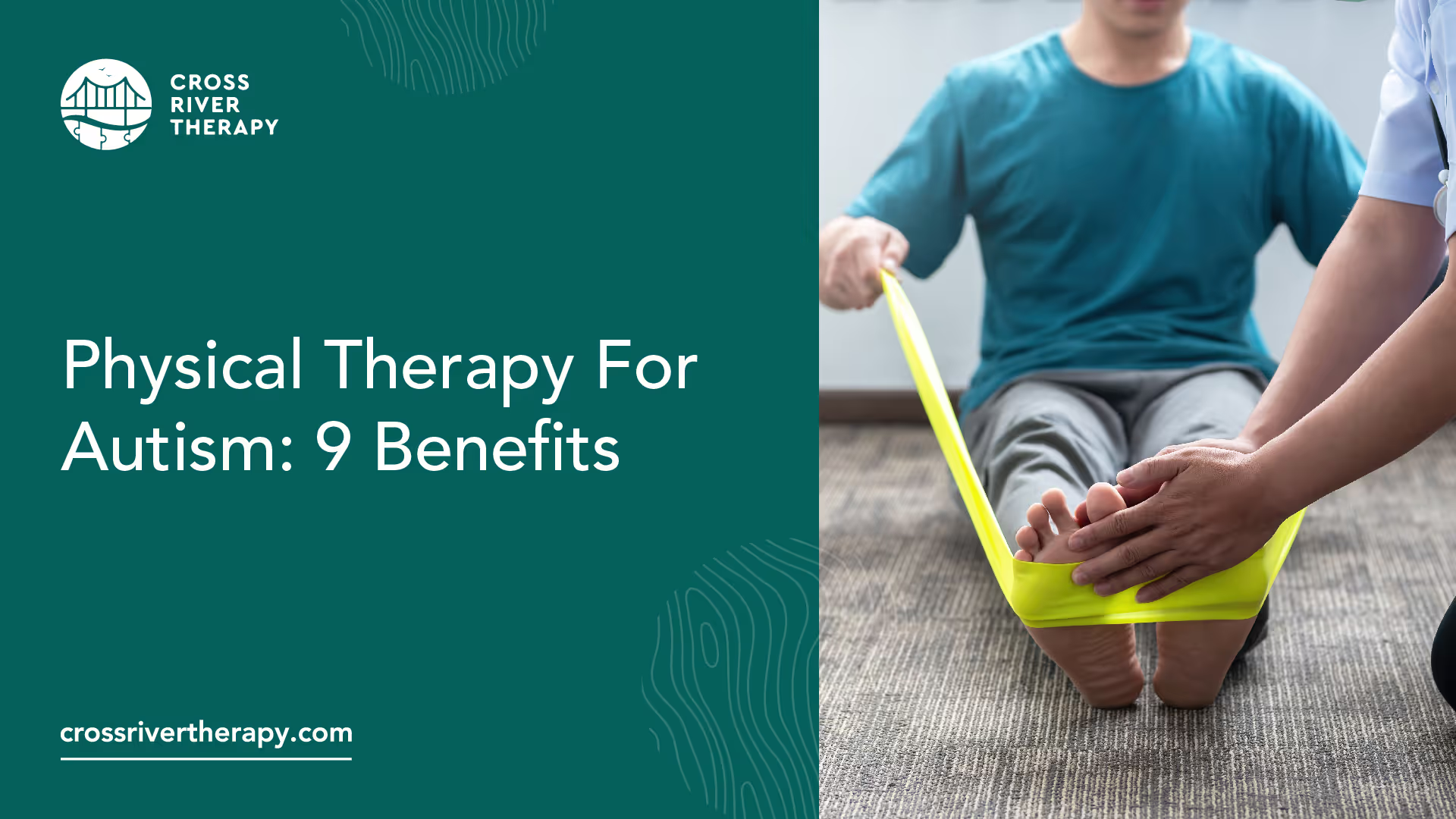
Here are the main benefits of physical therapy for kids with autism.

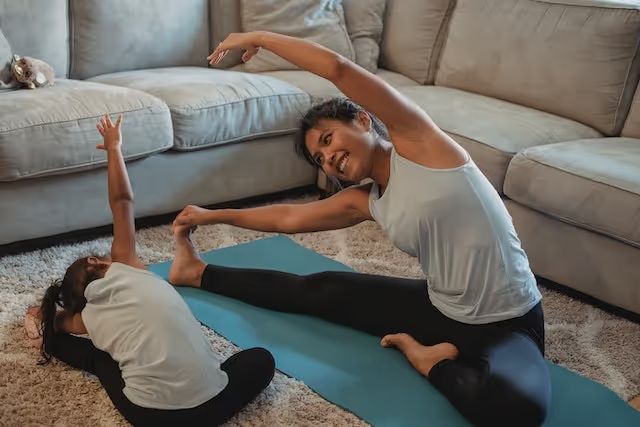
Physical Differences In Children With Autism
Motor Skills at 14 months
In a little over a year, young kids with autism exhibit development at a slower rate than their peers. This includes physical development as well. In one study, it was found that kids with ASD reach maturity in different motor patterns over short and long periods.
Control of posture
Autistic children often have problems keeping their physical balance in check. Stability and postural control in the lower portions of their body can turn simple activities into very difficult feats.
This can include walking, standing, or even sitting down in certain stances. Researchers learned that postural control didn't increase in some kids until they become preteens.
Clumsiness
Dyspraxia is a term used for clumsiness. It's often associated with multiple developmental and behavioral disorders, with ASD being one of them. Numerous studies show that motor skills and confidence in movement in kids with ASD are low and learned at a slower rate than in other children.
Motor imitation and gestures
Difficulty in communication is common among children with ASD. Things like physical gestures needed for expression and reading body language become bothersome, sometimes to the point of frustration and tantrums.
How Does Physical Therapy Help Kids With Autism?
Physical therapy is one of the numerous treatments that autistic clients rely upon to mitigate their symptoms.
Although there is no cure for autism, it can be treated to the point of symptoms becoming rare or almost nonexistent. Physical therapy is prescribed based on the severity of a patient's symptoms. A therapist evaluates their motor skill impairments.
Additionally, physical therapy assists in the following:
- Helps in the acquisition of new ways for movement
- Helps improve an everyday routine at school and home
- Enhanced and less risky skills during playtime
- Improves coordination levels
- Better stamina and overall fitness
- Boosts motor imitation abilities
Physical therapists assist kids by increasing their physical well-being. It uses a range of motion and coordination exercises. Such exercises can be performed at home or when visiting therapy centers.
Physical Therapy For Autism
Early development
When it comes to young kids, a therapist can help boost their coordination skills.
The treatment, for instance, might include ways to help them walk more safely, how to appropriately use stairs, and other essential maneuvers.
Many physical therapists assist kids in creating a routine, safely finding their way through various boundaries, and grounding them in ordinary physical interaction with other kids.
Autism can be predicted by studying delays in the early development of a child. It's strongly recommended by parents to report symptoms immediately when they're noticed.
However, regular visits with a pediatrician are often the way parents find out, as they're better trained on what to look out for.
Many physical therapists work closely with different guardians and parents.
They aim to boost children's abilities in getting through daily routines, ones they find challenging.
A physical therapist helps children to grow movement skills that are appropriate for their age. This is done through the teaching of structured activities, which allows them to take on knowledge through the routine.
They help to raise the strength level and coordination of children, Treatment plans consist of getting kids to walk in a better and more organized way, which also includes stairways. Most therapists consider imitation skills to be critical to their overall development.
While working with children, they help them carry out various actions, such as what to do when a certain song comes on that requires a rhythmic movement to be carried out. In this example, it's safe to teach in indoor and outdoor settings.
Lastly, a physical therapist offers guidance to parents and their children when taking on new routines. Eventually, the children in the session will learn enough to carry their knowledge into everyday life.
During School
While children are their primary focus, physical therapists also work closely with teachers, guardians, and parents.
Their awareness of ASD is especially important to know, as some of the work they do can travel at school and home when all parties are knowledgeable about it.
For this reason, many school staff stays in contact with physical therapists. This reduces difficulties for school kids, as those with ASD often have problems carrying out physical tasks that others their age wouldn't consider important.
One common motor skill is taught to children using a ball chair. Others may implement the use of carpet squares, hula hoops, and designated seats.
Movement breaks are recommended by therapists for teachers, especially in special needs classes.
For some with ASD, even going up a flight of stairs at school or on a bus can be demanding. Things like crowded hallways and the anxiety they feel when in such situations can all be lowered through physical therapy.
While at school, physical therapy also plays an important part in autistic children learning how to take turns, listen in class, and maintain self-control.
A physical therapist, or a teacher taught by one, may formulate plans that involve a child mimicking the movements of someone else they like, or even the teacher themselves.
During grade school, they can stay up with their peers on concepts that involve spatial awareness and coordination.
Regular physical education is crucial to this, especially for kids with special needs.
Adults with autism often work with physical therapists in the promotion of daily routines. For boosted movement, adults are typically advised to take part in different community resources. One of the most common is sports with family, friends, and workmates.
Even solitary exercise is well-suited for autistic adults, so long as it fits within the recommendation of an individual's therapist. At an older age, the focus is on the coordination of the body and recreational abilities.
With the right plan, adults can increase their ability to move in ways that may have led to stress and anxiety. These can have far-reaching positive effects, such as better performance at work, more interactive family activities, and even better employment prospects.
Why Should Kids With Autism Get Physical Therapy?
Children with autism should get physical therapy to increase their brain development and motor skills.
Physical therapists can pinpoint delays in motor abilities and performance. They work with parents, teachers, and siblings in improving daily routines outside of a therapy center.
Sources
Recent News
Related articles

Arizona Autism Laws Every Parent Should Know Before Starting ABA Therapy
Autism laws Arizona parents should know cover ABA insurance, AHCCCS appeals, IEPs, and Section 504 rights. Check ABA coverage with Cross River.

ABA Therapist Salary in Arkansas: What BCBAs and RBTs Actually Earn in 2026
ABA therapist salary Arkansas figures compare RBT and BCBA rates, benefits, guaranteed hours, and contract terms. Explore careers at Cross River.

5 Autism Support Groups and Family Resources in New Mexico Alongside ABA Therapy
Autism support groups New Mexico families can use offer peer support, local events, and school help. Cross River can explain ABA therapy options.

Where to Get an Autism Evaluation in New Mexico Before Starting ABA Therapy
Autism evaluation New Mexico options include UNM, NMSU, FIT, and private providers. Compare providers, records, and ABA steps with Cross River.

7 North Carolina Autism Resources to Contact Before ABA Therapy Starts
Autism resources North Carolina families can call for diagnosis, early intervention, rights, and parent support. Start ABA intake with Cross River.

Does Indiana Medicaid Cover ABA Therapy? A Step-by-Step Eligibility Checklist for Parents
Medicaid ABA therapy Indiana covers eligible children under 21 with prior authorization. Your five-step coverage review can start with Cross River.
How to Apply for New Mexico’s DD Waiver While Starting ABA Therapy
Autism waiver New Mexico applications need DD Waiver records and proof of daily support needs. Your next step is to start ABA intake with Cross River.

Is ABA Therapy Covered by Insurance in New Jersey? What Every Parent Should Know
ABA therapy insurance New Jersey may cover medically necessary care based on plan type, network, and authorization. Verify benefits with Cross River.

How ABA Therapy Builds Communication for Nonverbal Children Without Forcing Speech
ABA therapy communication for nonverbal children starts with AAC, signs, and daily routines. See how kids ask, refuse, choose, and get help.

How to Start ABA Therapy in New Jersey With a First-Call Checklist
How to start ABA therapy in New Jersey begins with records, insurance details, and intake questions. Use this first-call checklist before you call.

How to Get an Autism Evaluation in Arkansas Before Starting ABA Therapy
How to get an autism evaluation in Arkansas starts with a referral, provider choice, and key records. Use this parent checklist before ABA intake.

Center-Based vs In-Home vs School-Based ABA Therapy and How to Choose the Right Fit
Center-based, in-home, and school-based ABA therapy each fit different goals, routines, and settings. Compare options before your intake call.