








Autism and Sleep: Understanding the Connection
Research shows that up to 80% of children with autism have difficulty sleeping.


How To Get A Child With Autism To Sleep Alone
Sleep problems are common among individuals with autism spectrum disorder (ASD). In fact, research shows that up to 80% of children with ASD have difficulty sleeping.
This can have a significant impact on their overall health and wellbeing, as well as their ability to learn and function during the day. In this article, we'll explore the connection between autism and sleep, and provide tips for improving sleep quality in individuals with ASD.
Why Do Individuals with Autism Have Trouble Sleeping?
There are several reasons why individuals with ASD may have difficulty sleeping. One of the main reasons is sensory processing issues. Many individuals with autism are hypersensitive to certain stimuli, such as noise, light, or touch. These stimuli can make it difficult for them to fall asleep or stay asleep throughout the night.
Another reason is anxiety. Many individuals with ASD struggle with anxiety, which can make it difficult for them to relax and fall asleep. Additionally, individuals with ASD may have trouble regulating their emotions, which can lead to increased stress and difficulty sleeping.

Finally, individuals with ASD may have a disrupted circadian rhythm. This is the body's internal clock that regulates sleep and wake cycles. Disruptions to the circadian rhythm can make it difficult for individuals with ASD to fall asleep at night and wake up in the morning.
Tips for Improving Sleep Quality in Individuals with ASD
Fortunately, there are several strategies that can help improve sleep quality in individuals with ASD. Here are a few tips to consider:
Create a Calming Bedtime Routine
One of the most effective ways to improve sleep quality in individuals with ASD is to create a calming bedtime routine. This can include activities such as taking a warm bath, reading a book, or listening to calming music. The key is to create a routine that helps the individual relax and unwind before bed.
Limit Screen Time Before Bed
Electronic devices emit blue light, which can disrupt the body's natural sleep-wake cycle. To improve sleep quality, it's important to limit screen time before bed. This can include turning off electronic devices at least an hour before bedtime.
Create a Sensory-Friendly Sleep Environment
Individuals with ASD may be hypersensitive to certain stimuli, such as noise or light. To create a sensory-friendly sleep environment, consider using blackout curtains, white noise machines, or other tools to reduce sensory input.
Consider Melatonin Supplements
Melatonin is a hormone that helps regulate sleep-wake cycles. Some individuals with ASD may benefit from taking melatonin supplements to improve sleep quality. However, it's important to talk to a healthcare provider before starting any new supplements.
Conclusion
Sleep problems are common among individuals with ASD, but there are several strategies that can help improve sleep quality. By creating a calming bedtime routine, limiting screen time before bed, creating a sensory-friendly sleep environment, and considering melatonin supplements, individuals with ASD can get the restful sleep they need to thrive.
Recent News
Related articles

Arizona Autism Laws Every Parent Should Know Before Starting ABA Therapy
Autism laws Arizona parents should know cover ABA insurance, AHCCCS appeals, IEPs, and Section 504 rights. Check ABA coverage with Cross River.

ABA Therapist Salary in Arkansas: What BCBAs and RBTs Actually Earn in 2026
ABA therapist salary Arkansas figures compare RBT and BCBA rates, benefits, guaranteed hours, and contract terms. Explore careers at Cross River.

5 Autism Support Groups and Family Resources in New Mexico Alongside ABA Therapy
Autism support groups New Mexico families can use offer peer support, local events, and school help. Cross River can explain ABA therapy options.

Where to Get an Autism Evaluation in New Mexico Before Starting ABA Therapy
Autism evaluation New Mexico options include UNM, NMSU, FIT, and private providers. Compare providers, records, and ABA steps with Cross River.

7 North Carolina Autism Resources to Contact Before ABA Therapy Starts
Autism resources North Carolina families can call for diagnosis, early intervention, rights, and parent support. Start ABA intake with Cross River.

Does Indiana Medicaid Cover ABA Therapy? A Step-by-Step Eligibility Checklist for Parents
Medicaid ABA therapy Indiana covers eligible children under 21 with prior authorization. Your five-step coverage review can start with Cross River.
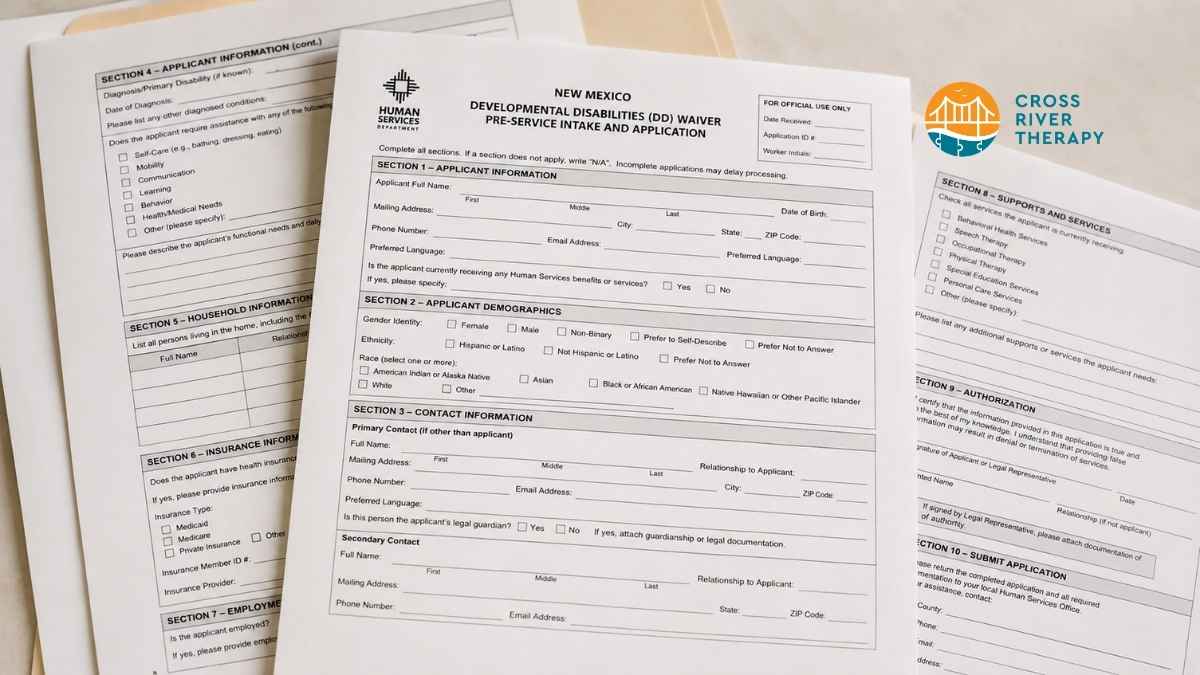
How to Apply for New Mexico’s DD Waiver While Starting ABA Therapy
Autism waiver New Mexico applications need DD Waiver records and proof of daily support needs. Your next step is to start ABA intake with Cross River.

Is ABA Therapy Covered by Insurance in New Jersey? What Every Parent Should Know
ABA therapy insurance New Jersey may cover medically necessary care based on plan type, network, and authorization. Verify benefits with Cross River.

How ABA Therapy Builds Communication for Nonverbal Children Without Forcing Speech
ABA therapy communication for nonverbal children starts with AAC, signs, and daily routines. See how kids ask, refuse, choose, and get help.

How to Start ABA Therapy in New Jersey With a First-Call Checklist
How to start ABA therapy in New Jersey begins with records, insurance details, and intake questions. Use this first-call checklist before you call.

How to Get an Autism Evaluation in Arkansas Before Starting ABA Therapy
How to get an autism evaluation in Arkansas starts with a referral, provider choice, and key records. Use this parent checklist before ABA intake.

Center-Based vs In-Home vs School-Based ABA Therapy and How to Choose the Right Fit
Center-based, in-home, and school-based ABA therapy each fit different goals, routines, and settings. Compare options before your intake call.