Financial stability through energy innovations
Moreover, the adoption of innovative energy solutions promotes financial stability. Sustainable practices, such as utilizing renewable energy sources, not only minimize expenses but can attract community support and government grants, bolstering the facility's fundraising efforts. As facilities become more energy efficient, they create a welcoming environment that is conducive to growth and development, thus enhancing overall service provision for individuals on the spectrum.
| Economic Impact | Benefits | Examples |
| Cost Savings | Up to 50% reduction in electricity bills | Solar panels, energy-efficient appliances |
| Resource Allocation | More funding available for essential therapies | Enhanced autism programs |
| Financial Stability | Attracts grants and community support | Sustainable initiatives |
Smart Homes: Creating Predictable and Safe Environments
Automation for Routine Establishment
Smart home technologies are instrumental in establishing predictable routines for individuals with autism. Automation features include:
- Lighting controls that adjust brightness and color temperatures to create calming atmospheres.
- Smart thermostats that maintain stable indoor temperatures, crucial for avoiding sensory overload.
- Emergency response systems ready to alert caregivers in case of unexpected situations.
These tools help not only in routine establishment but also in fostering a sense of control over their environment, thus reducing anxiety.
Safety Features Like Emergency Responses
Safety is paramount in autism care. Smart grid technologies offer:
- Real-time monitoring that alerts caregivers to unusual activities.
- Automated door locks that prevent unauthorized exits, ensuring safety without compromising independence.
- Integrated surveillance cameras for enhanced safety measures, allowing caregivers to keep watch securely from a distance.
This technology supports immediate responses to potential hazards, allowing individuals to feel safe and secure at home.
Confidence-Building Technology
Confidence is built through independence. Smart home systems not only enhance safety but also empower individuals with autism through:
- Voice-activated devices that simplify interactions, allowing individuals to manage their needs more independently.
- Wearable devices that track behavioral indicators and provide real-time feedback to caregivers.
- Augmented reality tools that simulate social situations to improve social skills in a safe, controlled setting.
These smart technologies come together to ensure that individuals with autism can thrive within a supportive, predictable, and safe environment, ultimately enhancing their quality of life.
Technological Advancements Supporting Autism Care
New smart grid features
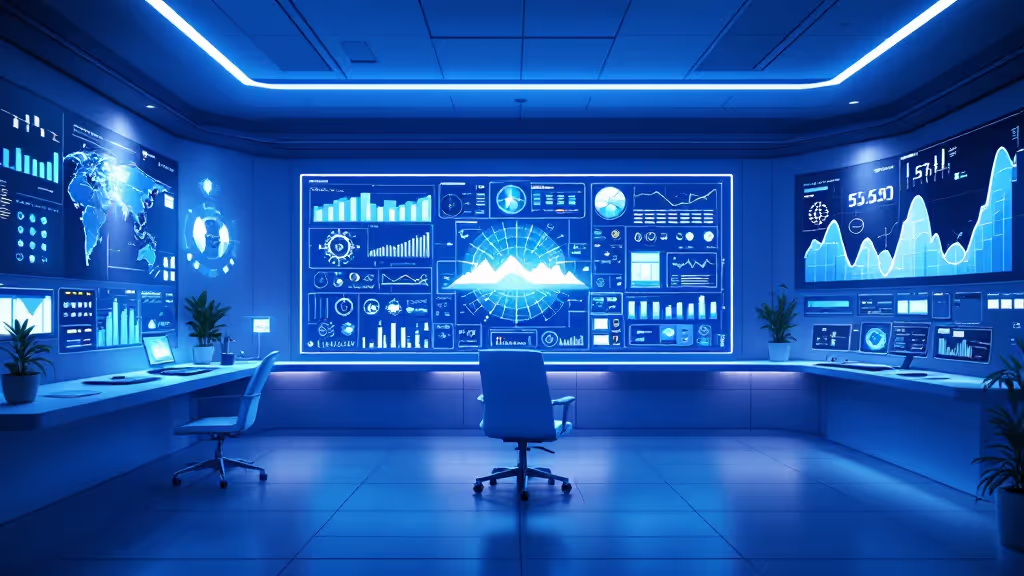
Smart grid technology integrates advanced monitoring systems that provide caregivers with real-time insights into the safety and behaviors of individuals with autism. Innovations include automated door locks and smart surveillance systems, which enhance security and allow caregivers to respond to emergencies swiftly. Additionally, smart sensors can alert caregivers in case of unusual activity, creating a responsive care environment.
Personalization of care strategies
The customization of support systems is a hallmark of advancements in smart grid technology. By utilizing tools that adjust lighting, sound, and temperature according to individual preferences, experts can create environments tailored specifically to the sensory needs of individuals on the autism spectrum. For instance, smart home systems can implement energy-efficient practices while also facilitating a comfortable and soothing atmosphere through adaptive lighting and temperature controls.
Integration of virtual and augmented reality
Virtual and augmented reality technologies are now being explored to complement traditional autism therapy. These tools simulate real-life interactions and environments, providing safe settings for individuals to practice social skills and enhance communication abilities. By creating engaging and interactive experiences, these technologies can significantly contribute to emotional and social skill development, leading to better engagement in therapeutic settings.
| Topic | Details | Benefits |
| New smart grid features | Automated door locks, surveillance, and real-time alerts | Improved safety and monitoring |
| Personalization of care strategies | Smart environmental controls for lighting, sound, and temperature | Enhanced comfort and reduction of sensory overload |
| Integration of AR/VR | Immersive technologies for social skills training | Increased engagement and skill development |
Future Directions and Considerations
Evolving smart grid technology in autism care
The future of smart grid technology in autism care is bright and expansive. As advancements continue, customized solutions can offer enhanced safety and improved communication for individuals with autism. Continued innovation can lead to more robust support systems, allowing caregivers to efficiently monitor behaviors and respond to needs in real time. This includes improving integration with smart home technologies, further streamlining everyday care routines.
Potential for broader applications
Beyond autism care, smart grid technology has potential applications in various healthcare settings. Its principles of real-time monitoring and energy management can also optimize care environments for those with differing health conditions. Implementing this technology across different facilities could contribute to healthier living spaces and drive down operational costs, ultimately leading to better care outcomes.
Fostering innovation and collaboration
Fostering collaboration among technology developers, healthcare providers, and community stakeholders is essential. Innovative funding approaches like the EU’s Horizon 2020 initiative can help address financial barriers that currently impede the broad adoption of smart grid solutions. By blending public and private efforts, the advancement of secure, efficient energy systems can be accelerated, further improving the quality of care for individuals with autism. Through these collaborative efforts, we can pave the way for the integration of smart technologies in autism care and other related fields.
Concluding Thoughts on Smart Grid Solutions for Autism
The integration of smart grid technology into autism support systems marks a revolutionary step toward creating more customized and efficient care environments. By optimizing energy management, enhancing communication, and tailoring living spaces to individual needs, smart grids hold transformative potential for improving the quality of life for individuals with autism. While challenges such as cost and security remain, the ongoing evolution of these technologies and the support of innovative funding mechanisms are paving the way for broader adoption. As we look to the future, the continued collaboration between technologists, caregivers, and communities will be critical in realizing the full benefits that smart grid solutions can offer to those on the autism spectrum.
References