








Smart thermostats for autism comfort
Enhancing Comfort with Smart Thermostat Technology in Autism-Friendly Homes


Customization and Control for Personal Comfort
Individual Preferences
Smart thermostats can be tailored to meet the individual temperature preferences of those living with autism. These devices have the capability to learn from user behavior, automatically adjusting heating and cooling based on routines and past settings. This level of customization ensures that individuals enjoy a stable atmosphere, particularly the recommended indoor temperature range of 71°F to 75°F. For individuals who may be hypersensitive to temperature changes, having control over these settings can significantly reduce anxiety and enhance comfort levels.
Adaptive Environment Control
The integration of smart thermostats into an individual’s living space allows for an adaptive environment that promotes well-being. With features like remote access, caregivers can easily monitor and adjust settings from anywhere, ensuring a calming atmosphere is maintained even when they are not home. Furthermore, establishing predictable schedules through programmable settings minimizes sensory overload and fosters a sense of security. By taking advantage of these smart technologies, families can create a sensory-friendly home tailored to their loved ones' unique needs.
Integrating Smart Home Technology for Autism Support
Comprehensive smart systems
Smart thermostats are at the forefront of smart home technology, offering customizable settings that cater specifically to the comfort needs of individuals with autism. By maintaining a stable indoor temperature, they reduce sensory overload caused by temperature fluctuations, which many on the autism spectrum find distressing. The recommended indoor temperature range of 70°F to 75°F is easily programmable, allowing families to create an environment that promotes routine and predictability.
These thermostats use advanced algorithms to learn user preferences, automatically adjusting settings based on occupancy and daily patterns. This intelligent management of heating and cooling systems ensures a comforting atmosphere tailored to the unique needs of each individual.
Synergy with other smart devices
Smart thermostats gain added functionality when integrated with other smart home devices. Combining them with smart lighting systems allows for adjustable brightness and color temperature, which can dramatically enhance the sensory-friendly atmosphere. Similarly, noise-canceling devices can be incorporated to manage overwhelming sounds, complementing the tranquil environment facilitated by stable temperature control.
This synergistic approach not only ensures comfort but also contributes to the emotional well-being of individuals with autism. Remote access features enable caregivers to adjust settings from anywhere, offering peace of mind while also significantly reducing energy costs by an estimated 10-15%. Overall, the combination of smart technology creates a nurturing and stable home that supports individuals with autism in thriving independently.
Energy Efficiency in Autism Care Environments
Cost Savings
Utilizing smart thermostats not only provides comfort to individuals with autism but also offers significant cost savings for their families. By automatically adjusting heating and cooling schedules based on routines, these devices can reduce energy bills by 10-15%. This means families can save between $100 and $200 annually, allowing them to allocate funds towards vital services and therapies specific to autism care.
Environmental Benefits
In addition to financial relieve, smart thermostats contribute to environmental sustainability. By optimizing energy consumption, they help reduce overall electricity usage, decreasing the household's environmental footprint. Integrating these technologies with renewable energy solutions, such as solar panels, can amplify these benefits, potentially saving families up to $1,200 per year. This not only supports financial stability but also promotes healthier living conditions, creating sensory-friendly spaces that enhance emotional well-being for individuals on the autism spectrum.
| Benefit Type | Description | Impact on Autism Care |
|---|---|---|
| Cost Savings | Reduction in energy bills by 10-15% | More funds for therapies |
| Environmental Benefit | Lower carbon footprint through reduced energy usage | Sustainable living spaces |
The Financial Advantage for Families

Savings on Utility Bills
Families with individuals on the autism spectrum can greatly benefit from the energy efficiency of smart thermostats. These devices optimize heating and cooling based on occupancy and user preferences, leading to potential savings of 10-15% on energy bills. By integrating smart technology, families can lower utility costs, which is crucial when managing specialized needs.
Reinvestment in Autism Care
The savings generated from lower energy costs can be redirected towards autism-specific therapies and support services. For instance, annual savings can range from $100 to $200, allowing families to allocate more resources to essential care. This financial relief not only eases household budgeting but enhances the overall well-being of individuals with autism by providing access to necessary treatments and therapies.
Conclusion: Towards Sensory-Friendly Environments

How do smart thermostats enhance comfort for individuals with autism?
Smart thermostats provide precise control over home temperatures, crucial for individuals with autism who may experience sensory sensitivities. By maintaining consistent indoor climates, these devices prevent discomfort caused by temperature fluctuations. The integration of smart home technology allows customizable temperature settings, catering to the unique preferences of each individual.
What benefits do smart thermostats offer for managing anxiety?
Individuals on the autism spectrum often thrive on predictability. Smart thermostats can automate temperature adjustments based on personalized schedules, creating a reliable environment. This predictability helps reduce anxiety and sensory overload, making home life more comfortable. Caregivers can also remotely access and manage these devices, ensuring that the environment remains stable even when they are not present.
How do smart thermostats contribute to energy efficiency?
Energy efficiency is another significant advantage of smart thermostats. By optimizing heating and cooling based on occupancy patterns and preferences, they can reduce energy consumption by 10-15%. Families can expect savings on their utility bills, which can be redirected toward essential therapies and support services for individuals with autism.
| Feature | Description | Benefits |
|---|---|---|
| Customizable Settings | Adjust temperatures based on individual preferences | Enhances comfort levels, reducing anxiety |
| Remote Control | Caregivers can manage settings from anywhere | Ensures stability in the environment |
| Energy Savings | Optimizes heating and cooling | Cuts costs by 10-15%, aiding families financially |
| Predictable Scheduling | Creates routines for temperature control | Reduces stress associated with temperature changes |
Through these advanced features, smart thermostats not only boost comfort but also promote a safe, adaptable living space for individuals with autism.
Embracing Technology for Enhanced Comfort
As we move towards a future where technology continues to integrate seamlessly into our daily lives, embracing smart thermostats offers a crucial way to enhance comfort for individuals on the autism spectrum. These devices not only contribute to sensory comfort but also align with the principles of energy efficiency, providing financial relief and fostering sustainable living conditions. By adopting smart thermostat solutions, families can create an environment that not only supports the unique needs of autistic individuals but also promotes overall well-being and independence. It's a step towards crafting nurturing spaces that honor both emotional stability and environmental responsibility, ensuring that smart technology continues to improve quality of life in meaningful ways.
References
Recent News
Related articles

6 Arkansas Medicaid ABA Therapy Rules Families Need to Know
Arkansas Medicaid ABA therapy has age, diagnosis and approval rules. Families can check six requirements before care.

Arizona Autism Laws for ABA Coverage and School Rights
Arizona autism laws for ABA coverage vary by plan. Families can check insurance, appeal options, and school rights.

ABA Therapist Salary in Arkansas for RBTs and BCBAs
Compare ABA therapist salary in Arkansas by role. See how paid hours and benefits affect earnings before applying.

5 Autism Support Groups and Family Resources in New Mexico
Autism support groups in New Mexico connect families. Local resources offer events, parent support, and school help.

Where to Get an Autism Evaluation in New Mexico
Autism evaluation options in New Mexico include UNM and NMSU. Age and referral details help parents prepare.
7 North Carolina Autism Resources to Contact Before ABA Therapy Starts
Autism resources North Carolina families can call for diagnosis, early intervention, rights, and parent support. Start ABA intake with Cross River.
Does Indiana Medicaid Cover ABA Therapy? A Parent Checklist
Indiana Medicaid ABA therapy may cover care for eligible children. The checklist covers coaching and renewals.
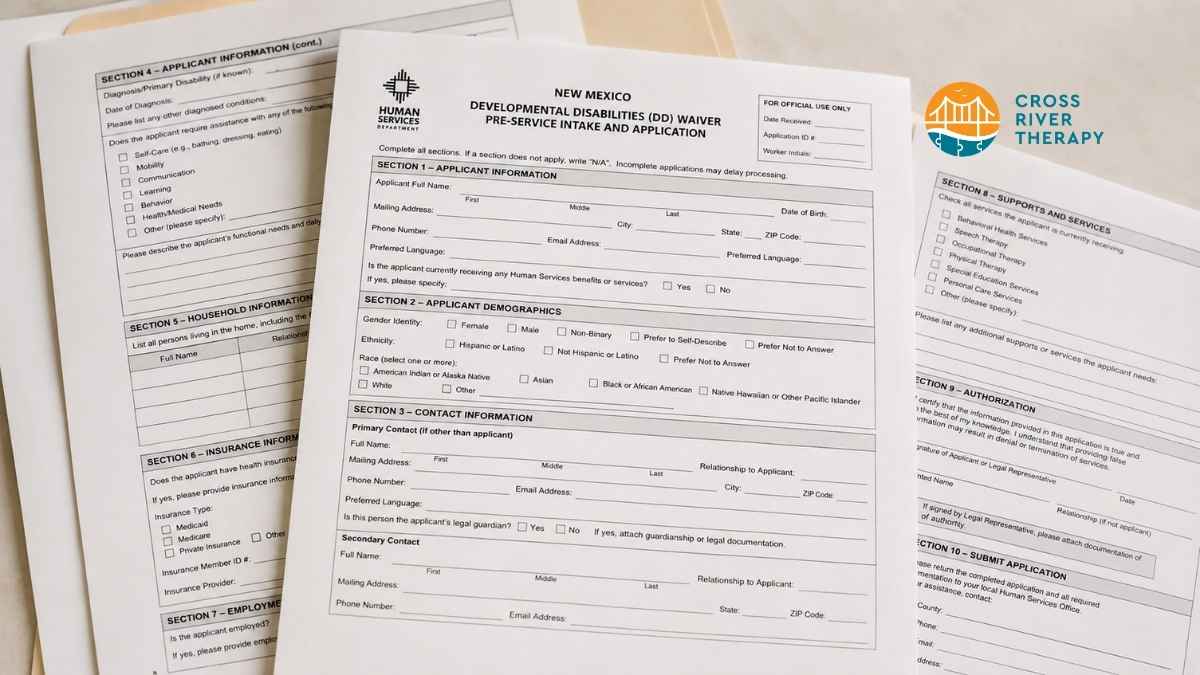
How to Apply for the New Mexico DD Waiver
Your NM DD waiver application starts with state intake. The steps cover records, submission, and enrollment.

Does Insurance Cover ABA Therapy in New Jersey?
ABA therapy insurance in New Jersey varies by plan. Learn what NJ FamilyCare covers and how to check costs.

How ABA Therapy Builds Communication for Nonverbal Children Without Forcing Speech
ABA therapy communication for nonverbal children starts with AAC, signs, and daily routines. See how kids ask, refuse, choose, and get help.

How to Start ABA Therapy in New Jersey With a Checklist
Your guide explains how to start ABA therapy in New Jersey. A first-call checklist covers records and next steps.

How to Get an Autism Evaluation in Arkansas Before Starting ABA Therapy
How to get an autism evaluation in Arkansas starts with a referral, provider choice, and key records. Use this parent checklist before ABA intake.