








Strategies for Reinforcing ABA Therapy Techniques at Home
Enhancing Home-Based ABA Therapy: Practical Strategies and Insights


Introduction
Applied Behavior Analysis (ABA) therapy is a powerful tool used to enhance the learning and behavior development of children with autism. While professional therapy sessions provide the foundational structure, it is equally essential to reinforce these techniques within a home environment. This article delves into effective strategies for implementing ABA principles at home, emphasizing the importance of collaboration, consistency, and creativity in supporting your child's growth.
Understanding Home-Based ABA Therapy

What is home-based ABA therapy?
Home-based ABA therapy refers to Applied Behavior Analysis services delivered in a child's natural environment, integrating learning into their daily routines. Family involvement is a key component, with parents and siblings encouraged to participate actively in the child's treatment.
This approach focuses on practical activities like dressing, mealtime, and bedtime, making therapy relevant and engaging for the child. It is tailored to meet individual needs and is based on scientifically-proven methods, making it effective for various disabilities, including Autism Spectrum Disorder. Early intervention is particularly emphasized, as it can significantly enhance social, language, and learning skills during the critical developmental years.
Role of family in home-based ABA
The involvement of family members is crucial in home-based ABA therapy. Parents can directly observe behaviors and implement strategies under the guidance of a therapist. This hands-on participation encourages consistent reinforcement of positive behaviors and the application of skills learned during formal sessions.
Regular communication with ABA professionals ensures that family members are equipped with the necessary techniques to support the child's progress effectively.
Emphasis on natural learning environment
By integrating therapy with everyday activities, home-based ABA therapy enhances learning opportunities in a comfortable setting. Skills learned in therapy can be generalized to various situations such as during social interactions, playdates, or household chores. The natural learning environment helps children apply these skills in real-life contexts, thereby improving their functionality and confidence.
This strategy not only fosters independence but also strengthens family bonds as parents and children work together through challenges, making therapy a family activity.
Implementing ABA Techniques at Home

How can parents implement ABA therapy techniques at home?
Parents can effectively implement ABA therapy techniques right in their homes by focusing on several critical components. Creating a structured environment is essential. This involves setting up a consistent daily routine that includes scheduled times for meals, play, and bedtime. Predictability can significantly reduce anxiety in children with autism and improve compliance during activities.
Positive reinforcement plays a vital role in promoting desired behaviors. Parents should reward their children immediately after they exhibit positive behavior, whether through praise, stickers, or additional playtime. This encourages repetition of good behaviors and helps the child feel accomplished.
Collaboration with ABA professionals—like Registered Behavior Technicians (RBT) and Board Certified Behavior Analysts (BCBA)—is crucial. These professionals can help develop personalized strategies and monitor progress, ensuring that techniques are adapted to best suit the child's needs.
Overall, incorporating prompting techniques, task analysis, and monitoring progress through data collection allows parents to understand and modify behaviors effectively. Active engagement in reinforcing communication and social skills during daily activities further ensures that learned skills generalize across various settings, aiding the child's development.
Core ABA Strategies Used by Therapists

What strategies do ABA therapists use?
ABA therapists utilize a range of strategies tailored to help children with autism improve their skills. Among these strategies, the following stand out:
- Positive Reinforcement: This involves rewarding desirable behaviors to increase the chances of their repetition. Rewards can include tangible items, verbal praise, or extra playtime.
- Negative Reinforcement: This technique aims at reducing inappropriate behaviors by removing adverse stimuli when the desired behavior is displayed.
- Video Modeling: Children can learn social skills effectively by observing appropriate behaviors demonstrated in videos, aiding in their understanding of social interactions.
- Prompting and Fading: Therapists provide cues to assist children in task completion, gradually reducing help to encourage independence.
- Natural Environment Teaching: This approach allows for skill application in everyday settings, reinforcing learning through real-life contexts.
- Behavior Chaining: Complex tasks are broken down into smaller steps, making them easier to learn and achieve.
- Generalization of Skills: This principle encourages children to apply newly learned skills across different situations.
- Behavior Contracts: These set clear expectations and rewards, fostering a sense of accountability for children.
Promoting independence through fading
Fading is critical in promoting independence among children. By gradually decreasing the number of prompts or assistance given, children learn to perform tasks on their own. This technique builds confidence and self-sufficiency, empowering children to tackle challenges without relying heavily on guidance.
Role of visual aids
Visual aids, such as picture schedules or charts, help clarify expectations and routines for children. Integrating these tools into therapy supports comprehension and organization, assisting children in navigating daily activities. They also provide visual feedback, offering motivation as children complete tasks successfully.
Understanding these strategies can enhance the effectiveness of ABA therapy, especially when implemented with parental support at home.
Exploring Reinforcement Strategies in ABA Therapy
What are reinforcement strategies in ABA?
Reinforcement strategies in Applied Behavior Analysis (ABA) are essential for increasing desirable behaviors and reducing challenging ones. These strategies involve providing preferred items or activities immediately following a desired behavior to encourage its recurrence.
For instance, when a child with autism completes a task, using verbal praise or giving a sticker right away reinforces that behavior. It's crucial to distinguish between reinforcers, which reliably strengthen behaviors, and rewards, which may not have the same impact.
The effectiveness of these reinforcement strategies depends on individual preferences, highlighting the need for personalized approaches. By identifying what motivates your child, you can increase the chances of success in behavior modification.
Using tokens and rewards effectively
Implementing token systems can create motivation and enhance the sense of achievement for positive behaviors. For example, children can earn tokens for completing chores or following instructions and exchange them for rewards like extra playtime or a favorite activity.
Here’s a brief overview of effective token systems:
Token System Element Description Benefits Clear expectations Define what behaviors earn tokens to remove ambiguity. Helps children understand goals and expectations. Immediate rewards Provide tokens as soon as the child exhibits the desired behavior. Reinforces the link between the behavior and the reward. Variety of rewards Offer a range of rewards to choose from to maintain interest. Keeps motivation high and engagement consistent.
Using tokens not only supports positive behavior but also fosters independence as children learn to manage their rewards thoughtfully.
Maintaining Consistency in Home-Based ABA

Why is consistency important in applying ABA techniques at home?
Consistency is essential in applying ABA techniques at home because it helps children with autism effectively learn and generalize their skills across different environments, such as from home to school. When caregivers apply strategies uniformly, it reduces confusion and reinforces positive behaviors.
Structured routines create a stable and predictable environment, decreasing anxiety for children. Establishing a consistent daily schedule—similar to their ABA sessions—can include fixed times for meals, play, and bedtime, helping children feel secure.
Moreover, clear expectations among everyone involved in the child's care, including parents and teachers, ensure effective communication and uniform reinforcement techniques. This collaborative approach supports skill maintenance and promotes continuous learning, making consistency the foundation for meaningful behavior change and long-term success in ABA therapy.
Structured routines and clear expectations
To support learning and behavior management at home, parents can implement structured routines that resemble the format of therapy sessions. Here are some key strategies:
- Daily Schedule: Use visual schedules or storyboards to clarify daily routines, making transitions smoother.
- Defined Areas: Create a dedicated space for therapy that is free from distractions, allowing children to focus better.
- Routine Activities: Incorporate skill-building exercises during daily activities like mealtime and playtime.
- Behavior Tracking: Monitor progress with data collection techniques to assess the effectiveness of interventions.
- Adjustments: Regularly consult with an ABA therapist to make necessary adjustments based on the child's progression.
Implementing these strategies not only fosters independence but also enhances the child's ability to practice skills learned in therapy in real-life situations.
Tracking Progress and Overcoming Challenges in Home-Based ABA

How can parents track progress and overcome challenges in home-based ABA therapy?
Parents play a pivotal role in tracking their child’s progress in home-based ABA therapy. Establishing a structured system is essential. This can include maintaining journals, charts, or utilizing digital applications designed specifically for documenting activities and noting outcomes related to their child's responses.
Effective Progress Tracking Methods
- Journals and Charts: Parents can create detailed logs of daily activities and behaviors. This helps in identifying patterns over time.
- Digital Apps: Many apps are tailored for documenting ABA therapy goals, allowing parents to input data seamlessly.
Understanding specific therapy goals, such as improving communication skills or following simple directions, enhances the effectiveness of tracking. Visual supports, like colorful charts, can engage children and make the monitoring process enjoyable.
Utilizing Technology for Documentation
Incorporating technology into progress tracking can significantly enhance accessibility and clarity:
- Video and Audio Recording: Recording sessions can help parents observe behaviors and improvements over time.
- Online Platforms: Some platforms allow parents to share data directly with ABA professionals for real-time feedback.
Importance of Parent-Professional Communication
Maintaining open communication with ABA professionals is vital. Regularly sharing observations allows for tailored adjustments to the therapy plan, ensuring the child’s needs are met effectively. This collaboration enables parents to address challenges promptly and receive guidance on refining strategies for their child’s unique requirements.
Through structured tracking, engaging methods, and consistent communication, parents can navigate home-based ABA therapy successfully, fostering their child's development in meaningful ways.
Conclusion
Reinforcing ABA techniques at home requires commitment, consistency, and collaboration between parents and professionals. By creating a structured environment, utilizing positive reinforcement, and maintaining open communication with ABA therapists, parents can effectively support their child's development. The integration of these strategies into daily life not only enhances therapy outcomes but also empowers families to foster a nurturing and supportive environment conducive to lifelong learning and growth for their children with autism.
References
- How to Incorporate ABA Therapy at Home - Surpass Behavioral Health
- 7 Ways Families Can Reinforce ABA Therapy at Home
- Tips for Managing Aggression in Autism with In-Home ABA Therapy
- ABA Therapy Techniques and Usage - First Step Arkansas
- Continuing ABA Therapy and Autism Therapy at Home as a Parent
- Home-based ABA Therapy: A Comprehensive Guide
- Understanding ABA Techniques: 7 Strategies You Need to Know
- Home-Based ABA Therapy - Autism Learning Partners
- Autism Learning Partners | Making Progress Possible
Recent News
Related articles

6 Arkansas Medicaid ABA Therapy Rules Families Need to Know
Arkansas Medicaid ABA therapy has age, diagnosis and approval rules. Families can check six requirements before care.

Arizona Autism Laws for ABA Coverage and School Rights
Arizona autism laws for ABA coverage vary by plan. Families can check insurance, appeal options, and school rights.

ABA Therapist Salary in Arkansas for RBTs and BCBAs
Compare ABA therapist salary in Arkansas by role. See how paid hours and benefits affect earnings before applying.

5 Autism Support Groups and Family Resources in New Mexico
Autism support groups in New Mexico connect families. Local resources offer events, parent support, and school help.

Where to Get an Autism Evaluation in New Mexico
Autism evaluation options in New Mexico include UNM and NMSU. Age and referral details help parents prepare.

7 North Carolina Autism Resources to Contact Before ABA Therapy Starts
Autism resources North Carolina families can call for diagnosis, early intervention, rights, and parent support. Start ABA intake with Cross River.

Does Indiana Medicaid Cover ABA Therapy? A Parent Checklist
Indiana Medicaid ABA therapy may cover care for eligible children. The checklist covers coaching and renewals.
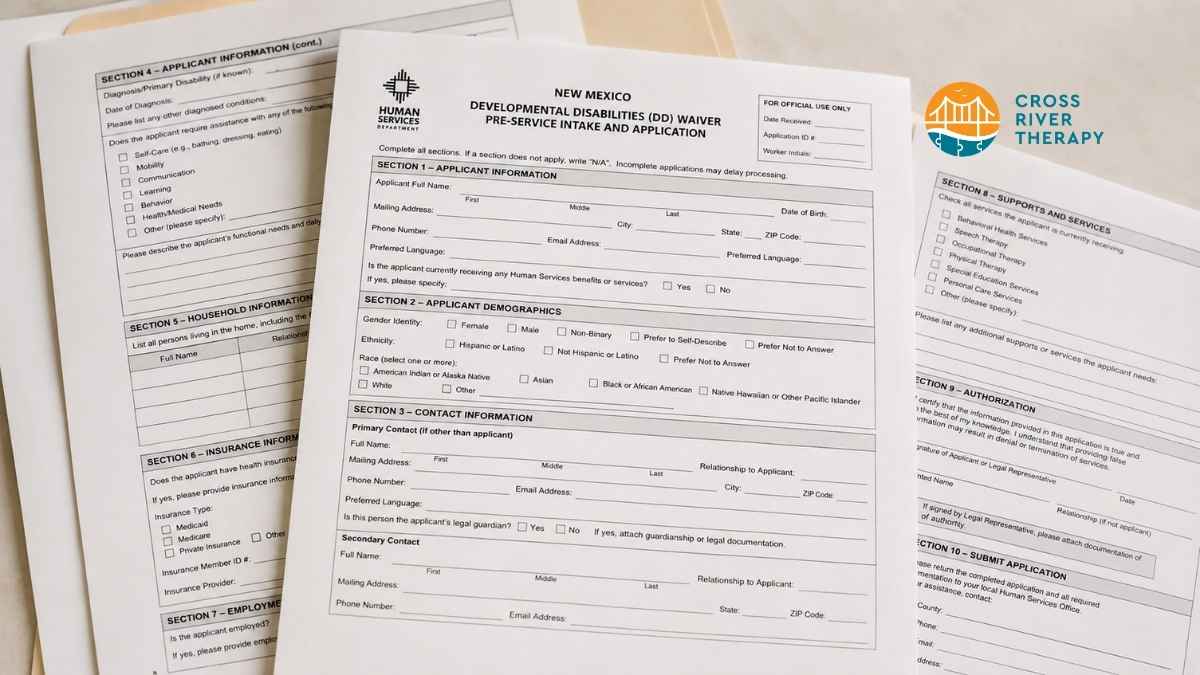
How to Apply for the New Mexico DD Waiver
Your NM DD waiver application starts with state intake. The steps cover records, submission, and enrollment.

Does Insurance Cover ABA Therapy in New Jersey?
ABA therapy insurance in New Jersey varies by plan. Learn what NJ FamilyCare covers and how to check costs.

How ABA Therapy Builds Communication for Nonverbal Children Without Forcing Speech
ABA therapy communication for nonverbal children starts with AAC, signs, and daily routines. See how kids ask, refuse, choose, and get help.

How to Start ABA Therapy in New Jersey With a Checklist
Your guide explains how to start ABA therapy in New Jersey. A first-call checklist covers records and next steps.

How to Get an Autism Evaluation in Arkansas Before Starting ABA Therapy
How to get an autism evaluation in Arkansas starts with a referral, provider choice, and key records. Use this parent checklist before ABA intake.