








Supporting Autistic Children in Groups
Enhancing Group Participation for Autistic Students


Introduction to Group Support for Autistic Children
Autistic children face unique challenges when interacting in group settings, which can affect their social and learning experiences. Educational environments often require collaboration that may be difficult for them due to differences in communication and sensory processing. By implementing supportive strategies, educators and caregivers can create inclusive group settings where autistic children thrive socially and academically.
Strategies for Integrating Autistic Children into Groups

What are effective strategies for integrating autistic children into group settings within educational environments?
Effective integration of autistic children into group settings relies on creating structured and welcoming atmospheres that encourage social skills development. Teachers can begin by establishing clear routines, which help students feel secure and reduce anxiety about changes. Visual supports, like schedules, serve as valuable tools to guide students through their day.
Modeling appropriate social behaviors is crucial. Educators can demonstrate how to interact positively and allow opportunities for peer mentoring, fostering a sense of belonging. Additionally, utilizing sensory tools—like noise-canceling headphones—and arranging optimal seating can help accommodate sensory sensitivities, ensuring a comfortable environment for learning.
Professional development for educators on autism-specific strategies is essential. This training enhances understanding and support for autistic students. Finally, implementing targeted social skills training within these settings can significantly improve their ability to engage with peers and form friendships, making their educational experience more enjoyable and fulfilling.
Guidelines for Engaging and Teaching in Groups

What guidelines should be followed for effectively engaging and teaching autistic children in group contexts?
To enhance engagement and learning for autistic children in group settings, educators should adopt specific strategies tailored to their unique strengths. Here are some essential methods:
- Use Visual Supports
Visual aids, such as schedules and step-by-step instructions, can clarify tasks and expectations, helping students manage anxiety. - Clear Communication
Always use simple, direct language. Pair verbal instructions with visual cues to aid comprehension. - Structured Activities
Implement structured group tasks that encourage teamwork, such as board games or sports, to facilitate social interaction. - Assign Roles
Clearly defined roles in group projects help autistic children understand their responsibilities, making collaboration more predictable. - Sensory-Friendly Environment
Create a calm classroom space that minimizes distractions and accommodates sensory needs, allowing autistic children to focus better. - Social Skills Reinforcement
Regularly reinforce positive behaviors through praise for specific actions, fostering a motivating environment.
Educators are encouraged to work closely with families and special education professionals to ensure that all accommodations are thoughtfully implemented.
Fostering Social Skills and Friendships
How can social skills and friendships be fostered among autistic children in group situations?
To foster social skills and friendships among autistic children in group situations, it's essential to provide direct instruction and practice in structured environments. Social skills groups are effective, offering a platform for students to engage with each other and learn vital interaction skills.
Using methods like role-playing and modeling social interactions can help children grasp social norms. Positive reinforcement of desired behaviors during these interactions nurtures a motivating environment.
Visual aids, such as social stories, can clarify social expectations, aiding comprehension and communication. Encouraging children to engage with peers who share similar interests can further establish connections and friendships.
Educating peers about autism fosters a supportive environment, enhancing acceptance and understanding within the group. Lastly, fostering patience and celebrating small milestones in social interactions can boost confidence, encouraging ongoing engagement among autistic children.
Managing Behavior and Anxiety in Groups

What are some practical tips for managing behavior and anxiety in autistic children during group activities?
Managing behavior and anxiety in autistic children during group activities can be enhanced through several practical strategies. Incorporating sensory breaks, visual schedules, and clear rules can provide structure and predictability, which help reduce stress.
Engaging activities that reflect the child's interests, such as cooperative sports, creative projects, and sensory play, can enhance participation and learning outcomes. These activities tap into their passions, making them more likely to engage positively with others.
Utilizing calming techniques like deep breathing, yoga, and designated quiet spaces can aid in self-regulation. Creating areas in the classroom where students can retreat when feeling overwhelmed is crucial.
Additionally, using tools like social scripts and emotion cards can help children practice social skills and understand emotional cues. These resources give context to feelings and enhance interactions within the group, making social engagements less intimidating.
By integrating these strategies into group settings, educators can foster a more inclusive environment that supports the needs of autistic children and reduces anxiety.
Supporting Autistic Children Socially and Emotionally
How can educators and caregivers best support autistic children socially and emotionally?
Educators and caregivers can best support autistic children socially and emotionally by creating a safe and predictable environment that accommodates individual sensory needs and preferences. Implementing strategies such as visual schedules, clear routines, and sensory-friendly spaces can help children manage sensory overload and understand daily expectations.
Engaging in shared activities that captivate the child's interests not only fosters joint attention but also enhances communication skills. Using methods like role-playing and social stories can significantly improve their ability to navigate social situations.
Additionally, employing positive reinforcement to acknowledge their strengths and achievements encourages social interactions and boosts emotional well-being. Collaboration with caregivers and special education professionals is essential to tailor interventions that meet each child’s unique needs, ultimately supporting their overall development and connection with peers.
Support Groups for Autism Families
How can families of autistic children benefit from support groups?
Families of autistic children can greatly benefit from support groups by gaining access to shared experiences, practical advice, and emotional support. These groups help reduce feelings of isolation, offering a space where parents can vent frustrations and validate their feelings.
Additionally, support groups facilitate connections with other families, fostering long-lasting friendships and a supportive community that understands unique challenges. Parents can also share resources regarding therapies and educational options, enhancing their ability to navigate the complexities of autism care.
These connections empower families to advocate for their children effectively, promoting emotional well-being among caregivers. By participating in these groups, families not only receive guidance but also build a network that can offer invaluable support during challenging times.
Table of Support Group Benefits
Benefit Description Impact on Families Emotional Support Opportunities to express feelings and alleviate loneliness Reduces feelings of isolation Shared Resources Parents exchange tips about therapies and educational strategies Enhances understanding of autism Community Connections Build friendships with families facing similar challenges Fosters a sense of belonging Advocacy Empowering parents to speak up for their child's needs Improves support within schools
Community Resources for Social Skills
How can social skills development for autistic children be supported by community resources?
Social skills development for autistic children can be significantly supported by community resources through structured programs like social skills workshops and inclusive playgroups. These resources often employ professionals such as special education teachers and therapists who facilitate social skills groups, allowing children to practice skills in real-life settings with peers.
Effective programs break down social skills into manageable components, incorporate visual aids, and utilize varied learning strategies to enhance understanding and application. For instance, emotion cards can be employed to help children recognize and interpret emotional cues, while role-playing scenarios can simulate real-life social interactions.
Community initiatives can also celebrate children's individual strengths and interests, fostering motivation and engagement in social interactions. Ultimately, families play a crucial role by encouraging friendships and promoting awareness about autism, creating a more inclusive environment.
Additional Community Resources
Type of Resource Description Benefits Social Skills Workshops Structured programs focused on developing key social skills. Real-life practice and support. Inclusive Playgroups Groups that promote interaction among autistic and non-autistic children. Encourage social connections. Family Support Groups Platforms for parents to share experiences and strategies. Build community and knowledge. School Partnerships Collaborations between schools and local autism organizations. Enhance understanding and inclusion.
Utilizing these community resources effectively can provide significant support to autistic children in developing the social skills necessary for successful interactions.
Conclusion
Supporting autistic children in group contexts requires a commitment to creating inclusive, understanding environments. By employing a variety of tailored strategies, leveraging community resources, and fostering strong connections between educators, caregivers, and families, we can enhance the social and emotional well-being of these children. Moving forward, it's crucial to continue evolving these approaches to accommodate the unique needs of autistic children, helping them thrive in group settings and beyond.
References
- Group Work in a General Education Classroom for Students with ASD
- Autism in the classroom: Strategies for success
- Helping Kids with Autism Make Friends
- Social skills and autism | Autism Speaks
- Making friends - supporting your autistic child
- Social interactions: autistic kids & teens | Raising Children Network
- 24 Classroom Activities for Kids with Autism | Waterford.org
Recent News
Related articles

6 Arkansas Medicaid ABA Therapy Rules Families Need to Know
Arkansas Medicaid ABA therapy has age, diagnosis and approval rules. Families can check six requirements before care.

Arizona Autism Laws Every Parent Should Know Before Starting ABA Therapy
Autism laws Arizona parents should know cover ABA insurance, AHCCCS appeals, IEPs, and Section 504 rights. Check ABA coverage with Cross River.

ABA Therapist Salary in Arkansas: What BCBAs and RBTs Actually Earn in 2026
ABA therapist salary Arkansas figures compare RBT and BCBA rates, benefits, guaranteed hours, and contract terms. Explore careers at Cross River.

5 Autism Support Groups and Family Resources in New Mexico Alongside ABA Therapy
Autism support groups New Mexico families can use offer peer support, local events, and school help. Cross River can explain ABA therapy options.

Where to Get an Autism Evaluation in New Mexico Before Starting ABA Therapy
Autism evaluation New Mexico options include UNM, NMSU, FIT, and private providers. Compare providers, records, and ABA steps with Cross River.

7 North Carolina Autism Resources to Contact Before ABA Therapy Starts
Autism resources North Carolina families can call for diagnosis, early intervention, rights, and parent support. Start ABA intake with Cross River.

Does Indiana Medicaid Cover ABA Therapy? A Step-by-Step Eligibility Checklist for Parents
Medicaid ABA therapy Indiana covers eligible children under 21 with prior authorization. Your five-step coverage review can start with Cross River.
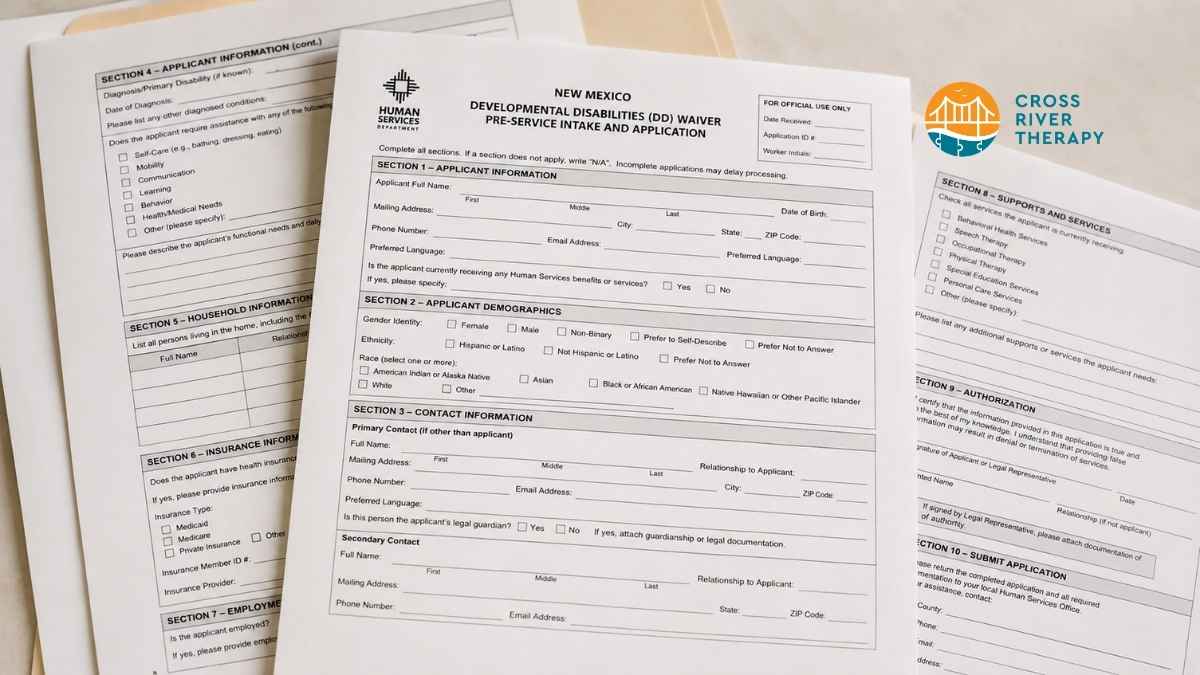
How to Apply for New Mexico’s DD Waiver While Starting ABA Therapy
Autism waiver New Mexico applications need DD Waiver records and proof of daily support needs. Your next step is to start ABA intake with Cross River.

Is ABA Therapy Covered by Insurance in New Jersey? What Every Parent Should Know
ABA therapy insurance New Jersey may cover medically necessary care based on plan type, network, and authorization. Verify benefits with Cross River.

How ABA Therapy Builds Communication for Nonverbal Children Without Forcing Speech
ABA therapy communication for nonverbal children starts with AAC, signs, and daily routines. See how kids ask, refuse, choose, and get help.

How to Start ABA Therapy in New Jersey With a First-Call Checklist
How to start ABA therapy in New Jersey begins with records, insurance details, and intake questions. Use this first-call checklist before you call.

How to Get an Autism Evaluation in Arkansas Before Starting ABA Therapy
How to get an autism evaluation in Arkansas starts with a referral, provider choice, and key records. Use this parent checklist before ABA intake.