








Supporting Children with Autism in Public Spaces Through ABA Therapy
Creating Inclusive Public Spaces with ABA Therapy for Children with Autism


Understanding the Need for Autism-Friendly Public Spaces
Creating autism-friendly public environments is vital for the inclusion and participation of individuals with Autism Spectrum Disorder (ASD). These spaces not only reduce sensory overload but also promote acceptance and understanding within the community. By exploring the application of Applied Behavior Analysis (ABA) in public settings, we can support children with autism to navigate these spaces more effectively and enhance their social skills.
Challenges Faced by Children with Autism in Public Spaces

Autism and Sensory Sensitivities
Children with autism often experience sensory sensitivities that can profoundly affect their interactions in public places. Bright lights, loud sounds, and crowded spaces can trigger anxiety and distress. A bustling environment may lead to sensory overload, making it difficult for them to focus or participate in activities.
To mitigate these challenges, public spaces can be designed with sensory-friendly elements such as calming colors, adjustable lighting, and quiet zones where children can retreat when feeling overwhelmed.
Social Interaction Difficulties
Social cues can be particularly challenging for children with autism. Understanding body language, tone of voice, or facial expressions might be difficult, leading to misunderstandings in social settings. These challenges can hinder their participation in community events.
Preparation is essential; prior discussions about social expectations and settings can help establish comfort. Visual aids, such as communication cards or social scripts, can enhance their confidence and willingness to engage with others.
The Importance of Structured Environments
A structured environment is vital for children with autism, as it provides predictability, which can ease anxiety. Creating consistent routines and clear schedules aids in making public outings less daunting. For instance, visiting during quieter times can reduce stress, allowing children to navigate through more comfortably.
Implementing transition strategies and offering individual flexibility within established routines can foster a sense of security. This is crucial for developing independence and fostering positive experiences during public outings.
Overall, addressing the unique challenges faced by children with autism in public spaces promotes inclusivity and supports their growth. Design considerations, enhanced communication strategies, and structured environments can significantly improve their ability to engage and participate in society.
Strategies for Creating Autism-Friendly Environments
Noise Reduction Techniques
Reducing noise is essential for creating an autism-friendly environment. Here are several effective methods:
- Soundproofing: Use sound-absorbing materials in walls and ceilings to minimize noise transmission.
- Quiet Areas: Designate specific quiet zones where individuals can retreat to alleviate sensory overload.
- Soft Background Music: Implement soft, calming music in some spaces to mask jarring sounds without overwhelming individuals.
Sensory-Friendly Adjustments
Adjusting sensory elements in public spaces can significantly enhance comfort for individuals with autism:
- Calming Colors: Opt for softer, muted colors that reduce visual overstimulation, such as pastels.
- Lighting Choices: Utilize natural light when possible, and install adjustable lighting to reduce harsh brightness that can lead to discomfort.
- Texture Variety: Incorporate a variety of textures in furniture and decor that are soothing for touch, helping individuals to engage more comfortably with the environment.
Visual Supports
Effective visual tools can facilitate navigation and understanding in public spaces:
- Clear Signage: Develop clear and simple signs with visual aids to help individuals navigate the space comfortably.
- Visual Schedules: Implement schedules indicating routine activities to reduce anxiety related to unpredictability.
- Social Stories: Utilize social stories that prepare individuals for specific scenarios, enhancing comfort in new environments.
Combining these strategies can create an inclusive space that not only addresses sensory sensitivities but also fosters greater participation and understanding within the community.
Implementing ABA Therapy in Public Contexts

Role of ABA in Behavior Management
Applied Behavior Analysis (ABA) therapy plays a significant role in behavior management for children with autism, especially in public settings. By employing the principles of learning and behavior, ABA aims to increase helpful behaviors while decreasing harmful ones. It focuses on essential areas such as communication skills, social interactions, and adaptive behavior.
ABA's approach includes using positive reinforcement—rewarding desirable behaviors—which helps children learn more effectively. A structured setting allows for precise behavior tracking, making it easier to implement strategies immediately when challenging behaviors arise.
Supporting Communication and Social Skills
In public contexts, ABA can enhance communication skills by promoting functional communication. This includes teaching children to use gestures, communication cards, or apps to express needs, ask for help, or engage with others. The use of visual aids, such as social stories, also prepares children for social interactions by clarifying expected behaviors and social cues.
Moreover, community-based ABA therapy provides opportunities for social skills development. Practicing initiating conversations or sharing in settings like parks encourages interactions in real-life scenarios, fostering social understanding and relationships.
Real-World Application of ABA Techniques
The real-world application of ABA techniques is crucial in helping children transfer skills learned in therapy to everyday situations. Visits to parks or community centers can be structured to include practice opportunities for the skills they've learned. For instance, establishing a safe signal allows children to indicate when they feel overwhelmed, promoting self-regulation.
Research shows strong evidence that community-based ABA therapy supports skill acquisition and generalization of learned behaviors, allowing children to navigate public spaces more comfortably. With the cooperation of parents and commitment to consistent methods, children can thrive in inclusive environments, enhancing both their independence and social engagement.
Topic Description Benefits ABA in Behavior Management Increases positive behaviors through reinforcement Improves everyday interactions Communication Skill Support Uses communication aids to enhance expression Promotes understanding in social situations Real-World Applications Applies learned skills in community settings Fosters independence and confidence
Role of Positive Reinforcement in ABA
Encouraging Desirable Behaviors
Positive reinforcement plays a vital role in Applied Behavior Analysis (ABA) therapy by motivating individuals to repeat desirable behaviors. When a behavior is followed by a reward, it increases the likelihood of that behavior occurring again in the future. This approach not only fosters better behavior in children with autism but also boosts their confidence and self-esteem.
Mechanics of the A-B-Cs Model
The effectiveness of positive reinforcement is framed within the A-B-Cs model: Antecedent, Behavior, and Consequence.
- Antecedent: A trigger often involves a prompt or situation leading to the behavior.
- Behavior: The action or response made by the individual.
- Consequence: What follows the behavior, often a reward when it meets a desired goal.
Positive Reinforcement Techniques
Techniques can vary widely, including:
- Verbal Praise: Simple encouragement recognizes and reinforces good behavior.
- Tokens or Rewards: A more tangible method where children earn tokens for specific positive actions, which they can exchange for a prize.
- Social Reinforcement: Engaging in enjoyable activities or getting time with peers or family as a reward.
These techniques are tailored to meet the individual’s preferences, ensuring that reinforcement is effective.
Social Skills Development: A Core Focus
Importance of Social Interaction
Social interaction is essential for children with autism, playing a pivotal role in their social skills development. Engaging with peers fosters relationships and enhances communication skills, helping children navigate various social situations. By participating in structured group activities like small lunch groups, children can practice conversation in low-pressure contexts, gradually building confidence.
Techniques to Enhance Social Understanding
To effectively develop social skills, incorporating a variety of techniques is beneficial. Breaking down social interactions into smaller, manageable components is crucial. Here are some strategies to enhance social understanding:
- Modeling: Demonstrate appropriate social behaviors for children. Seeing these behaviors in action helps them learn what to emulate.
- Context Clues: Teach children to recognize body language and other non-verbal cues that signal social contexts and emotions.
- Role-Playing: Use role-playing exercises to simulate social scenarios, allowing children to practice responses and behaviors within a safe environment.
- Visual Supports: Utilize visual aids, such as charts or social stories, to reinforce key concepts and strategies associated with social interactions.
Use of Model Demonstrations and Peer Involvement
Peer involvement can significantly enhance learning. Encourage peers to model positive social interactions, such as sharing and initiating conversations. Implementing peer buddy systems where children pair with supportive classmates can foster understanding and skill-building. Moreover, encouraging joint activities, like cooperative games, provides natural settings for practice.
Implementing a Program for Social Skills Development
To implement a successful social interaction skills program for a child with autism, consider the following steps:
- Create structured environments:
- Use small, engaging groups to encourage interaction.
- Break social skills into manageable components:
- Focus on specific areas, providing clear steps for achievement.
- Reinforce positive behaviors:
- Use specific praise to acknowledge improvements.
- Teach empathy and reciprocity:
- Help the child recognize emotions in themselves and others.
- Support caregivers:
- Provide resources to manage stress and promote nurturing environments.
By adopting these strategies, caregivers can facilitate meaningful social skill development, empowering children with autism to thrive in community settings.
Practical Tips for Navigating Public Spaces with ABA Support
Preparing for Outings
Navigating public spaces can be particularly challenging for children with autism. Effective preparation is essential. Discuss the outing in advance, outlining what to expect. Use visual aids, such as social stories, to help the child understand the sequence of events and potential scenarios they might encounter.
Using Visual Aids and Social Stories
Incorporating communication tools can greatly enhance a child’s experience. Visual aids like communication cards or social scripts can help children express their needs and navigate interactions. Practicing social scripts before outings can build confidence and reduce anxiety, enabling children to handle social situations more smoothly.
Choosing the Right Environments
The choice of environment also plays a significant role in success. Opt for visits to public places during quieter times to minimize sensory overload from bright lights and loud noises. Establishing a structured schedule for outings can provide predictability, helping children feel more comfortable while engaging in community activities. Additionally, allowing the use of comfort items can ease transitions, making outings more enjoyable and manageable.
Tip Description Benefits Prepare in advance Discuss outing details and potential scenarios Reduces anxiety and helps the child know what to expect Use visual aids Communication cards and social scripts Enhances understanding and expression of needs Choose quieter times Visit public spaces during less busy hours Minimizes sensory overload and stress
Community-Based ABA Therapy and Inclusivity
Benefits of Real-World Contexts
Community-based Applied Behavior Analysis (ABA) therapy leverages real-world environments to enrich learning experiences for children with autism. By utilizing familiar settings, such as parks or community centers, therapists can engage children in activities that foster independence and functional skills. This approach enables children to practice important social interactions, like initiating conversations or sharing toys, within the context they will encounter in everyday life.
Generalization of Learned Skills
One of the hallmarks of community-based ABA therapy is its focus on generalizing learned skills. Rather than confining learning to a therapy room, children are encouraged to apply their skills in varied social situations. For instance, they may practice ordering food or asking for help, supporting their understanding of functional communication in different contexts, which is crucial for their everyday independence.
Fostering Community Involvement
Community-based settings promote active participation among peers, enhancing social skills development and reducing feelings of isolation. By engaging in recreational activities alongside typically developing peers, children with autism not only improve their social understanding but also foster lasting relationships, paving the way for inclusion in broader community events.
Aspect Benefit Details Real-world Learning Enhanced skill acquisition Practice skills in familiar, engaging settings Generalization of Skills Applied learning in real contexts Transition therapy skills to everyday scenarios Social Skills Development Improved peer interactions Encouragement of friendships and community involvement
Exploring the Broader Application of ABA Therapy
Can ABA be used outside of autism?
Yes, Applied Behavior Analysis (ABA) can be used beyond autism. It has a wide range of applications that benefit various individuals and settings. Here are some key areas where ABA proves effective:
- Behavioral Addictions: Techniques within ABA can address behavioral issues like online gaming addiction, gambling, and risky sexual behavior.
- Educational Settings: ABA strategies improve academic performance and classroom behavior management, helping students engage more effectively in their learning environments.
- Organizational Behavior: Businesses utilize ABA to enhance employee performance and motivation through structured behavioral techniques.
- Anxiety Management: ABA can also aid in teaching coping strategies for anxiety, helping individuals manage stressors more effectively.
- Social Skills Development: Promoting positive social interactions is another application, making it beneficial for the general population seeking to enhance their interpersonal skills.
- Lifestyle Changes: ABA techniques can encourage healthy habits and positive lifestyle changes for individuals looking to improve their overall quality of life.
This versatility underscores ABA’s potential impact across a broad spectrum of behavioral and educational challenges.
Engaging the Community and Promoting Awareness
Collaboration with Autism Organizations
Collaborating with autism organizations is essential for creating inclusive public spaces. By partnering with these groups, communities can gain valuable insights and resources tailored specifically to the needs of individuals with autism. Organizations often possess expertise in understanding sensory sensitivities and social challenges that individuals with autism face, allowing for informed adjustments in public environments.
Training Staff for Better Inclusion
Training and sensitization of staff in public spaces, like libraries, parks, and recreational centers, are vital. Staff should focus on effective communication strategies and understanding sensory sensitivities to assist individuals with autism better. This training can lead to more positive interactions, reducing anxiety for those who might find such spaces overwhelming.
Feedback from the Autism Community
Seeking feedback from the autism community allows for continuous improvement of public spaces. Engaging individuals with autism and their families in discussions about their experiences can reveal what adjustments are necessary for accessibility. Gathering this input ensures that spaces remain welcoming and supportive, fostering an inclusive atmosphere for all.
Strategy Description Benefits Collaboration with organizations Partnering to design inclusive environments Enhanced understanding of needs Staff training Educating staff on communication and sensory issues Improved interactions and reduced anxiety Community feedback Regular input from individuals with autism Continuous improvement and adaptation of public spaces
Concluding Thoughts on Supporting Autism in Public Spaces
With the integration of ABA therapy into public settings, we can foster an inclusive environment that not only supports the needs of children with autism but also enriches community understanding and acceptance. Through equitable access, effective communication tools, and ABA-focused strategies, public spaces can become venues of growth, learning, and connection for individuals on the autism spectrum.
References
- Autism And Public Spaces - Treetop ABA
- Best Ways to Create a Autism-Friendly Environment for a Child
- Applied Behavior Analysis (ABA) | Autism Speaks
- 8 Ways to Support Your Child with Autism in Public Settings
- Community Based ABA Therapy - Bluesprig Autism
- Applied Behavior Analysis in Children and Youth with Autism ...
- Autism and Social Skills Development
- Tool Kit Excerpt - Autism Speaks
- Applied Behavior Analysis (ABA) | Autism Speaks
Recent News
Related articles

6 Arkansas Medicaid ABA Therapy Rules Families Need to Know
Arkansas Medicaid ABA therapy has age, diagnosis and approval rules. Families can check six requirements before care.
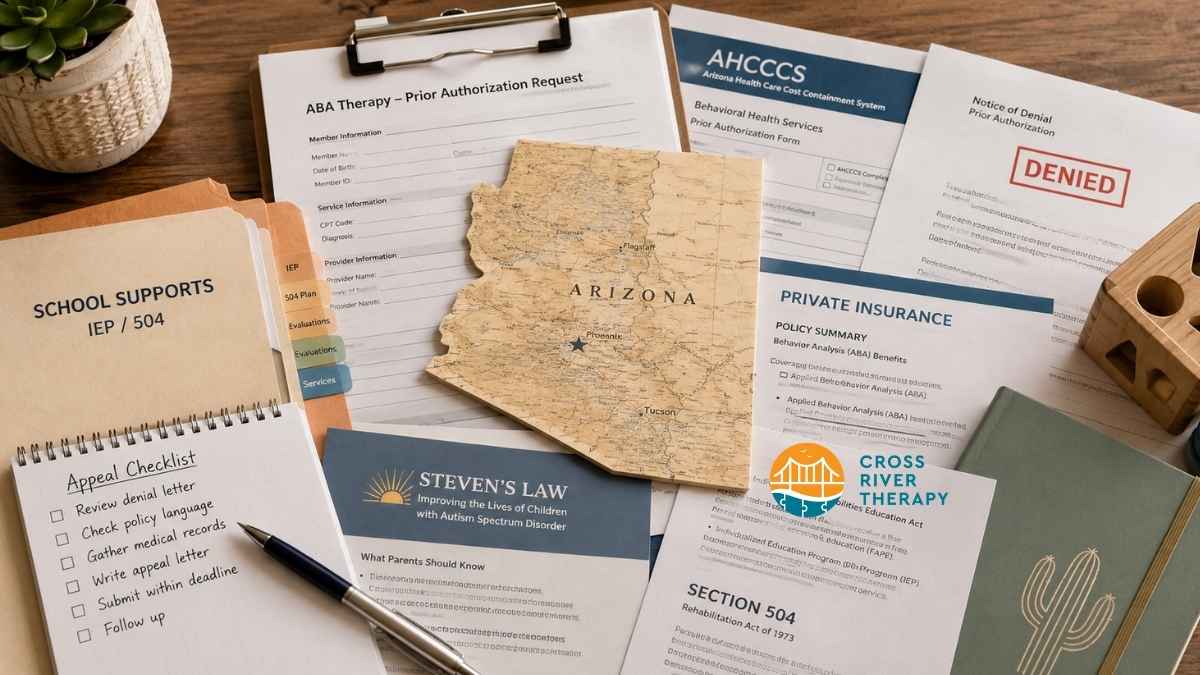
Arizona Autism Laws Every Parent Should Know Before Starting ABA Therapy
Autism laws Arizona parents should know cover ABA insurance, AHCCCS appeals, IEPs, and Section 504 rights. Check ABA coverage with Cross River.

ABA Therapist Salary in Arkansas: What BCBAs and RBTs Actually Earn in 2026
ABA therapist salary Arkansas figures compare RBT and BCBA rates, benefits, guaranteed hours, and contract terms. Explore careers at Cross River.

5 Autism Support Groups and Family Resources in New Mexico Alongside ABA Therapy
Autism support groups New Mexico families can use offer peer support, local events, and school help. Cross River can explain ABA therapy options.

Where to Get an Autism Evaluation in New Mexico Before Starting ABA Therapy
Autism evaluation New Mexico options include UNM, NMSU, FIT, and private providers. Compare providers, records, and ABA steps with Cross River.

7 North Carolina Autism Resources to Contact Before ABA Therapy Starts
Autism resources North Carolina families can call for diagnosis, early intervention, rights, and parent support. Start ABA intake with Cross River.
Does Indiana Medicaid Cover ABA Therapy? A Step-by-Step Eligibility Checklist for Parents
Medicaid ABA therapy Indiana covers eligible children under 21 with prior authorization. Your five-step coverage review can start with Cross River.
How to Apply for New Mexico’s DD Waiver While Starting ABA Therapy
Autism waiver New Mexico applications need DD Waiver records and proof of daily support needs. Your next step is to start ABA intake with Cross River.

Is ABA Therapy Covered by Insurance in New Jersey? What Every Parent Should Know
ABA therapy insurance New Jersey may cover medically necessary care based on plan type, network, and authorization. Verify benefits with Cross River.

How ABA Therapy Builds Communication for Nonverbal Children Without Forcing Speech
ABA therapy communication for nonverbal children starts with AAC, signs, and daily routines. See how kids ask, refuse, choose, and get help.

How to Start ABA Therapy in New Jersey With a First-Call Checklist
How to start ABA therapy in New Jersey begins with records, insurance details, and intake questions. Use this first-call checklist before you call.

How to Get an Autism Evaluation in Arkansas Before Starting ABA Therapy
How to get an autism evaluation in Arkansas starts with a referral, provider choice, and key records. Use this parent checklist before ABA intake.