








Supporting Children with Autism Through ABA Therapy and Other Therapies
Empowering Development: A Comprehensive Guide to Autism Interventions


Understanding Autism and Its Support Strategies
Supporting children with autism requires a multifaceted approach tailored to each child's unique needs. Among the most researched and effective strategies is Applied Behavior Analysis (ABA), complemented by various therapies designed to improve communication, daily living skills, and social interactions. This article explores the landscape of autism interventions, emphasizing ABA's role within a spectrum of evidence-based therapies, and offers guidance for caregivers and professionals to optimize support and outcomes.
What is ABA Therapy and How Does It Support Children with Autism?
What is ABA therapy and how does it support children with autism?
Applied Behavior Analysis (ABA) therapy is a scientifically backed approach used to help children with autism spectrum disorder (ASD) develop essential skills and reduce problematic behaviors. Rooted in the principles of behaviorism, ABA operates on the belief that behaviors can be learned and modified through structured environments, rewards, and reinforcement.
The core goal of ABA is to promote positive, meaningful behaviors such as improved communication, social interaction, self-care, and academic skills. It also works to decrease behaviors that may hinder learning or socialization. Therapists assess each child's strengths, preferences, and challenges, creating personalized programs tailored to individual needs.
ABA utilizes techniques like positive reinforcement—rewarding desired behaviors to encourage their recurrence—and understanding environmental triggers that influence behavior. This targeted approach can help children learn to ask for things, participate in social activities, manage emotions, and participate more fully in daily routines.
therapy is highly flexible and adaptable, delivered across multiple settings such as home, school, or community environments. It often involves one-on-one instruction but can also include group learning, depending on the child’s requirements.
Professionals such as Board Certified Behavior Analysts (BCBAs) oversee the planning and implementation of ABA programs. They work closely with trained therapists and family members to ensure consistency and progress.
Research consistently supports the effectiveness of ABA, with numerous studies indicating improvements across cognitive, language, social, and adaptive skills. The therapy's evidence-based nature and focus on individual needs make it a cornerstone for early intervention and ongoing support for children with autism, significantly enhancing their ability to navigate the world and achieve greater independence.
Main Types of Autism Therapies and Their Goals
What are the main types of therapies used to manage autism spectrum disorder?
Autism spectrum disorder (ASD) is managed through a variety of therapies that target different needs and developmental stages. Among the most widely recognized are behavioral therapies, developmental approaches, speech and occupational therapies, educational programs, social skills training, and medication management.
Behavioral therapies, especially Applied Behavior Analysis (ABA), are considered cornerstone treatment options. ABA focuses on encouraging positive behaviors through reinforcement, helping children develop skills such as communication, social interaction, and daily living tasks. It is evidence-based, systematic, and highly individualized, often involving structured sessions guided by trained professionals.
Developmental strategies like the Early Start Denver Model (ESDM) and Floortime emphasize using play and natural interactions to promote emotional and social development. These approaches support children in making meaningful connections, sharing attention, and improving language skills from an early age.
Speech and occupational therapies also play a vital role. Speech therapy helps children enhance their language abilities, whether verbal or through alternative communication methods like picture systems or gestures. Occupational therapy focuses on improving daily living skills, motor coordination, sensory processing, and independence.
Educational interventions such as the TEACCH approach adapt learning environments to accommodate visual learning styles and routines, fostering better engagement and understanding.
Social skills training, often conducted in groups, teaches children key social cues and interaction strategies to foster friendships and better social functioning.
Lastly, medications are used as supplementary treatment options. While they do not address core autism symptoms, they can help manage co-occurring conditions like anxiety, mood disorders, or aggression.
The selection and combination of these therapies are tailored to each child's unique profile, with early intervention proving especially beneficial.
By integrating behavioral, developmental, and supportive therapies, caregivers can help children with autism develop essential life skills, improve communication, and participate more fully in social and educational settings.
Exploring Alternatives to ABA Therapy
Are there alternatives to ABA therapy for autism?
Yes, there are several options beyond ABA for children on the autism spectrum. While ABA is a widely researched and evidence-based approach, some families seek alternative therapies based on their child’s specific needs, preferences, and values.
One popular developmental approach is DIR Floortime. It centers on building emotional and social connections through playful interactions, encouraging children to develop social-cognitive skills at their own pace. This method emphasizes respect and unconditional acceptance, helping children engage more deeply with their environment.
Another prominent alternative is the Son-Rise Program. This therapy is based on the principles of creating a nurturing and accepting environment, focusing heavily on love, patience, and connection. It encourages natural interactions and is often implemented at home with the involvement of parents and caregivers.
Relationship Development Intervention (RDI) offers another pathway. It aims to improve social-emotional understanding through structured parent-guided activities. RDI emphasizes flexible thinking, emotional regulation, and building social bonds as foundational skills for everyday life.
In addition to relationship-focused therapies, sensory and arts therapies provide vital support. Sensory integration therapy helps children manage sensory processing issues, improving their response to sights, sounds, and touch. Arts therapies, including music, dance, and visual arts, promote emotional expression and social interaction.
Effective communication support is essential. The Picture Exchange Communication System (PECS) and augmentative and alternative communication (AAC) devices enable children with speech difficulties to express themselves. These tools foster independence and help reduce frustration.
Complementary therapies like animal-assisted therapy, yoga, mindfulness, and dietary interventions are also gaining popularity. While these therapies are not substitutes for proven behavioral interventions, they can support overall well-being, emotional regulation, and sensory processing.
Most of these alternatives prioritize individualized plans that respect each child’s unique profile. They often operate within a holistic framework, combining emotional, sensory, social, and communication strategies tailored to promote growth and independence. Families considering these options should consult with medical and educational professionals to develop a comprehensive, safe, and effective support plan.
Effectiveness of ABA and the Evidence Base
How effective is ABA therapy and what does research say about its benefits?
Applied Behavior Analysis (ABA) is widely regarded as an effective, evidence-based approach for children with autism spectrum disorder (ASD). A substantial body of research supports its ability to improve various skill areas. Multiple studies indicate that ABA therapies significantly enhance communication, social skills, and intellectual development.
For example, meta-analyses of over 20 studies demonstrate that children undergoing ABA show notable progress in language acquisition, social interaction, and cognitive abilities. These benefits are often described as moderate to strong, especially when treatments are started early and are intensive. Programs like the Early Start Denver Model (ESDM) underline promising results in facilitating shared attention, language skills, and social engagement.
However, research also points to some limitations. Not all children experience the same level of progress across all domains. Effects on core ASD symptoms such as repetitive behaviors or sensory issues tend to be more modest. Additionally, studies vary in their design and measurement, with many relying on small sample sizes or single-case experimental designs.
The current evidence affirms that ABA can be very effective in improving social and communication skills, which are central to daily functioning and integration. Nevertheless, there remains a need for large-scale, rigorous studies to better understand its impact on broader autism symptoms and quality of life.
Benefits observed in studies
- Improved language and communication abilities
- Enhanced social interaction and play skills
- Increased independence in daily activities
- Reduction in problem behaviors
Limitations and areas for further research
- Variability in individual responses
- Limited data on impact on general autism symptoms and adaptive behaviors
- Need for standardized outcome measures across studies
- Lack of extensive research on quality of life improvements
Comparison with other interventions
Research comparing ABA with alternative therapies shows mixed results. Some studies favor ABA for specific skill development, while others find comparable benefits from developmental or social-relational approaches such as Floortime or RDI. Overall, although ABA is strongly supported by scientific evidence, continued research is essential to optimize treatment strategies and evaluate long-term outcomes.
Aspect Evidence Summary Notes Effectiveness Supported by over 20 studies with positive outcomes Benefits include language, social, and cognitive skills Study Designs Mix of RCTs (6%) and single-case designs Larger, validated studies yield more generalizable results Areas of Improvement Significant gains in communication and social skills Modest effects on core autism symptoms Limitations Need for more comprehensive, long-term research Quality of life and adaptive behavior less studied
In summary, ABA remains a highly supported, scientifically validated therapy with proven benefits. Its effectiveness underscores its role as a frontline intervention, though ongoing research will help refine approaches and establish broader impacts.
Guidelines for Selecting the Right Autism Therapies
What should parents consider when choosing therapy options for their child with autism?
When selecting therapies for a child with autism, it’s crucial for parents to first understand their child's unique strengths and developmental needs. Each child is different, so a tailored approach often results in the best outcomes.
Evidence-based therapies, like Applied Behavior Analysis (ABA), speech-language therapy, and occupational therapy, are recommended because they are backed by scientific research demonstrating their effectiveness. These therapies focus on improving essential skills such as communication, social interaction, and daily living activities.
Provider qualifications and experience are also important factors. Certified professionals, including board-certified behavior analysts (BCBAs) and experienced therapists, can ensure that interventions are implemented correctly and ethically.
Practical considerations include accessibility to services, location, and costs. Parents should explore options within their community, check insurance coverage, and be mindful of the financial commitment involved.
A collaborative, multidisciplinary plan involving healthcare providers, educators, and therapists helps address the medical, behavioral, and social needs of the child. Regular assessments and adjustments ensure that the therapy remains suited to the child's evolving development.
Parents should steer clear of unproven remedies or therapies that lack scientific support or could cause harm. Prioritizing evidence-based, individualized, and respectful interventions will support the child's growth and well-being.
By carefully considering these factors and consulting with professionals, families can choose a comprehensive treatment plan that fosters meaningful progress and enhances quality of life for their child.
Resources and Support for Parents and Caregivers
How can parents learn more about autism therapies?
Parents seeking to deepen their understanding of autism therapies have access to a wide range of credible resources. Autism Speaks offers a comprehensive Parent Support Guide that provides valuable information on supporting children with autism, including practical strategies and tips on building effective support networks.
Connecting with specialized organizations can also be beneficial. For instance, The Autism Project offers system navigation, education, coaching, and emotional support through trained Family Support Specialists, helping families navigate available services.
Additionally, programs like Autism Speaks’ Caregiver Skills Training (CST) and resources provided by the CDC focus on early detection and intervention. These offer evidence-based strategies and training tools designed specifically for caregivers to support developmental progress.
Online platforms have become vital resources, offering educational videos, podcasts, and forums that foster community and sharing of experiences. Many directories of healthcare professionals can also connect parents with qualified therapists and service providers.
Ongoing education and advocacy play crucial roles in empowerment, ensuring parents are well-informed advocates for their children. Attending local workshops, webinars, and support groups can enhance knowledge and provide emotional support.
Resources and support options include:
Support Resources Description How They Help Autism Speaks Parent Support Guide Organized info, strategies, and resources Guides families through understanding autism therapies and support options The Autism Project System navigation, coaching, emotional support Helps families find and access appropriate services CDC Resources on Early Detection Education on early signs and intervention Promotes early diagnosis and therapy initiation Online Communities Forums, videos, podcasts Provide peer support, shared experiences, and shared knowledge Healthcare Provider Directories Lists of qualified therapists and clinics Facilitate connections to professional support
Importance of ongoing education and advocacy
Continual learning equips parents to better advocate for their children’s needs and access the most effective therapies. Staying updated on new research, guidelines, and available services fosters a proactive approach.
Parents are encouraged to participate in advocacy efforts, contribute to policy development, and share their experiences to improve community resources and awareness.
The journey of supporting a child with autism is ongoing, and access to reliable information combined with community support enables families to navigate challenges and celebrate progress.
Harnessing Science and Support for Better Outcomes
Supporting children with autism is a dynamic process that benefits from a combination of evidence-based therapies, personalized approaches, and active caregiver involvement. ABA stands out as a foundational therapy validated by extensive research, but it is most effective when integrated into a comprehensive, multidisciplinary treatment plan that includes speech, occupational, and developmental therapies. Alternatives and supplementary methods can enrich the intervention landscape, especially when tailored to the child's preferences and needs. Equipping parents and caregivers with knowledge, resources, and a network of support ensures that every child has the opportunity to develop skills, achieve independence, and lead fulfilling lives.
References
- ABA and other therapies | Autism Speaks
- Applied Behavior Analysis (ABA) | Autism Speaks
- Treatment and Intervention for Autism Spectrum Disorder - CDC
- Applied Behavior Analysis in Children and Youth with Autism ...
- 6 Life-Changing Benefits of ABA Therapy for Children with Autism
- Alternatives to ABA Therapy for Children with Autism - ECCM.org
- Autism Therapy Types & Interventions - Cleveland Clinic
- Applied Behaviour Analysis (ABA) and autistic children
Recent News
Related articles

6 Arkansas Medicaid ABA Therapy Rules Families Need to Know
Arkansas Medicaid ABA therapy has age, diagnosis and approval rules. Families can check six requirements before care.

Arizona Autism Laws Every Parent Should Know Before Starting ABA Therapy
Autism laws Arizona parents should know cover ABA insurance, AHCCCS appeals, IEPs, and Section 504 rights. Check ABA coverage with Cross River.

ABA Therapist Salary in Arkansas: What BCBAs and RBTs Actually Earn in 2026
ABA therapist salary Arkansas figures compare RBT and BCBA rates, benefits, guaranteed hours, and contract terms. Explore careers at Cross River.

5 Autism Support Groups and Family Resources in New Mexico Alongside ABA Therapy
Autism support groups New Mexico families can use offer peer support, local events, and school help. Cross River can explain ABA therapy options.

Where to Get an Autism Evaluation in New Mexico Before Starting ABA Therapy
Autism evaluation New Mexico options include UNM, NMSU, FIT, and private providers. Compare providers, records, and ABA steps with Cross River.

7 North Carolina Autism Resources to Contact Before ABA Therapy Starts
Autism resources North Carolina families can call for diagnosis, early intervention, rights, and parent support. Start ABA intake with Cross River.

Does Indiana Medicaid Cover ABA Therapy? A Step-by-Step Eligibility Checklist for Parents
Medicaid ABA therapy Indiana covers eligible children under 21 with prior authorization. Your five-step coverage review can start with Cross River.
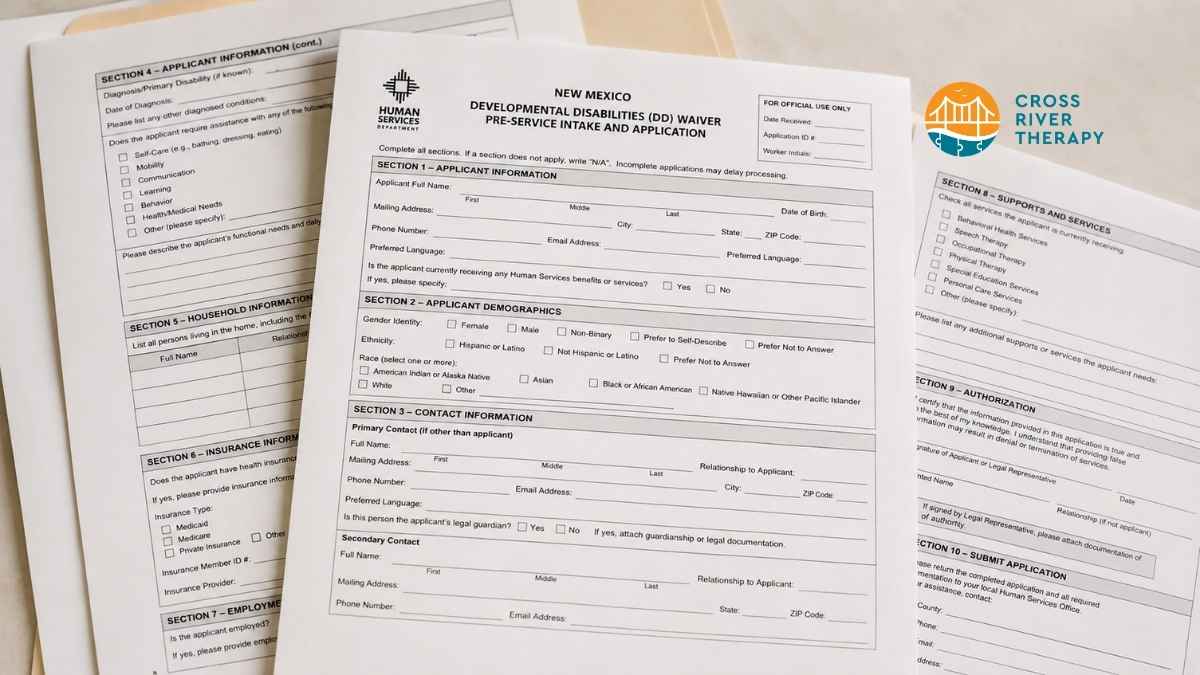
How to Apply for New Mexico’s DD Waiver While Starting ABA Therapy
Autism waiver New Mexico applications need DD Waiver records and proof of daily support needs. Your next step is to start ABA intake with Cross River.

Is ABA Therapy Covered by Insurance in New Jersey? What Every Parent Should Know
ABA therapy insurance New Jersey may cover medically necessary care based on plan type, network, and authorization. Verify benefits with Cross River.

How ABA Therapy Builds Communication for Nonverbal Children Without Forcing Speech
ABA therapy communication for nonverbal children starts with AAC, signs, and daily routines. See how kids ask, refuse, choose, and get help.

How to Start ABA Therapy in New Jersey With a First-Call Checklist
How to start ABA therapy in New Jersey begins with records, insurance details, and intake questions. Use this first-call checklist before you call.

How to Get an Autism Evaluation in Arkansas Before Starting ABA Therapy
How to get an autism evaluation in Arkansas starts with a referral, provider choice, and key records. Use this parent checklist before ABA intake.