








Teaching Emotional Regulation Skills Through ABA Therapy
Enhancing Emotional Resilience in Autism Through Targeted ABA Approaches


Building Foundations for Emotional Success in ABA Therapy
Teaching emotional regulation is a cornerstone of Applied Behavior Analysis (ABA) therapy, especially for individuals with autism spectrum disorder (ASD). This comprehensive approach integrates evidence-based techniques tailored to help learners recognize, manage, and respond to their emotions constructively. Through structured strategies like visual supports, modeling, role-playing, and collaboration with caregivers, ABA therapy aims to foster meaningful, lasting improvements in emotional and social functioning.
Core Techniques in ABA for Emotional Regulation
Visual aids for emotion recognition
Using visual supports is a cornerstone of teaching emotional regulation to learners with developmental delays or autism. Visual aids like emotion cards, social stories, or emotion thermometers make abstract feelings tangible, helping children identify and understand their emotions. The Zones of Regulation program exemplifies this approach by using a color-coded scale—Green, Yellow, Red, and sometimes Blue—to help learners recognize and label their emotional states.
Color-coded systems like stoplight visuals (red, yellow, green) are simple yet effective tools. They guide children to identify their feelings quickly and respond with appropriate strategies. Flipbooks and photographs further support understanding by illustrating different emotional expressions, making recognition and regulation more accessible.
Functional Communication Training (FCT)
FCT teaches individuals to express their needs clearly, reducing emotional frustrations. When children can communicate effectively, they are less likely to act out impulsively or become overwhelmed. This training involves replacing challenging behaviors with functional, appropriate communication methods, like using words or gestures to signal frustration or need for a break.
Modeling and role-playing
Modeling appropriate emotional responses and self-regulation behaviors is vital. Teachers and therapists demonstrate labeling feelings and using calming strategies, such as deep breaths or counting. Role-playing scenarios allow children to practice these skills in a safe environment, reinforcing their ability to handle real-life emotional situations.
Antecedent interventions
Proactively reducing triggers that lead to emotional outbursts is critical. Visual schedules, calming areas, and break cards serve as preparatory tools to prevent escalation. For example, a visual schedule shows upcoming activities to reduce anxiety about transitions. Break cards give children a signal that they can pause or step away when overwhelmed.
Supporting evidence and strategies
Research supports these techniques as effective in promoting emotional regulation among learners with autism. Data collection during interventions helps track progress, while consistent practice and reinforcement solidify skills. Collaboration with families ensures strategies are consistent across environments, making generalization more successful.
Technique Description Purpose Visual aids (emotion scales/thermometers) Use of visuals to recognize feelings Enhance emotional awareness Functional Communication Training Teaching effective expression of needs Reduce frustration and outbursts Modeling and role-playing Demonstrating and practicing regulation behaviors Build skills in controlled and real settings Antecedent interventions Visual schedules, break cards, calming areas Prevent triggers and support regulation
By integrating these techniques into therapy, especially through ABA, individuals develop stronger emotional understanding and regulation, leading to better social interactions, reduced anxiety, and increased independence.
Utilizing Visual Supports and Practical Tools
What practical tools and techniques does ABA therapy provide for teaching emotional regulation?
ABA therapy offers a variety of practical strategies and tools to help individuals, especially those with autism or developmental delays, learn to manage their emotions. Visual aids are central to these methods. For example, emotion charts, thermometers, and the Zones of Regulation program help learners recognize and label their feelings using clear, tangible cues.
The Zones of Regulation is a widely used framework that employs a color-coded scale—Green, Yellow, Red, and sometimes Blue—to guide individuals in identifying their emotional state. This system makes abstract feelings more concrete, enabling learners to understand and communicate their emotions better.
Additionally, visual supports such as emotion cards, social stories, and emotion thermometers serve as cues that facilitate emotional awareness and regulation. Calm areas or sensory breaks with visual supports allow learners to self-regulate when overwhelmed.
Teaching emotional regulation also involves developing specific coping strategies. Techniques like deep breathing, counting, or using visual aids to prompt relaxation are modeled through role-playing and reinforced with positive feedback.
Functional Behavior Assessments (FBAs) help identify triggers that lead to emotional outbursts. Based on this information, individualized Behavior Intervention Plans (BIPs) are created, guiding tailored interventions that foster self-control.
To ensure skills are retained and applied across different situations, data collection and progress tracking are critical. Regular monitoring helps adjust strategies as needed and supports long-term success.
Overall, the combination of visual supports, structured routines, and data-driven interventions form the core of practical tools used in ABA therapy to teach emotional regulation effectively.
Addressing Emotional Challenges in ABA Contexts

How does ABA address emotional challenges and foster emotional regulation skills?
Applied Behavior Analysis (ABA) employs a structured approach to help individuals develop emotional regulation skills, especially those with developmental delays or autism spectrum disorder (ASD). Therapists incorporate clear, systematic strategies such as modeling, role-playing, and direct coaching in real-life situations. One common method involves teaching children to identify their emotions using visual prompts like feelings charts, emotion thermometers, or color-coded systems such as the Zones of Regulation.
Trained ABA professionals guide learners in monitoring their emotional states, recognizing triggers, and applying coping strategies like deep breathing, counting, or visual aids to manage intense feelings. These techniques are introduced gradually, ensuring skills are built hierarchically—from basic emotion recognition to complex self-regulation. Reinforcement is pivotal; positive feedback encourages repeated use of these strategies, laying the foundation for consistent emotional management.
Consistency across therapy sessions, home environments, and community settings is essential. Collaboration with families allows reinforcement of skills outside the clinical context, promoting generalization. Evidence from research supports these methods, indicating that ABA interventions can significantly reduce problematic behaviors such as aggression and help improve social interactions.
In addition to behavioral techniques, ABA emphasizes developing resilience. By addressing emotional challenges through tailored, step-by-step learning plans, children gain not only control over their emotional responses but also the ability to navigate social situations more effectively, fostering greater independence and emotional well-being.
Strategies for Teaching Emotional Regulation Effectively
What are effective strategies for teaching emotional regulation through ABA therapy?
Teaching emotional regulation with ABA therapy involves various techniques that make abstract feelings more tangible and manageable for learners. One highly effective approach is the use of visual supports. These include emotion charts, mood meters, and color-coded systems such as the Zones of Regulation, which help children recognize and label their emotions. Visual aids like flipbooks or emotion thermometers serve as reminders and cues, making it easier for learners to communicate their feelings.
In addition, social stories are an excellent tool for explaining emotional situations in relatable ways. These stories can depict common scenarios, demonstrating both the emotional response and appropriate coping strategies. Modeling behaviors, where therapists or caregivers visibly demonstrate labeling emotions and responding appropriately, reinforces internal understanding.
Role-playing activities are structured exercises that allow children to practice emotional regulation techniques in a safe setting. During these sessions, children can rehearse calming strategies like deep breathing or counting backward, which are then reinforced with positive feedback.
Reinforcement plays a crucial role. Using token economies or praise encourages children to practice emotion regulation skills consistently. This helps embed these behaviors into their natural repertoire.
Involving parents and caregivers in training sessions ensures that emotional regulation strategies are reinforced at home and other settings. Caregivers learn techniques like calming methods and self-monitoring, which help maintain consistency and generalization of skills.
Overall, combining visual supports, modeling, role-playing, and active reinforcement creates a comprehensive approach that addresses the complex task of teaching emotional regulation to children with developmental challenges, leading to better emotional awareness, resilience, and social interactions.
Effectiveness of ABA in Supporting Emotional Development
ABA (Applied Behavior Analysis) therapy is widely recognized for its effectiveness in helping individuals with autism develop emotional regulation skills. This approach involves customized interventions that target specific emotional behaviors, with therapists closely monitoring progress to ensure that strategies are effective and adjusted as needed.
A crucial aspect of ABA is working collaboratively with families. This partnership helps reinforce emotional regulation strategies across different environments, ensuring consistency and generalization of skills. When parents and caregivers are involved, children are more likely to apply what they learn in therapy to everyday situations, which promotes better emotional awareness and self-control.
Implementing ABA also positively impacts communication and social skills. By teaching individuals to recognize and respond to emotions appropriately, ABA fosters improved social interactions and relationships. As emotional regulation improves, children tend to demonstrate increased resilience, reduced anxiety, and enhanced self-esteem.
The scientific community supports these benefits with extensive research. Studies indicate that ABA-derived techniques—such as reinforcement, modeling, role-playing, and using visual supports—are effective in teaching emotional coping strategies. Notably, these methods lead to meaningful changes in behavior and emotional understanding, contributing to a higher overall quality of life.
Aspect Outcome Supporting Evidence Tailored interventions Improved emotion regulation skills Adapted to individual needs for better engagement Progress monitoring Enhanced therapy effectiveness Data-driven adjustments optimize outcomes Family collaboration Skill generalization and consistency Reinforces learning in multiple settings Social and communication gains Increased social interactions Recognizing social cues reduces frustration and impulsivity Long-term benefits Resilience, reduced anxiety Skills are maintained and built upon over time
Research consistently emphasizes that ABA's systematic, evidence-based techniques create lasting improvements in emotional regulation. This approach not only promotes immediate behavioral changes but also contributes to long-term social and emotional well-being, reinforcing ABA's role in supporting individuals with autism.
Long-term Benefits of ABA for Emotional Regulation
ABA therapy offers numerous lasting advantages for individuals working to develop emotional regulation skills. One of the primary outcomes is increased emotional awareness, which helps individuals better recognize and understand their feelings. This understanding can lead to improved problem-solving abilities, as individuals become more equipped to handle challenging situations calmly and effectively.
Resilience and self-esteem are also boosted through consistent ABA techniques. Learning to manage emotions successfully fosters a sense of mastery and confidence, encouraging individuals to face new challenges with a positive outlook.
Another significant benefit is the reduction of anxiety and impulsivity. ABA strategies, such as modeling and positive reinforcement, support the development of calmer responses, decreasing the likelihood of emotional outbursts and impulsive behaviors.
Additionally, improvements in social interactions are common. As individuals become more adept at recognizing social cues and responding appropriately, their relationships with peers, family, and others tend to strengthen. These skills contribute to a more independent and socially connected life.
Overall, engaging in ABA therapy to enhance emotional regulation not only alleviates immediate behavioral challenges but also sets a foundation for long-term emotional health and social success. These benefits enable learners to navigate everyday life with greater confidence and adaptability.
The Role of Consistency and Collaboration
What role do consistency and collaboration play in teaching emotional regulation through ABA?
When it comes to teaching emotional regulation, consistency is vital. Regular therapy sessions and the steady reinforcement of strategies by both therapists and caregivers help learners internalize skills more effectively. This means that the techniques learned, like deep breathing and using visual aids such as the stoplight system, become habitual and more automatic.
Collaboration among all involved—therapists, parents, teachers, and other caregivers—is equally important. By working together, they can share insights, align approaches, and ensure that strategies are applied similarly across different environments. Training sessions for caregivers on how to support emotion regulation, including recognizing triggers and responding appropriately, reinforce learning outside therapy sessions.
Involving families in ongoing training and practice helps maintain the progress made during therapy. Caregivers who understand how to reinforce strategies like social stories or emotion thermometers can help children apply these skills in daily life, whether at home, school, or community settings.
A combined effort creates a support network that fosters continuous growth. This network encourages consistent practice, celebrates progress, and addresses challenges collectively. Such teamwork helps children with developmental delays or autism develop not only emotional skills but also resilience and independence.
Overall, the synergy of consistent efforts and collaborative engagement significantly enhances the effectiveness and longevity of emotional regulation skills taught through ABA.
Fostering Emotional Growth in ABA Therapy
ABA therapy’s targeted, evidence-based techniques play a pivotal role in developing emotional regulation skills. Through visual supports, modeling, role-playing, and collaboration with families, children with autism can learn to navigate their emotions more effectively. Understanding that emotional regulation is a gradual process requiring patience, consistency, and individualized interventions ensures that individuals gain the skills necessary for greater independence and quality of life. When integrated thoughtfully into behavior plans, these strategies ultimately foster emotional resilience, social competence, and meaningful long-term outcomes.
References
- What is Emotional Regulation? Breaking Down the Basics for ABA ...
- Practical Strategies to Teach Emotional Regulation Skills in ABA ...
- Simple evidence-based strategies for teaching emotion regulation?
- ABA Therapy's Role in Emotional Regulation
- Intervention to Strengthen Emotional Self-Regulation in Children ...
- Teaching Emotional Regulation in Autistic Children - Childwise ABA
- Supporting Emotional Growth with ABA Therapy
- The effectiveness of applied behavior analysis program training on ...
- [PDF] Emotional Regulation Strategies
- ABA Therapy Technique for Strengthening Emotional Regulation
Recent News
Related articles

6 Arkansas Medicaid ABA Therapy Rules Families Need to Know
Arkansas Medicaid ABA therapy has age, diagnosis and approval rules. Families can check six requirements before care.

Arizona Autism Laws Every Parent Should Know Before Starting ABA Therapy
Autism laws Arizona parents should know cover ABA insurance, AHCCCS appeals, IEPs, and Section 504 rights. Check ABA coverage with Cross River.

ABA Therapist Salary in Arkansas: What BCBAs and RBTs Actually Earn in 2026
ABA therapist salary Arkansas figures compare RBT and BCBA rates, benefits, guaranteed hours, and contract terms. Explore careers at Cross River.

5 Autism Support Groups and Family Resources in New Mexico Alongside ABA Therapy
Autism support groups New Mexico families can use offer peer support, local events, and school help. Cross River can explain ABA therapy options.

Where to Get an Autism Evaluation in New Mexico Before Starting ABA Therapy
Autism evaluation New Mexico options include UNM, NMSU, FIT, and private providers. Compare providers, records, and ABA steps with Cross River.

7 North Carolina Autism Resources to Contact Before ABA Therapy Starts
Autism resources North Carolina families can call for diagnosis, early intervention, rights, and parent support. Start ABA intake with Cross River.

Does Indiana Medicaid Cover ABA Therapy? A Step-by-Step Eligibility Checklist for Parents
Medicaid ABA therapy Indiana covers eligible children under 21 with prior authorization. Your five-step coverage review can start with Cross River.
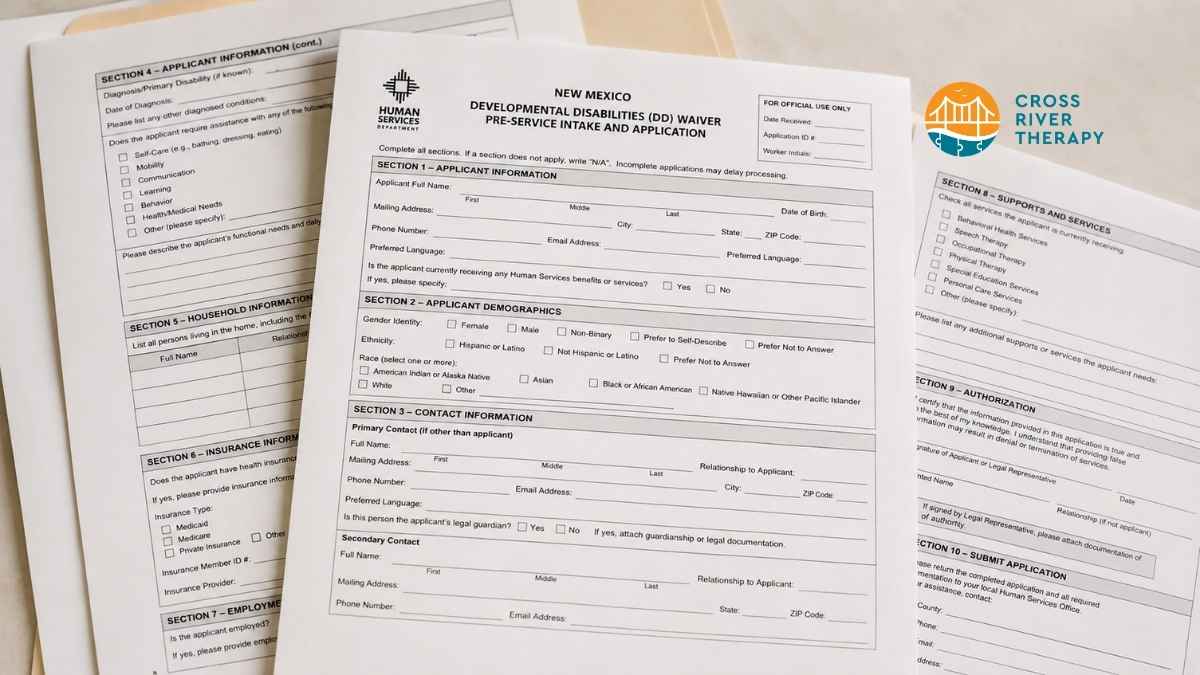
How to Apply for New Mexico’s DD Waiver While Starting ABA Therapy
Autism waiver New Mexico applications need DD Waiver records and proof of daily support needs. Your next step is to start ABA intake with Cross River.

Is ABA Therapy Covered by Insurance in New Jersey? What Every Parent Should Know
ABA therapy insurance New Jersey may cover medically necessary care based on plan type, network, and authorization. Verify benefits with Cross River.

How ABA Therapy Builds Communication for Nonverbal Children Without Forcing Speech
ABA therapy communication for nonverbal children starts with AAC, signs, and daily routines. See how kids ask, refuse, choose, and get help.

How to Start ABA Therapy in New Jersey With a First-Call Checklist
How to start ABA therapy in New Jersey begins with records, insurance details, and intake questions. Use this first-call checklist before you call.

How to Get an Autism Evaluation in Arkansas Before Starting ABA Therapy
How to get an autism evaluation in Arkansas starts with a referral, provider choice, and key records. Use this parent checklist before ABA intake.