








Teaching phone and technology skills in ABA
Leveraging Technology and Telehealth in ABA Therapy for Autism


Integrating Technology Skills Within ABA Therapy
Applied Behavior Analysis (ABA) therapy has transformed the lives of individuals with autism by using evidence-based strategies to develop essential skills and reduce challenging behaviors. In today’s increasingly digital world, teaching phone and technology skills within ABA protocols offers promising benefits for fostering communication, independence, and social engagement. This article explores how ABA therapy incorporates telehealth, technology applications, and self-management strategies to enhance interventions and empower individuals with autism on their developmental journey.
Understanding ABA Therapy: Foundations and Benefits for Autism
What is Applied Behavior Analysis (ABA) therapy and how does it help individuals with autism?
Applied Behavior Analysis (ABA) therapy is a scientifically based approach that applies principles of learning and behavior to assist individuals with autism spectrum disorder (ASD). The therapy focuses on helping individuals develop essential communication, social, academic, and daily living skills while reducing challenging behaviors.
Definition and goals of ABA therapy
ABA therapy involves creating personalized treatment plans that tailor interventions to each individual's unique needs. These plans use techniques such as positive reinforcement, task analysis, and natural environment teaching to encourage skill acquisition. By regularly collecting data and monitoring progress, ABA programs adjust goals to ensure the interventions are effective and meaningful.
Role of qualified professionals in delivering ABA
Qualified professionals, especially Board Certified Behavior Analysts (BCBAs), develop and supervise ABA treatment plans. They train parents, teachers, and therapists to implement techniques with high fidelity, ensuring the therapy is delivered consistently and effectively. This professional involvement guarantees that interventions maintain scientific rigor and responsiveness to the client’s progress.
Developmental benefits for individuals with autism
Research shows that early and intensive ABA therapy leads to significant improvements in key developmental areas. Participants often demonstrate increased socialization, stronger language skills, improved daily functioning, and greater independence. These enhancements empower individuals with autism to engage more fully in their communities and reduce reliance on adult support.
In summary, ABA therapy represents a flexible, evidence-based approach tailored by skilled professionals to help individuals with autism grow crucial skills and improve their quality of life.
Who Provides ABA Therapy?

Professional roles in ABA therapy delivery
ABA therapy for individuals with autism is typically provided by trained professionals with specialized expertise. The primary role is filled by Board Certified Behavior Analysts (BCBAs), who assess clients and develop individualized treatment plans. These plans are carefully tailored to address each person's unique behavioral needs. Registered Behavior Technicians (RBTs) implement these plans by working directly with clients during therapy sessions. Their hands-on involvement is crucial for teaching new skills and reducing challenging behaviors.
Importance of certifications and training
Certification and ongoing training are critical components for effective ABA therapy delivery. BCBAs and RBTs must complete rigorous education requirements and pass certification exams that ensure their competency. Maintaining certification involves continuing education to stay updated on the latest techniques and evidence-based practices in the field. This guarantees that therapists provide high-quality, ethical, and effective interventions.
Organizational contexts for ABA services
ABA therapy is often delivered through specialized organizations or clinics dedicated to autism support. These organizations prioritize employing certified and experienced professionals to maintain treatment integrity and promote positive outcomes. They may offer services in various settings, including clinics, schools, or in-home environments. For example, Autism Behavior Services Inc. stresses the importance of certified staff and structured training to uphold standards of care across all therapy providers.
Together, certified professionals and well-established organizations ensure that ABA therapy is delivered efficiently, ethically, and effectively, providing critical support to individuals with autism and their families.
Core Behavioral Techniques Utilized in ABA Therapy
What behavioral techniques are commonly used in ABA therapy for autism?
ABA therapy employs a variety of behavioral strategies specifically designed to support individuals with autism spectrum disorder (ASD).
One foundational method is Discrete Trial Training (DTT). DTT involves breaking down skills into small, manageable steps taught through repeated trials. This highly structured approach allows learners to practice and master specific skills in a step-by-step manner.
Another frequently used technique is Natural Environment Teaching (NET). Unlike DTT, NET occurs in everyday settings such as home or community spaces, leveraging naturally occurring situations to teach new abilities. This promotes generalization of skills because learning happens in relevant real-life contexts.
Behavior chaining is essential for teaching complex sequences by breaking them down into individual components, then teaching each step until the entire chain is mastered. This technique helps learners acquire multi-step routines independently.
Central to these techniques is positive reinforcement, which involves providing a reward or desired consequence immediately following a target behavior to increase the likelihood of that behavior recurring. Positive reinforcement is tailored to each individual’s preferences and can be tangible items, verbal praise, or social interaction.
Prompting and fading are critical in teaching new skills. Prompting provides additional cues or assistance to ensure a correct response, which is then gradually reduced (faded) to help the learner maintain independence. Similarly, shaping reinforces approximations of the target behavior, gradually directing behavior toward the desired outcome.
Other ABA strategies include:
- Visual modeling: Using pictures or demonstrations to guide behavior.
- Script fading: Gradually reducing scripted prompts to foster spontaneous communication.
- Redirection: Shifting attention away from challenging behaviors to more appropriate activities.
- Extinction: Withholding reinforcement for challenging behaviors to decrease their occurrence.
- Behavior contracts: Written agreements that specify expectations and consequences, promoting accountability.
These techniques are continuously personalized through ongoing assessment and data collection. The ultimate goal is to improve communication, social skills, and reduce harmful or challenging behaviors, thereby enhancing overall quality of life.
Each approach underscores the importance of consistency, individualization, and evidence-based practices to achieve meaningful and socially significant improvements in the lives of individuals with autism.
Developmental Progress Through ABA Therapy
How does ABA therapy benefit the developmental progress of individuals with autism?
Applied Behavior Analysis (ABA) therapy is a powerful approach that supports the developmental progress of individuals with autism by focusing on skill acquisition and fostering independence. It systematically teaches essential skills such as communication, social interaction, and self-care by reinforcing positive behaviors and reducing those that present challenges.
ABA therapy targets the reduction of challenging behaviors through personalized interventions like positive reinforcement and functional communication training. These strategies help individuals develop alternative, appropriate behaviors that improve their interactions and daily functioning.
Early and intensive ABA intervention plays a crucial role in maximizing developmental outcomes. Young children receiving such treatment often show significant gains in cognitive, language, and social skills. These improvements can enable some children to join mainstream educational settings and engage more fully with peers and their environments.
The focus on quality of life enhancement is central to ABA therapy. By building adaptive behaviors and promoting independence, individuals experience a more fulfilling daily life with increased opportunities for social engagement and reduced reliance on constant adult support. This foundation lays the groundwork for long-term success across academic, social, and vocational domains.
In summary, ABA provides tailored, evidence-based strategies that empower individuals with autism to develop critical skills, mitigate behavioral challenges, and enjoy a higher level of autonomy and well-being.
Telehealth in ABA Therapy: Expanding Access and Engagement
What is Telehealth and How is it Used in Behavioral Services?
Telehealth involves using telecommunications and information technology to deliver health or behavioral health services remotely. This approach has been widely adopted across fields such as speech therapy, mental health care, and behavioral assessments. By facilitating access over distances, telehealth breaks down geographic barriers and supports ongoing care without the need for in-person visits.
What Are the Benefits of Telehealth in Behavioral Therapy?
Telehealth offers several practical advantages that enhance service delivery:
- Increased Access: Clients in remote or underserved areas can receive specialized support previously unavailable locally.
- Reduced Travel Costs and Time: Families and providers save on transportation expenses and time commitments.
- Enhanced Family Participation: Remote access allows families to be more involved during sessions, which can improve outcomes and generalization of skills.
How is Telehealth Integrated into ABA Training and Client Intervention?
In applied behavior analysis (ABA), telehealth serves as a valuable tool for training various individuals, including parents, teachers, and therapists. Training encompasses techniques such as functional assessments, preference assessments, functional communication training (FCT), and differential reinforcement.
Most telehealth ABA training employs videoconferencing for real-time interaction, utilizing methods like modeling, role playing, and live coaching. These approaches help trainees learn to implement ABA procedures with fidelity — often comparable to traditional in-person training.
Studies have reported that telehealth training leads to meaningful social outcomes for clients, such as reductions in challenging behaviors and increased development of communicative skills, especially in individuals with autism spectrum disorder (ASD). Economic evaluations also demonstrate lower costs and decreased travel burdens for trainees.
Overall, telehealth enhances ABA therapy by expanding access, fostering family engagement, and maintaining high-quality training and intervention efficacy.
Training ABA Techniques via Telehealth
What Methods Are Used in Telehealth Training for ABA?
Telehealth training primarily employs videoconferencing as its mode of real-time communication. This platform enables interactive sessions where trainers can model ABA techniques live. Trainees engage in role-playing exercises to practice these methods with immediate feedback. Live coaching during sessions allows trainers to correct and guide the execution of procedures, enhancing skill acquisition.
Which ABA Techniques Are Taught Remotely Through Telehealth?
Multiple ABA strategies are effectively taught via telehealth, including:
- Functional assessments: Identifying the causes of challenging behaviors.
- Preference assessments: Determining preferred stimuli to motivate clients.
- Functional Communication Training (FCT): Teaching alternative communication to reduce problematic behavior.
- Differential reinforcement: Encouraging desirable behaviors by reinforcing them selectively.
These techniques are critical in addressing behavioral challenges and skill development, particularly in individuals with autism spectrum disorder (ASD).
Who Are the Target Trainees for Telehealth ABA Training?
Telehealth training targets a broad range of individuals responsible for intervention implementation, including:
- Parents: Often without prior ABA experience, empowered to support their children.
- Teachers: Integrating ABA strategies in educational settings.
- ABA therapists: Seeking to refine or acquire new skills remotely.
The accessibility of telehealth removes geographical barriers, increasing family participation and involvement across various settings.
Together, these training methods promote high fidelity in implementing ABA procedures, often comparable to in-person training results. The social significance of the outcomes, such as reduced challenging behaviors and improved client skills, highlights telehealth's practical advantages in disseminating ABA knowledge widely and effectively.
Effectiveness of Telehealth Training in ABA
Fidelity of Implementation by Trainees
Telehealth training in Applied Behavior Analysis (ABA) often employs videoconferencing with real-time communication methods such as modeling, role-playing, and live coaching. This approach has demonstrated variable but frequently high fidelity in how trainees implement ABA procedures. Many participants—including parents, teachers, and therapists—start with little or no prior experience in the specific ABA techniques being taught. Despite this, the fidelity of their implementation after telehealth training can rival that seen with traditional in-person instruction.
Outcomes in Client Behavior Change
The effectiveness of telehealth-delivered ABA training is evident in the positive changes observed in clients, especially those with Autism Spectrum Disorder (ASD). Trained individuals can conduct functional assessments, preference assessments, and apply strategies like functional communication training (FCT) and differential reinforcement to reduce challenging behaviors and increase communicative skills. Several studies report large effect sizes in behavioral improvements, including the identification of behavioral functions and significant reductions in problematic behavior.
Comparability to In-Person Training
Comparisons between telehealth training and in-person ABA training reveal that telehealth can be equally effective. Some evidence indicates that the social significance of outcomes—such as client skill acquisition and reductions in difficult behaviors—matches that of face-to-face interventions. Furthermore, telehealth provides economic advantages by lowering costs and travel burdens for trainees while maintaining high standards of training fidelity and client outcomes. These benefits suggest telehealth is a viable and practical alternative for delivering ABA training to a diverse range of trainees and clients.
Economic and Practical Benefits of Telehealth for ABA

Cost Reduction and Travel Burden
Telehealth has made significant strides in reducing the costs associated with Applied Behavior Analysis (ABA) training and therapy. By delivering training remotely, telehealth minimizes or eliminates travel expenses for trainees such as parents, teachers, and therapists. Research indicates that telehealth training costs are significantly lower than traditional in-person support, making ABA services more affordable and accessible to a wider population.
Accessibility Improvements
Telehealth breaks geographical barriers by providing health and behavioral services across distances. This technology enables individuals in remote or underserved areas to access expert ABA training and interventions without the need to travel long distances. The use of videoconferencing for real-time communication allows effective teaching methods like modeling, role-playing, and live coaching, ensuring that quality training is delivered regardless of location.
Family Participation Increase
One notable advantage of telehealth is the increased involvement of family members in the treatment process. With training accessible from home, family members can participate more actively in implementing ABA techniques. This not only enhances the consistency of interventions but also empowers families to support their loved ones effectively. Increased family participation has been linked to socially significant outcomes, such as reductions in challenging behaviors and improved skills in individuals with autism spectrum disorder (ASD).
Overall, telehealth brings economic and practical benefits to ABA therapy by lowering costs, increasing accessibility, and enhancing family engagement, thereby improving therapy outcomes and supporting clients’ independence.
Technology Skills as an ABA Intervention Area
Why Are Phone and Technology Skills Important for Individuals with Autism?
In today's digital world, technology skills like using a phone or tablet are essential for daily functioning and social interaction. For individuals with autism spectrum disorder (ASD), learning these skills can significantly enhance communication, independence, and access to services. Mastery of technology allows them to participate more fully in educational, vocational, and social activities.
How Are Technology Skills Integrated Within ABA Programs?
Applied Behavior Analysis (ABA) incorporates technology training as part of broader teaching and intervention efforts. ABA techniques can teach individuals with ASD to navigate devices through prompting, task analysis, and reinforcement strategies. Telehealth platforms have extended ABA's reach by using videoconferencing and AI-guided applications, such as the GAINS® system, to provide real-time coaching to therapists. This helps increase training fidelity and consistency, making technology instruction more effective. Additionally, ABA-based self-management strategies empower learners to independently use technology by fostering goal setting, self-monitoring, and self-reinforcement.
What Is the Impact of Technology Skills on Communication and Independence?
Developing proficiency with phones and other technologies fosters increased communication opportunities, whether through voice calls, text messaging, or video chats. This enhanced communication contributes to social skills like responsiveness and appropriate interaction. Moreover, technology skills promote independence by reducing reliance on prompts from adults or therapists. Self-management interventions support this by encouraging individuals to take control of their behavior and actions, ultimately improving their autonomy. Studies have shown that when ABA techniques target technology skills, clients experience reductions in challenging behaviors and growth in vital communication and social skills.
By combining telehealth training, AI support, and well-established ABA methods, technology skill teaching is an expanding and vital area of intervention for individuals with autism, enhancing both their communication and independence.
Self-Management Interventions in ABA Therapy
What Are Self-Management Interventions and Their Components?
Self-management interventions are a branch of applied behavior analysis (ABA) focused on encouraging individuals to regulate their own behaviors. These strategies involve teaching people to take active roles in monitoring and controlling their actions to achieve meaningful outcomes. Key components include goal setting, self-monitoring, self-evaluation, self-reinforcement, and self-instruction. Through these elements, individuals learn to recognize their behaviors, assess progress toward targets, reward desired actions, and follow structured plans.
How Do Self-Management Interventions Benefit Individuals with Autism?
For those with autism spectrum disorder (ASD), self-management techniques offer significant advantages. They help reduce dependency on prompts or support from others by promoting autonomy in daily activities. Research shows that self-management leads to improvements in social skills such as responding appropriately to social initiations, engaging in suitable play, enhancing social communication, and sustaining conversations.
These interventions have also been effective in various domains including academic achievement, vocational skills, and diminishing challenging behaviors. By empowering individuals with ASD to actively participate in their own behavior change, self-management increases accountability and personal awareness, which can contribute to greater self-confidence and less social stigma related to reliance on adult assistance.
How Is Self-Management Related to Independence and Social Behavior?
Self-management fosters independence by teaching individuals to control behaviors without continuous external guidance. This independence often extends into social contexts, where improved behavior regulation can result in better social interactions and relationships.
Because individuals learn to set their own goals and assess their behavior, they gain skills that support long-term behavioral change. This promotes consistency and supports the development of socially appropriate behaviors, which are key to functioning successfully in natural environments. Ultimately, self-management interventions empower individuals to be proactive agents in their own development, making these approaches essential components of effective ABA therapy for people with autism.
Improving Social Skills Through Self-Management
How Does Self-Management Enhance Social Responsiveness?
Self-management interventions empower individuals, particularly those with autism spectrum disorder (ASD), to become more aware and accountable for their own behaviors. This heightened self-awareness directly improves social responsiveness by encouraging proactive engagement in social situations. Individuals learn to recognize social cues and appropriately respond to social initiations, fostering better interpersonal connections.
What Role Does Self-Management Play in Appropriate Play and Conversation Skills?
Through components like goal setting, self-monitoring, and self-instruction, self-management teaches individuals to regulate their behaviors during play and conversations. This supports the development of appropriate play skills and social communication by promoting independence and reducing reliance on adult prompts. As a result, individuals demonstrate increased initiation and maintenance of social interactions, appropriate turn-taking, and more meaningful conversations.
How Are Communicative Behaviors Enhanced Through Self-Management?
Self-management strategies support improvements in communicative behaviors by encouraging individuals to monitor and modify their own communication. Interventions focusing on self-reinforcement and self-evaluation help maintain positive communication patterns such as requesting, commenting, and responding. These enhancements contribute to a reduction in challenging behaviors and an overall increase in effective social communication.
Collectively, self-management interventions have been widely recognized as evidence-based practices that cultivate independence and meaningful social skills in individuals with ASD, leading to more successful social interactions and community engagement.
Evidence Supporting Self-Management as an ABA Practice
What Does Research Say About the Effectiveness of Self-Management?
Research consistently demonstrates that self-management interventions yield significant improvements across several important areas for individuals with autism spectrum disorder (ASD). Studies report large effect sizes, indicating strong positive outcomes such as increased social skills, reductions in challenging behaviors, and enhanced communicative abilities. These interventions empower individuals to take actions that change their environment and promote more adaptive behaviors, fostering greater independence.
How Is Self-Management Recognized in Official Reports?
Self-management has gained widespread recognition as an evidence-based practice by expert groups and task force reports specializing in autism interventions. This endorsement reflects the robust empirical support and practical benefits demonstrated across multiple studies. Such recognition guides practitioners and caregivers in selecting effective strategies that promote autonomy and improve quality of life for those with ASD.
What Range of Skill Improvements Are Associated with Self-Management?
Self-management strategies have been shown to enhance a diverse array of skills, including:
Social Skills: Improved responsiveness to social initiations, appropriate play behavior, enhanced social communication, and better conversational abilities.
Academic and Vocational Skills: Gains in task completion, goal achievement, and functional independence.
Behavioral Control: Reduction in disruptive or challenging behaviors, increased accountability, and decreased reliance on adult prompts.
Components such as goal setting, self-monitoring, self-evaluation, self-reinforcement, and self-instruction form the basis of these positive changes. Through these elements, individuals learn to regulate their own behavior, which not only supports skill development but also helps reduce social stigma related to dependence on direct adult support.
Using ABA Strategies to Teach Self-Help Skills like Handwashing
What Role Do Prompting, Task Analysis, and Reinforcement Play in Teaching Self-Help Skills?
Applied Behavior Analysis (ABA) provides a structured approach to teaching self-help skills such as handwashing, which are essential for independence, particularly for children with autism. Prompting helps guide the learner through each step, gradually fading to promote autonomy. Task analysis breaks down the complex process of handwashing into smaller, manageable steps, making it easier for learners to master each component. Reinforcement strengthens desired behaviors by providing positive consequences when steps are completed correctly, increasing the likelihood that these behaviors will be repeated.
How Are ABA Strategies Applied Within Everyday Routines?
ABA strategies are integrated into everyday routines by systematically teaching skills within natural contexts. For example, handwashing, a vital hygiene practice, can be taught during daily bathroom routines or before meals. By embedding task analysis and prompting into these natural settings, learners receive consistent, meaningful practice. This approach allows learners to generalize skills across different environments and situations, promoting maintenance over time.
How Does Technology Enhance Independence Through ABA?
Advances in technology have bolstered ABA interventions, particularly through tools like tablet-based AI applications. One example is GAINS®, which offers real-time, in-the-moment guidance to therapists implementing ABA strategies, thereby improving fidelity of implementation. High fidelity is crucial as it correlates with better child outcomes. AI-driven systems help overcome traditional barriers such as limited therapist training time and costs by providing continuous, automated support.
Technology also aids in individualizing instruction. For example, AI applications can adapt prompts and reinforcement schedules to the learner's specific needs, increasing consistency and effectiveness. Such innovations not only enhance therapist performance but also support learners in achieving greater independence with self-help skills like handwashing.
In summary, combining traditional ABA strategies with modern technology enhances the teaching and acquisition of vital self-help skills, empowering individuals to become more independent in their daily lives.
Innovation: AI Applications Supporting ABA Therapy Implementation
Introduction to tablet-based AI (GAINS®)
In the evolving landscape of Applied Behavior Analysis (ABA) therapy, a novel approach involves the use of tablet-based artificial intelligence (AI) applications such as GAINS®. This technology targets therapists by providing structured, real-time support during therapy sessions to improve intervention quality. GAINS® utilizes AI algorithms to deliver automated, context-specific guidance, ensuring therapists can implement design ABA strategies effectively.
Real-time guidance to therapists
GAINS® operates by offering immediate, in-the-moment instructions on ABA techniques, including prompting, task analysis, and reinforcement. This real-time feedback helps therapists maintain high standards of intervention delivery without requiring constant supervision from more experienced clinicians. By supporting therapists during sessions, the application addresses common challenges such as skill retention, consistency, and adapting interventions dynamically to client needs.
Enhancement of fidelity and therapy outcomes
High fidelity in implementing ABA strategies directly correlates with better outcomes for children undergoing therapy. The integration of AI guidance through GAINS® has shown promise in improving this fidelity by reducing variability in how therapists apply interventions. Such fidelity improvement not only enhances the effectiveness of therapy but may also lower costs and reduce barriers associated with extensive traditional training. Ultimately, AI applications like GAINS® have the potential to individualize instruction, increase consistency, and elevate overall therapy success for individuals with autism spectrum disorder (ASD).
Addressing Barriers in ABA Training Through AI
How Do Cost and Time Constraints Affect ABA Training?
Traditional ABA training demands significant time and financial resources. In-person coaching sessions often require travel and scheduling commitments that can burden both trainers and trainees. This results in limited access to quality training, especially for therapists and caregivers in remote or underserved areas. Consequently, these barriers hinder the widespread adoption of effective ABA techniques, affecting outcomes for clients with autism spectrum disorder (ASD).
How Can Automation Improve Coaching in ABA Training?
Innovations like tablet-based AI applications, such as GAINS®, offer real-time, in-the-moment guidance that supports therapists during ABA interventions. By automating coaching, these AI systems reduce the need for constant human supervision, making training more accessible and scalable. Continuous automated feedback helps maintain high fidelity in implementing ABA strategies, which is essential for achieving optimal client progress.
In What Ways Does AI Facilitate Individualized Instruction and Consistency?
AI technologies can tailor prompts and feedback based on the therapist's performance and the client’s unique needs. This individualized instruction ensures that therapeutic approaches are adapted effectively, enhancing engagement and learning. Moreover, AI promotes consistency by providing standardized guidance, reducing variability caused by differing levels of trainer experience. Consistent implementation of ABA strategies leads to more reliable and socially significant outcomes for individuals with ASD.
| Barrier | AI Solution | Benefit |
|---|---|---|
| High training costs | Automated coaching via AI tools | Reduces expenses related to in-person training and travel |
| Time constraints | Real-time feedback during sessions | Enables flexible and efficient learning opportunities |
| Need for individualized approaches | Adaptive AI guidance | Personalizes therapy to match client and therapist needs |
| Inconsistent fidelity | Continuous monitoring and prompting | Ensures effective and standardized implementation |
AI-driven solutions like GAINS® represent a promising step toward overcoming traditional obstacles in ABA training, enhancing therapist proficiency while contributing to improved client outcomes.
High Fidelity Implementation: Linking Quality ABA Delivery to Outcomes
What is fidelity in ABA?
Fidelity in Applied Behavior Analysis (ABA) refers to how accurately and consistently practitioners implement intervention procedures as they were designed. High fidelity means the therapist or caregiver follows specific steps of a treatment plan precisely, using the recommended techniques and sequences.
Maintaining fidelity is crucial because it ensures that interventions are delivered as intended, thereby maximizing their effectiveness. Without high fidelity, the effectiveness of ABA procedures can diminish, leading to less optimal outcomes for the individual receiving therapy.
How does fidelity correlate with child progress?
Multiple studies have shown a strong relationship between high fidelity implementation and improved outcomes in children receiving ABA therapy. When ABA techniques are carried out correctly, clients—especially those with autism spectrum disorder (ASD)—demonstrate significant progress.
Improvements linked to high fidelity include:
- Reduction in challenging behaviors
- Increased communicative and social skills
- Better acquisition of self-help and adaptive behaviors
In fact, research indicates that higher fidelity correlates with larger effect sizes in outcomes such as behavior function identification and functional communication training.
How does technology support fidelity?
Technology plays an increasing role in supporting high fidelity implementation in ABA.
Telehealth platforms: These allow real-time video conferencing, where trainers can model ABA techniques, offer live coaching, and provide immediate feedback to caregivers or therapists implementing the interventions. They not only increase access but have shown to help trainees reach high levels of fidelity comparable to in-person training.
AI applications: Tools like the tablet-based GAINS® system provide automated, in-the-moment guidance to ABA therapists. By offering prompts and instructions during sessions, such AI systems help therapists maintain consistent, accurate use of ABA methods.
Benefits of technology: Using telehealth and AI reduces costs and time burdens associated with traditional training and supervision. They facilitate individualized instruction, enhance therapist consistency, and can continuously reinforce proper implementation techniques without requiring constant human oversight.
Together, these technological supports empower therapists and caregivers to uphold high fidelity in ABA, directly contributing to more effective intervention outcomes for children with ASD and other behavioral challenges.
Role of Caregivers and Educators in Technology Skills Training
Training Parents and Teachers via Telehealth
Telehealth has become a valuable tool for training parents and teachers in Applied Behavior Analysis (ABA) techniques. Through videoconferencing, these caregivers receive real-time coaching that includes modeling, role playing, and live feedback. This approach allows individuals without prior ABA experience to learn critical practices such as functional assessments, preference assessments, and functional communication training. Training delivered remotely not only makes expert guidance more accessible but also reduces travel costs and logistical barriers.
Supporting Generalization of Skills
One important aspect of training caregivers includes promoting the generalization and maintenance of skills across different environments and situations. Telehealth-based training enables caregivers to implement ABA strategies directly within the home or classroom. This naturalistic setting supports caregivers in adapting techniques to everyday contexts, fostering consistent behavior change for the individual with autism spectrum disorder (ASD). Furthermore, the ongoing support provided remotely helps caregivers troubleshoot challenges and refine their skills over time.
Building Caregiver Confidence and Competence
Training via telehealth has demonstrated to increase caregiver confidence and competence in delivering ABA interventions. By engaging caregivers actively during sessions, they gain immediate guidance and reinforcement, which leads to higher fidelity in applying ABA methods. The use of video technology also allows therapists to observe caregivers' implementation and provide tailored feedback. This empowerment of parents and educators not only benefits the client by reducing challenging behaviors and increasing communication but also promotes caregiver independence and reduces reliance on professional support.
| Training Aspect | Description | Benefits |
|---|---|---|
| Remote Coaching | Real-time videoconferencing with modeling and live feedback | Accessibility, cost savings, immediate support |
| Natural Environment Implementation | Caregivers apply ABA methods in home or classroom settings | Skill generalization, practical behavior change |
| Skill Development | Focused sessions to boost knowledge and confidence in ABA techniques | Improved fidelity, greater independence in implementation |
This integrated approach using telehealth optimally equips caregivers and educators to support individuals with ASD effectively, ensuring that ABA interventions achieve meaningful and lasting outcomes.
Enhancing Communication with Technology-Assisted ABA Interventions
Functional Communication Training (FCT) via Telehealth
Functional Communication Training (FCT) is a behavioral intervention used to replace challenging behaviors with effective communication skills. Delivered through telehealth, FCT has shown promising results, especially for individuals with autism spectrum disorder (ASD). Telehealth enables therapists to train parents, teachers, and caregivers remotely on FCT techniques, such as identifying the function of behavior and teaching alternative communication responses. Using videoconferencing platforms, live modeling, role-playing, and coaching sessions help trainees implement FCT with fidelity.
Use of Phones and Tablets to Support Communication
Mobile devices like phones and tablets play a vital role in supporting communication interventions for individuals with ASD. Tablet-based applications, including those augmented by artificial intelligence (AI), provide real-time prompts and guidance to both therapists and clients. For example, apps like GAINS® offer on-the-spot instructional support during ABA therapy, enhancing the consistency and accuracy of intervention delivery. Such technology supports self-management by encouraging clients to engage actively in their communication goals through self-monitoring and self-instruction features.
Increasing Social Initiations and Responses
Technology-assisted ABA interventions, including telehealth and mobile applications, contribute to improving social communication skills by fostering increased social initiations and appropriate responses. Self-management strategies embedded in these programs promote awareness and accountability in social interactions, leading to more spontaneous and meaningful exchanges. Studies report that clients demonstrate enhanced responsiveness to social initiations, better conversation skills, and increased appropriate play behaviors following interventions supported by remote training and device-based tools.
Together, the integration of telehealth-delivered FCT and supportive communication technologies offers accessible, cost-effective, and effective pathways to improving social communication among individuals with ASD. These advancements empower caregivers and professionals while promoting greater independence and skill acquisition for clients.
Reducing Challenging Behaviors Through Telehealth-Delivered ABA
How Are Functional Assessments Conducted Remotely?
Functional assessments are a cornerstone of effective behavior intervention plans in Applied Behavior Analysis (ABA). Telehealth enables these assessments to be carried out remotely by training parents, teachers, or therapists through videoconferencing. Real-time coaching allows trainers to guide trainees in observing behaviors, collecting data, and identifying the environmental factors maintaining challenging behaviors despite the physical distance.
This remote process typically uses interactive methods such as modeling and role playing, ensuring accuracy in function identification. Reliable functional assessments via telehealth make it possible to create targeted interventions without the necessity of onsite specialists, increasing accessibility for families and schools.
What Are Differential Reinforcement Techniques Used in Telehealth ABA?
Differential reinforcement is a behavior reduction strategy that focuses on reinforcing desirable behaviors while withholding reinforcement for problematic ones. Through telehealth, families and educators learn to apply this technique during live training sessions.
Trainees receive step-by-step instructions and real-time feedback on how to selectively reinforce positive behaviors. This method not only decreases challenging behaviors but also promotes skill acquisition by encouraging more appropriate responses. Such techniques include:
- Differential Reinforcement of Alternative Behavior (DRA)
- Differential Reinforcement of Incompatible Behavior (DRI)
- Differential Reinforcement of Other Behavior (DRO)
What Outcomes Are Associated With Behavior Reduction Via Telehealth?
Research reports significant behavior reductions in individuals with autism spectrum disorder (ASD) following telehealth-delivered ABA interventions. These outcomes include decreased occurrences of challenging behaviors and improvements in communicative and social skills.
Studies have demonstrated high fidelity of trainee implementation of ABA procedures, often comparable to in-person training, which correlates with better client outcomes. Large effect sizes are reported in some cases, highlighting the social significance of these interventions.
Furthermore, telehealth reduces barriers such as travel costs and time, allowing more families to access effective behavior support. By empowering caregivers and educators remotely, challenging behaviors are more effectively addressed in natural settings, contributing to sustainable change.
Generalizing Technology Skills Across Environments
Strategies to promote transfer
To ensure that technology-based skills learned in one setting are applied effectively in other environments, strategic approaches are essential. These include deliberate practice across varied contexts and the use of consistent prompts and reinforcements. Implementing role-playing and real-time coaching, particularly when mediated by telehealth platforms, helps trainees adapt skills to diverse situations. Such strategies also often involve parents, teachers, and caregivers, who play critical roles in encouraging skill application beyond therapy sessions. By expanding practice opportunities, individuals enhance their ability to generalize skills independently.
Incorporation of natural environment teaching
Natural environment teaching (NET) is a pivotal technique in promoting skill generalization, especially for individuals with autism spectrum disorder (ASD). NET focuses on teaching skills in everyday settings, which aligns well with telehealth’s capability to coach caregivers in real-world contexts. By embedding behavioral interventions within typical routines and daily activities, the transfer of technology-related skills to functional use is facilitated. This method increases client engagement and relevance of learning, producing more sustainable outcomes while reducing the need for artificial or clinical settings.
Use of self-management to maintain skills
Self-management is a key component in sustaining learned skills over time and across settings. This approach involves teaching clients to monitor and regulate their own behavior, which promotes autonomy and reduces dependence on external prompts. Components such as goal setting, self-monitoring, self-evaluation, self-reinforcement, and self-instruction empower individuals to maintain and generalize technology skills independently. For example, when teaching the use of assistive technology or ABA strategies, self-management techniques encourage continuous practice and consistent implementation. Given its evidence base, particularly for individuals with ASD, integrating self-management into training protocols supports lasting behavioral improvements and promotes social independence.
Benefits of Teaching Phone Skills in ABA
Promoting Safety and Social Connection
Teaching phone skills within Applied Behavior Analysis (ABA) is crucial for enhancing both safety and social connectivity for individuals, especially those with Autism Spectrum Disorder (ASD). Mastery of phone skills allows individuals to effectively reach out in emergencies or everyday situations, fostering a vital communication link with family, friends, and community resources. This capability helps bridge social gaps and supports emotional well-being by enabling more consistent and meaningful interactions.
Increasing Independence in Daily Living
Phone skills teaching also plays a significant role in promoting daily independence. Through ABA strategies, individuals learn to initiate calls, answer questions appropriately, leave messages, and manage conversations. These skills reduce reliance on caregivers and encourage proactive engagement with their environment. Self-management components — such as self-monitoring and self-instruction — applied in ABA further bolster independent phone use, enhancing accountability and confidence in social contexts.
Supporting Emergency Communication
Effective phone skills are fundamental for ensuring safety in unforeseen situations. By incorporating evidence-based ABA approaches like prompting, modeling, and reinforcement, therapists can help learners rapidly acquire the ability to communicate urgent needs via phone. This improves client outcomes by enabling timely access to help, reducing challenging behaviors associated with emergencies, and fostering a greater sense of security for both individuals and their families.
In summary, teaching phone skills within ABA interventions directly contributes to better safety, social connectivity, and independence. These benefits align with broader ABA goals to improve socially significant behaviors and reduce reliance on external prompts, ultimately supporting more empowered and autonomous living experiences.
Barriers to Technology Use in Autism and ABA Responses
What Are Common Challenges for Individuals with Autism Regarding Technology?
Individuals with autism spectrum disorder (ASD) often face barriers when using technology that can limit the benefits of digital tools designed for therapy and learning. Challenges may include difficulty adapting to new technologies, sensory sensitivities to screens or sounds, and limitations in attention or communication skills that impact how effectively technology is used. These factors can hinder independent use or consistent engagement with technological interventions without tailored support.
How Does ABA Address These Limitations?
Applied Behavior Analysis (ABA) offers structured strategies to overcome such challenges by incorporating evidence-based techniques that promote skill development and independence. ABA interventions, including self-management strategies, provide step-by-step instructions and reinforcement schedules to help individuals with ASD learn how to use technology effectively and confidently. These interventions emphasize teaching components such as goal setting, self-monitoring, and self-evaluation, which empower users to navigate technology with less dependence on adults.
Additionally, telehealth applications in ABA have demonstrated effectiveness in training caregivers and educators remotely, enabling more personalized support for technology use despite distance. For example, therapists use videoconferencing to model and coach implementation, improving the fidelity of these ABA strategies. Employing techniques like functional communication training and differential reinforcement has helped reduce behavioral barriers associated with technology use.
What Is the Role of Prompts and Reinforcement in Managing Technology Barriers?
Prompts and reinforcement are fundamental ABA tools that facilitate technology learning and usage. Prompting involves cues or assistance given to initiate or complete a task, such as navigating a tablet app or responding appropriately during digital therapy sessions. Over time, these prompts are faded to promote independence.
Reinforcement strengthens desired behaviors by providing motivating consequences when the individual correctly uses technology or follows instructions. For example, positive feedback or access to preferred content can encourage sustained engagement.
Together, prompts and reinforcement create a systematic approach that addresses sensory, attentional, and behavioral challenges, helping individuals with autism build skills necessary for overcoming technological barriers. This foundational ABA framework ensures that technology use becomes accessible, functional, and integrated within broader communication and behavioral goals.
Using Video Modeling and Role-Playing to Teach Technology Use
Techniques to Teach Phone and Tablet Use
Video modeling and role-playing are effective teaching strategies used to promote technology skills such as phone and tablet use, especially within Applied Behavior Analysis (ABA) interventions. Video modeling involves showing learners a video demonstration of the desired skill, allowing them to observe and imitate the steps independently. Role-playing, on the other hand, provides learners with the opportunity to practice these skills in a safe and structured environment by simulating real-life use cases.
In ABA contexts, these techniques focus on breaking down the complex use of devices into manageable steps guided by prompting, task analysis, and reinforcement strategies. For example, a video model might show a child how to unlock a tablet, open an app, or navigate a communication device. During role-play sessions, learners practice mimicking these actions with support until mastery is achieved.
Application in Telehealth and In-Person Settings
These instructional strategies have been successfully applied both in telehealth and in-person settings. Telehealth sessions commonly use videoconferencing platforms to deliver real-time coaching, allowing trainers to model precise use of phones or tablets remotely and observe learner responses. Through live coaching, trainers can provide immediate feedback, adjust prompts, and encourage correct responses.
In-person instruction complements this by enabling hands-on assistance and tactile feedback, which are crucial for learners with limited fine motor skills. Hybrid approaches also exist, where initial teaching occurs via telehealth, and in-person sessions reinforce skills for generalization.
Promoting Learner Engagement
Maintaining learner engagement during technology instruction is pivotal. Video modeling captures attention by using visually interesting content and clear, concise demonstrations. Role-playing empowers learners by creating interactive, low-pressure situations to practice new skills.
In both approaches, reinforcing attempts and successes with preferred rewards helps motivate learners. Incorporating functional communication training alongside technology instruction can also enhance engagement, as learners see how these skills support their ability to express needs and participate socially.
Together, video modeling and role-playing form a powerful combination to teach technology use, increasing accessibility of ABA services through telehealth while promoting independence and engagement among learners with autism spectrum disorder.
Incorporating Task Analysis in Teaching Technology Skills
Breaking down complex tasks
Task analysis is a foundational strategy in applied behavior analysis (ABA) that involves dissecting complex skills into smaller, manageable steps. When teaching technology skills, especially to individuals with autism spectrum disorder (ASD), task analysis helps simplify intricate procedures, enabling learners to gain mastery over each component before moving to the next. For example, using a tablet or computer may involve several sub-skills like turning on the device, navigating the interface, or opening an application. Breaking these steps down systematically allows teachers or therapists to provide clear, manageable instructions, reducing frustration and increasing learner engagement.
Systematic teaching progression
Once a task has been broken down, educators deliver instruction in a structured sequence guided by task analysis. This systematic progression ensures learners build on mastered skills progressively, supporting successful acquisition of technology-related abilities. Methodical teaching may incorporate prompting, modeling, and reinforcement tailored to each step, thereby fostering an environment where skill acquisition happens efficiently and effectively. The framework adapts seamlessly across technologies and individual learner needs, accommodating gradual independence.
Enhancing learner confidence and success
Applying task analysis in technology instruction not only supports skill development but also enhances learner confidence. Mastery of each small step builds a sense of accomplishment, motivating learners to continue progressing. This approach reduces the cognitive load of learning multifaceted technology skills, making tasks more approachable. When individuals experience success consistently, it encourages persistence and reduces anxiety around technology use. Additionally, the independence fostered through task analysis promotes greater autonomy and functional use of technology in daily life.
Through careful task breakdown, systematic teaching, and positive reinforcement at each stage, task analysis serves as an effective ABA strategy to support individuals with ASD in acquiring meaningful technology skills. This approach aligns with broader ABA goals of promoting independence and functional abilities through evidence-based methods.
Reinforcement Strategies Tailored for Technology Learning
Identification of Motivating Reinforcers
Selecting effective reinforcers is essential when teaching technology skills within ABA frameworks, particularly for learners with autism. Motivators can vary widely across individuals and may include tangible rewards, social praise, or access to preferred activities. Identifying what specifically motivates each learner ensures that reinforcement is meaningful and encourages engagement during technology-based interventions.
Use of Immediate and Contingent Rewards
Timeliness and contingency are critical in reinforcement delivery, especially for technology learning. Immediate rewards following the correct use or practice of a technology skill strengthen the connection between the behavior and its consequence. For instance, when a learner successfully navigates a tablet-based app or completes a digital task, providing a prompt verbal praise or digital token can maintain motivation and promote skill generalization.
Balancing Intrinsic and Extrinsic Motivation
Although extrinsic rewards like treats or tokens are effective in early learning stages, fostering intrinsic motivation is important for sustained independence with technology. Strategies such as self-monitoring and self-evaluation—core components of ABA self-management interventions—encourage learners to recognize their own progress, increasing internal satisfaction. Over time, this balance helps learners value the technology skill itself, rather than just the tangible rewards.
By tailoring reinforcement strategies that combine personalized motivators with timely rewards and support for internal motivation, ABA-based technology instruction can enhance learning outcomes and promote lasting skill acquisition.
Utilizing Data Collection to Monitor Technology Skill Acquisition
Why Is Frequent Measurement Important in Technology Skill Acquisition?
Frequent measurement allows for timely insights into an individual's progress with new technology skills. In ABA therapy, consistent data collection helps identify whether an intervention is effective or if adjustments are necessary. Without regular monitoring, subtle improvements or emerging challenges might go unnoticed, delaying necessary changes.
How Can Interventions Be Adjusted Based on Data?
Data collected during skill acquisition serves as a feedback loop for practitioners. For example, if data indicates minimal progress or errors increasing, therapists can modify their approach—perhaps altering prompts, reinforcement schedules, or instructional strategies. Such data-driven adjustments optimize learning outcomes and support individualized instruction tailored to each learner's needs.
Why Is Documenting Progress and Outcomes Essential?
Documentation provides an evidence-based record of skill acquisition, which benefits multiple stakeholders. It demonstrates growth to clients, families, and funding entities, supports clinical decision-making, and ensures continuity among therapists. Well-maintained data also facilitates research on best practices and helps validate the effectiveness of technology-based ABA interventions.
Practical Applications in ABA for Technology Skills
- Self-Management: Tracking data on goal setting, self-monitoring, and self-evaluation components enhances independent skill mastery.
- Telehealth: Videoconferencing sessions allow real-time coaching and data collection on technique fidelity and client responses.
- AI Tools: Tablet-based AI applications can automatically capture implementation fidelity, providing continuous data to guide therapy adjustments.
Ultimately, frequent and systematic data collection ensures that technology skill teaching is both effective and responsive, fostering greater independence and better outcomes for individuals with autism.
Teaching Technology Skills to Promote Vocational Readiness
Application of Phone and Computer Skills in Employment
Mastering phone and computer skills is essential for many vocational roles, especially for individuals with autism spectrum disorder (ASD) preparing for employment. These technology skills enable individuals to communicate effectively, manage tasks, and engage with employers and colleagues. For example, understanding how to navigate email systems, use scheduling applications, or conduct video calls can open doors to various job opportunities.
Teaching these skills within an ABA framework ensures structured learning and consistent practice. Telehealth platforms have demonstrated that technology-mediated instruction can increase access to training, reduce costs, and support skill generalization across environments.
Building Foundational Competencies
Developing foundational technology competencies involves breaking down complex skills into manageable steps. Core components such as recognizing icons, following instructions for software use, and troubleshooting basic issues are vital. ABA strategies like task analysis, prompting, and reinforcement have proven effective in teaching these capabilities.
Self-management plays a critical role in building independence with technology. Techniques such as self-monitoring and self-evaluation foster awareness and responsibility for one’s learning progress. Incorporating these strategies can lead to greater consistency and motivation when acquiring new technology skills.
Supporting Future Independence
Promoting independence through technology skills empowers individuals with ASD to engage in vocational activities more confidently and with less reliance on support. Self-management interventions encourage individuals to set goals, monitor their performance, and self-correct errors, which directly translates to improved workplace functioning.
In addition, emerging AI tools, like tablet-based applications providing real-time coaching, offer promising avenues to enhance autonomous skill development. These technologies can support therapists and learners alike by ensuring high fidelity in skill acquisition, ultimately leading to better vocational outcomes.
By integrating telehealth-delivered ABA training, self-management strategies, and AI-assisted instruction, educators and therapists can effectively prepare individuals with ASD for the technology demands of the workforce, paving the way for future employment success and independence.
Training ABA Therapists with Technology-Assisted Tools
How Are AI Coaching Apps Integrated into ABA Therapist Training?
Artificial intelligence (AI) applications like the tablet-based GAINS® system have been developed to provide therapists with real-time, in-the-moment guidance during applied behavior analysis (ABA) sessions. These systems offer automated coaching by delivering immediate prompts and feedback, helping therapists maintain high fidelity in implementing ABA strategies. By integrating AI coaching apps into training, therapists receive support that mimics live supervision without the constant presence of a trainer.
In What Ways Do AI Tools Enhance Therapist Consistency?
AI-assisted tools enhance consistency by standardizing the delivery of training cues and reinforcement techniques. With features such as real-time error correction and individualized guidance, therapists are more likely to apply ABA procedures accurately and uniformly across sessions. This increased fidelity is crucial as research connects high implementation fidelity with improved client outcomes, including reduced challenging behaviors and increased communication skills.
How Do Technology-Assisted Tools Reduce Training Time and Costs?
Technology-assisted training via AI apps significantly lowers costs and minimizes travel burdens compared to traditional in-person training. These tools facilitate continuous, on-demand learning and coaching, which reduces reliance on scheduled, face-to-face supervision. Consequently, trainees such as parents, teachers, and therapists—many of whom have no prior ABA experience—can acquire skills more efficiently. The decrease in time commitment and elimination of travel expenses make ABA training more accessible and scalable.
These advances in technology-assisted ABA training illustrate how telehealth combined with AI coaching tools is revolutionizing therapist education. Such methods empower a broader range of caregivers and professionals to competently deliver behavioral interventions, ultimately benefiting clients with autism spectrum disorder (ASD) through increased accessibility, fidelity, and treatment impact.
Ethical Considerations When Incorporating Technology in ABA

Privacy and confidentiality
When integrating technology such as telehealth and AI applications into Applied Behavior Analysis (ABA), protecting privacy and maintaining confidentiality are paramount. Telehealth platforms often use videoconferencing to facilitate real-time communication, making the secure handling of sensitive client information essential. Ethical practice requires implementing robust data encryption, secure storage solutions, and informed consent detailing how client data will be managed and protected.
Ensuring accessibility and equity
Advancements like telehealth and AI-based tools (e.g., the GAINS® tablet application) have great potential to expand ABA services, especially by reducing costs and travel burdens. However, ensuring equitable access to these technologies is a crucial ethical concern. Practitioners and organizations must consider disparities in access to reliable internet, compatible devices, and technological literacy, which can impact parents, teachers, and therapists differently. Promoting accessibility includes offering training and support to users with diverse backgrounds and abilities to engage fully with these tools.
Balancing screen time with therapeutic goals
While technology enhances ABA training and intervention fidelity, it is important to balance screen time with the overall therapeutic goals for clients, especially for individuals with Autism Spectrum Disorder (ASD). Excessive screen exposure can negatively affect social skills and development. Therefore, ethical ABA practice involves thoughtful integration of digital tools to maximize outcomes such as increased independence and reduced challenging behavior while minimizing potential adverse effects related to prolonged device use. Clinicians should monitor and adjust interventions to ensure technology aids rather than hinders social and behavioral progress.
Future Directions: Telehealth, AI, and Technology Skills in ABA
What Are Emerging Research and Innovations in ABA Delivery?
Recent advancements in telehealth and artificial intelligence (AI) are reshaping how applied behavior analysis (ABA) services are delivered. Telehealth has allowed for distance-based implementation of ABA techniques, especially training parents, teachers, and therapists in core methods such as functional assessments, preference assessments, and functional communication training. Most sessions use videoconferencing for live coaching, modeling, and role-playing, which contribute to high fidelity of implementation.
Simultaneously, AI technologies like the GAINS® tablet-based application are emerging as innovative tools providing in-the-moment guidance to therapists. This helps maintain consistent, accurate implementation of ABA strategies, a critical factor linked to improved client outcomes. Automated feedback from AI also offers a scalable solution to challenges in therapist training such as limited time and high cost.
How Could Technology Impact Therapy Delivery and Outcomes?
Integrating telehealth and AI has important implications for therapy delivery and effectiveness. Telehealth reduces financial burdens and eliminates geographic barriers, allowing families and professionals without previous ABA expertise to participate actively in intervention processes. These approaches have demonstrated comparable effectiveness to in-person methods for achieving socially significant outcomes like reduced challenging behaviors and enhanced communication skills in clients with autism spectrum disorder (ASD).
Moreover, AI-assisted tools may personalize instruction by adapting prompts and reinforcement strategies to the learner's needs in real time, potentially increasing treatment fidelity and consistency. This tailored approach promotes independence and skill acquisition, vital goals in ABA, while easing therapist workload.
How Does Technology Expand Access and Customize Interventions?
Expanding access is a core benefit of telehealth supported ABA training, enabling rural and underserved populations to receive quality services. The flexibility of remote sessions encourages increased family involvement and facilitates self-management interventions that help individuals with ASD gain autonomy over their behaviors.
Through components like goal setting, self-monitoring, and self-reinforcement integrated into digital platforms, interventions become more interactive and client-centered. AI's ability to continuously monitor implementation fidelity also ensures interventions remain aligned with best practices.
Collectively, telehealth and AI technologies promise to democratize ABA services and support the broader dissemination of evidence-based practices, making therapeutic interventions more accessible, efficient, and individually tailored.
Harnessing Technology to Empower Individuals with Autism
The integration of phone and technology skills within ABA therapy underscores the potential of digital tools and telehealth to enhance autism interventions. By combining evidence-based behavioral techniques with innovative technology solutions—including AI-supported training and telehealth coaching—ABA providers can offer more accessible, personalized, and effective services. These advances not only facilitate skill development in communication, independence, and social behavior but also empower individuals with autism to participate more fully in their communities. Ongoing research and technology refinement promise to further elevate ABA therapy’s impact, ensuring greater inclusion and opportunity for all.
References
- Training Individuals to Implement Applied Behavior ...
- Self-Management Interventions
- The Effects of Artificial Intelligence on Implementors' ...
- Applied Behavior Analysis (ABA)
- ABA Techniques: Strategies for Behavior Analysts - GSEP Blog
- Applied Behavior Analysis in Children and Youth with ...
- ABA Therapy Examples, Definition & Techniques
- Applied Behavior Analysis (ABA)
- The Top 10 Reasons Children With Autism Deserve ABA
Recent News
Related articles

ABA Therapist Salary in Arkansas: What BCBAs and RBTs Actually Earn in 2026
ABA therapist salary Arkansas figures compare RBT and BCBA rates, benefits, guaranteed hours, and contract terms. Explore careers at Cross River.

5 Autism Support Groups and Family Resources in New Mexico Alongside ABA Therapy
Autism support groups New Mexico families can use offer peer support, local events, and school help. Cross River can explain ABA therapy options.

Where to Get an Autism Evaluation in New Mexico Before Starting ABA Therapy
Autism evaluation New Mexico options include UNM, NMSU, FIT, and private providers. Compare providers, records, and ABA steps with Cross River.

7 North Carolina Autism Resources to Contact Before ABA Therapy Starts
Autism resources North Carolina families can call for diagnosis, early intervention, rights, and parent support. Start ABA intake with Cross River.

Does Indiana Medicaid Cover ABA Therapy? A Step-by-Step Eligibility Checklist for Parents
Medicaid ABA therapy Indiana covers eligible children under 21 with prior authorization. Your five-step coverage review can start with Cross River.
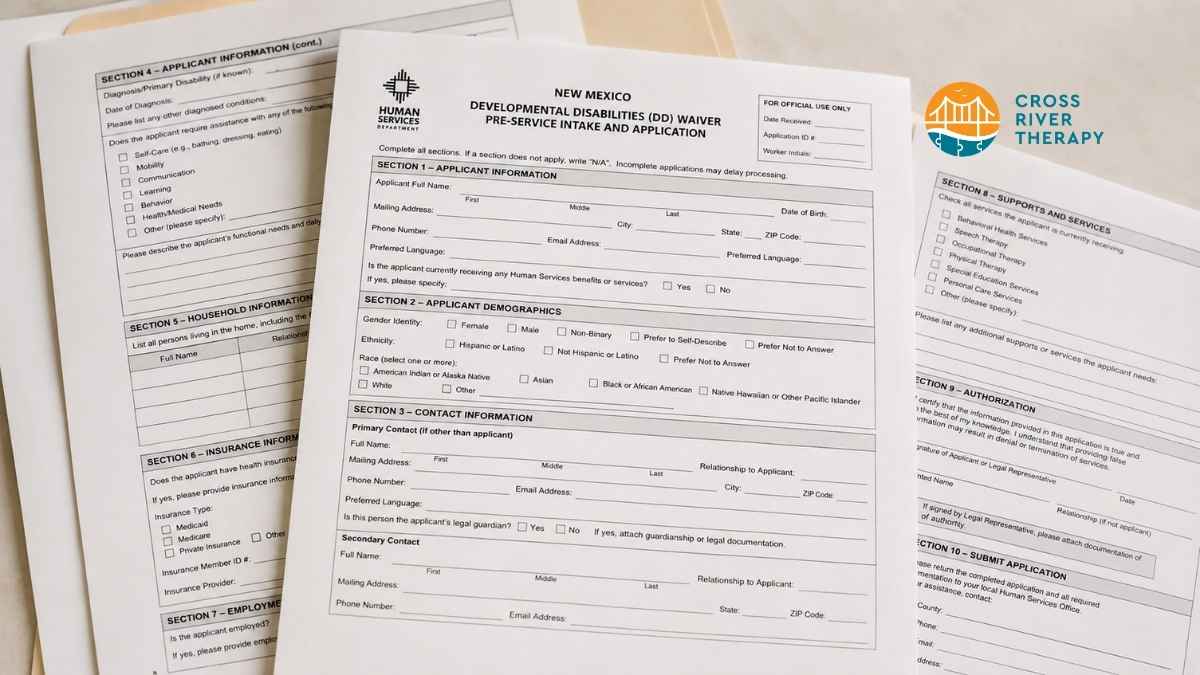
How to Apply for New Mexico’s DD Waiver While Starting ABA Therapy
Autism waiver New Mexico applications need DD Waiver records and proof of daily support needs. Your next step is to start ABA intake with Cross River.

Is ABA Therapy Covered by Insurance in New Jersey? What Every Parent Should Know
ABA therapy insurance New Jersey may cover medically necessary care based on plan type, network, and authorization. Verify benefits with Cross River.

How ABA Therapy Builds Communication for Nonverbal Children Without Forcing Speech
ABA therapy communication for nonverbal children starts with AAC, signs, and daily routines. See how kids ask, refuse, choose, and get help.

How to Start ABA Therapy in New Jersey With a First-Call Checklist
How to start ABA therapy in New Jersey begins with records, insurance details, and intake questions. Use this first-call checklist before you call.

How to Get an Autism Evaluation in Arkansas Before Starting ABA Therapy
How to get an autism evaluation in Arkansas starts with a referral, provider choice, and key records. Use this parent checklist before ABA intake.

Center-Based vs In-Home vs School-Based ABA Therapy and How to Choose the Right Fit
Center-based, in-home, and school-based ABA therapy each fit different goals, routines, and settings. Compare options before your intake call.

Early Signs of Autism: A Guide for North Carolina Parents
Early signs of autism North Carolina parents notice can include speech, play, sensory, or skill loss patterns. See what to track before screening.