








The Basics of ABA Therapy Explained
Understanding the Foundation of ABA Therapy


Introduction to ABA Therapy
Applied Behavior Analysis (ABA) therapy stands as a cornerstone in the field of behavior modification, particularly known for its utilization in treating Autism Spectrum Disorder (ASD). Rooted in behaviorism, ABA applies the scientific principles of learning to increase desirable behaviors and reduce those that are detrimental to daily functioning. This article delves into the basics of ABA therapy, its history, methodologies, and its widespread application today.
The Essentials of ABA Therapy
What are the basic principles of ABA?
The principles of Applied Behavior Analysis (ABA) are centered around changing behavior through systematic interventions and the application of positive reinforcement. At its core, ABA seeks to enhance socially significant behaviors, particularly in children with autism, by utilizing various established techniques.
For instance, Discrete Trial Training (DTT) breaks down complex behaviors into manageable parts, allowing therapists to teach each component step by step. The ABC model is integral to ABA, where the Antecedent signals the behavior, and the Consequence influences future behavior. Data collection is paramount, ensuring that progress is consistently measured and treatment plans are customized accordingly.
What are the key objectives and scope of ABA?
ABA therapy has several foundational objectives:
- Skill Acquisition: Teaching new behaviors to replace inappropriate ones.
- Behavior Modification: Reducing undesirable behaviors through reinforcement & consequences.
- Functional Improvement: Enhancing communication, social interactions, and overall independence.
The scope of ABA extends beyond autism treatment, addressing behaviors linked to ADHD, anxiety disorders, and more. It encompasses various techniques tailored to meet the individual needs of clients, ensuring a personalized approach.
How has behaviorism influenced ABA?
The influence of behaviorism on ABA is profound, rooted in the work of pioneers like B.F. Skinner. The therapy incorporates operant conditioning principles, where consequences shape behavior. ABA focuses on observable behaviors instead of internal thoughts, allowing practitioners to apply consistent, empirical methodologies to foster positive change.
In summary, ABA therapy operates through a systematic framework emphasizing behavioral change, reinforcing desirable actions while measuring success through data-driven strategies, striving to improve quality of life for individuals seeking support.
Historical Development of ABA Therapy
Origins and Historical Figures in ABA
Applied Behavior Analysis (ABA) has its roots in behaviorism, with foundational contributions from scholars such as Ivana Pavlov and John B. Watson. However, it was B.F. Skinner who significantly shaped the field with his work on operant conditioning—a principle that behaviors can be modified by their consequences or reinforcements. Another key figure, Ivar Lovaas, pioneered its application for Autism Spectrum Disorder (ASD) in the 1960s, laying the groundwork for techniques still used today.
Evolution of Techniques and Methods
Over the decades, ABA therapy has evolved to encompass various techniques tailored for different learning needs. Techniques such as Discrete Trial Training (DTT), Natural Environment Training (NET), and Functional Communication Training (FCT) emerged from continuous research and practice. These methods focus on breaking down complex tasks into manageable tasks while fostering communication and social skills in a structured learning environment.
Growth of ABA in Autism Treatment
Since its inception, ABA has grown exponentially as the predominant therapy for children with autism. Recognized as an evidence-based best practice, it is endorsed by health organizations such as the American Psychological Association and the U.S. Surgeon General. Today, ABA therapy is utilized not only in one-on-one therapeutic settings but also integrated into educational environments, emphasizing the importance of skill generalization across diverse contexts.
Core Techniques in ABA
Identification of Key Methods Like DTT and NET
Applied Behavior Analysis (ABA) employs several structured methods to teach essential skills and modify behavior. Two notable techniques are Discrete Trial Training (DTT) and Natural Environment Training (NET).
- DTT breaks learning into small, manageable steps, allowing therapists to teach each component of a behavior or skill one at a time. This technique reinforces correct responses systematically, which aids in learning and mastering complex behaviors.
- NET focuses on teaching behaviors in the child’s natural surroundings, promoting the generalization of skills. This method reinforces positive behavior in real-life scenarios, ensuring skills learned in therapy are applicable outside of structured sessions.
Application of ABC Framework
Central to ABA is the ABC framework which stands for Antecedent, Behavior, and Consequence. This model helps therapists understand the contexts surrounding behavior. The analysis includes:
- Antecedents: Events or triggers that occur before a behavior.
- Behavior: The actual response or action performed by the individual.
- Consequences: What happens after the behavior, influencing future actions.
This understanding allows professionals to tailor interventions effectively based on the dynamics of the child's environment.
Role of Positive Reinforcement
Positive reinforcement plays a crucial role in ABA therapy. It involves rewarding desired behaviors to increase their frequency. Here’s how it functions:
- Rewards must be meaningful to the individual for the reinforcement to be effective.
- When a child displays a target behavior and receives positive reinforcement, it encourages them to repeat that behavior in the future. This strategy significantly enhances motivation and engagement during sessions.
By integrating these core techniques, ABA therapy effectively addresses the diverse needs of children with Autism Spectrum Disorder.
Understanding the Seven Dimensions of ABA

What are the seven pillars of ABA?
The seven pillars of Applied Behavior Analysis (ABA) were articulated by Baer, Wolf, and Risley in 1968 and are essential for understanding the field's principles. These dimensions include:
- Applied: Focuses on socially significant behaviors that are meaningful to the client, ensuring that the therapy addresses important life skills.
- Behavioral: Emphasizes observable and measurable actions, allowing for concrete assessment of progress.
- Analytic: Requires interventions to be data-driven and evidence-based, ensuring that decisions made during therapy are informed by solid analysis.
- Technological: Involves clearly defined and replicable procedures, enabling consistent implementation of therapy techniques.
- Conceptually Systematic: Connects practical applications to established theories and principles, ensuring that all methods used are grounded in behavioral science.
- Effective: Focuses on producing significant changes in behavior, thereby ensuring that the interventions lead to positive outcomes.
- Generality: Encourages learned behaviors to be maintained and applied across different settings and situations, promoting independence and versatility in skills.
Importance of these dimensions in therapy
Understanding these dimensions is crucial as they guide therapists in developing effective treatment plans tailored to each individual's needs. By adhering to these principles, therapists can ensure meaningful changes in behavior that enhance the quality of life for clients, particularly for individuals with autism. Each dimension serves as a foundation for creating structured, evidence-based interventions that foster progress and skill application in real-world contexts.
Structure and Implementation of ABA Programs
Tailoring Programs to Individual Needs
Applied Behavior Analysis (ABA) therapy is not one-size-fits-all; it’s essential to tailor each program to the individual’s unique strengths, challenges, and family dynamics.
Therapists start by conducting thorough behavioral assessments to identify specific target behaviors that are crucial for the individual’s development. By setting measurable and achievable goals, therapists can focus on enhancing communication, social skills, and daily living abilities.
Ongoing Assessment and Data Collection
A critical component of ABA is continuous assessment and data collection. Behavior analysts regularly collect data on the progress and effectiveness of interventions. This ongoing evaluation helps to determine if the strategies are leading to desired changes.
When interventions are not proving efficient, data allows therapists to adapt and modify the treatment plans effectively, ensuring long-term maintenance of behavioral improvements.
Role of BCBAs in Program Development
Board Certified Behavior Analysts (BCBAs) play a pivotal role in the development of ABA programs. They are trained professionals responsible for designing individualized treatment plans that cater to the needs of each child. BCBAs monitor progress closely, providing oversight and ensuring the application of evidence-based practices throughout the therapeutic process.
Their expertise guarantees that interventions remain aligned with scientifically grounded principles, driving successful outcomes for individuals with autism.
Effectiveness of ABA Therapy
Evidence-based outcomes and success rates
Applied Behavior Analysis (ABA) therapy is recognized for its evidence-based effectiveness, particularly in improving skills in individuals with Autism Spectrum Disorder (ASD). Studies indicate that intensive, long-term ABA sessions can significantly enhance cognitive functioning, language acquisition, and daily living skills. Research shows that children who engage in 25 to 40 hours of ABA therapy weekly have about an 80% chance of integrating into general education classes after 2-3 years of intervention.
Benefits for individuals with autism
ABA therapy offers various benefits, targeting skills such as communication, social interactions, and self-regulation. It employs techniques like Discrete Trial Training and Functional Communication Training to foster essential life skills. The therapy is tailored to meet individual needs, incorporating family involvement, which is crucial for generalizing learned behaviors into everyday situations. Positive reinforcement plays a vital role in motivation, encouraging children to practice newly acquired skills confidently.
Critiques and ethical considerations
While ABA therapy has demonstrated effectiveness, it also faces scrutiny. Critics argue that some practices focus too heavily on conformity, potentially disregarding the unique needs of autistic individuals. Concerns have been raised about historical practices that were overly harsh or punitive, leading to emotional distress. Though many children benefit from ABA, it's vital for caregivers and practitioners to remain reflective and consider alternatives that may prioritize the client's individuality and emotional safety. Exploring diverse therapeutic approaches is essential in providing a respectful environment for autistic children.
Focus Area Evidence of Effectiveness Key Considerations Evidence-based outcomes Proven improvements in cognitive and adaptive skills Importance of intensive sessions for optimal results Benefits for individuals with autism Enhanced communication and social skills Tailored plans and parental involvement are crucial Critiques and ethical considerations Potential harm from punitive approaches Approach with awareness of individuality and emotional impact
Common Applications Beyond Autism
Use in Other Psychological and Behavioral Disorders
Applied Behavior Analysis (ABA) is not only effective for autism spectrum disorder (ASD) but also proves helpful in addressing various psychological and behavioral issues. Treatments utilizing ABA techniques are applied in managing Attention Deficit Hyperactivity Disorder (ADHD), anxiety disorders, obsessive-compulsive disorder (OCD), and even post-traumatic stress disorder (PTSD). By leveraging principles of reinforcement, ABA can encourage desirable behaviors while reducing maladaptive ones in these diverse populations.
Application in Educational and Social Settings
In educational environments, ABA is instrumental in modifying classroom behavior, helping to create conducive learning atmospheres for all students, including those with special needs. Through goal-setting and monitoring, teachers can apply ABA strategies to enhance students' academic engagement and appropriate social interactions. Furthermore, outside of the classroom, ABA approaches are utilized in community settings to promote social skills and emotional intelligence, making it a flexible tool for fostering positive behavior across various life aspects.
Summary of Applications of ABA Beyond Autism
Application Area Examples of Use Benefits Melting Point Other Psychological Issues ADHD, Anxiety Disorders, PTSD Encourages positive behavior change Educational Settings Classroom Management Enhances learning environment & social skills Community Contexts Social Skills Development Fosters emotional regulation and interaction
Challenges and Criticisms of ABA Therapy
Concerns About Normalization and Ethics
Despite its effectiveness, Applied Behavior Analysis (ABA) therapy faces criticisms regarding its focus on normalizing behaviors. Critics argue that this approach can sometimes overlook the individuality of autistic individuals, viewing behavior non-compliance as a problem to be corrected. The pressing question is: does this normalization infringe on the rights and unique identities of those with autism?
Impacts on Mental Health and Emotional Well-being
Furthermore, some critics voice concerns about the potential adverse impacts on mental health and emotional well-being. There are worries that certain ABA techniques, particularly if misapplied, could lead to feelings of frustration or trauma. For instance, emphasizing compliance could unintentionally suppress self-expression, creating a dichotomy between fitting in socially and being true to oneself. Ongoing debates emphasize the need for balance and sensitivity in the implementation of ABA techniques, ensuring that mental health is prioritized.
ConcernsImpactsConsiderations Normalization of behavior Potential emotional harm over time Must respect individuality Pressure to conform to societal norms Stigmatization or suppression of authentic self-expression Balance between social adaptation and identity
Future Directions in ABA Therapy
Innovations and Technological Advancements in ABA
Applied Behavior Analysis (ABA) is evolving with technological advancements that enhance its effectiveness. One notable innovation is the use of mobile apps that assist therapists in collecting real-time data during sessions. These tools streamline data management, allowing for quicker analysis and adaptation of strategies based on concrete results.
Furthermore, virtual and augmented reality technologies are being integrated into ABA therapy, creating immersive environments that can simulate real-world situations. This helps individuals practice social skills in a controlled setting, promoting generalization of learned behaviors to everyday situations. These advancements promise a broader reach and potentially improved outcomes for individuals with autism.
Changing Perceptions and Evolving Methodologies
As knowledge of autism and behavior science increases, perceptions of ABA are also shifting. There is a growing emphasis on person-centered approaches that prioritize the individual's preferences and goals. This evolution is steering practitioners to design more collaborative treatment plans that involve not only the child but also their family and support systems.
Additionally, there is a push toward flexibility in methodologies employed in ABA. This includes integrating other therapeutic practices and acknowledging the importance of emotional and psychological well-being alongside behavioral modification. Such changes reflect a more holistic approach to treatment, aligning with current trends in mental health and education that emphasize the importance of emotional support.
Final Thoughts on ABA Therapy
ABA therapy has proven to be an invaluable tool in behavior modification, particularly for those with autism. However, its application goes beyond this, influencing how we address a variety of behavioral challenges across different contexts. The therapy's continued evolution and the integration of new methodologies will likely enhance its effectiveness and address the ethical concerns raised by critics. As we look to the future, the hope is that ABA therapy will continue to adapt and provide meaningful support in diverse areas of need.
References
- Applied Behavior Analysis (ABA) - Autism Speaks
- [PDF] ABA 101 Handouts The Autism Helper
- The 7 Dimensions & Core Principles of ABA
- Module 1: Introduction to Basic ABA Concepts | Applied Behavior ...
- What is Applied Behavior Analysis? 3 Career Paths to Consider
- Everything You Need to Know About ABA Therapy - Behavior Nation
- The Fundamentals Of ABA Therapy For Children
Recent News
Related articles

6 Arkansas Medicaid ABA Therapy Rules Families Need to Know
Arkansas Medicaid ABA therapy has age, diagnosis and approval rules. Families can check six requirements before care.

Arizona Autism Laws Every Parent Should Know Before Starting ABA Therapy
Autism laws Arizona parents should know cover ABA insurance, AHCCCS appeals, IEPs, and Section 504 rights. Check ABA coverage with Cross River.

ABA Therapist Salary in Arkansas: What BCBAs and RBTs Actually Earn in 2026
ABA therapist salary Arkansas figures compare RBT and BCBA rates, benefits, guaranteed hours, and contract terms. Explore careers at Cross River.

5 Autism Support Groups and Family Resources in New Mexico Alongside ABA Therapy
Autism support groups New Mexico families can use offer peer support, local events, and school help. Cross River can explain ABA therapy options.

Where to Get an Autism Evaluation in New Mexico Before Starting ABA Therapy
Autism evaluation New Mexico options include UNM, NMSU, FIT, and private providers. Compare providers, records, and ABA steps with Cross River.

7 North Carolina Autism Resources to Contact Before ABA Therapy Starts
Autism resources North Carolina families can call for diagnosis, early intervention, rights, and parent support. Start ABA intake with Cross River.

Does Indiana Medicaid Cover ABA Therapy? A Step-by-Step Eligibility Checklist for Parents
Medicaid ABA therapy Indiana covers eligible children under 21 with prior authorization. Your five-step coverage review can start with Cross River.
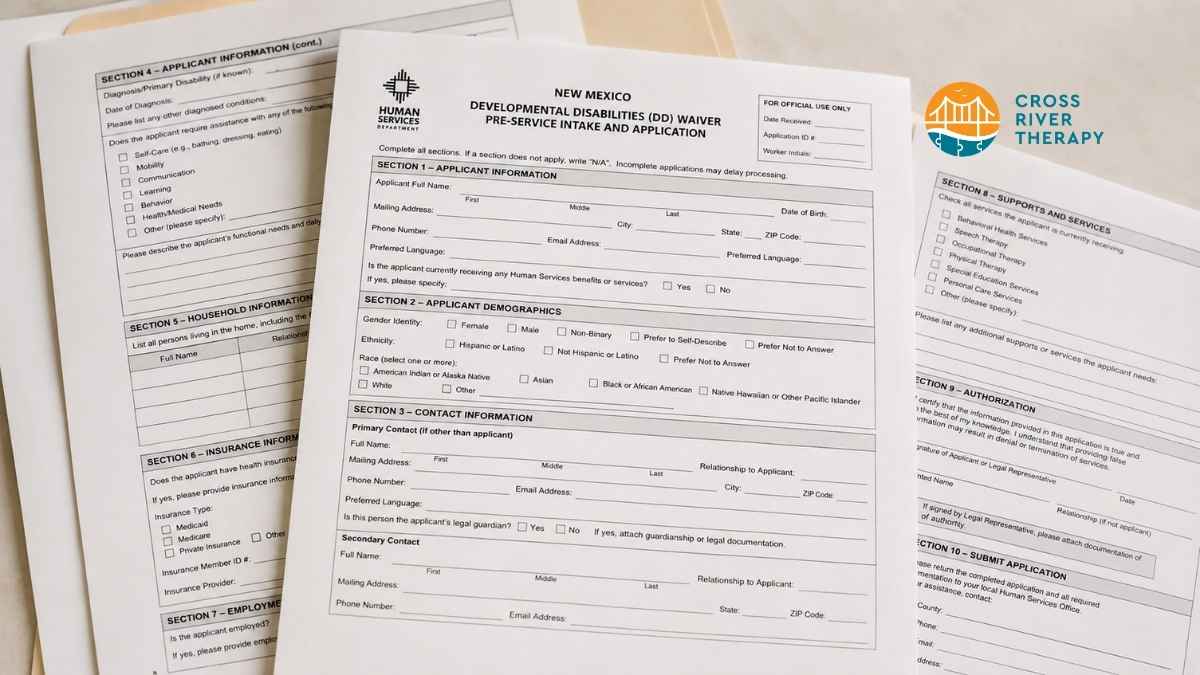
How to Apply for New Mexico’s DD Waiver While Starting ABA Therapy
Autism waiver New Mexico applications need DD Waiver records and proof of daily support needs. Your next step is to start ABA intake with Cross River.

Is ABA Therapy Covered by Insurance in New Jersey? What Every Parent Should Know
ABA therapy insurance New Jersey may cover medically necessary care based on plan type, network, and authorization. Verify benefits with Cross River.

How ABA Therapy Builds Communication for Nonverbal Children Without Forcing Speech
ABA therapy communication for nonverbal children starts with AAC, signs, and daily routines. See how kids ask, refuse, choose, and get help.

How to Start ABA Therapy in New Jersey With a First-Call Checklist
How to start ABA therapy in New Jersey begins with records, insurance details, and intake questions. Use this first-call checklist before you call.

How to Get an Autism Evaluation in Arkansas Before Starting ABA Therapy
How to get an autism evaluation in Arkansas starts with a referral, provider choice, and key records. Use this parent checklist before ABA intake.