








The Benefits of Group Therapy in ABA Therapy Centers
Exploring How Group Therapy Enhances ABA Treatment for Autism


Understanding the Role of Group Therapy in ABA
Applied Behavior Analysis (ABA) therapy has long been recognized for its effectiveness in helping children with autism develop essential skills. Within this framework, group therapy offers a unique and powerful context for facilitating social, communicative, and behavioral growth. This article delves into the myriad advantages of group therapy in ABA centers, focusing on its impact on children with autism.
Advantages of Group Therapy in ABA Settings

What are the advantages of group therapy in ABA therapy centers for children with autism?
Group therapy in ABA therapy centers can offer several advantages for children with autism, including fostering social skills, promoting confidence, and supporting emotional growth.
Social Skill Improvement
- Peer Interaction: The structured environment encourages children to interact with peers, allowing them to practice skills like listening and conversation.
- Peer Modeling: By observing and imitating others, children can learn positive behaviors, which enhances their ability to communicate effectively with peers.
Confidence Building
- Safe Practice Space: Group therapy provides a non-judgmental setting where children can experiment with social interactions, which boosts their self-esteem.
- Gradual Exposure: This controlled exposure reduces anxiety related to social situations, helping children feel more comfortable in everyday interactions.
Emotional Growth
- Shared Experiences: Connecting with peers facing similar challenges decreases feelings of isolation, nurturing deeper friendships and emotional understanding.
- Skill Development: The therapy also emphasizes emotional regulation, teaching children constructive ways to express their feelings and manage their emotions.
Ultimately, group therapy serves as a critical component in the development of essential interpersonal skills for children with autism, laying a foundation for healthier social interactions.
Social Skills Development Through Group Sessions
How does group therapy aid in the development of social skills for children with autism?
Group therapy aids in the development of social skills for children with autism by providing a supportive environment where they can interact with peers and practice essential communication skills. In structured group activities, children learn to take turns, share, and respond to social cues, which are vital for successful interactions.
ABA therapy programs often include diverse techniques tailored to individual needs. For instance, programs at centers like Pinnacle Blooms Network incorporate occupational and speech therapies, enhancing both verbal and non-verbal communication skills. This includes training in body language, facial expressions, and understanding personal space—all crucial for social engagement.
Additionally, research indicates that group-based psychotherapy designed for children with autism leads to significant improvements in social responsiveness. By learning in a group, children not only practice interactions but also gain a sense of belonging among peers with similar experiences. This connection helps in reducing feelings of loneliness and promotes deeper friendships.
Interaction with peers
The structured environment of group therapy encourages interaction among participants. Children have the opportunity to relate to one another, boosting their confidence as they communicate and collaborate. Such environments are non-judgmental, allowing children to explore and refine their social skills without fear of negative feedback.
This peer interaction is facilitated by behavior technicians who supervise group sessions. They create opportunities for role-playing and engage children in games designed to reinforce learned skills. The practice of learned behaviors in a controlled setting assists individuals in applying their skills to real-world scenarios, which is essential for generalization.
Communication enhancement
Effective communication is pivotal for children with autism, and group therapy is instrumental in enhancing these skills. The format allows children to practice verbal communication through discussions and interactive activities, such as storytelling or collaborative projects.
Moreover, through positive reinforcement strategies employed by therapists, children are motivated to improve their communication abilities. They learn to recognize social cues and respond accordingly, which translates to better understanding and articulation of their thoughts and feelings.
In conclusion, group therapy not only fosters social skills development among children with autism but also cultivates their ability to connect meaningfully with others, promoting independence and self-advocacy in a supportive setting.
Communication Enhancement Through ABA Group Therapy
Can group therapy within the ABA framework improve communication for individuals with developmental challenges?
Yes, group therapy within the ABA framework can significantly enhance communication for children with developmental challenges. This form of therapy engages children in activities that promote both verbal and non-verbal communication skills.
Verbal and Non-Verbal Communication
Group sessions provide a dynamic environment where children can practice speaking, listening, and understanding body language. By interacting with peers, they learn how to convey their thoughts effectively and respond to others, which is crucial for social interactions.
Adapting to Communication Styles
Being in a group allows children to experience various communication styles. Each participant brings unique strengths and challenges, enabling children to observe different approaches. This exposure helps them adapt their own communication techniques when interacting with diverse individuals.
Conversational Contexts
In these structured group settings, conversations occur organically through role plays, games, and discussions, presenting real-world scenarios. Children can explore different conversational contexts and learn how to navigate them, boosting their confidence in social situations.
Skills DevelopedBenefitsActivities Verbal Communication Enhanced articulation Discussions and Role Plays Non-Verbal Communication Improved body language skills Games focused on interactions Adaptability Flexibility in conversations Structured social activities Understanding Contexts Awareness of social cues Real-life scenario practices
Through these strategies, group therapy fosters essential communication skills in children with autism, paving the way for better relationships and social engagement.
Comparative Benefits of Group vs. Individual Therapy

What are the benefits of group therapy compared to individual therapy in ABA settings?
Group therapy brings numerous benefits that often surpass those found in individual sessions, especially for children with autism. Here’s a closer look at these advantages:
- Peer Learning: In a group setting, children can observe and imitate their peers, gaining social skills through modeling. This dynamic accelerates learning as they witness interactions and engage in role-play, enhancing emotional and verbal communication skills.
- Social Interaction Opportunities: Group therapy encourages children to practice their social abilities in a safe environment. They can forge friendships and reduce feelings of isolation, which are crucial for their emotional development.
However, individual therapy is better suited for personalized attention, allowing therapists to focus specifically on a child's unique needs and developmental goals. Ultimately, the choice between group and individual therapy in ABA depends on what will best support each child’s growth and socialization journey.
Structure and Dynamics of Group Therapy Sessions
How do therapy session structures differ between group therapy and individual therapy in ABA?
The structure of group therapy in Applied Behavior Analysis (ABA) differs significantly from individual therapy. Group sessions are built around structured activities that promote interaction among participants. This fosters an environment where children can practice their social skills in a safe setting monitored by therapists.
In group therapy, therapists often employ collaborative tasks, role-playing scenarios, and social games. These activities encourage the children to engage with one another, which is essential for developing communication and social skills. Through peer engagement, children learn not only from the therapists but also from each other, reinforcing positive behaviors and skills.
In contrast, individual therapy is tailored to each child's unique behavioral objectives. While it focuses on personalized strategies, group therapy emphasizes socialization and building confidence through shared interactions. As a result, the session dynamics in group therapy are typically more interactive, promoting collective learning and relationship building among children with similar experiences.
Preparation and Prerequisites for Group Participation
What prerequisites are there for participation in group therapy at ABA centers?
Before children can participate in group therapy at Applied Behavior Analysis (ABA) centers, certain prerequisites must be met. One of the primary requirements is conducting initial assessments to evaluate each child's readiness for a group setting. These assessments gauge not only the individual's skills but also their compatibility with potential group dynamics.
Additionally, children should possess basic communication abilities. This foundational skill enables them to engage meaningfully in group activities, fostering interaction with peers and therapists alike. Furthermore, behavior management skills are essential, ensuring that each child can navigate social settings effectively and contribute positively to the group environment.
Together, these prerequisites create a structured framework, maximizing the therapeutic benefits for all participants.
The Role of Structured Environments in Group Therapy
Reduced Anxiety
Structured environments play a critical role in group therapy for children with autism. Having a consistent setting helps reduce anxiety, allowing kids to feel more secure and focused. The familiarity of the environment enables them to channel their energy toward learning and practicing social skills, rather than being overwhelmed by distractions.
Improved Focus
In a controlled atmosphere, children are better able to concentrate on tasks and interactions. This enhanced focus is vital for developing crucial skills such as communication and peer engagement, which can be challenging for those on the autism spectrum.
Controlled Environments
The organization of group therapy sessions fosters a non-judgmental atmosphere where children can practice social interactions. Structured activities, guided by therapists, encourage peer modeling and positive reinforcement, allowing participants to learn beneficial behaviors in real-time while also reducing potential stressors.
Aspect Benefit Example Activity Reduced Anxiety Provides a sense of safety for participants Structured routines Improved Focus Enhances attention during learning and interactions Focused group discussions Controlled Environment Supports tailored learning and social skill development Role play and games
Professional Guidance and Parent Involvement
What are the roles of therapists in group therapy?
Therapists play a pivotal role in group therapy for children with autism. They create a structured environment that reduces anxiety and fosters focus, enabling participants to practice social skills effectively. Each therapist tailors their approach using behavioral data to meet the specific developmental needs of each child.
Moreover, therapists facilitate engaging activities such as role plays and games aimed at reinforcing learned behaviors, making the sessions both effective and enjoyable for the children involved.
How does family support enhance therapy?
Family involvement is crucial in the ABA therapy process, as it fosters continuity of care at home. Parents and caregivers gain insights and strategies to reinforce skills learned during sessions, enhancing the overall efficacy of the therapy. Their engagement also allows for better behavior management outside the structured environment of therapy.
Why is consistency of care important in ABA therapy?
Children with autism greatly benefit from consistent routines and structured settings. Consistency in therapy helps children feel secure, making them more receptive to learning and applying new skills. The adaptable nature of ABA therapy enables personalized routines that accommodate the unique needs of each child, aiding their development in various life skills.
Conclusion
Group therapy within ABA centers represents a dynamic and impactful approach to supporting the development of children with autism. By offering a structured yet flexible environment, it enhances critical social, communication, and emotional skills necessary for children's holistic growth. The collaborative nature of group therapy, guided by trained professionals and supplemented by family involvement, ensures that each child receives the tailored support they require to succeed, highlighting its pivotal role in the broader spectrum of ABA treatments.
References
- The Benefits of Group Therapy for Children with Autism - Carebot ABA
- 15 Benefits of Center-Based ABA Therapy for Individuals
- Group ABA Therapy: Building Connections for Collective Growth
- Embracing the Benefits of Group-Based ABA Services
- 6 Life-Changing Benefits of ABA Therapy for Children with Autism
- The Benefits of Clinic-based ABA Therapy for Autism - AutismCOE
- Applied Behavior Analysis (ABA) | Autism Speaks
Recent News
Related articles

6 Arkansas Medicaid ABA Therapy Rules Families Need to Know
Arkansas Medicaid ABA therapy has age, diagnosis and approval rules. Families can check six requirements before care.

Arizona Autism Laws Every Parent Should Know Before Starting ABA Therapy
Autism laws Arizona parents should know cover ABA insurance, AHCCCS appeals, IEPs, and Section 504 rights. Check ABA coverage with Cross River.

ABA Therapist Salary in Arkansas: What BCBAs and RBTs Actually Earn in 2026
ABA therapist salary Arkansas figures compare RBT and BCBA rates, benefits, guaranteed hours, and contract terms. Explore careers at Cross River.

5 Autism Support Groups and Family Resources in New Mexico Alongside ABA Therapy
Autism support groups New Mexico families can use offer peer support, local events, and school help. Cross River can explain ABA therapy options.

Where to Get an Autism Evaluation in New Mexico Before Starting ABA Therapy
Autism evaluation New Mexico options include UNM, NMSU, FIT, and private providers. Compare providers, records, and ABA steps with Cross River.

7 North Carolina Autism Resources to Contact Before ABA Therapy Starts
Autism resources North Carolina families can call for diagnosis, early intervention, rights, and parent support. Start ABA intake with Cross River.

Does Indiana Medicaid Cover ABA Therapy? A Step-by-Step Eligibility Checklist for Parents
Medicaid ABA therapy Indiana covers eligible children under 21 with prior authorization. Your five-step coverage review can start with Cross River.
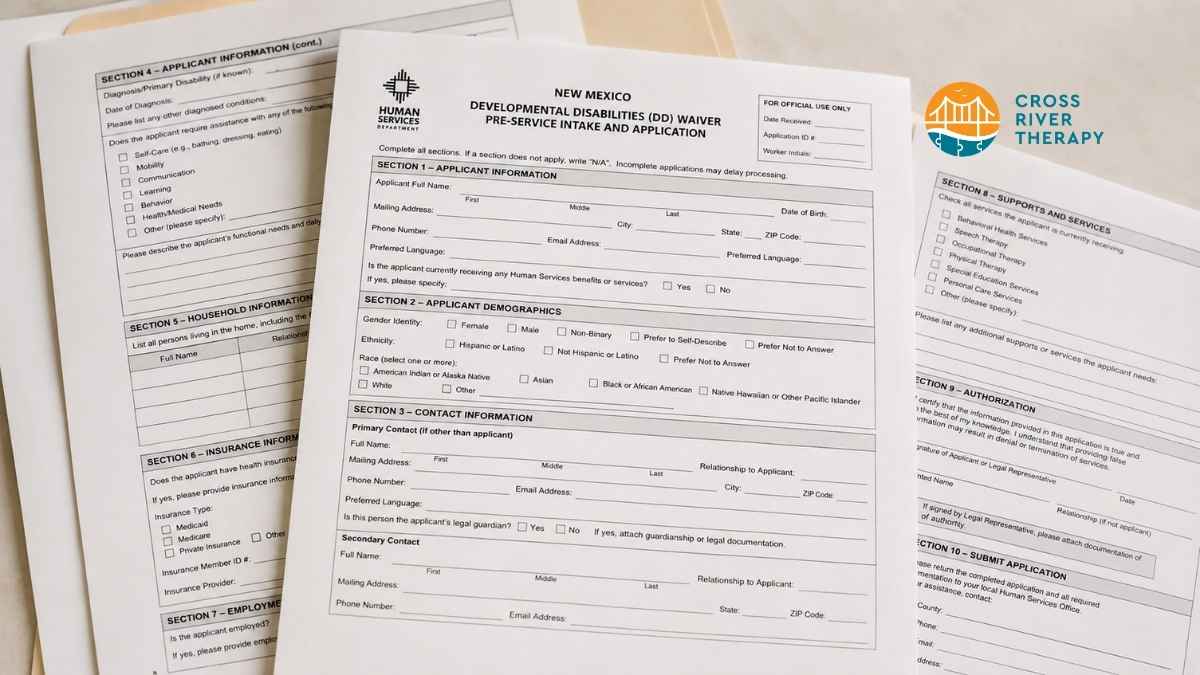
How to Apply for New Mexico’s DD Waiver While Starting ABA Therapy
Autism waiver New Mexico applications need DD Waiver records and proof of daily support needs. Your next step is to start ABA intake with Cross River.

Is ABA Therapy Covered by Insurance in New Jersey? What Every Parent Should Know
ABA therapy insurance New Jersey may cover medically necessary care based on plan type, network, and authorization. Verify benefits with Cross River.

How ABA Therapy Builds Communication for Nonverbal Children Without Forcing Speech
ABA therapy communication for nonverbal children starts with AAC, signs, and daily routines. See how kids ask, refuse, choose, and get help.

How to Start ABA Therapy in New Jersey With a First-Call Checklist
How to start ABA therapy in New Jersey begins with records, insurance details, and intake questions. Use this first-call checklist before you call.

How to Get an Autism Evaluation in Arkansas Before Starting ABA Therapy
How to get an autism evaluation in Arkansas starts with a referral, provider choice, and key records. Use this parent checklist before ABA intake.