








The Role of ABA Therapy in Improving Adaptive Functioning in Autism
Exploring the Impact of ABA Therapy on Autism


Understanding the Mechanics of ABA Therapy
Applied Behavior Analysis (ABA) therapy is widely recognized for its effectiveness in improving the lives of individuals with autism. Rooted in the science of behavior and learning, ABA therapy utilizes tailored techniques to modify and understand behavior, promoting positive outcomes for those on the autism spectrum.
Defining ABA Therapy
What is Applied Behavior Analysis (ABA)?
Applied Behavior Analysis (ABA) is a therapy grounded in the science of learning and behavior. Its primary aim is to understand how behaviors operate and can be modified through environmental influences. This therapy is especially beneficial for individuals with autism and other developmental disorders, focusing on increasing positive behaviors and decreasing negative ones.
Key strategies in ABA include:
- Positive Reinforcement: This technique rewards desirable behaviors, making them more likely to occur again.
- A-B-C Model: This model stands for Antecedent, Behavior, and Consequence, helping to analyze and teach desired behaviors.
ABA therapy is highly individualized, meaning treatment plans are tailored to meet each learner’s needs, and it is recognized as an evidence-based best practice for improving critical skills such as communication, social interactions, and self-care.
What does ABA therapy stand for?
ABA therapy stands for Applied Behavior Analysis. It is a scientific approach designed to improve behaviors by examining the relationship between behavior and the environment.
The therapy is particularly effective in assisting children with autism, encouraging helpful behaviors while reducing problematic ones. Techniques involved in ABA include:
- Positive Reinforcement to promote desirable behaviors.
- Customizable Interventions that adapt to individual needs.
Supported by decades of empirical research, ABA therapy has emerged as a leading intervention in autism treatment, enhancing the quality of life for many individuals by focusing on skill development and emotional growth.
Principles and Procedures of ABA
What are the principles and procedures of Applied Behavior Analysis (ABA)?
Applied Behavior Analysis (ABA) is a scientific approach designed to analyze how behaviors can be modified by environmental factors and learning opportunities. The fundamental aims of ABA therapy include:
- Increasing Specific Behaviors: Focused efforts to foster desired skills, such as communication and social interactions.
- Teaching New Skills: Implementing strategies to help individuals learn adaptive behaviors necessary for everyday functions.
- Maintaining Learned Behaviors: Ensuring that skills are retained over time.
- Generalizing Skills Across Contexts: Teaching individuals to apply newly learned skills in various situations.
- Reducing Challenging Behaviors: Identifying and addressing undesirable behaviors through tailored interventions.
The principles of ABA hinge on understanding antecedents (triggers) and consequences (results) in behavior change, establishing clear contingencies. Systematic data collection and analysis are crucial to monitor progress and effectiveness.
Key strategies
In practice, ABA employs several key strategies:
- Prompting: A technique encouraging desired responses by providing hints or assistance.
- Shaping: Gradually reinforcing behaviors that are closer to the desired target behavior.
- Functional Behavior Analysis: Assessing behaviors to understand their purpose and modify them effectively.
- Discrete Trial Training (DTT): Breaking skills into smaller, manageable tasks and using systematic reinforcement as a learning aid.
These strategies are typically deployed by trained professionals, including teachers and behavior specialists, to ensure structured learning environments and effective implementation of interventions.
Adaptive Behaviors Explained

What are adaptive behaviors in ABA?
Adaptive behaviors in Applied Behavior Analysis (ABA) refer to the conceptual, social, and practical skills that enable individuals to function effectively in their daily lives. This is especially relevant for individuals with developmental disabilities, including autism spectrum disorder (ASD).
These behaviors can be categorized into three broad areas:
- Conceptual Skills: These include academic abilities, communication, and self-direction. They entail the critical thinking and understanding needed in various scenarios.
- Social Skills: This area encompasses interpersonal skills, such as communication and cooperation, as well as social responsibility. It is essential for building positive relationships.
- Practical Skills: These cover daily living tasks like personal care, safety, and managing life tasks. They are vital for independent living and self-sufficiency.
Importance of Adaptive Behaviors in ABA
Enhancing adaptive behavior is crucial in ABA therapy because it significantly impacts an individual's independence, social interactions, and academic or workforce performance. For instance, clinicians often utilize standardized assessment tools such as the Vineland Adaptive Behavior Scales (VABS) to evaluate these skills.
By focusing on improving adaptive behaviors, ABA therapists aim to help individuals achieve a higher quality of life and greater independence. This structured approach not only increases the ability to handle everyday challenges but also fosters success in social and educational settings, crucial for holistic development.
ABA Therapy's Role in Enhancing Adaptive Functioning

What is the role of ABA therapy in improving adaptive functioning for individuals with autism?
The role of ABA therapy in improving adaptive functioning for individuals with autism lies in its systematic approach to behavior modification. By focusing on individual needs, ABA programs teach essential skills, including communication and daily living tasks, using a structured and supportive environment.
ABA employs techniques such as positive reinforcement—rewarding desired behaviors—that enhance the likelihood of these behaviors being repeated. This method is especially beneficial for young autistic children facing complex challenges. It nurtures their strengths while respecting their neurodiversity, fostering skill development tailored to their capabilities.
How does ABA impact daily living skills?
The impact of ABA therapy on daily living skills is significant. It addresses critical adaptive behaviors, which are essential for functioning in social, educational, and work environments. Skills targeted can include:
- Communication: Enhancing both expressive and receptive language abilities.
- Self-care: Teaching independence in personal hygiene and daily routines.
- Social interactions: Promoting empathy, tolerance, and engagement with peers.
Structured training provided through ABA can lead to notable improvements. Studies indicate that consistent and intensive intervention often results in enhanced daily living skills, improving an individual’s quality of life and facilitating social integration.
The effectiveness of ABA interventions, as supported by various studies, showcases the potential for significant gains in adaptive behaviors for many children with autism, making it a valuable tool in promoting independence and success across various life areas.
Beyond Autism: ABA Therapy Applications

Is ABA therapy only used for autism?
ABA therapy is primarily known for its effectiveness in treating individuals with autism spectrum disorders, but it is not limited to this population. It can also be beneficial for people with a variety of other developmental and behavioral challenges, including:
- ADHD: Helps improve focus and behavioral control.
- Intellectual Disabilities: Supports skill development and adaptive function.
- Learning Disabilities: Enhances learning strategies and academic performance.
- Anxiety Disorders: Provides techniques for managing anxiety-related behaviors.
- Traumatic Brain Injuries: Assists in regaining lost skills and behaviors.
The therapy is grounded in scientific principles and is recognized by authoritative bodies as a best practice for various behavioral interventions. While often associated with autism, ABA therapy can be customized to meet the needs of any individual, making it versatile and applicable to a broader range of learners.
Versatility of ABA therapy
ABA is effective beyond autism and can support anyone who requires behavioral assistance. This adaptability allows practitioners to tailor programs specifically to each individual's goals, fostering improvements in:
- Communication skills
- Social interactions
- Daily living skills
- Academic achievements
Moreover, continuous assessment ensures that the interventions remain aligned with the individual's progress, solidifying ABA's role as a valuable approach in diverse settings and for various conditions.
Impact on Emotional and Social Skills
How does ABA therapy impact emotional and social skills in children with autism?
ABA therapy significantly influences emotional and social skills in children with autism. By focusing on enhancing communication abilities, social interactions, and overall competence, ABA establishes a foundation for effective peer engagement.
Structured sessions emphasize practices such as eye contact, turn-taking, and reciprocal conversations, which help children learn vital social cues. Research shows that early and intensive ABA therapy results in considerable progress in adaptive behavior and emotional development.
In particular, children often demonstrate improved abilities in empathy, tolerance, and social interaction. A meta-analysis of 29 studies highlighted that interventions tailored to individual needs showed strong effect sizes in communication skills and adaptive behavior.
Family involvement in the ABA process is crucial as it aids in generalizing learned skills to real-life situations. This holistic approach not only nurtures emotional growth but also fosters self-confidence and self-esteem, leading to an enhanced quality of life.
In summary, ABA therapy is a scientifically backed method that promotes positive emotional and social outcomes, ultimately transforming the lives of children with autism.
Additional Insights
Here are some key aspects of how ABA fosters emotional and social growth:
Emotional/Social Skills Focus Impact of ABA Therapy Examples of Strategies Used Emotional Understanding Enhanced empathy and tolerance Modeling and role-playing Social Interaction Improved engagement and peer relationships Task analysis and prompts Confidence Building Increased self-esteem Positive reinforcement Real-life Application Generalization of skills Naturalistic teaching strategies
With its structured approach and personalized interventions, ABA therapy continues to show compelling outcomes in emotional and social skill development for children with autism.
Techniques in ABA Therapy
What are common ABA therapy techniques?
Applied Behavior Analysis (ABA) therapy employs a variety of techniques designed to foster learning and behavior modification. Here are some common techniques utilized in ABA:
Technique Description Positive Reinforcement Rewards or praise are provided to encourage desired behaviors, increasing the likelihood of repetition. Discrete Trial Training (DTT) Skills are broken down into small, manageable parts, with each part taught individually to reinforce correct responses. Functional Communication Training (FCT) Negative behaviors are replaced with appropriate communication skills, allowing for better expression. Modeling and Video Modeling Demonstrates desired behaviors through observation, enabling children to learn from watching others. Redirection and Prompting Guides children towards more appropriate behaviors while gradually fostering independence.
Each of these techniques is tailored to individual needs, focusing on improving communication, social skills, and adaptive behaviors. The personalized approach ensures that therapy sessions are effective and aligned with the child's progress, ultimately enhancing their quality of life.
ABA Therapy in Practice
What are some examples of ABA therapy in practice?
Applied Behavior Analysis (ABA) therapy utilizes various practical strategies that directly support children with Autism Spectrum Disorder (ASD). One of the most renowned methods is Discrete Trial Training (DTT), where skills are broken down into manageable parts. In this structured setting, skills are taught through focused trials and reinforced with positive feedback to encourage repetition of desired behaviors.
Another effective method is the Picture Exchange Communication System (PECS), designed for non-verbal children. This approach enables them to express their needs using images, thereby minimizing communication frustrations and fostering language development.
Functional Behavior Assessments (FBAs) play a key role in understanding specific chronic behaviors. These assessments guide the development of tailored interventions that address identified behavioral issues, promoting positive behavior change.
In addition to these methods, modeling and role-playing are extensively used to help children learn social interactions. By observing and practicing scenarios in a safe environment, children can develop essential social skills such as empathy and conversation.
Overall, ABA therapy encompasses these diverse practices to enhance communication, social behavior, and daily living skills in a variety of real-world settings.
Real-world applications
The impact of ABA therapy extends beyond clinical settings, demonstrating effectiveness in home, school, and community environments. For instance, in schools, ABA strategies help teachers manage classroom behaviors, assist in reinforcing academic skills, and support peer interactions among classmates.
In homes, parents apply ABA techniques to promote appropriate behaviors. By using positive reinforcement and structured routines, they can create supportive environments that encourage children to engage with others effectively.
ABA therapy also integrates into community programs, allowing children to practice their social skills in naturalistic settings. Through supervised playgroups and social clubs, the application of ABA principles enables children to generalize learned skills, facilitating smoother social interactions in their everyday lives.
ABA Strategies Description Application Context Discrete Trial Training Breaking skills into small, manageable steps Clinical and home settings Picture Exchange Communication System (PECS) Using pictures for communication Home and school Functional Behavior Assessments (FBAs) Understanding and assessing behaviors Clinical and school settings Modeling and Role-Playing Teaching social skills through observation Community and home settings
Controversies and Considerations
What are the potential risks and criticisms of ABA therapy?
While Applied Behavior Analysis (ABA) therapy is widely acclaimed for its effectiveness in improving skills for children with autism, it does not come without its critics. Some argue that earlier methodologies utilized forms of punishment which could lead to negative outcomes for children, even though contemporary practices emphasize positive reinforcement. There is concern that the nature of ABA can be inherently repetitive and may incite stress or anxiety in young learners.
Critics also point to the risk of emphasizing behavior modification at the expense of teaching functional, adaptive skills. This approach may inadvertently pressure autistic individuals to conform to neurotypical standards, potentially compelling them to mask their authentic selves. This masking behavior can lead to significant emotional distress and a disconnection from their true identity.
Indeed, certain studies have indicated a correlation between ABA experiences and an increase in PTSD symptoms among some children, which raises important ethical concerns regarding the mental health impact of such therapies.
Given these issues, there is a call for a more tailored approach that respects each child’s individuality, acknowledging their unique needs instead of relying on a standardized, one-size-fits-all treatment model. Such considerations are crucial for ensuring the therapeutic journey supports the well-being and authentic development of autistic children.
The Lifelong Benefits and Challenges of ABA Therapy
ABA therapy remains a cornerstone in the supportive strategies available for individuals on the autism spectrum, proving its effectiveness in enhancing adaptive functioning. While it promotes improved behaviors and skills crucial for everyday living, the approach must be tailored to individual needs. Despite the challenges and criticisms, ABA therapy continues to evolve, integrating more personalized and respectful practices to empower individuals with autism to lead fulfilling lives. Continued research and ethical considerations ensure that ABA therapy adapts to meet the diverse needs of those it serves.
References
- Applied Behavior Analysis (ABA) | Autism Speaks
- The effectiveness of applied behavior analysis program training on ...
- The effectiveness of applied behavior analytic interventions for ...
- ABA Therapy Results
- Adaptive Behavior | Chicago ABA Therapy Glossary
- Understanding Applied Behavior Analysis (ABA) in Autism
- What is Applied Behavior Analysis?
- Adaptive Behavior | Chicago ABA Therapy Glossary
- Debunking 7 Common Myths About ABA Therapy - GSEP Blog
Recent News
Related articles

6 Arkansas Medicaid ABA Therapy Rules Families Need to Know
Arkansas Medicaid ABA therapy has age, diagnosis and approval rules. Families can check six requirements before care.
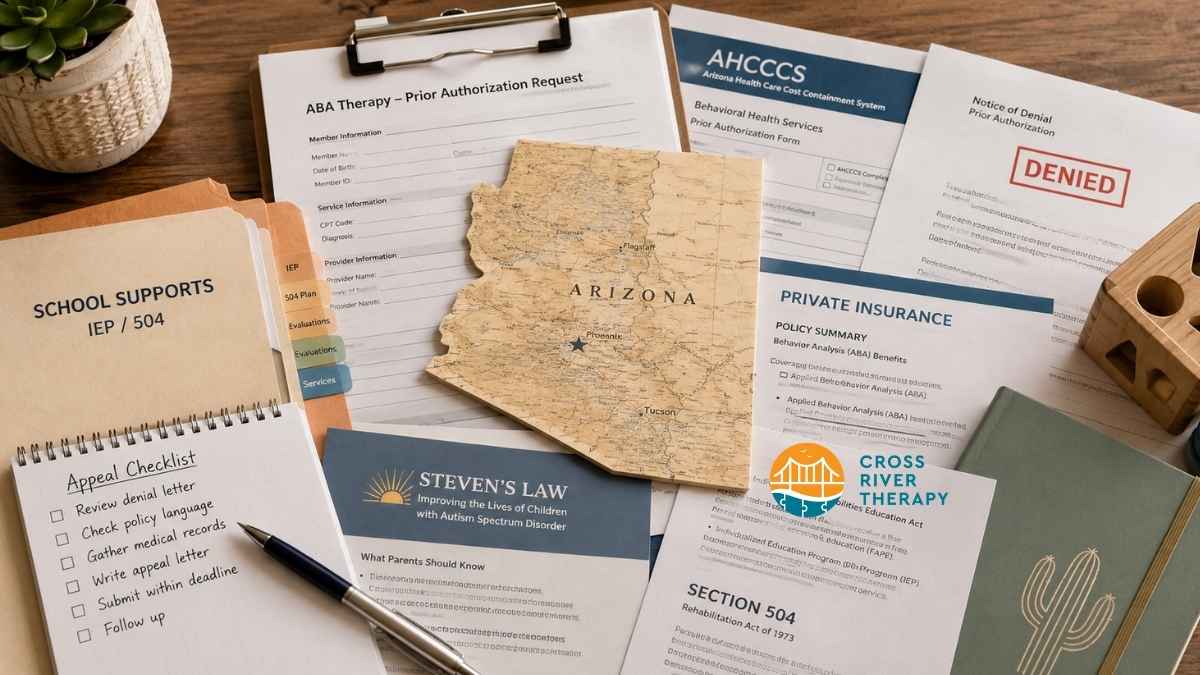
Arizona Autism Laws Every Parent Should Know Before Starting ABA Therapy
Autism laws Arizona parents should know cover ABA insurance, AHCCCS appeals, IEPs, and Section 504 rights. Check ABA coverage with Cross River.

ABA Therapist Salary in Arkansas: What BCBAs and RBTs Actually Earn in 2026
ABA therapist salary Arkansas figures compare RBT and BCBA rates, benefits, guaranteed hours, and contract terms. Explore careers at Cross River.

5 Autism Support Groups and Family Resources in New Mexico Alongside ABA Therapy
Autism support groups New Mexico families can use offer peer support, local events, and school help. Cross River can explain ABA therapy options.

Where to Get an Autism Evaluation in New Mexico Before Starting ABA Therapy
Autism evaluation New Mexico options include UNM, NMSU, FIT, and private providers. Compare providers, records, and ABA steps with Cross River.

7 North Carolina Autism Resources to Contact Before ABA Therapy Starts
Autism resources North Carolina families can call for diagnosis, early intervention, rights, and parent support. Start ABA intake with Cross River.

Does Indiana Medicaid Cover ABA Therapy? A Step-by-Step Eligibility Checklist for Parents
Medicaid ABA therapy Indiana covers eligible children under 21 with prior authorization. Your five-step coverage review can start with Cross River.

How to Apply for New Mexico’s DD Waiver While Starting ABA Therapy
Autism waiver New Mexico applications need DD Waiver records and proof of daily support needs. Your next step is to start ABA intake with Cross River.

Is ABA Therapy Covered by Insurance in New Jersey? What Every Parent Should Know
ABA therapy insurance New Jersey may cover medically necessary care based on plan type, network, and authorization. Verify benefits with Cross River.

How ABA Therapy Builds Communication for Nonverbal Children Without Forcing Speech
ABA therapy communication for nonverbal children starts with AAC, signs, and daily routines. See how kids ask, refuse, choose, and get help.

How to Start ABA Therapy in New Jersey With a First-Call Checklist
How to start ABA therapy in New Jersey begins with records, insurance details, and intake questions. Use this first-call checklist before you call.

How to Get an Autism Evaluation in Arkansas Before Starting ABA Therapy
How to get an autism evaluation in Arkansas starts with a referral, provider choice, and key records. Use this parent checklist before ABA intake.