








The Role of Behavior Technicians in ABA Therapy
Exploring the Vital Contributions of Behavior Technicians in ABA Therapy


Understanding the Foundations of ABA Therapy
Applied Behavior Analysis (ABA) therapy is a well-recognized approach in the treatment of autism spectrum disorder (ASD) and other developmental disabilities. Aiding individuals in skill development through a structured framework, the therapy relies heavily on the involvement of behavior technicians (BTs) who are fundamental in carrying out effective intervention strategies. However, their role extends beyond mere implementation, encompassing a wide range of responsibilities that contribute to impactful therapeutic outcomes.
Responsibilities and Influence of Behavior Technicians
What is the role of a behavior technician in ABA therapy?
Behavior technicians (BTs) play a fundamental role in applied behavior analysis (ABA) therapy, providing direct support to individuals, typically those with autism spectrum disorder (ASD). They work closely under the supervision of Board Certified Behavior Analysts (BCBAs) to implement individualized treatment plans designed to enhance communication, social skills, and self-help abilities.
Responsibilities of behavior technicians
The responsibilities of behavior technicians extend beyond merely following treatment plans. Their core tasks include:
- Implementing Behavior Intervention Plans (BIPs): BTs execute strategies crafted by BCBAs to modify behaviors and teach new skills.
- Engaging Clients: They facilitate therapeutic activities that encourage clients to practice newly acquired skills, fostering engagement and learning.
- Building Trust: Establishing rapport with clients is crucial for effective therapy, ensuring a supportive environment where individuals feel safe to learn and interact.
Implementation of therapy plans
BTs meticulously apply ABA strategies, such as positive reinforcement, to encourage desired behaviors. They adapt sessions to meet the needs of each client, creating a tailored approach based on real-time observations. Their role is dynamic; immediate adjustments during therapy can significantly enhance the efficacy of interventions, allowing for a responsive and personalized experience.
Data collection and evaluation
A primary aspect of a behavior technician's role is data collection. Using methods like direct observation and ABC data collection (Antecedent, Behavior, Consequence), they consistently track client progress. This data is vital for:
- Evaluating Treatment Effectiveness: Assessing how clients respond to various interventions helps determine what works best.
- Guiding Future Interventions: The insights gleaned from data inform necessary adjustments to treatment plans, ensuring that they remain relevant and effective.
In conclusion, behavior technicians are integral to the success of ABA therapy, providing critical direct support and ensuring the effective execution of treatment plans.
Qualifications and Training Essentials for Behavior Technicians

What are the qualifications and training required for a behavior technician?
To become a Registered Behavior Technician (RBT), candidates must meet several qualifications and complete specific training. Here’s a breakdown of the key components:
Educational Requirements
- Minimum Age: Must be at least 18 years old.
- High School Diploma: A high school diploma or equivalent is required.
- Background Check: A criminal background check ensures safety and suitability for working with vulnerable populations.
Training and Certification
- 40-Hour Training Course: Aspiring RBTs must complete a comprehensive training program that covers the RBT Task List. This includes:
- Applied Behavior Analysis (ABA): Understanding the principles of ABA.
- Data Collection: Learning methods to collect and analyze behavioral data.
- Ethical Decision-Making: Training on ethical practices when working with clients.
Competency Assessments
- Initial Competency Assessment: After completing the training, candidates must pass an assessment that demonstrates their understanding and ability to apply learned concepts.
- Certification Application: Finally, candidates can apply for RBT certification through the Behavior Analyst Certification Board (BACB).
Behavior technicians are crucial for implementing ABA therapy plans and collecting vital data on client progress, working under the supervision of Board Certified Behavior Analysts (BCBAs). Their training ensures they are equipped to face various challenges while providing effective support to individuals with autism and other developmental disorders.
Collaboration Between Behavior Technicians and BCBAs

What is the relationship between behavior technicians and Board Certified Behavior Analysts (BCBAs)?
The relationship between behavior technicians, or Registered Behavior Technicians (RBTs), and Board Certified Behavior Analysts (BCBAs) is centered around supervision and guidance. BCBAs are responsible for creating individualized treatment plans that outline specific goals and methods for interventions. They then supervise RBTs in implementing these plans while ensuring fidelity and effectiveness throughout the process.
Supervisory relationship
RBTs provide direct one-on-one support to clients, helping them develop skills in communication, socialization, and daily living through applied behavior analysis (ABA). Under the supervision of a BCBA, technicians continuously apply evidence-based strategies as they manage therapy sessions. This relationship allows for a structured approach where BCBAs oversee the process, while RBTs execute the interventions.
Development and implementation of treatment plans
A crucial aspect of this collaboration is the way it enhances treatment outcomes. BCBAs not only design the therapeutic strategies but also offer real-time feedback to RBTs on their implementation. Behavior technicians collect essential data on client behavior during sessions, which they report back to BCBAs. This process allows for timely adjustments to be made in treatment plans based on documented client progress, fostering a responsive therapeutic environment.
Importance of collaboration
The partnership between behavior technicians and BCBAs is vital for providing high-quality care to individuals with autism spectrum disorder and other developmental challenges. This unique blend of skills and expertise enables a more effective application of ABA therapy. By working closely, they ensure that therapies are tailored to meet the specific needs of each client, thereby maximizing the potential for positive outcomes and individual growth.
Role Responsibilities Impact on Therapy Board Certified Behavior Analyst (BCBA) Develops treatment plans and supervises RBTs Ensures therapeutic fidelity Registered Behavior Technician (RBT) Implements therapy and collects data Directly supports client skill development
A Day in the Life of a Behavior Technician
What are the daily activities and work environment of behavior technicians?
Behavior technicians (BTs) have dynamic roles that vary from day to day, much depending on client needs and the specific settings where they work. A typical day often begins with session preparation, where technicians review treatment plans designed by board-certified behavior analysts (BCBAs) to optimize their approach.
Once on-site, BTs provide direct, one-on-one support to clients, engaging them in ABA therapy activities that promote communication, socialization, and self-help skills. This could mean practicing social scenarios for a child with autism in a school setting or helping an adult improve daily living skills in their home.
Collaboration and Interaction with Clients and Families
Interacting with clients forms the core of a behavior technician's job. Building trust and rapport is essential to encourage clients to engage fully in therapy. BTs not only follow prescribed interventions but also adapt their methods in real-time to address each client's unique responses and behaviors. During each session, they also collect data on client progress, which is vital for evaluating and modifying treatment effectiveness.
Apart from client interactions, BTs often collaborate with families, providing feedback on their loved one's progress and strategies for reinforcing therapy goals at home. This partnership contributes significantly to the overall effectiveness of the behavioral strategies and helps create consistent support across various environments.
Work Environment Adapts to Client Needs
The work environment for behavior technicians can include homes, schools, and community centers. This variety requires BTs to be adaptable and responsive, ensuring that they create safe, supportive spaces for clients to thrive. Given the emotional and psychological components of their work, behavior technicians must possess patience, empathy, and resilience to manage challenges effectively while fostering positive outcomes.
Impact of Behavior Technicians on Individuals with Autism
What is the impact of behavior technicians in supporting individuals with autism and behavioral challenges?
Behavior technicians play a crucial role in supporting individuals with autism and behavioral challenges by implementing behavior intervention plans developed by board certified behavior analysts (BCBAs).
They work directly with clients to teach essential skills such as communication, social interactions, and self-care. This hands-on approach fosters independence among clients, enabling them to navigate daily life with greater confidence and capability.
Their responsibilities also include collecting and recording data on client progress. This data is vital for evaluating treatment effectiveness and guiding future interventions. Techniques like direct observation and ABC data collection help behavior technicians identify patterns in client behavior, informing necessary adjustments to therapy plans.
Behavior technicians operate in various settings, including homes, schools, and community environments, which allows them to adapt interventions to diverse situations. Their collaboration with families ensures that strategies are consistent across different contexts, enhancing the overall effectiveness of interventions.
In summary, behavior technicians provide essential support, contributing significantly to the development, well-being, and quality of life of individuals with autism and related behavioral challenges.
Skills and Qualities for Aspiring Behavior Technicians
What skills are beneficial for those considering a role as a behavior technician in ABA therapy?
Aspiring behavior technicians need a blend of technical and interpersonal skills. On the technical side, they should be adept in implementing behavior intervention plans, performing data collection and analysis, and applying various applied behavior analysis (ABA) techniques. This knowledge is critical for ensuring effective interventions and tracking client progress.
Soft skills play a significant role as well. Empathy, patience, and effective communication are essential for establishing rapport with clients who may exhibit challenging behaviors. Additionally, adaptability is crucial, as behavior technicians must often adjust their strategies based on immediate client needs or responses during therapy sessions. Collaboration with families and other professionals ensures that approaches remain consistent across different environments.
Importance of certifications and assessments
Obtaining relevant certifications, such as the Registered Behavior Technician (RBT) credential, is vital for establishing credibility in this field. The certification process includes coursework, supervised experience, and competency assessments. These credentials not only enhance a technician’s employability but also signal a commitment to applying evidence-based practices reliably.
Continuous learning and adaptability
Continuous professional development is paramount, as the field of ABA is ever-evolving. Behavior technicians should stay updated with best practices and emerging research to maintain efficacy in their interventions. By regularly evaluating their approaches and being willing to learn from colleagues and supervisors, technicians can positively impact their clients' lives and ensure ethical, effective practice in all settings they work in.
Career Pathways and Opportunities for Behavior Technicians
What are the career opportunities for behavior technicians in ABA therapy?
Behavior technicians working in Applied Behavior Analysis (ABA) have diverse career opportunities. They typically find employment in various settings such as schools, clinics, and private practices, where they provide critical support to individuals with autism and developmental disorders.
As behavior technicians gain experience, they can advance to roles like lead technician or behavior analyst by pursuing further education and relevant certifications. The demand for behavior technicians continues to grow, particularly in residential programs and outpatient facilities, reflecting an increased recognition of the importance of ABA therapy.
Furthermore, there are avenues for specialization within specific populations or clinical environments, allowing technicians to focus on areas of personal interest and expertise.
Career Opportunity Description Common Settings Entry-Level Behavior Tech Providing direct support in therapy sessions Schools, clinics, homes Lead Behavior Technician Supervising other behavior technicians and implementing treatment plans Clinics, private practices Board Certified Assistant Behavior Analyst (BCaBA) A step towards becoming a Board Certified Behavior Analyst (BCBA) Schools, private practices Specialization Roles Focusing on specific populations (e.g., severe autism, early childhood) Various clinical settings
Technicians are positioned for rewarding careers, contributing to impactful therapies while improving their skills and knowledge along the way.
The Gateway to Positive Behavioral Change
Behavior technicians play a pivotal role in the successful delivery of ABA therapy, providing invaluable support to both clients and Board Certified Behavior Analysts (BCBAs). Their work not only enhances the lives of individuals with autism and behavioral challenges but also lays a strong foundation for the transparency and effectiveness of therapeutic interventions. As the demand for skilled behavior technicians continues to grow, the industry presents continuously evolving opportunities for those dedicated to making a significant impact through this rewarding career path.
References
- What is a Behavior Technician? - LEARN Behavioral
- Understanding the Role of Behavior Technician in ABA Therapy
- How Behavior Technicians Play a Vital Role - Brighter Strides ABA
- The Role of a Behavior Technician: Making a Difference in Lives
- Applied Behavior Analysis (ABA) | Autism Speaks
- Behavior Technicians: A Key Role in Autism Therapy - Move Up ABA
- What Does a Behavior Technician Actually Do? - Brighter Strides ABA
- A Day in the Life of a Behavior Technician
- What is a Behavior Technician? - LEARN Behavioral
Recent News
Related articles

6 Arkansas Medicaid ABA Therapy Rules Families Need to Know
Arkansas Medicaid ABA therapy has age, diagnosis and approval rules. Families can check six requirements before care.

Arizona Autism Laws for ABA Coverage and School Rights
Arizona autism laws for ABA coverage vary by plan. Families can check insurance, appeal options, and school rights.

ABA Therapist Salary in Arkansas for RBTs and BCBAs
Compare ABA therapist salary in Arkansas by role. See how paid hours and benefits affect earnings before applying.

5 Autism Support Groups and Family Resources in New Mexico
Autism support groups in New Mexico connect families. Local resources offer events, parent support, and school help.

Where to Get an Autism Evaluation in New Mexico
Autism evaluation options in New Mexico include UNM and NMSU. Age and referral details help parents prepare.

7 North Carolina Autism Resources to Contact Before ABA Therapy Starts
Autism resources North Carolina families can call for diagnosis, early intervention, rights, and parent support. Start ABA intake with Cross River.

Does Indiana Medicaid Cover ABA Therapy? A Parent Checklist
Indiana Medicaid ABA therapy may cover care for eligible children. The checklist covers coaching and renewals.
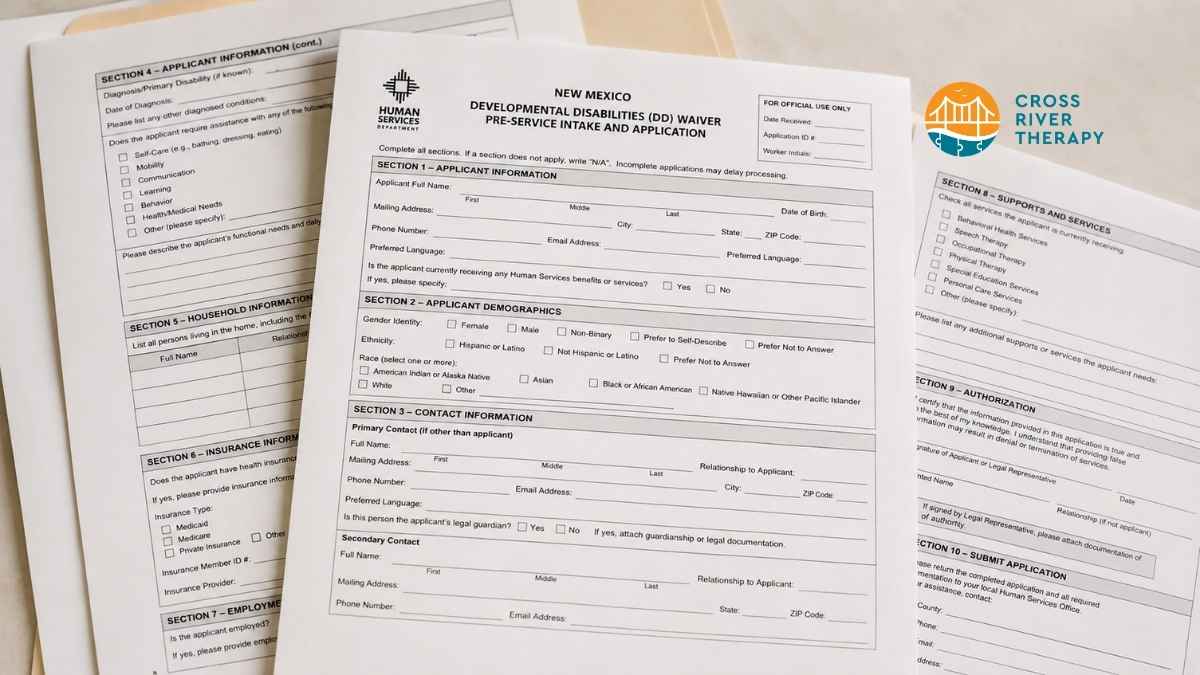
How to Apply for the New Mexico DD Waiver
Your NM DD waiver application starts with state intake. The steps cover records, submission, and enrollment.

Does Insurance Cover ABA Therapy in New Jersey?
ABA therapy insurance in New Jersey varies by plan. Learn what NJ FamilyCare covers and how to check costs.

How ABA Therapy Builds Communication for Nonverbal Children Without Forcing Speech
ABA therapy communication for nonverbal children starts with AAC, signs, and daily routines. See how kids ask, refuse, choose, and get help.

How to Start ABA Therapy in New Jersey With a Checklist
Your guide explains how to start ABA therapy in New Jersey. A first-call checklist covers records and next steps.

How to Get an Autism Evaluation in Arkansas Before Starting ABA Therapy
How to get an autism evaluation in Arkansas starts with a referral, provider choice, and key records. Use this parent checklist before ABA intake.