








The Role of Behavioral Contracts in ABA Therapy
Harnessing Behavioral Contracts for Effective Behavior Change in ABA Therapy


Introduction to Behavioral Contracts in ABA
Behavioral contracts stand as a cornerstone in Applied Behavior Analysis (ABA), offering a structured strategy for fostering behavioral change. These formal agreements not only guide clients toward achieving targeted behaviors but also clarify expectations and strengthen commitment. By utilizing the principles of ABA, behavioral contracts help in managing and modifying a range of behaviors, making them a valuable tool within therapeutic and educational settings. This article explores the role, structure, and application of behavioral contracts in ABA therapy.
Understanding Behavioral Contracts
What is a behavioral contract in ABA?
A behavioral contract in Applied Behavior Analysis (ABA) is a structured intervention tool that involves clients agreeing to specific behavior changes in exchange for defined rewards. This method is designed to modify behaviors effectively and is suitable for various individuals, particularly those with autism.
Components of Behavioral Contracts
Behavior contracts contain several essential elements:
- Clearly Defined Goals: The objectives must be SMART (Specific, Measurable, Achievable, Relevant, Time-bound), making it easy to understand what successful behavior looks like.
- Reinforcement Strategies: These contracts often include positive consequences, such as praise or tangible rewards, to motivate the individual to maintain the desired behaviors.
- Consequences for Behaviors: These are explicitly defined and can vary from positive reinforcement to corrective actions when undesired behaviors occur.
Role in ABA Therapy
Behavior contracts serve multiple roles in ABA therapy:
- Structured Framework: They provide clarity on expectations and desired outcomes.
- Collaboration Among Stakeholders: Involving therapists, parents, and clients ensures that the contracts are tailored to meet unique needs, fostering better engagement in the process.
- Monitoring Progress: Regularly tracking adherence to the contract can lead to adjustments that support sustained behavioral changes.
Effectiveness in Behavior Change
Research demonstrates the effectiveness of behavior contracts in various settings:
- Health Interventions: Studies indicated significant successes in lowering cholesterol and increasing physical activities among patients utilizing behavioral contracts. Clients who adhered to these contracts often reported better health outcomes.
- Enhanced Accountability: By outlining expectations and rewards, these agreements promote accountability in individuals, encouraging them to take ownership of their behavior changes.
Overall, behavioral contracts are powerful tools within ABA that enhance motivation, accountability, and systematic progress tracking.
Key Components of Behavioral Contracts
What are the three main components of a behavior contract?
A behavior contract, often referred to as a contingency contract, is a strategic document consisting of three essential components:
- Clear Goals
Each contract outlines specific behaviors that the individual is expected to achieve. These goals should be articulated clearly to eliminate any ambiguity, ensuring that everyone involved understands what is expected. - Measurable Behavior
The contract includes a task record that helps track the individual’s progress toward meeting the defined goals. This aspect is crucial for accountability, as it allows both the individual and the instructor to evaluate adherence to the agreed criteria over time. - Reinforcement and Consequences
Lastly, the contract defines what reinforcement will be provided for successful completion of the specified behaviors or what consequences may occur should the expectations not be met. This encourages individuals to strive for positive behavior changes by making clear the rewards of their efforts.
How do SMART objectives enhance behavior contracts?
Effective behavior contracts also incorporate SMART objectives, which ensure that goals are:
- Specific: Clearly defined to focus on exact behaviors.
- Measurable: Quantifiable outcomes that facilitate tracking progress.
- Achievable: Realistic targets that the individual can reach.
- Relevant: Important behaviors that align with the individual’s needs.
- Time-bound: Set within a specific time frame for completion.
Using SMART objectives fosters an environment where success can be recognized, motivating individuals toward positive behavioral change.
Table of Key Components in Behavioral Contracts
Component Description Importance Clear Goals Specific target behaviors that are well-defined Avoids ambiguity and ensures understanding Measurable Behavior Task record that tracks progress and accountability Facilitates evaluation over time Reinforcement Defined rewards for success and consequences for failure Motivates behavior change
The Impact of Behavioral Contracts on Behavior Modification
Effectiveness of behavioral contracts
Behavior contracts serve as powerful tools for altering behavior by clearly defining expectations and rewards. Rooted in Applied Behavior Analysis (ABA), these contracts specify desired behaviors and paired reinforcements, making them a preferred strategy for behavior modification.
Moreover, by utilizing SMART criteria—Specific, Measurable, Achievable, Relevant, and Time-bound—these agreements ensure that objectives are clear and attainable for learners. As a result, both instructors and learners have a mutual understanding of what success looks like, fostering accountability.
Positive reinforcement
A pivotal component of behavioral contracts is positive reinforcement. This method encourages individuals to repeat desirable behaviors by offering rewards—ranging from verbal praise to tangible items. By implementing consistent reinforcement strategies, contracts create a supportive environment that motivates continuous improvement.
Reinforcers not only help in behavior modification but also enhance the learner’s motivation, making them feel more invested in their progress. Feedback and necessary corrective actions are implemented when undesired behaviors arise, allowing for learning opportunities and behavior adjustments.
Influence on behavior change
Behavior contracts significantly influence behavior change by establishing a structured framework for both individuals and their support systems. These agreements enhance communication around expected outcomes, thus promoting consistency in implementing behavior modifications.
They have shown to be effective for a diverse range of individuals, including students with special needs, by addressing personal goals in academic and social settings. The collaborative nature of these contracts, which involves teachers, students, and sometimes parents, further bolsters their effectiveness.
ComponentDescriptionOutcome Clearly Defined Goals Specifies desired behaviors using SMART criteria. Enhanced accountability Positive Reinforcement Applies rewards to encourage desirable behaviors consistently. Increased motivation and engagement Collaboration Involves educators, students, and parents in the creation and monitoring of the contract. Tailored approach leading to better results Monitoring and Adjustment Regularly reviews progress and modifies contracts as needed. Sustained behavior change and ownership
By continuously tracking progress, behavioral contracts not only enhance performance but also foster independence, particularly among learners facing developmental challenges.
Developing and Implementing Behavioral Contracts
Process of Creating Contracts
Developing a behavioral contract begins with thorough preparation. This involves identifying specific behaviors that need to change and defining clear objectives using the SMART criteria: Specific, Measurable, Achievable, Relevant, and Time-bound. By ensuring the goals are clear, both the instructor and learner can clearly communicate what success looks like.
Negotiation with Clients
An essential part of creating a behavioral contract is involving the learner in the negotiation process. By discussing expected behaviors and potential reinforcers, clients become more invested and engaged in the agreement. This collaboration not only empowers learners but also tailors the contract to their unique needs and preferences, which enhances the likelihood of successful behavior modification.
Establishing Expectations
Once the behaviors and reinforcers have been identified, it's crucial to establish clear expectations. This includes detailing the criteria for achieving set goals and outlining the reinforcement strategies to motivate positive changes. Monitoring progress toward these goals is vital. Regular feedback can help adjust the contract if necessary, ensuring that it remains effective and relevant for the learner.
Step in Contract Development Key Focus Importance Preparation Identifying behaviors Lays the groundwork for success Negotiation Involving learners Increases investment and ownership Establishing Expectations Setting clear goals Provides clarity and accountability for behaviors
Functions of Behavior and Contract Utilization
What are the functions of behavior in ABA therapy?
The functions of behavior in Applied Behavior Analysis (ABA) therapy are primarily designed to address certain needs or achieve specific outcomes for individuals. These functions can be categorized into four main areas:
- Social Attention
- Behaviors that seek interaction or responses from others. For example, a child may shout to get their teacher's or peers' attention.
- Escape
- Actions aimed at avoiding unpleasant tasks or situations. An example is a student who may act out to avoid a difficult assignment.
- Access to Tangibles
- Behaviors that are performed to obtain specific items or activities. This could involve a child begging for a toy or snack.
- Sensory Stimulation
- Actions that provide internal sensory satisfaction, such as jumping up and down or hand-flapping. These behaviors can be self-soothing or pleasurable.
Understanding these functions is essential for developing effective treatment plans and interventions to promote positive behavior in children.
How do these functions influence the creation of behavior contracts?
When crafting behavior contracts, it is vital to consider these functions of behavior. The understanding of why a particular behavior occurs helps educators and therapists to set realistic and achievable goals within the contract.
- Behavior Objectives
- A clear objective that addresses a child's specific needs can lead to better engagement.
- Reinforcement Strategies
- Tailoring reinforcements to meet the motivations behind behaviors promotes adherence to the behavior changes outlined in the contract.
What is the application of behavior contracts in therapy?
Behavior contracts are utilized effectively in therapy settings, particularly for individuals with autism. They provide a structured framework that addresses both the expectations and reinforcements related to specific behaviors.
- Clarity and Accountability
- Contracts help individuals understand the desired outcomes and encourages accountability for their actions.
- Collaboration
- Involving parents and therapists ensures tailored support, enhancing the likelihood of successful behavior changes.
- Monitoring Progress
- The systematic approach of these contracts allows for ongoing assessment and adjustments, ensuring that the interventions remain effective and relevant.
Benefits and Limitations of Behavioral Contracts

Advantages of contracts in behavior management
Behavior contracts provide a structured approach to behavior modification, defining expected behaviors and corresponding reinforcers. This clarity can lead to greater accountability and responsibility among participants.
Involving students in the creation of their contracts enhances their commitment, making them more invested in achieving the set goals. Effective contracts utilize SMART objectives, ensuring that behavior modifications are clear and measurable, which can significantly improve learning outcomes. Moreover, collaboration among teachers, students, and parents strengthens the support system necessary for positive behavioral changes.
Limitations and challenges
Despite their benefits, behavior contracts can encounter challenges. The effectiveness of these contracts heavily depends on consistent reinforcement and communication among all parties involved. Additionally, if the goals are not realistically set or the reinforcers are not adequately motivating, students may struggle to meet the expectations outlined in the contract.
Finally, frequent monitoring and necessary adjustments require time and resources, which can be a limitation in some educational settings.
Aspects Benefits Limitations Structure Provides clear expectations and accountability Requires time for monitoring and adjustment Engagement Involves students in the process May not work if goals and reinforcers are ineffective Collaboration Fosters cooperation among all stakeholders Dependence on effective communication Clarity Uses SMART objectives for measurable outcomes Requires consistent reinforcement efforts
Practical Tips for Using Behavioral Contracts

Crafting effective contracts
When developing a behavior contract, it's essential to incorporate SMART objectives. This means that the goals should be Specific, Measurable, Achievable, Relevant, and Time-bound. Additionally, gather input from the learner to ensure they feel invested in the agreement. This collaboration not only enhances engagement but also ensures the proposed behaviors are realistic and aligned with the learner's abilities.
Utilizing contracts in educational settings
Behavior contracts are versatile tools that can be employed effectively across various grade levels. Engage both students and parents in the process to create a supportive framework. For instance, provide clear definitions of expected positive behaviors and establish systems of reinforcement, such as tokens or privileges, to motivate students. Monitoring progress is crucial; regular check-ins can facilitate timely adjustments to the contract if needed.
Guidance for therapists and educators
For therapists and educators, using behavior contracts is about maintaining consistency and communication. Feedback is critical; when undesired behaviors occur, offer constructive guidance to help learners understand the necessary adjustments. Reinforcements should be consistently applied to promote a sense of accountability. Celebrate small successes along the way to maintain motivation and encourage continued progress, fostering a positive environment for change.
Aspect Description Tips Contract Goals Establish clear SMART objectives Involve learners in the goal-setting process Collaboration Engage students and parents in the development process Ensure all parties understand their roles and expectations Monitoring and Feedback Track progress systematically; provide timely feedback Regularly check in and adjust as necessary Reinforcement Strategies Use positive reinforcement to encourage good behaviors Consider varied rewards to maintain interest Consistency and Communication Ensure consistency in applying consequences and reinforcing positives Maintain open lines of communication among all involved Celebrating Progress Recognize successes to motivate further effort Make celebrations meaningful to the learner
Conclusion: The Significance of Behavioral Contracts in ABA
Behavioral contracts are proven tools for fostering positive behavioral change through structured agreements that emphasize clear communication, measurable goals, and consistent reinforcement. Their application across therapeutic and educational settings underscores their versatility and effectiveness in behavior modification. By understanding the components, development, and application of these contracts, professionals can harness their full potential to enhance outcomes in ABA therapy.
References
- A Step-by-Step Guide to Crafting an Effective Behaviour Contract
- [PDF] The 5 W's of Behavior Contracting
- Behavioural contracting as a tool to help patients achieve better health
- Understanding Behavior Contracts in ABA Therapy
- Behavior Contract in ABA: Ultimate Guide
- Expert Columns: Behavior Contracts - May Institute
- Expert Columns: ASD and DD, Adult-focused - May Institute
Recent News
Related articles

6 Arkansas Medicaid ABA Therapy Rules Families Need to Know
Arkansas Medicaid ABA therapy has age, diagnosis and approval rules. Families can check six requirements before care.

Arizona Autism Laws for ABA Coverage and School Rights
Arizona autism laws for ABA coverage vary by plan. Families can check insurance, appeal options, and school rights.

ABA Therapist Salary in Arkansas for RBTs and BCBAs
Compare ABA therapist salary in Arkansas by role. See how paid hours and benefits affect earnings before applying.

5 Autism Support Groups and Family Resources in New Mexico
Autism support groups in New Mexico connect families. Local resources offer events, parent support, and school help.

Where to Get an Autism Evaluation in New Mexico
Autism evaluation options in New Mexico include UNM and NMSU. Age and referral details help parents prepare.

7 North Carolina Autism Resources to Contact Before ABA Therapy Starts
Autism resources North Carolina families can call for diagnosis, early intervention, rights, and parent support. Start ABA intake with Cross River.

Does Indiana Medicaid Cover ABA Therapy? A Parent Checklist
Indiana Medicaid ABA therapy may cover care for eligible children. The checklist covers coaching and renewals.
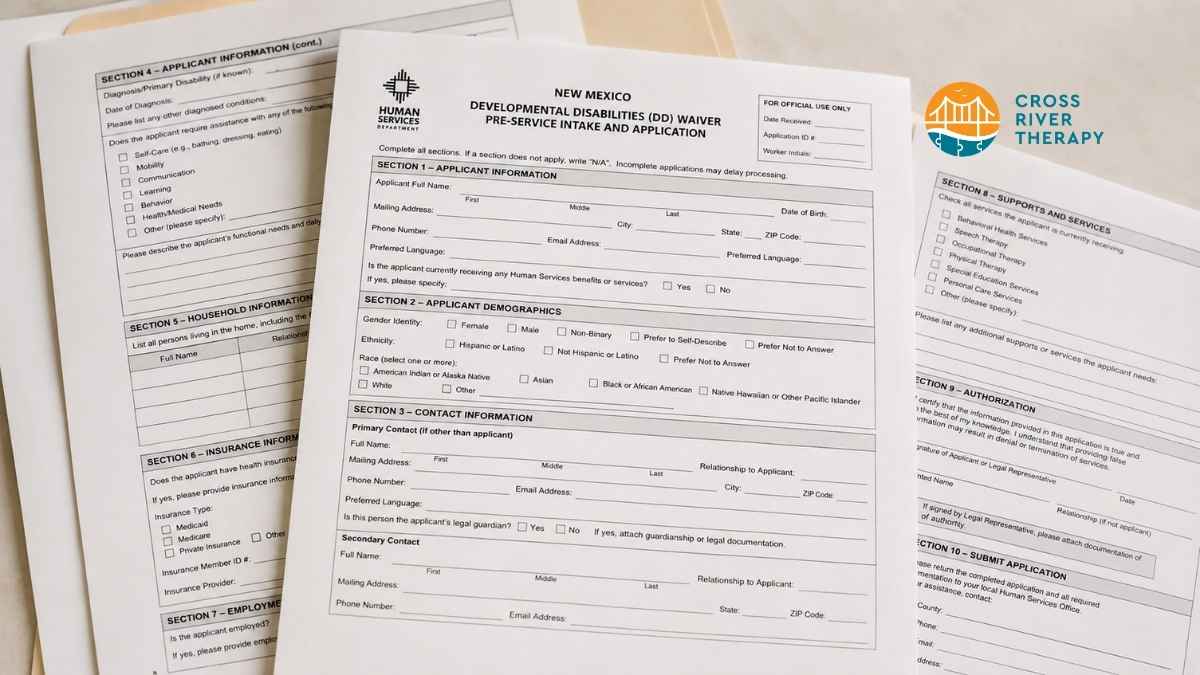
How to Apply for the New Mexico DD Waiver
Your NM DD waiver application starts with state intake. The steps cover records, submission, and enrollment.

Does Insurance Cover ABA Therapy in New Jersey?
ABA therapy insurance in New Jersey varies by plan. Learn what NJ FamilyCare covers and how to check costs.

How ABA Therapy Builds Communication for Nonverbal Children Without Forcing Speech
ABA therapy communication for nonverbal children starts with AAC, signs, and daily routines. See how kids ask, refuse, choose, and get help.

How to Start ABA Therapy in New Jersey With a Checklist
Your guide explains how to start ABA therapy in New Jersey. A first-call checklist covers records and next steps.

How to Get an Autism Evaluation in Arkansas Before Starting ABA Therapy
How to get an autism evaluation in Arkansas starts with a referral, provider choice, and key records. Use this parent checklist before ABA intake.