








The role of play in early ABA therapy
Integrating Play to Unlock Potential in Early ABA Therapy


Understanding the Intersection of Play and Behavioral Science
Applied Behavior Analysis (ABA) therapy has long been a cornerstone in supporting children with autism spectrum disorder (ASD), targeting vital areas like communication and social skills. Within this transformative intervention, play emerges as a critical component—especially in early intensive ABA programs—serving as both a medium and motivator for learning. This article explores how play-based strategies amplify ABA's effectiveness, detailing the foundational science, key techniques, delivery methods, and measures of success, while emphasizing how structured play fosters developmental gains and joy for children in therapy.
Foundations of ABA Therapy: A Behavioral Science Framework
What is Applied Behavior Analysis (ABA) therapy?
Applied Behavior Analysis (ABA) therapy is a research-based behavior therapy focused on changing behaviors through learning principles grounded in operant conditioning. It aims to increase positive behaviors while reducing negative ones by using reinforcement and modeling strategies. ABA primarily supports individuals with autism spectrum disorder (ASD) in acquiring essential skills such as social communication, daily living activities, and cognitive development.
Delivered by professionals like Board Certified Behavior Analysts (BCBAs), ABA involves detailed assessments to understand individual needs. Personalized treatment plans utilize techniques like Discrete Trial Training (DTT), Pivotal Response Treatment (PRT), and naturalistic methods to promote skill acquisition in various settings.
Historical development and key figures
ABA emerged in the 1970s, notably due to the pioneering work of Ole Ivar Lovaas. His research demonstrated significant developmental gains in children with ASD through intensive behavioral interventions. While earlier ABA approaches included aversive methods, modern practices have evolved toward positive reinforcement and play-based strategies.
Core goals and targeted skills in ABA
ABA seeks to improve crucial areas such as language development (both receptive and expressive), social skills, communication, cognitive abilities, problem behavior reduction, and adaptive behaviors necessary for daily life. Treatments are tailored individually with measurable objectives, aiming to foster independence, enhance quality of life, and support participation in society. Through structured teaching and naturalistic play, ABA equips children to better navigate social environments and everyday challenges.
Diverse ABA Techniques and Their Role in Play-Based Learning

What are the main techniques used in ABA therapy?
ABA therapy utilizes a blend of distinct methods, each tailored to support skill acquisition and behavior improvement in children with autism. Core techniques include positive reinforcement, which rewards desired behaviors to increase their occurrence, and prompting and fading, which gradually encourages independence.
Discrete Trial Training (DTT) and structured teaching
DTT is a highly structured method where learning goals are broken into small, manageable steps. Tutors provide clear instructions, prompts when necessary, and reinforce correct responses systematically. This approach allows for precise measurement of progress and targeted teaching but tends to occur in controlled settings like clinics or classrooms.
Pivotal Response Treatment (PRT) and naturalistic approaches
In contrast, PRT employs a more naturalistic and less rigid style. It focuses on child-led play and interests, encouraging learning through engaging and enjoyable activities. Reinforcements in PRT are natural consequences tied directly to the child's actions, eliminating extrinsic rewards like candy. This promotes generalization of skills into real-life settings and builds motivation organically.
Early Start Denver Model (ESDM) as a hybrid method
The ESDM combines structured elements of DTT with the play-based, naturalistic techniques of PRT. It integrates developmental goals across multiple domains—social, cognitive, and language skills—using both direct teaching and interactive play. ESDM sessions typically emphasize responsiveness to the child’s cues, making therapy enjoyable and effective.
How these methods incorporate play and child interests
Play is central to modern ABA techniques, especially in PRT and ESDM, where it serves as a vehicle for learning social, communication, and cognitive skills. Therapists create supportive environments filled with appropriate toys, sensory materials, and space for interaction. Using the child’s interests as a foundation, these methods help develop cooperative, pretend, and interactive play stages.
By balancing structured teaching with natural engagement, these ABA techniques harness the power of play to foster meaningful skill development and joyful learning experiences for children on the spectrum.
The Integral Role of Play in Early ABA Interventions
Why is play important in childhood and autism development?
Play plays a vital role in all children's development, allowing them to learn communication, problem-solving, and social skills. For children with autism, structured play becomes even more crucial, as it serves as an effective teaching tool that builds essential skills while honoring natural interests and preferences.
How do children with autism progress through stages of play?
Children with autism typically progress through distinct stages of play:
- Solitary Play: Playing alone, focusing on objects or activities independently.
- Onlooker Play: Observing others play without direct participation.
- Parallel Play: Playing alongside peers without interaction.
- Interactive Play: Engaging with peers in cooperative activities.
Each stage lays the foundation for the next, supporting gradual development of social interaction and communication.
How are structured play activities used as teaching tools in ABA?
ABA therapy employs specific structured play strategies to support learning, including:
- Discrete Trial Training (DTT): Uses repetitive, task-oriented play to teach specific skills.
- Natural Environment Teaching (NET): Incorporates play in natural settings, emphasizing child-led interests.
- Pivotal Response Training (PRT): Focuses on play-based, natural interactions leveraging a child’s motivation.
These methods utilize positive reinforcement and the child's natural interests to teach communication, social interaction, and cognitive skills effectively.
What environment supports effective play-based interventions?
Creating a supportive environment for play is essential. This includes:
- Organized Play Spaces: Structured areas designed to minimize distractions and provide clear activity zones.
- Sensory Activities: Incorporation of sensory materials that engage and calm children, tailoring to sensory needs.
- Appropriate Materials: Toys and tools aligned with developmental goals and interests.
- Adult Involvement: Presence of trained adults to guide, reinforce, and encourage skill development during play.
Together, these elements maximize the success of play-based ABA therapy by fostering a safe, engaging, and educational atmosphere.
How Play Enhances Communication and Social Skills in ABA
Using cooperative and pretend play to build empathy and social interaction
ABA therapy emphasizes the importance of play to foster social skills and empathy in children with autism. Structured cooperative and pretend play activities encourage children to interact with peers, learn to share ideas, and understand others' emotions and perspectives. By practicing these social scenarios in a safe and supportive setting, children gradually develop empathy and improve their ability to participate in social interactions.
Role of natural environment teaching (NET) and interest-based learning
Natural Environment Teaching (NET) is integral to ABA’s play-based approaches, using children’s interests and real-world settings to promote learning. This method embeds communication and social skills development into everyday activities, enhancing motivation and encouraging generalization of skills beyond therapy sessions. NET allows children to engage naturally, practicing skills like requesting, turn-taking, and responding to social cues during enjoyable play.
Developing communication through play-based tasks
Play-based tasks within ABA therapy target language growth by encouraging expressive and receptive communication. Activities such as naming objects during play, following simple directions, and engaging in back-and-forth interactions help children build vocabulary and conversational skills. Reinforcement strategies support these efforts by rewarding successful communication attempts, increasing the likelihood the child will use language effectively.
Encouraging problem-solving and cognitive development via play
ABA uses play not just for social and communication skills but also to enhance problem-solving and cognitive abilities. Through activities designed to challenge a child’s thinking—like puzzles, interactive games, and imaginative scenarios—children learn to plan, adapt, and find solutions collaboratively. These experiences build executive functioning skills critical for daily life and academic readiness.
ABA Benefits for Individuals with Autism
ABA therapy benefits individuals with autism by providing personalized, evidence-based interventions that target communication, social skills, and daily living abilities. Techniques such as structured play, positive reinforcement, and natural environment teaching foster meaningful skill development. Early, intensive ABA has demonstrated notable gains in intellectual functioning and independence, improving long-term outcomes and quality of life through family involvement and ongoing assessment.
Assessing Progress: Measuring Effectiveness in Play-Based ABA Therapy
How is the Effectiveness of ABA Therapy Measured?
Effectiveness in ABA therapy is evaluated through systematic data collection strategies. Therapists track targeted behaviors by measuring their frequency, duration, and intensity. This objective approach allows for clear monitoring of progress over time.
Data Collection and Behavioral Measurement Methods
Data is collected during therapy sessions using direct observation and recording techniques. Behavioral data such as the number of independent responses or the time spent on a task are carefully charted. This process ensures measurable outcomes which can be consistently reviewed.
Standardized Assessment Tools
Several standardized tools support the measurement of progress in ABA therapy. Popular scales include the VB-MAPP, which assesses language and social skills, and the Vineland Adaptive Behavior Scales, focusing on daily living and communication skills. Additional tools like the Early Functional Language (EFL) scale and the Patient Outcome Planning Calculator (POP-C) help therapists estimate treatment dosage needs and predict outcomes.
Visual Data Analysis
Graphical representations such as line charts or bar graphs are used to visualize behavior trends. Visual data analysis helps assess if improvements are sustained and informs clinical decision-making regarding the therapy's success.
Tailoring Interventions From Measurement
Ongoing data review guides therapists in adjusting intervention strategies. By responding to measured progress or plateaus, ABA programs remain personalized and dynamic, enhancing skill development and reducing problematic behaviors effectively.
| Measurement Aspect | Description | Example Tools / Methods |
|---|---|---|
| Behavioral Data Collection | Recording frequency, duration, intensity of behaviors | Direct observation, session notes |
| Standardized Assessment | Structured testing to gauge developmental domains | VB-MAPP, Vineland Scales, EFL, POP-C |
| Data Visualization | Graphs and charts for analyzing trends over time | Line graphs, bar charts |
| Intervention Adjustment | Modifying therapy based on ongoing measurement | Treatment plan revisions, dosage adjustments |
Early Intensive ABA: Harnessing Play for Maximum Developmental Gains

How does early intensive ABA therapy benefit young children with autism?
Early intensive ABA therapy, particularly when started before age 4 and delivered for more than 20 hours weekly, has proven to foster significant developmental strides. This intervention targets critical areas such as language acquisition, social engagement, and cognitive growth. By breaking down complex skills into manageable steps and reinforcing progress consistently, children achieve measurable improvements in communication and independence.
What are the typical intensity and duration parameters for early intensive ABA?
Typically, early intensive ABA involves around 20 or more hours of focused therapy per week, tailored to the child's individual needs. The therapy duration often spans several years during these formative early childhood periods, optimizing the window for developmental plasticity and promoting sustained gains over time.
How does early intervention with ABA reduce long-term care needs?
By enabling children to acquire adaptive behaviors and reduce challenging behaviors early on, intensive ABA therapy can decrease reliance on future specialized services. Children who participate in early and intensive programs frequently demonstrate better functioning in daily living skills and social participation, which translates to a reduced need for extensive support as they grow.
How are ABA treatment plans tailored to individual developmental profiles?
Every ABA program begins with a detailed assessment conducted by a Board Certified Behavior Analyst (BCBA), who designs a personalized treatment plan based on the child's strengths, challenges, and interests. This plan flexibly incorporates methodologies like Discrete Trial Training, Pivotal Response Treatment, and play-based approaches such as the Early Start Denver Model to maximize engagement and learning.
ABA interventions emphasize play as a teaching tool to support skill generalization and make learning enjoyable. Structured play activities and naturalistic teaching methods coordinate with reinforcement strategies to build communication, problem-solving, and social skills, individualized to each child's developmental stage and profile.
Who Delivers ABA Therapy and the Importance of Setting
Who provides ABA therapy and how is it delivered?
ABA therapy is delivered by trained professionals, primarily Board Certified Behavior Analysts (BCBAs) and behavioral therapists skilled in applying reinforcement and behavioral intervention strategies. These experts assess the individual's needs and design personalized treatment plans that utilize techniques such as discrete trial training (DTT), modeling, and reinforcement systems to teach communication, social, and adaptive skills.
Settings for ABA delivery
ABA services are offered across a variety of environments to support diverse learning opportunities. Common settings include clinics, schools, and the individual's home. Home-based therapy allows for real-world application of skills within a familiar environment, increasing generalization potential. Clinics offer structured environments with access to specialized resources, while schools integrate therapy into the child's daily routine to enhance social and educational development.
The use of telehealth has grown substantially, providing remote access to therapy during situations like the COVID-19 pandemic. Telehealth sessions facilitate flexible scheduling and overcome transportation or geographical barriers, ensuring continuity of care.
Involvement of families in therapy processes
Family participation is integral to ABA therapy. Parents and caregivers often collaborate closely with therapists to reinforce learning outside of sessions and support consistent behavior change. Families receive training on techniques and progress monitoring, enabling a supportive environment that fosters skill retention and generalization.
Skills required for effective therapy delivery
Successful ABA implementation requires therapists to possess strong communication skills to interact effectively with children and families. Critical thinking enables therapists to tailor programs and adapt interventions based on continuous assessment. Empathy and patience are crucial for building trust and encouraging positive behavior change. Furthermore, therapists often work collaboratively within multidisciplinary teams to address complex developmental needs.
| Aspect | Details | Benefit |
|---|---|---|
| Providers | Board Certified Behavior Analysts (BCBAs), trained behavioral therapists | Expertise in assessment and individualized intervention planning |
| Delivery Settings | Home, clinic, school, telehealth platforms | Flexibility and opportunities for skill generalization |
| Family Involvement | Active collaboration, training on reinforcement techniques | Consistent support and enhanced skill maintenance |
| Therapist Skills | Communication, critical thinking, empathy | Personalized, adaptive, and compassionate therapy delivery |
Through skilled professionals and varied settings, ABA therapy provides a comprehensive approach tailored to each child's needs, maximizing developmental outcomes and family involvement.
Evolving Approaches: From Traditional Methods to Play-Based Modern ABA

Shift away from punitive early ABA techniques
Early forms of Applied Behavior Analysis, especially those developed in the 1960s like Discrete Trial Training (DTT), included both positive reinforcement and punishment, sometimes involving aversive methods now considered unacceptable. Over time, the field has moved decisively away from such punitive approaches, emphasizing instead ethical, humane, and child-centered practices.
Integration of play-based, naturalistic strategies
Modern ABA therapy often incorporates more naturalistic, play-based strategies that align with children's interests and everyday activities. Models like Pivotal Response Treatment (PRT) and the Early Start Denver Model (ESDM) blend structured ABA principles with play to improve communication, social skills, and cognitive development in a more engaging, enjoyable manner.
Balancing structure with flexibility to foster generalization
While traditional ABA favored highly structured, repetitive tasks, contemporary methods balance this structure with flexibility. Therapists adapt interventions to natural settings like home or playgrounds, facilitating skill generalization. This shift recognizes the importance of applying learned behaviors across diverse environments rather than only in clinical settings.
Respecting neurodiversity and individual differences in therapy goals
Modern ABA focuses on building each child’s strengths and interests to foster autonomy, participation, and joy. Rather than aiming to eliminate all atypical behaviors, it respects neurodiversity and individual differences by supporting meaningful skill development and enhancing quality of life. This approach supports social inclusion and independence without attempting to suppress natural expressions of the child’s identity.
Challenges, Criticisms, and Future Directions in Play-Oriented ABA
What are common criticisms about ABA's demands and focus?
ABA therapy has faced criticism for sometimes being too demanding and focusing heavily on eliminating certain behaviors instead of fostering natural skill development. Critics argue that this approach may discourage natural behaviors like self-stimulation, which can be an important expression for some children with autism. Early ABA methods included the use of aversive techniques such as electric shocks, which are now widely considered unacceptable and have been abandoned in modern practice.
How does ABA address concerns related to neurodiversity acceptance?
Supporters of ABA emphasize that the therapy aims to enhance independence and participation in society while respecting individual differences and neurodiversity. Contemporary ABA interventions are individualized, building on each child's strengths and interests. The goal is to promote autonomy, joy, and maximum participation rather than trying to 'normalize' behaviors or eliminate natural expressions unique to each child.
What are the current research gaps regarding ABA?
Despite a large body of research supporting ABA's effectiveness, gaps remain in understanding its long-term effects and its impact on quality of life. Only a minority of studies incorporate long-term follow-up or assess how ABA therapy influences overall wellbeing beyond immediate skill gains. Additionally, limited research compares ABA to other interventions without relying solely on mastery criteria, highlighting a need for higher-quality evidence.
What are emerging questions on intensity, cost-effectiveness, and lasting impact?
Ongoing research is exploring the optimal intensity of ABA therapy for different individuals, considering that traditional early intensive ABA involved over 20 hours per week but many current approaches use fewer hours. Cost-effectiveness is also an important focus, as is understanding how ABA impacts individuals as they transition into adulthood. Large-scale randomized controlled trials are underway to better address these questions, moving beyond the small-scale and single-subject designs common in earlier studies.
Play as a Catalyst for Growth in Early ABA Therapy
The integration of play within early Applied Behavior Analysis therapy offers a dynamic pathway to fostering essential skills in children with autism. By combining rigorous behavioral techniques with engaging, child-centered play activities, ABA creates an environment where learning is both effective and joyful. As research continues to refine methods and emphasize individualized approaches, play remains a vital tool—nurturing communication, social interaction, and independence. Embracing this balance between science and play promises a future where children with autism are empowered to thrive in diverse settings, unlocking their full potential from the very start.
References
- Applied Behavior Analysis in Children and Youth with Autism ...
- Applied Behavior Analysis (ABA)
- The Controversy Around ABA
- Enhance ABA Therapy and Play Skills for Kids
- Applied Behavior Analysis (ABA) for Children With Autism
- Applied Behavior Analysis (ABA)
- The Top 10 Reasons Children With Autism Deserve ABA
- 6 Benefits of ABA Therapy for Children with Autism
- Applied Behavior Analysis (ABA)
- 5 Benefits Of ABA Therapy For Autism
Recent News
Related articles

6 Arkansas Medicaid ABA Therapy Rules Families Need to Know
Arkansas Medicaid ABA therapy has age, diagnosis and approval rules. Families can check six requirements before care.

Arizona Autism Laws for ABA Coverage and School Rights
Arizona autism laws for ABA coverage vary by plan. Families can check insurance, appeal options, and school rights.

ABA Therapist Salary in Arkansas for RBTs and BCBAs
Compare ABA therapist salary in Arkansas by role. See how paid hours and benefits affect earnings before applying.

5 Autism Support Groups and Family Resources in New Mexico
Autism support groups in New Mexico connect families. Local resources offer events, parent support, and school help.

Where to Get an Autism Evaluation in New Mexico
Autism evaluation options in New Mexico include UNM and NMSU. Age and referral details help parents prepare.

7 North Carolina Autism Resources to Contact Before ABA Therapy Starts
Autism resources North Carolina families can call for diagnosis, early intervention, rights, and parent support. Start ABA intake with Cross River.

Does Indiana Medicaid Cover ABA Therapy? A Parent Checklist
Indiana Medicaid ABA therapy may cover care for eligible children. The checklist covers coaching and renewals.
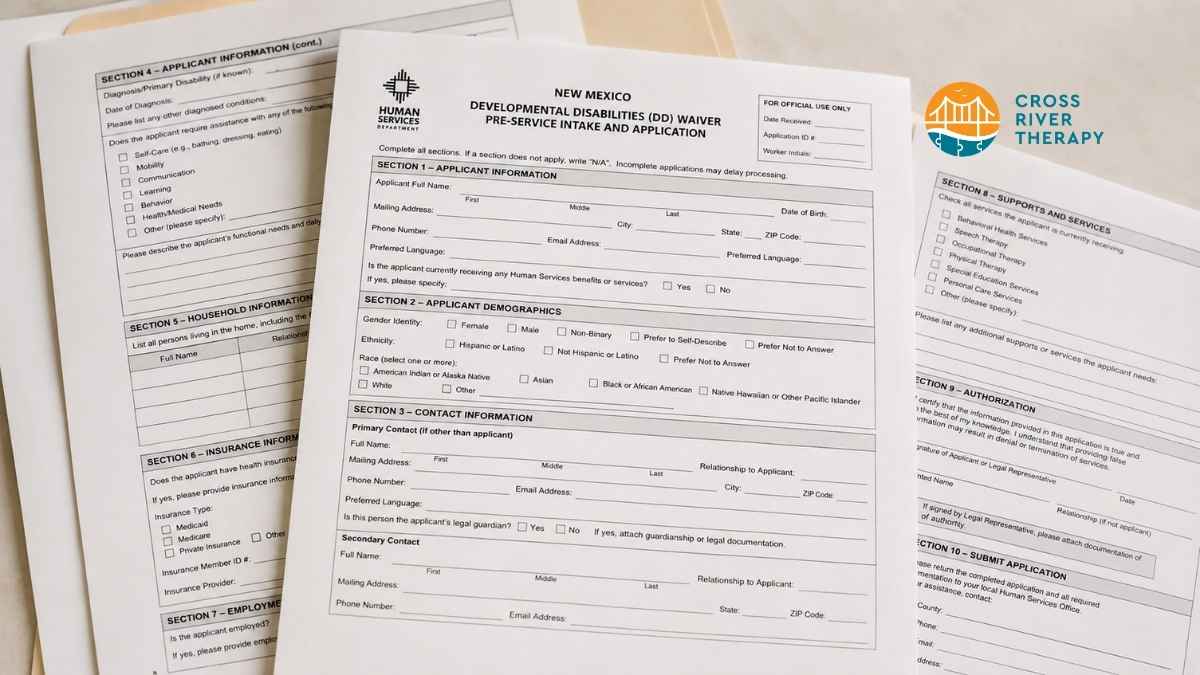
How to Apply for the New Mexico DD Waiver
Your NM DD waiver application starts with state intake. The steps cover records, submission, and enrollment.

Does Insurance Cover ABA Therapy in New Jersey?
ABA therapy insurance in New Jersey varies by plan. Learn what NJ FamilyCare covers and how to check costs.

How ABA Therapy Builds Communication for Nonverbal Children Without Forcing Speech
ABA therapy communication for nonverbal children starts with AAC, signs, and daily routines. See how kids ask, refuse, choose, and get help.

How to Start ABA Therapy in New Jersey With a Checklist
Your guide explains how to start ABA therapy in New Jersey. A first-call checklist covers records and next steps.

How to Get an Autism Evaluation in Arkansas Before Starting ABA Therapy
How to get an autism evaluation in Arkansas starts with a referral, provider choice, and key records. Use this parent checklist before ABA intake.