








Understanding Autism Behavior
Decoding the Behaviors of Autism Spectrum Disorder


Introduction to Autism Behavior
Autism Spectrum Disorder (ASD) encompasses a complex array of behaviors affecting social, communicational, and interactional capacities. Understanding these behaviors is crucial for caregivers, educators, and the general public to foster a supportive environment for autistic individuals. This article delves into common behaviors, their underlying causes, and effective management strategies, aiming to provide comprehensive insights drawn from scientific research and practical guidelines.
Recognizing Common Behaviors in Autism
What are some common examples of behaviors in autism?
Individuals with autism spectrum disorder (ASD) may exhibit a variety of behaviors, each reflecting the unique ways they interact with the world.
Repetitive Movements
Repetitive movements are hallmark traits of autism. Common examples include:
- Hand flapping: A self-soothing action usually seen during moments of excitement or anxiety.
- Body rocking: A motion often used to regulate sensory input.
- Toe bouncing: Another way to manage overstimulation or express happiness.
These behaviors can serve as coping mechanisms or a means of communication, expressing underlying feelings when words may not be sufficient.
Unusual Communication Patterns
Communication challenges are significant for individuals with ASD. They may struggle with:
- Initiating conversations: Difficulty starting interactions makes social engagement challenging.
- Responding to direct questions: This can lead to misunderstandings and frustration in social situations.
- Inconsistent eye contact: Many individuals avoid or have reduced eye contact, which can be misinterpreted.
Sensitivity to Sensory Stimuli
Heightened sensitivity to sensory stimuli can profoundly affect an individual’s comfort in various settings. This might involve:
- Discomfort in loud environments or with bright lights, causing anxiety or distress.
- Overreacting to specific textures or sounds, which can trigger meltdowns if overwhelmed.
Emotional responses may seem out of context—such as giggling during distress—further complicating interactions. Additionally, the dependence on specific comforting objects can lead to agitation if those objects are removed. Each behavior reflects a unique way of navigating a complex world.
Exploring the Causes of Autism

What Causes Autism?
Autism spectrum disorder (ASD) is believed to arise from a combination of genetic and environmental factors, although no single cause has been definitively identified. Genetic influences play a significant role, contributing to 60 to 90% of the risk for developing autism. Certain genetic conditions, such as Rett syndrome and fragile X syndrome, are known to increase autism risk.
Genetic Factors
Research highlights that individuals with a family history of autism are more likely to exhibit symptoms. Numerous gene variations may interfere with brain development and function, making it complex to pinpoint specific genetic patterns associated with ASD.
Environmental Influences
Environmental factors may also play a role in the development of autism. These include advanced parental age, prenatal exposure to harmful substances, and birth complications that could affect neurological development.
Debunking Vaccine Myths
Extensive research has shown no credible link between vaccines and autism. This myths persist, but studies have consistently indicated that vaccinations do not increase the risk of developing autism spectrum disorder.
Overall, while multiple factors interact to influence the likelihood of developing ASD, the precise mechanisms remain unclear.
Core Symptoms of Autism Spectrum Disorder
What are the three main symptoms of autism?
The three main symptoms of autism spectrum disorder (ASD) include difficulties with social communication and interaction, restricted and repetitive behaviors, and communication challenges.
Individuals with autism often struggle to pick up on social cues. For instance, they may avoid eye contact or have trouble beginning conversations, making it hard to form and maintain relationships. This can manifest as a lack of interest in sharing experiences or emotions with others.
Furthermore, restricted behaviors are common. This can involve a strong adherence to routines or an intense focus on specific interests, sometimes to the exclusion of other activities. For example, a child might prefer to line up their toys in a particular arrangement rather than engage in imaginative play.
Communication challenges are also significant. Many autistic individuals experience delayed speech, while others might find it difficult to articulate their feelings or needs effectively. This can create barriers in social settings, leading to further misunderstandings.
In summary, these core symptoms can vary widely in severity and expression among individuals with ASD, underscoring the need for tailored support and intervention strategies.
The Importance of Early Diagnosis
What are the early signs of autism and why is early diagnosis important?
Early signs of autism spectrum disorder (ASD) can manifest as early as six months old. Some of the main indicators include:
- Limited eye contact: A noticeable lack of engagement through visual connections.
- Few smiles or engaging expressions: Reduced facial expressions and social smiling.
- Lack of response to name: Not consistently acknowledging when called.
- Delayed babbling and gestures: By 12 months, there may be minimal or absent babbling, pointing, or waving.
Recognizing these early signs is crucial for several reasons. Prompt diagnosis can lead to timely interventions that significantly enhance communication, learning, and social skills in children with ASD. The American Academy of Pediatrics emphasizes the importance of screening for autism at 18 and 24 months. This proactive approach to monitoring developmental milestones can help identify children who may struggle in social or communication contexts, ultimately offering them a better chance for positive long-term outcomes.
Addressing Misunderstood Behaviors
What behaviors might seem bossy in individuals with autism, and what underlies these behaviors?
Bossy behavior in individuals with autism can often be misunderstood as a desire to control others. However, these actions usually arise from feelings of anxiety, challenges in social relationships, and rigid thinking patterns. Autistic individuals may have difficulty maintaining eye contact and interpreting social cues, which complicates their ability to engage acceptably in social scenarios.
Children with pathological demand avoidance (PDA) may display particularly strong controlling behaviors due to their intense need for predictability and stability. They often experience overwhelming feelings when confronted with unexpected changes.
Social and sensory challenges that contribute to misunderstood behaviors
Understanding the social and sensory challenges faced by individuals with ASD is crucial. Typical difficulties include:
- Limited social communication skills: Autistic individuals might struggle to initiate or maintain conversations, learning about turn-taking or sharing feelings can be particularly challenging.
- Sensory sensitivities: Many experience overwhelming reactions to sensory stimuli like loud noises or bright lights, causing distress that might manifest as controlling behavior.
Management strategies for misunderstood behaviors
Effectively managing these behaviors requires a multi-faceted approach:
- Setting clear boundaries: Establishing specific rules and expectations helps autistic individuals understand acceptable behavior.
- Teaching flexibility: Encourage adaptability to unexpected changes through gradual exposure to minor deviations in routine.
- Addressing sensory sensitivities: Identify specific triggers and create supportive environments that minimize sensory overload.
Collaboration among parents, educators, and professionals is essential to fostering an environment that aids individuals with autism in navigating complex social interactions successfully.
Managing Behavioral Challenges
How should one deal with behavior challenges in autism?
Dealing with behavior challenges in autism requires a multifaceted approach centered around positive behavior management. Instead of relying on punitive measures, it's crucial to foster positive interactions that can help guide individuals with autism through their difficulties.
Positive behavior management
Utilizing positive behavior management strategies is fundamental. This includes rewarding appropriate behaviors through incentives, which can strengthen desirable actions. Recognizing and celebrating small successes can motivate further positive behavior changes. Furthermore, ensuring that communication is clear and simple helps autistic individuals understand what is expected of them, significantly reducing frustration and confusion.
Routine and choices
Establishing a predictable routine can significantly minimize anxiety and prevent resistance to daily tasks. Routine provides a sense of security, allowing individuals to feel more comfortable in their environment. Within this structure, presenting choices gives children agency, enabling them to feel more in control. For instance, allowing them to choose between two activities can empower them while still adhering to the scheduled routine.
Professional support
Professional help can be invaluable in managing behavioral challenges. Techniques like Applied Behavior Analysis (ABA) provide tailored strategies to address specific issues. With the guidance of trained professionals, individualized behavior intervention plans can be developed, ensuring support is aligned with the individual's unique needs. This collaborative approach not only targets cognitive and emotional growth but can also enhance overall well-being.
Summary
Overall, understanding the complex interplay of triggers and creating supportive environments can lead to better emotional regulation, reducing the occurrence of challenging behaviors among individuals with autism.
Overview of Autism-Related Behavioral Issues
What are some behavioral issues faced by individuals with autism and what factors contribute to these behaviors?
Individuals with autism often experience various behavioral challenges that manifest in unique ways. Two common behaviors include stimming and meltdowns. Stimming refers to repetitive movements such as rocking, jumping, or hand-flapping that can help individuals self-soothe or focus. On the other hand, meltdowns are intense reactions characterized by a complete loss of control, often triggered when the person feels overwhelmed or unable to cope with sensory input.
These behaviors are frequently linked to sensory sensitivities. Children with autism may be either underreactive or overreactive to sensory stimuli, such as loud noises or bright lights, greatly impacting their emotional regulation.
Additionally, factors like anxiety—often exacerbated by changes in routine—play a significant role in the emergence of these behaviors. Common challenges also include eating difficulties, which can range from fussy eating habits to pica. Sleep disturbances are prevalent in this population and further complicate behavior management.
Understanding the roots of these behaviors allows caregivers to provide targeted support. Management strategies often include creating consistent routines, reducing sensory overload, and teaching coping skills for emotional distress.
Conclusion: Towards Better Understanding and Support
Recognizing and understanding autism behaviors is vital for creating inclusive and supportive environments. Through early diagnosis, personalized management strategies, and informed interventions, individuals with autism can be better supported to lead fulfilling lives. Continued education and awareness are essential in helping society embrace neurodiversity, fostering acceptance and empathy towards those on the autism spectrum.
References
- Common Behavior Characteristics of Individuals with Autism ...
- Autism Spectrum Disorder (ASD) Symptoms & Causes
- Autism Spectrum Disorder - National Institute of Mental Health (NIMH)
- Behaviour - National Autistic Society
- Behavior challenges | Autism Speaks
- What Are Causes and Symptoms of Autism? - WebMD
- Challenging Behaviors and Autism
- Autism spectrum disorder - Symptoms and causes - Mayo Clinic
- Autism symptoms | Autism Speaks
Recent News
Related articles

6 Arkansas Medicaid ABA Therapy Rules Families Need to Know
Arkansas Medicaid ABA therapy has age, diagnosis and approval rules. Families can check six requirements before care.

Arizona Autism Laws Every Parent Should Know Before Starting ABA Therapy
Autism laws Arizona parents should know cover ABA insurance, AHCCCS appeals, IEPs, and Section 504 rights. Check ABA coverage with Cross River.

ABA Therapist Salary in Arkansas: What BCBAs and RBTs Actually Earn in 2026
ABA therapist salary Arkansas figures compare RBT and BCBA rates, benefits, guaranteed hours, and contract terms. Explore careers at Cross River.

5 Autism Support Groups and Family Resources in New Mexico Alongside ABA Therapy
Autism support groups New Mexico families can use offer peer support, local events, and school help. Cross River can explain ABA therapy options.

Where to Get an Autism Evaluation in New Mexico Before Starting ABA Therapy
Autism evaluation New Mexico options include UNM, NMSU, FIT, and private providers. Compare providers, records, and ABA steps with Cross River.

7 North Carolina Autism Resources to Contact Before ABA Therapy Starts
Autism resources North Carolina families can call for diagnosis, early intervention, rights, and parent support. Start ABA intake with Cross River.

Does Indiana Medicaid Cover ABA Therapy? A Step-by-Step Eligibility Checklist for Parents
Medicaid ABA therapy Indiana covers eligible children under 21 with prior authorization. Your five-step coverage review can start with Cross River.
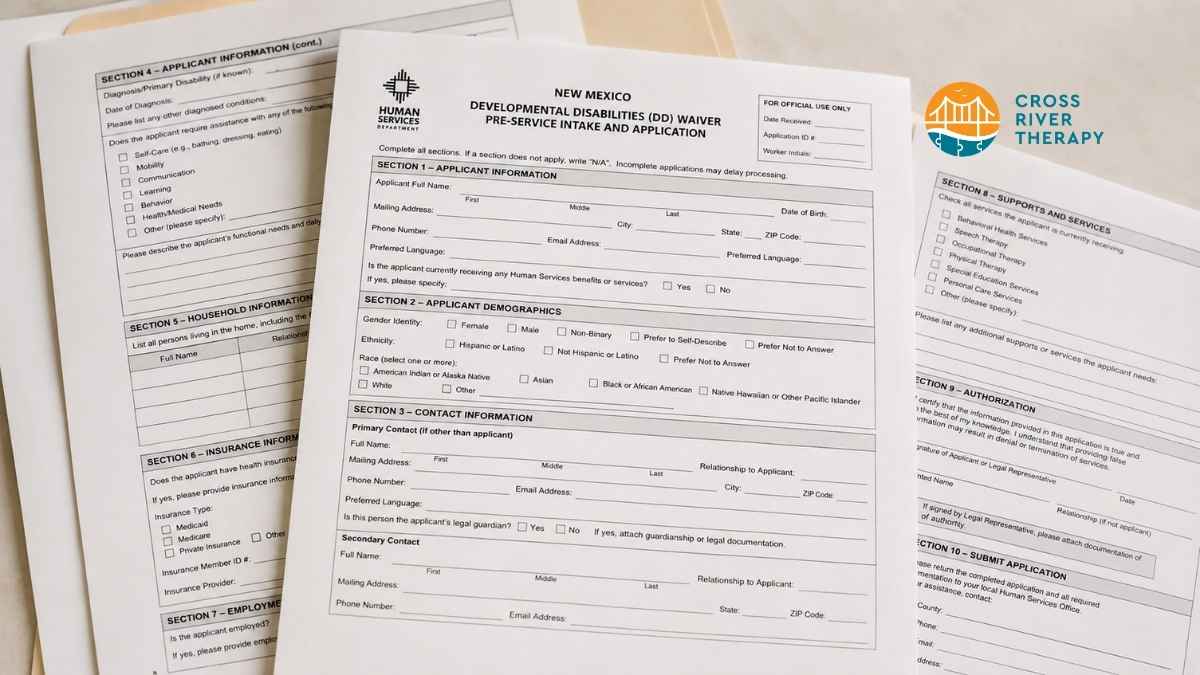
How to Apply for New Mexico’s DD Waiver While Starting ABA Therapy
Autism waiver New Mexico applications need DD Waiver records and proof of daily support needs. Your next step is to start ABA intake with Cross River.

Is ABA Therapy Covered by Insurance in New Jersey? What Every Parent Should Know
ABA therapy insurance New Jersey may cover medically necessary care based on plan type, network, and authorization. Verify benefits with Cross River.

How ABA Therapy Builds Communication for Nonverbal Children Without Forcing Speech
ABA therapy communication for nonverbal children starts with AAC, signs, and daily routines. See how kids ask, refuse, choose, and get help.

How to Start ABA Therapy in New Jersey With a First-Call Checklist
How to start ABA therapy in New Jersey begins with records, insurance details, and intake questions. Use this first-call checklist before you call.

How to Get an Autism Evaluation in Arkansas Before Starting ABA Therapy
How to get an autism evaluation in Arkansas starts with a referral, provider choice, and key records. Use this parent checklist before ABA intake.