








Understanding contingency-shaped vs rule-governed behavior
Exploring Human Behavioral Control Mechanisms


Deciphering the Roots of Behavior: Definitions and Foundations
Understanding the distinction between contingency-shaped and rule-governed behaviors is crucial in behavior analysis and psychology. These two types of behavior, while interconnected, operate through fundamentally different processes. Contingency-shaped behavior arises from direct experience with environmental consequences, shaping responses through reinforcement and punishment. Conversely, rule-governed behavior is driven by verbal instructions and socially transmitted knowledge, allowing individuals to act in accordance with rules without experiencing the consequences firsthand. Recognizing these differences enhances our ability to analyze, predict, and modify human behavior across various settings, from clinical interventions to everyday life.
Defining Contingency-Shaped and Rule-Governed Behaviors
What is the difference between contingency-shaped and rule-governed behavior?
Contingency-shaped behavior is learned through direct contact with environmental consequences, such as reinforcement or punishment, shaping behavior over time based on actual experience. In contrast, rule-governed behavior is controlled by verbal rules or instructions that specify the relationship between behavior and consequences, often without the individual needing to experience these consequences firsthand.
For example, a person might follow traffic laws simply because they have learned or heard the rules, even if they have never been ticketed, demonstrating rule-governed behavior. Conversely, a child learns to use the potty outside because of reinforcement in that context, exemplifying contingency-shaped behavior.
Overall, contingency-shaped behaviors depend on direct experiences, while rule-governed behaviors are guided by verbal rules and cognitive processes.
Influence of Verbal Rules and Instructional Control
How does instructional control affect contingency-shaped and rule-governed behaviors?
Instructional control plays a significant role in shaping how individuals behave by establishing verbal rules that guide responses, often without relying on immediate reinforcement. This leads to the development of rule-governed behaviors, where responses are maintained by understanding and adhering to these rules.
Contingency-shaped behaviors, on the other hand, are directly influenced by concrete environmental outcomes and reinforcement experiences. These behaviors depend on real-time feedback from the environment rather than verbal instructions.
In practical settings and research, instructional control has proven effective in promoting appropriate behaviors, especially when rules clearly specify contingencies. For example, children with ADHD often respond better when given explicit verbal rules, which help them discriminate and select correct responses.
The relative value of options influences the effectiveness of instructional control. When rules help differentiate which options are more beneficial, rule-governed behavior becomes more prominent. However, if choices are similar in value, the influence of verbal rules diminishes, and behaviors tend to depend more on direct reinforcement.
Overall, instructional control interacts with individuals' reinforcement histories and verbal stimuli, facilitating behaviors that can persist even when environmental contingencies change. This shows how rules serve as powerful tools to guide behavior beyond immediate outcomes.
What are the practical implications of instructional control in behavior management?
In behavior management, particularly in clinical, educational, and organizational contexts, instructional control offers valuable strategies to establish and sustain desired behaviors. Clear, accurate verbal instructions help create strong rule-governed responses that individuals follow even when immediate reinforcement isn’t available.
For instance, therapeutic interventions often use explicit instructions to help clients adhere to safety guidelines, manage habits, or develop new skills. These instructions act as discriminative stimuli that reinforce their own control, maintaining consistent behavior over time.
Research has shown that when rules are accurate and well-designed, they can override programmed schedules of reinforcement. This leads to more predictable and intentional behavior, which is crucial in maintaining safety, compliance, and skill development.
However, inaccuracies or discrepancies between instructions and actual contingencies can diminish instructional control. If individuals encounter conflicting cues or experience negative consequences after following instructions, they may lose confidence in the rules, leading to errors or undesirable behaviors.
Understanding how to craft and implement effective instructions helps practitioners reinforce correct responses and foster lasting behavioral change. Recognizing the influence of verbal rules allows for designing interventions that capitalize on humans' unique capacity for rule-following, thereby improving outcomes in behavior management.
Experimental Evidence and Theoretical Perspectives
What does research say about the differences between contingency-shaped and rule-governed behavior?
Recent research exploring human learning and behavior emphasizes that the boundary between contingency-shaped behavior (CSB) and rule-governed behavior (RGB) is not always distinct. Experiments involving college students performing complex visual problem-solving tasks, such as Raven’s Standard and Advanced Progressive Matrices, provide valuable insights.
In these studies, participants were divided into four groups: one trained solely through immediate feedback (CSB), another through explicit strategic instructions (RGB), a third combining both methods, and a control group with no specific guidance. Over time, all groups showed improvement, but interestingly, there were no significant differences in how quickly they learned, how well they generalized skills, or how well they maintained their performance.
These findings suggest that the classic distinction—highlighting that rule-guided behaviors can occur without direct contact with consequences—may be less rigid. Instead, both environmental contingencies and verbal instructions play substantial roles in shaping behavior. Skinner’s analysis distinguishes rule-governed behavior as driven by verbal stimuli that specify responses, influencing performance in ways comparable to direct reinforcement in certain contexts. This indicates that human learning is often a blend of both processes, with their interplay crucial for understanding complex behaviors.
What are Skinner’s contributions to understanding these behavioral processes?
B.F. Skinner’s work forms the cornerstone of behavior analysis, particularly in differentiating between contingency-shaped and rule-governed behaviors. Skinner proposed that rule-governed behavior stems from verbal stimuli—rules or instructions—that specify the contingencies for responses. This type of behavior can change quickly, often without the individual having prior direct contact with the consequences.
Skinner’s insights reveal that language and verbal rules serve as powerful tools controlling human actions. For example, following traffic laws or hygiene rules involves understanding and adherence to verbal contingencies rather than direct environmental contact at every decision point.
His analysis also underscores that these verbal controls often operate within cultural and social contexts, facilitating adaptation and coordination. Although rule-governed and contingency-shaped behaviors can operate independently, they frequently interact—rules can set the framework that shapes immediate responses, which are then reinforced or modified through direct contact with consequences.
Skinner’s contributions extend beyond theory to practical applications, informing behavior modification techniques and therapeutic interventions. His emphasis on verbal stimuli as control variables highlights the importance of language and instruction in shaping complex human behaviors—an understanding that remains central to contemporary behavioral science.
Synthesizing Insights and Practical Applications
The distinction between contingency-shaped and rule-governed behaviors offers vital insights into human behavior's complexity. While contingency-shaped behaviors are directly influenced by immediate environmental events, rule-governed behaviors allow for flexible responses based on verbal instructions, social norms, and cognitively mediated processes. Recognizing how instructional control and verbal rules shape these behaviors enhances our capacity to develop effective interventions in clinical, educational, and organizational contexts. Advances in research continue to reveal the nuanced relationship between these two types, emphasizing the importance of integrating direct environmental contingencies with verbal and cognitive processes to promote adaptive functioning. Ultimately, a comprehensive understanding of these behavior types enriches our theories and techniques for behavioral change, anchored in both naturalistic learning and symbolic language.
References
- B.18 Rule-Governed and Contingency-Shaped Behavior - AllDayABA
- Identify and distinguish between rule-governed and contingency ...
- B18 Identify between rule-governed and contingency-shaped behavior
- Contingency-Shaped Behavior and Rule-Governed Behavior
- Rule-Governed vs. Contingency-Shaped Behavior - Section B-13
- Contingency Based vs. Rule-Governed Behavior Flashcards - Quizlet
- Contingency-shaped and rule-governed behavior: instructional ...
- An Experimental Analysis of Rule-Governed Behavior | SpringerLink
Recent News
Related articles

Where to Get an Autism Evaluation in New Mexico Before Starting ABA Therapy
Autism evaluation New Mexico options include UNM, NMSU, FIT, and private providers. Compare providers, records, and ABA steps with Cross River.

7 North Carolina Autism Resources to Contact Before ABA Therapy Starts
Autism resources North Carolina families can call for diagnosis, early intervention, rights, and parent support. Start ABA intake with Cross River.

Does Indiana Medicaid Cover ABA Therapy? A Step-by-Step Eligibility Checklist for Parents
Medicaid ABA therapy Indiana covers eligible children under 21 with prior authorization. Your five-step coverage review can start with Cross River.
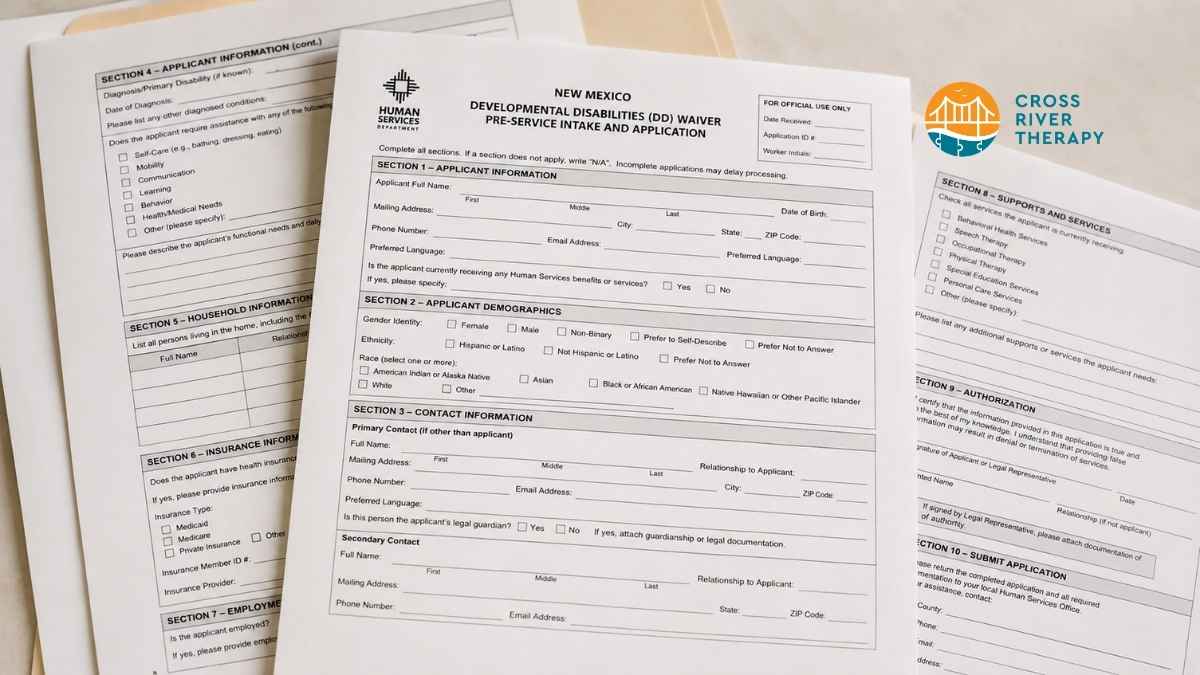
How to Apply for New Mexico’s DD Waiver While Starting ABA Therapy
Autism waiver New Mexico applications need DD Waiver records and proof of daily support needs. Your next step is to start ABA intake with Cross River.

Is ABA Therapy Covered by Insurance in New Jersey? What Every Parent Should Know
ABA therapy insurance New Jersey may cover medically necessary care based on plan type, network, and authorization. Verify benefits with Cross River.

How ABA Therapy Builds Communication for Nonverbal Children Without Forcing Speech
ABA therapy communication for nonverbal children starts with AAC, signs, and daily routines. See how kids ask, refuse, choose, and get help.

How to Start ABA Therapy in New Jersey With a First-Call Checklist
How to start ABA therapy in New Jersey begins with records, insurance details, and intake questions. Use this first-call checklist before you call.

How to Get an Autism Evaluation in Arkansas Before Starting ABA Therapy
How to get an autism evaluation in Arkansas starts with a referral, provider choice, and key records. Use this parent checklist before ABA intake.

Center-Based vs In-Home vs School-Based ABA Therapy and How to Choose the Right Fit
Center-based, in-home, and school-based ABA therapy each fit different goals, routines, and settings. Compare options before your intake call.

Early Signs of Autism: A Guide for North Carolina Parents
Early signs of autism North Carolina parents notice can include speech, play, sensory, or skill loss patterns. See what to track before screening.

Early Intervention ABA Therapy in Albuquerque, NM: Why Starting Early Matters
Early intervention ABA therapy in Albuquerque, NM helps toddlers practice communication, play, and routines. Spot signs and care options sooner.

In-Home ABA Therapy in Indianapolis, IN: What Parents Should Expect
In-home ABA therapy in Indianapolis can support home routines, communication, and daily skills. See what sessions look like before care starts.