








Using behavioral skills training with caregivers
Empowering Caregivers Through Evidence-Based Training Methods


Transforming Caregiving with Behavioral Skills Training (BST)
Behavioral Skills Training (BST) is an innovative, research-backed approach that enhances caregivers’ abilities to support children with disabilities effectively. This systematic method integrates instruction, modeling, rehearsal, and feedback to foster skill development and promote meaningful improvements in both caregiver and child outcomes. Its versatility, adaptability, and empirical support make BST a cornerstone in modern caregiver training, especially for those working with children diagnosed with autism spectrum disorder (ASD) and other developmental disabilities.
Principles and Applications of Behavioral Skills Training (BST) in Caregiver Education
What are the principles and applications of behavioral skills training (BST) for caregiver training?
Behavioral Skills Training (BST) is a structured, evidence-based approach designed to teach caregivers the skills they need through active learning methods. Its core principles revolve around four main components: instruction, modeling, rehearsal, and feedback. This combination ensures caregivers not only learn the necessary skills but also apply them correctly in real-world situations.
The training begins with clear, concise instructions often supported by visual aids to ensure understanding. The next step involves modeling, where the trainer demonstrates the target skills either through live presentation or videos. Caregivers then practice these skills through rehearsal, engaging in role-play or real practice to gain hands-on experience. Immediate, specific feedback is provided to refine performance, reinforce correct behaviors, and correct errors.
BST’s application stretches across diverse settings, including homes, schools, and clinics, and covers a wide range of skills such as communication, guides for managing behavior, and activities of daily living. It has been successfully used worldwide, including in studies conducted in the US, Canada, and Saudi Arabia, demonstrating its adaptability across different cultures and caregiver demographics.
Caregivers trained with BST—whether parents, siblings, teachers, or other providers—show notable improvements in their skills. These improvements often lead to positive changes in the individuals they support, such as increased independence, better communication, and reduced challenging behaviors.
Research indicates that BST can be tailored to specific tasks and individual caregiver needs, making it a versatile tool for effective caregiver training. Its systematic structure helps ensure high fidelity of implementation and real-world effectiveness, supporting caregivers in their vital roles and fostering meaningful, lasting improvements in the lives of individuals with intellectual and developmental disabilities (IDDs).
Benefits and Effectiveness of BST in Caregiver Support
How does caregiver skill development improve through BST?
Behavioral Skills Training (BST) significantly enhances the ability of caregivers, including parents, teachers, and other family members, to implement evidence-based interventions. The structured approach of instruction, modeling, rehearsal, and feedback reinforces learning and ensures that caregivers understand how to carry out interventions effectively. As a result, there is a marked improvement in their skills and confidence.
Caregivers trained with BST show high levels of procedural fidelity—meaning they perform the targeted skills correctly and consistently. Studies report that even caregivers with limited experience can reach proficiency levels of around 97-99% accuracy in implementing strategies such as guided compliance and communication training.
Are the skills learned through BST durable and do they generalize?
One of the strengths of BST is that the skills acquired tend to be maintained over time and generalize across various settings. Research indicates that improvements are often sustained weeks after training and are evident in naturalistic environments, such as the home or classroom.
For example, studies using multiple baseline designs have demonstrated that caregivers’ correct implementation of interventions remains high during follow-up assessments, even in novel contexts. The use of booster sessions and ongoing assessment helps reinforce these skills, preventing decline over time.
What positive impacts does BST have on children and caregivers?
The primary goal of BST is to improve outcomes for children with disabilities by empowering their caregivers with effective skills. Enhanced caregiver competence leads to more consistent and accurate implementation of behavioral strategies, which can result in improved child behaviors, such as increased communication, compliance, and social engagement.
Caregivers also experience increased self-efficacy and confidence in managing challenging behaviors. Many studies show that caregivers find BST acceptable, feasible, and valuable, leading to higher satisfaction with intervention processes.
| Aspect | Impact | Supporting Evidence |
|---|---|---|
| Caregiver skills | Improved accuracy and confidence | Up to 99% correct implementation post-training |
| Skill durability | Skills maintained over time | Follow-up assessments showing maintained performance |
| Generalization | Skills transferred across settings | Demonstrated in home, school, and community environments |
| Child outcomes | Better communication and reduced maladaptive behaviors | Increased social skills and independence |
| Caregiver well-being | Increased self-efficacy and satisfaction | Positive caregiver feedback and high acceptability |
How do these findings illustrate BST’s potential?
Overall, behavioral skills training offers a practical and effective framework for empowering caregivers. Its active, engaging methods foster long-lasting skill acquisition, which has a meaningful impact on both caregiver confidence and child development. As research continues to validate BST's adaptability across cultures and settings, it becomes an increasingly vital component in supporting children with autism and other developmental disabilities.
Implementing BST to Teach Communication Skills in Children with Autism
How can BST be implemented with caregivers to teach communication skills to children with autism?
Behavioral Skills Training (BST) is a practical and effective approach to teaching caregivers how to support communication development in children with autism. The process involves four main steps: instruction, modeling, rehearsal, and feedback. First, caregivers receive clear, concise instructions, often supplemented with visual aids, to understand the targeted communication skill, such as mand (requesting).
Next, trainers demonstrate the skill through live or video modeling, allowing caregivers to observe correct procedures. This demonstration helps caregivers visualize the correct implementation of communication strategies.
Rehearsal involves caregivers practicing the skill, often through role-playing or applying the strategies with their child in naturalistic settings. This hands-on practice helps build confidence and skill proficiency.
Finally, trainers provide specific, timely, and constructive feedback to improve performance and correct any errors. This cycle is repeated until caregivers reach a specified mastery criterion, such as 80-90% correct implementation.
Research underscores that when BST is carefully delivered, even caregivers with little prior experience can learn to reliably teach communication skills, leading to notable improvements in a child's social and communicative behaviors. Booster sessions are often included to reinforce skills, ensuring long-term maintenance. Importantly, studies demonstrate that this method is feasible in various settings, including in-home and telehealth environments, and is adaptable across diverse caregiver populations.
Focus on mand/requesting skills
A primary focus of BST in training caregivers for children with autism is on teaching mand skills. Mands are requests that fulfill the child's needs and are foundational for functional communication. Caregivers are coached to prompt and model requesting behaviors, praise appropriately, and record data to monitor progress.
Methods for ensuring skill generalization
To promote generalization, BST incorporates training in real-life settings, such as the home or classroom, and encourages consistent reinforcement of the communication strategies. Follow-up booster sessions and ongoing data collection help maintain skills over time and across different contexts. Using sample schedules, visual aids, and handouts can further support caregivers in applying these skills consistently.
Tables below summarize the structured components of BST, the focus on communication skills, and methods to ensure these skills generalize:
| Component | Description | Practical Examples |
|---|---|---|
| Instruction | Clear and concise explanations, often with visual aids | Handouts, videos |
| Modeling | Demonstrating procedures through live or video examples | Live demonstration, recorded examples |
| Rehearsal | Practicing skills in role-plays or real settings | Role-playing, applying in daily routines |
| Feedback | Specific, timely guidance on performance | Verbal praise, corrective feedback |
| Focus Area | Strategies | Tools and Techniques |
|---|---|---|
| Mand/requesting | Prompting, modeling, reinforcement | Visual cues, data recording |
| Generalization | Training in natural environments, booster sessions | Follow-up visits, sample schedules |
| Effectiveness of BST | Evidence from multiple studies shows significant gains in caregiver fidelity and child communication, with improvements maintained over time. The use of remote and in-person training formats demonstrates flexibility and broad applicability.|
Using BST to Manage Challenging Behaviors in Children
In what ways is BST used with caregivers to manage challenging behaviors in children?
Behavioral Skills Training (BST) is a practical, evidence-based approach for helping caregivers manage difficult behaviors in children. It involves a structured process of instruction, modeling, rehearsal, and feedback, making it an active and engaging training method.
During BST, caregivers first receive clear instructions—often supplemented with visual aids—to understand specific behavioral strategies. Then, a trainer models the targeted techniques, demonstrating how to implement them in real-life situations. Caregivers practice these skills through role-playing or simulated scenarios, gaining hands-on experience.
Immediate feedback helps caregivers refine their implementation, ensuring they meet a mastery criterion—usually around 80-90% correct application. This process is continued until the caregiver feels confident and proficient.
Studies across different countries, such as the US, Canada, and Saudi Arabia, show that BST can be adapted for diverse cultural and demographic groups, including parents, teachers, and other caregivers. The result is improved caregiver skills, which translate into more consistent and effective management of challenging behaviors.
By training caregivers in ABA techniques through BST, children often show reductions in problem behaviors along with improvements in communication, social interactions, and emotional regulation. Overall, BST empowers caregivers with the tools they need to foster positive behavioral changes in children, promoting healthier and more supportive family and educational environments.
Research Evidence Supporting BST in Caregiver Training

What does research say about the effectiveness of behavioral skills training (BST) for caregiver training?
Research consistently supports the use of behavioral skills training (BST) as a highly effective method for training caregivers. Studies conducted across different regions, including the US, Canada, and Saudi Arabia, demonstrate that BST—comprising instruction, modeling, rehearsal, and feedback—leads to significant improvements in caregivers’ ability to implement targeted behaviors accurately.
Most research findings indicate that caregivers, regardless of their background, can reach high levels of proficiency—often above 95% correct implementation—after a modest amount of training. For example, caregivers trained via BST showed significant gains in implementing guided compliance and communication skills, with these skills maintained over time and across different settings.
Beyond immediate improvements, studies also show that these skills tend to generalize well, with caregivers demonstrating consistency in real-world environments weeks after training. This durability highlights the strength of BST in fostering long-lasting behavior change. Moreover, evidence suggests that BST can be successfully delivered through remote formats like telehealth, further demonstrating its flexibility and adaptability.
Overall, the research affirms that BST is a practical, efficient, and impactful approach for equipping caregivers with essential skills. Its proven ability to produce meaningful, persistent improvements in caregiver behavior and, consequently, child outcomes, underscores its value in diverse caregiving contexts.
Supporting Caregivers in Remote Settings and the Role of Booster Trainings
How can caregivers be effectively trained in BST to support children with intellectual or developmental disabilities?
Effective training of caregivers in Behavioral Skills Training (BST) for supporting children with intellectual or developmental disabilities (IDDs) hinges on structured, evidence-based approaches. Most studies highlight the importance of four core components: instruction, modeling, rehearsal, and feedback. These components combine to help caregivers develop proficiency in implementing behavioral strategies. Training methods vary and can include face-to-face sessions, telehealth platforms, and real-time coaching, making the process flexible and accessible.
Research demonstrates that caregivers—regardless of demographic differences such as being parents, grandparents, teachers, or nannies—benefit from BST, leading to notable advancements in both their skills and the children's behaviors. Incorporating booster sessions and peer modeling further enhances skill retention over time. Overall, BST proves to be an efficient and adaptable approach for equipping caregivers with the necessary skills to nurture positive developmental changes.
What are the considerations for implementing BST in telehealth or remote contexts for caregiver training?
Applying BST remotely requires careful planning to overcome technological and environmental challenges. Ensuring a stable internet connection, clear audio-visual communication, and user-friendly platforms are fundamental for successful virtual training sessions. Practitioners must adapt the traditional BST components to digital formats—using video demonstrations for modeling, virtual role-playing for rehearsal, and screen-sharing for instruction.
Assessing caregivers' familiarity with technology is also crucial; providing tutorials or technical support can facilitate engagement. It’s important to incorporate ongoing coaching and feedback, which can be delivered through synchronous video calls or asynchronous video submissions. The effectiveness of remote BST has been supported by studies showing significant improvements in caregiver fidelity and confidence, along with sustained skill mastery over time.
Why are booster trainings and ongoing support critical for successful caregiver implementation of BST?
Booster trainings and continuous support play vital roles in ensuring caregivers maintain and generalize the skills learned through BST. They reinforce initial learning, prevent skill decay, and help caregivers troubleshoot real-world challenges. Regular follow-up sessions, whether virtual or in person, provide opportunities for feedback, additional practice, and reassurance. This ongoing engagement fosters caregiver confidence and adherence to intervention protocols.
Research indicates that caregivers who receive systematic booster sessions show higher fidelity and sustained effectiveness in their implementation, which directly benefits the child’s progress. In sum, ongoing support structures are essential for translating initial training gains into long-term, meaningful behavioral outcomes.
Fostering Skill Development and Sustained Success in Caregiving
The application of Behavioral Skills Training (BST) in caregiver education represents a significant advancement in promoting effective, evidence-based interventions for children with disabilities. Its core components—instruction, modeling, rehearsal, and feedback—serve to build caregivers’ confidence and competence in delivering consistent, high-quality support. The research consistently demonstrates BST’s efficacy across diverse populations, settings, and delivery formats, including telehealth. Emphasizing the importance of booster sessions and ongoing support, the literature highlights that sustained success depends on continuous skill reinforcement and collaborative engagement. Implementing BST thoughtfully and adapting it to remote and resource-limited settings broadens its reach and impact, ultimately contributing to better developmental and behavioral outcomes for children and more empowered, confident caregivers.
References
- Behavior skills training for family caregivers of people with ...
- Using Behavioral Skills Training as a Tool for Effective ...
- THE EFFECTS OF BEHAVIORAL SKILLS TRAINING ON ...
- Using Behavioral Skills Training to Support Caregivers ...
- Training caregivers to teach communication skills to their child ...
- Training Caregivers, Part I: Working With Young Children
- Effects of Remote Behavioral Skills Training on Caregiver ...
- (PDF) Training Caregivers to Teach Communication Skills ...
- Behavior skills training for family caregivers of people with ...
- Training Caregivers, Part I: Working With Young Children
Recent News
Related articles

ABA Therapist Salary in Arkansas: What BCBAs and RBTs Actually Earn in 2026
ABA therapist salary Arkansas figures compare RBT and BCBA rates, benefits, guaranteed hours, and contract terms. Explore careers at Cross River.

5 Autism Support Groups and Family Resources in New Mexico Alongside ABA Therapy
Autism support groups New Mexico families can use offer peer support, local events, and school help. Cross River can explain ABA therapy options.
Where to Get an Autism Evaluation in New Mexico Before Starting ABA Therapy
Autism evaluation New Mexico options include UNM, NMSU, FIT, and private providers. Compare providers, records, and ABA steps with Cross River.

7 North Carolina Autism Resources to Contact Before ABA Therapy Starts
Autism resources North Carolina families can call for diagnosis, early intervention, rights, and parent support. Start ABA intake with Cross River.

Does Indiana Medicaid Cover ABA Therapy? A Step-by-Step Eligibility Checklist for Parents
Medicaid ABA therapy Indiana covers eligible children under 21 with prior authorization. Your five-step coverage review can start with Cross River.
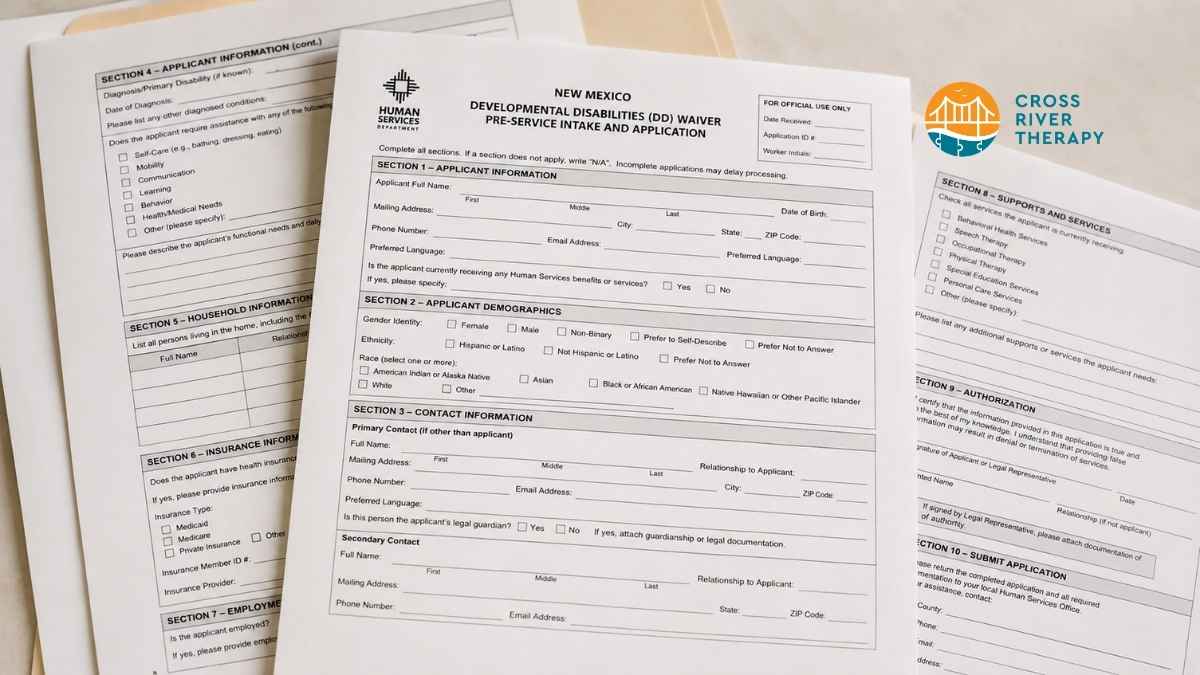
How to Apply for New Mexico’s DD Waiver While Starting ABA Therapy
Autism waiver New Mexico applications need DD Waiver records and proof of daily support needs. Your next step is to start ABA intake with Cross River.

Is ABA Therapy Covered by Insurance in New Jersey? What Every Parent Should Know
ABA therapy insurance New Jersey may cover medically necessary care based on plan type, network, and authorization. Verify benefits with Cross River.

How ABA Therapy Builds Communication for Nonverbal Children Without Forcing Speech
ABA therapy communication for nonverbal children starts with AAC, signs, and daily routines. See how kids ask, refuse, choose, and get help.

How to Start ABA Therapy in New Jersey With a First-Call Checklist
How to start ABA therapy in New Jersey begins with records, insurance details, and intake questions. Use this first-call checklist before you call.
How to Get an Autism Evaluation in Arkansas Before Starting ABA Therapy
How to get an autism evaluation in Arkansas starts with a referral, provider choice, and key records. Use this parent checklist before ABA intake.
Center-Based vs In-Home vs School-Based ABA Therapy and How to Choose the Right Fit
Center-based, in-home, and school-based ABA therapy each fit different goals, routines, and settings. Compare options before your intake call.

Early Signs of Autism: A Guide for North Carolina Parents
Early signs of autism North Carolina parents notice can include speech, play, sensory, or skill loss patterns. See what to track before screening.