








What is response latency and why does it matter?
Understanding Response Latency: Its Significance Across Fields


Introduction to Response Latency
Response latency refers to the time elapsed between a stimulus presentation and the subsequent response. This concept is fundamental across various disciplines—ranging from psychology and neurophysiology to system engineering and database management—serving as a crucial indicator of processing speed, system responsiveness, and behavioral dynamics. Recognizing and measuring response latency helps in diagnosing neurological conditions, improving system performance, understanding behavioral responses, and tailoring interventions in educational and clinical settings.
Defining Response Latency and Its Measurement
What response latency is
Response latency refers to the time delay between when a stimulus is presented and when an individual or system reacts. In humans and animals, it measures how quickly someone responds to a question, command, or environmental change. In computing and networks, it describes how long data takes to travel and be processed, affecting system responsiveness.
In psychology and neuroscience, shorter latencies often suggest faster cognitive processing or better memory, whereas longer delays might indicate processing difficulties or cognitive interference. Response latency is also used to investigate implicit attitudes, reaction times, and behavioral patterns.
In network systems, the response latency impacts the speed of web page loading, streaming, and communication services. Understanding and measuring this delay helps optimize performance and user experience.
How response latency is measured
Measuring response latency requires precise tools capable of capturing millisecond differences. In behavioral studies, timers or specialized software record the exact moment a stimulus appears and when the reaction occurs. For neural responses, sensors and high-speed recording equipment track reaction times.
In networking, ping tests are standard, sending data packets to a server and measuring the round-trip time. System response times are calculated by summing transmission delays, processing time, and queuing delays.
Advanced methods include response latency tests like the Implicit Association Test (IAT), which evaluates unconscious attitudes by measuring response speed. These tests are often resistant to faking and provide insights into implicit perceptions.
Examples of response latency in real-world scenarios
For instance, when a baby cries after a shot, the delay from injection to crying is a response latency. At a family gathering, the time between hearing a bell and responding demonstrates social response latency. In sports, reaction times to a starting gun exemplify physical response latency.
In clinical settings, speech latency in individuals with autism or schizophrenia can indicate processing challenges. Response latency also plays a crucial role in behavioral training, where delays in response to commands can hinder learning.
Understanding response latency across these contexts helps improve behavioral interventions, system performance, and cognitive assessments, making it an essential concept in multiple disciplines.
Response Latency vs. Response Time
What is the difference between response latency and response time?
Response latency and response time are related but distinct concepts used to measure delays in different systems.
Response latency refers to the shortest delay before a response begins after a stimulus or request. For example, in neuroscience, it measures the time it takes for a neural signal to start a physical response. In networking, it indicates the time data takes to start traveling across a connection, excluding any processing or transmission delays.
On the other hand, response time covers the entire duration from when a request is made to when the response is fully received or completed. This includes the initial latency, as well as processing time (reading or writing data), transmission delays, and any queuing or intermediary delays.
Components that make up response time
Understanding the components of response time helps in diagnosing issues or improving system performance:
| Component | Description | Example |
|---|---|---|
| Response latency | Delay before response starts, often in milliseconds | Neural signal initiation or initial packet transmission |
| Processing time | Time taken to process the request or data | Reading from memory or executing a command |
| Transmission delay | Time to travel across the network or medium | Data packets moving through internet cables |
| Queuing delay | Waiting time in buffers or queues | Waiting in router buffers |
Why understanding the difference matters
Measuring both metrics allows for a clearer picture of system or cognitive performance. Long response latencies could indicate delays in processing or data transfer, while high overall response times might reflect bottlenecks in multiple components.
Whether evaluating neural reactions, psychological testing, or computer network efficiency, distinguishing latency from total response time helps target specific problems and optimize overall responsiveness.
Significance of Response Latency in Technology and Behavior
Why is response latency important in psychology, behavioral analysis, and system performance?
Response latency plays a crucial role in multiple fields because it serves as a window into the speed and efficiency of processes, both human and technological.
In psychology, response latency measures how quickly a person reacts to stimuli, offering insight into mental processes such as decision-making, memory, and cognitive load. Shorter response times can indicate faster brain processing, higher alertness, or better memory, while longer latencies may suggest processing difficulties or neurological delays.
In behavioral analysis, particularly in applied behavior analysis (ABA), response latency helps assess how quickly an individual responds to cues or prompts. It reveals how efficiently a person processes instructions, manages transitions between activities, or reacts to social interactions. Longer delays could signal issues with comprehension or engagement, guiding intervention strategies.
In technology and system performance, response latency determines how swiftly a system reacts to input or requests. Low latency enhances user experience — for example, in online gaming, video conferencing, and financial trading, where delays can be disruptive. High latency results in lag, buffering, or slow system responses, reducing overall efficiency and satisfaction.
Therefore, understanding and measuring response latency is vital. It helps identify processing bottlenecks, diagnose neurological or behavioral issues, and optimize system responsiveness for better performance.
| Aspect | Measurement Focus | Impact | Additional Details |
|---|---|---|---|
| Psychology | Reaction times to stimuli | Cognitive speed, decision-making | Faster latencies linked to better mental processing |
| Behavioral Analysis | Response to cues or instructions | Learning speed, engagement | Longer latencies may indicate processing issues |
| System Performance | Request-response cycle | User experience, system efficiency | Reduced latency improves responsiveness and satisfaction |
Studying response latency across these domains highlights its importance as a measure of processing effectiveness and system health, driving improvements in both human and machine contexts.
Response Latency in Neurophysiology and Cognitive Psychology
Neural responses and cognitive processing
Response latency in neurophysiology refers to the time delay between a stimulus and the neural response it triggers. This measurement is crucial for understanding how quickly neural signals travel through the brain and nervous system. Shorter response latencies suggest faster neural processing, which generally correlates with better neurological health and efficiency in cognitive functions.
In cognitive psychology, response latency often indicates how swiftly a person processes information. For example, in reaction time studies such as the Stroop test, increased response latencies can highlight the presence of cognitive interference or processing difficulties. These delays help researchers gauge mental load, decision-making speed, and cognitive control.
Reaction time studies
Reaction time, a direct measure of response latency, is widely used in psychological research. Tasks like the Implicit Association Test (IAT) assess how quickly individuals respond to stimuli that reveal implicit attitudes and beliefs. Faster responses typically indicate stronger or more automatic associations, whereas longer response times may reflect uncertainty, interference, or weaker linkages.
Studies demonstrate that response latency is a reliable indicator of implicit perceptions, including unconscious biases and social attitudes. It offers an indirect but powerful way to explore complex mental processes without relying on self-report measures.
Implicit perception measurement
Measurement of implicit perceptions using response latency techniques exploits the automaticity of certain associations. Because longer or shorter response times can signify varying degrees of cognitive or emotional connection, these metrics are useful for psychological assessments.*
For example, the response latency in tests like the IAT is often resistant to faking and social desirability biases, making it a valuable tool for examining implicit stereotypes and biases. Low latency usually indicates strong, automatic associations, while increased latency can reveal hesitation or conflicting responses.
| Application Area | Response Latency Measure | Purpose | Notable Example |
|---|---|---|---|
| Neurophysiology | Neural response delay | Assess neural efficiency | Neural health diagnostics |
| Cognitive Psychology | Reaction times in tasks | Gauge cognitive load & interference | Stroop test, IAT |
| Behavioral Studies | Response speed to stimuli | Understand processing speed & social responses | Speech latency, reaction in social interactions |
Understanding response latency across these fields helps paint a comprehensive picture of how biological and psychological systems operate to process stimuli, react, and influence behavior.
Response Latency in Behavioral and Clinical Settings
Why is response latency relevant in ABA therapy?
In Applied Behavior Analysis (ABA), response latency refers to the time interval between presenting a stimulus or instruction and the individual’s response. Measuring this delay helps clinicians understand how quickly a person processes cues, manages transitions, and initiates responses. Shorter response latencies often suggest better processing speed, engagement, and learning capacity.
Tracking response latency allows therapists to evaluate the effectiveness of their interventions and optimize reinforcement timing. For example, a decrease in latency over sessions can indicate improved responsiveness and skill acquisition, making it a valuable metric for progress monitoring.
How does response latency indicate behavioral or neurological issues?
Longer response latencies may point to processing delays or cognitive difficulties. These delays can be associated with neurological conditions, developmental disorders, or behavioral challenges. For instance, individuals with autism or schizophrenia often exhibit increased speech latency, which may reflect challenges in speech production or information processing.
Monitoring these response delays helps clinicians identify potential areas needing support. Understanding the patterns of latency can inform tailored strategies to enhance cognitive function, communication skills, or behavioral responses.
Monitoring response latency for progress
Practitioners frequently measure response latency in various settings, including structured ABA sessions and cognitive assessments. Data collection involves recording the time from stimulus presentation to the initial response, then analyzing trends over time.
Assessing latency can involve different procedures, such as measuring the delay between a question and a verbal response or the time between a command and physical action. Changes in these times serve as indicators of learning, engagement, or difficulties.
Effective monitoring includes comparing response times before and after interventions, with shorter latencies indicating positive progress. These measures can also detect inconsistencies or regressions, guiding adjustments to treatment plans.
Tracking latency in conjunction with other behavioral data provides a comprehensive picture of an individual's development, enhancing intervention outcomes.
| Aspect of Response Latency | Description | Measurement Focus |
|---|---|---|
| Application in ABA | Measures how quickly responses are initiated in therapy | Response delays to cues and commands |
| Behavioral Indicators | Longer latencies can reflect processing issues or behavioral resistance | Response times in social and instructional contexts |
| Progress Monitoring | Changes over time demonstrate learning and engagement | Comparing baseline and post-intervention latencies |
Understanding and utilizing response latency metrics fosters more effective, personalized interventions, especially in populations with developmental or neurological challenges.
Types of Response Latency and Their Relevance

What are the different types of response latency?
Response latency can be categorized into several types, each serving a specific purpose in understanding behavior, cognition, or system performance.
One common type is initial response latency, which measures the time elapsed from the presentation of a stimulus to the individual's first response. This is often used in psychological and neurological studies to gauge processing speed.
Inter-response latency refers to the interval between consecutive responses. Analyzing this helps researchers understand patterns of behavior, response consistency, and engagement levels.
Reinforcement latency is the delay between a desired response and the delivery of reinforcement or reward. This helps evaluate learning processes, as shorter reinforcement latencies are often associated with more effective learning.
Each of these latency types provides a unique perspective—initial latency highlights cognitive processing speed, inter-response latency reveals behavioral patterns, and reinforcement latency informs lessons on reinforcement effectiveness.
Why are these types relevant?
Understanding different latency measures is crucial because they shed light on various aspects of behavior and system functioning. For example, shorter initial response latencies typically indicate faster brain processing or better memory. Longer latencies might suggest slower cognitive functions or difficulties.
In behavioral analyses such as applied behavior analysis (ABA), measuring response latency helps determine how quickly an individual responds to cues, which is vital for designing effective interventions and routines.
Moreover, in system performance, response latency directly influences user experience. Low latency ensures quick reactions necessary for real-time applications like video conferencing and online gaming.
By examining these different types, researchers and practitioners can better diagnose issues, tailor interventions, and improve system architectures for more efficient responses.
Impact of Response Latency on System and Behavioral Assessments
How does response latency impact system and behavioral assessments?
Response latency plays a vital role in both behavioral evaluation and system responsiveness analysis. In behavioral assessments, shorter response times generally indicate faster cognitive processing, higher engagement levels, and better learning outcomes. For example, in applied behavior analysis (ABA), quick responses to stimuli reflect effective cue recognition and prompt action. Conversely, longer latencies can signal processing difficulties, decreased motivation, or attentional challenges.
In system performance evaluation, high response latency results in delays that can hinder real-time operations and diminish user satisfaction. For instance, in a network, excessive latency causes slow page loads or lag in streaming and gaming, reducing overall efficiency. Managing and minimizing latency helps improve throughput, system responsiveness, and user experience.
What can latency tell us about performance?
Latency acts as an indicator of processing efficiency in both human and machine systems. Faster response speeds often suggest strong cognitive functioning, quick reflexes, or high system responsiveness. For example, in neural processing, reduced neural response latency correlates with faster reaction times, indicating better neural efficiency.
On the other hand, increased latency points to potential bottlenecks or inefficiencies. In computing, it may reveal network congestion, hardware limitations, or software delays. Overall, analyzing latency provides insights into the operational health of systems and the cognitive status of individuals, guiding improvements and interventions.
Techniques for Measuring Response Latency
 Measuring response latency accurately is vital across various fields, including computing, psychology, and neuroscience. Different methods are employed depending on the context and the type of response being studied.
One common approach involves timer-based measurement tools. In behavioral studies, researchers often use precise timers integrated into software or manual stopwatch methods to record the exact moment a stimulus is presented and when a response occurs. Automated response recording systems are also popular, especially in experimental psychology, where they can log millisecond-precision timing data effortlessly.
In the realm of computer networking, tools like ping and traceroute are essential. These tools send data packets to a server and measure the round-trip time, giving an estimate of network latency. Such techniques are critical for diagnosing delays in data transmission, which directly impact the performance of online services.
Furthermore, behavioral response recording extends to technologies like event-based systems that capture specific actions triggered by stimuli. These systems help analyze how quickly individuals respond to commands or environmental cues.
Across different disciplines, measurement techniques vary. In behavioral laboratories, stopwatch timers or specialized software are used. In network management, ping and traceroute follow. Neuroscientists often rely on electrophysiological recording systems and neural response measurements to gauge the speed of neural signals in reaction to stimuli.
These diverse methods ensure high accuracy and reliability in measuring response latency, helping researchers improve system responsiveness, optimize neural processing assessments, and enhance user experience in digital applications.
Conclusion: The Critical Role of Response Latency
 Response latency, which measures the time between a stimulus and a response, holds significant importance in diverse fields—from neuroscience and psychology to network computing and system design. It offers vital insights into how quickly an individual or system processes information, reacts to stimuli, and executes actions.
In cognitive and behavioral studies, response latency helps evaluate processing speed, attention, and engagement. For example, shorter latencies often reflect faster brain processing or better memory, while prolonged delays can indicate difficulties or slower cognitive functioning. Moreover, in applied behavior analysis (ABA), response latency serves as a key metric for assessing intervention effectiveness, predicting reinforcement outcomes, and understanding learning processes.
In the realm of technology and networking, response latency directly affects user experience. High latency can cause delays in web page loading, buffering in streaming, and lag in real-time applications like gaming or video calls. Devices like distributed databases, such as ScyllaDB, tailor architecture to minimize latency by reducing the number of responses needed from nodes, ensuring fast and consistent performance.
Assessing response latency also plays a crucial role in psychological assessments. Tests like the Implicit Association Test (IAT) measure subconscious associations and attitudes by analyzing how quickly responses are made to stimuli. Such measures can reveal implicit biases resistant to faking and social desirability influences.
Looking ahead, understanding and optimizing response latency can revolutionize multiple areas—from neural interfaces that require instant responsiveness to personalized therapies that adapt based on reaction times. As technology progresses, lowering latency will continue to enhance the responsiveness, efficiency, and accuracy of systems and interventions vital for improving quality of life.
In essence, response latency is more than just a measure of delay; it is a window into the speed and efficiency of cognitive, neural, and system functionalities. Its ongoing study promises to inform future innovations across scientific, technological, and clinical domains.
Final Thoughts on Response Latency
Response latency is a crucial concept bridging the gap between understanding human cognitive processes and system performance. Its measurement and analysis inform clinical diagnoses, behavioral interventions, and the development of faster, more efficient technology. As our reliance on real-time data and rapid responses increases, the importance of minimizing and accurately assessing response latency continues to grow, promising advances across healthcare, system engineering, and behavioral sciences.
References
- What is a Response Latency? Definition & FAQs
- Response Latency Overview & Examples - Lesson
- Response Latency - an overview
- Latency: What Is It and Why Does It Matter?
- 3 Real-Life Examples of Latency in ABA Therapy
- What is the difference between latency and response time?
- RESPONSE LATENCY AS AN INDEX ...
- What Is Latency? ABA Definition and Insights
- Response Latency - an overview
- Response Latency - an overview
Recent News
Related articles

5 Autism Support Groups and Family Resources in New Mexico Alongside ABA Therapy
Autism support groups New Mexico families can use offer peer support, local events, and school help. Cross River can explain ABA therapy options.

Where to Get an Autism Evaluation in New Mexico Before Starting ABA Therapy
Autism evaluation New Mexico options include UNM, NMSU, FIT, and private providers. Compare providers, records, and ABA steps with Cross River.

7 North Carolina Autism Resources to Contact Before ABA Therapy Starts
Autism resources North Carolina families can call for diagnosis, early intervention, rights, and parent support. Start ABA intake with Cross River.

Does Indiana Medicaid Cover ABA Therapy? A Step-by-Step Eligibility Checklist for Parents
Medicaid ABA therapy Indiana covers eligible children under 21 with prior authorization. Your five-step coverage review can start with Cross River.
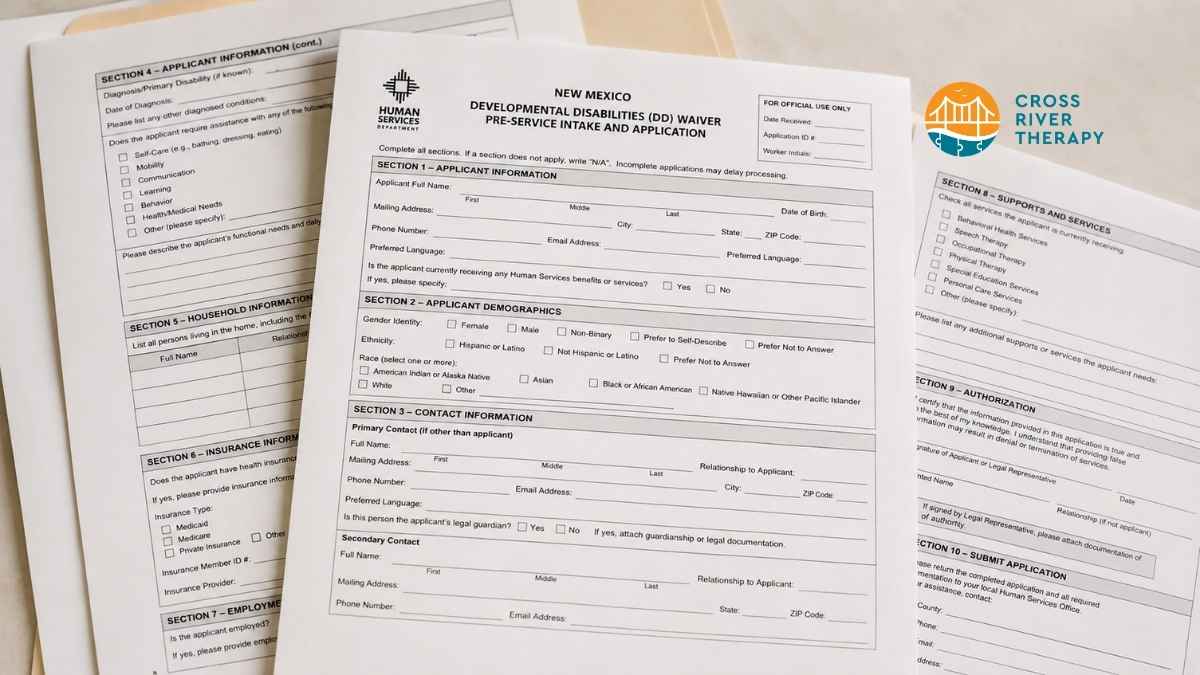
How to Apply for New Mexico’s DD Waiver While Starting ABA Therapy
Autism waiver New Mexico applications need DD Waiver records and proof of daily support needs. Your next step is to start ABA intake with Cross River.

Is ABA Therapy Covered by Insurance in New Jersey? What Every Parent Should Know
ABA therapy insurance New Jersey may cover medically necessary care based on plan type, network, and authorization. Verify benefits with Cross River.

How ABA Therapy Builds Communication for Nonverbal Children Without Forcing Speech
ABA therapy communication for nonverbal children starts with AAC, signs, and daily routines. See how kids ask, refuse, choose, and get help.

How to Start ABA Therapy in New Jersey With a First-Call Checklist
How to start ABA therapy in New Jersey begins with records, insurance details, and intake questions. Use this first-call checklist before you call.

How to Get an Autism Evaluation in Arkansas Before Starting ABA Therapy
How to get an autism evaluation in Arkansas starts with a referral, provider choice, and key records. Use this parent checklist before ABA intake.

Center-Based vs In-Home vs School-Based ABA Therapy and How to Choose the Right Fit
Center-based, in-home, and school-based ABA therapy each fit different goals, routines, and settings. Compare options before your intake call.

Early Signs of Autism: A Guide for North Carolina Parents
Early signs of autism North Carolina parents notice can include speech, play, sensory, or skill loss patterns. See what to track before screening.

Early Intervention ABA Therapy in Albuquerque, NM: Why Starting Early Matters
Early intervention ABA therapy in Albuquerque, NM helps toddlers practice communication, play, and routines. Spot signs and care options sooner.