








What to expect in the transition out of ABA services
Navigating the Journey Beyond ABA Therapy: Preparing for Successful Transitions


Understanding ABA Therapy and Its Role
Applied Behavior Analysis (ABA) therapy is a scientifically supported intervention designed to help individuals with autism develop critical skills and reduce challenging behaviors, greatly enhancing their quality of life. As families and individuals make progress, transitioning out of ABA services can be a significant milestone that requires careful planning and understanding of what to expect.
What is ABA Therapy and How Does It Support Individuals with Autism?

What is Applied Behavior Analysis (ABA) therapy, and how does it help individuals with autism?
Applied Behavior Analysis (ABA) therapy is a scientifically proven approach aimed at supporting individuals on the autism spectrum. It focuses on improving socially significant behaviors by using techniques rooted in learning and motivation. ABA helps individuals develop essential skills such as communication, social interaction, and adaptive behaviors while addressing challenges like behavioral difficulties.
Definition of ABA therapy
ABA therapy utilizes evidence-based interventions tailored to each person's unique needs. A Board Certified Behavior Analyst (BCBA) conducts a comprehensive assessment to create an individualized treatment plan. This therapy often involves structured activities and naturalistic play to engage and motivate children in familiar environments like home or school.
Goals of ABA therapy
The primary goals of ABA are to enhance independence, improve quality of life, and support individuals in achieving personal and family-centered objectives. Progress is continuously monitored, and treatment plans evolve over time based on data and family feedback.
Individualized treatment approach
Contemporary ABA emphasizes person-centered practices, naturalistic teaching, and play-based methods. Therapy sessions typically require a significant time commitment, often between 20 to 30 hours weekly, to allow consistency and consistency in learning and skill application across settings.
Common techniques and strategies
Interventions include reinforcement-based strategies that encourage positive behaviors while avoiding outdated practices such as forced eye contact or suppression of harmless stimming behaviors. Parent involvement is also encouraged to help generalize skills in daily routines.
Evidence-based effectiveness
Supported by extensive research, ABA remains one of the most effective interventions for autism, particularly when started early. Insurance coverage and professional collaboration ensure accessibility and integrated care, maximizing therapeutic outcomes.
The Professionals Behind ABA Therapy: Qualifications and Roles

Who Provides ABA Therapy and What Qualifications Do These Professionals Typically Have?
ABA therapy is delivered by a team of well-trained professionals who bring expertise to support individuals on the autism spectrum. Central to this team are Board Certified Behavior Analysts (BCBAs). BCBAs usually hold graduate degrees in fields like applied behavior analysis, psychology, or education. They have completed rigorous certification through the Behavior Analyst Certification Board, which includes supervised fieldwork totaling roughly 1,500 to 2,000 hours. These qualifications ensure they possess the skills to perform behavioral assessments, design individualized treatment plans, implement evidence-based interventions, and analyze data effectively.
Registered Behavior Technicians (RBTs) also play a vital role by working directly with clients under the supervision of BCBAs. They provide hands-on therapy and support the daily delivery of interventions. RBTs undergo specialized training and certification as well but operate as part of the broader ABA therapy team.
Team Structure and Collaboration
ABA therapy teams typically include a BCBA who oversees treatment planning and supervision, alongside one or more RBTs who implement therapy sessions. This collaboration ensures that treatment is consistent, adaptable, and grounded in professional oversight. The team also frequently works together with families, value their input, and cooperate with other professionals such as speech or occupational therapists to deliver integrated care.
Importance of Professional Credentials and Supervision
Professional certification and ongoing supervision are critical in maintaining the quality and effectiveness of ABA services. Credentials like those from the Behavior Analyst Certification Board provide assurance about a provider’s competency and adherence to ethical guidelines. Supervision by BCBAs helps guarantee fidelity to treatment plans, smooth communication among team members, and timely modification of therapy based on progress. Organizations also focus on minimizing therapist turnover to maintain consistency, which can be crucial to successful outcomes.
Through a combination of specialized qualifications, coordinated roles, and expert oversight, ABA therapy providers deliver high-quality, individualized interventions tailored to each child’s needs.
Modern ABA Techniques: Emphasizing Positive, Individualized Interventions

What are the common approaches and techniques used in ABA therapy for managing autism?
Modern Applied Behavior Analysis (ABA) therapy employs a variety of positive, evidence-based strategies tailored to the individual needs of each child. A central technique is positive reinforcement, which rewards desirable behaviors to encourage their repetition. This approach helps build motivation and engagement in learning.
Discrete Trial Training (DTT) and Natural Environment Teaching (NET) are fundamental instructional methods. DTT involves structured, one-on-one teaching sessions with clear prompts, responses, and consequences to rapidly teach skills. In contrast, NET integrates learning opportunities into the child's everyday activities and natural settings, making skill acquisition more functional and meaningful.
The use of prompting and fading allows therapists to guide children through new skills by providing cues that are gradually faded, promoting independence. Behavior chaining breaks down complex tasks into smaller, teachable steps linked together, while visual supports enhance understanding and communication.
Importantly, contemporary ABA explicitly avoids outdated and aversive methods such as reducing harmless stimming behaviors or forcing eye contact. Instead, it focuses on reinforcement-based strategies that respect individual differences and promote skill development in a supportive and play-based environment.
These techniques combined help create a therapy experience that is adaptive, motivating, and centered on the child's goals, fostering progress in communication, social skills, and daily living activities.
Measuring Progress: Assessing Effectiveness in ABA Therapy
Behavioral assessments and data collection
Effectiveness in ABA therapy is gauged through comprehensive behavioral assessments conducted by Board Certified Behavior Analysts (BCBAs). These assessments identify strengths and challenges, allowing therapists to develop individualized treatment plans. Continuous data collection during therapy sessions monitors progress on specific skills, ensuring that interventions remain relevant to the individual's evolving needs.
Tracking individualized goals
Goals in ABA therapy are tailored based on initial assessments and family input, covering areas such as communication, social interaction, adaptive behaviors, academic skills, cognitive development, motor skills, and play. Progress is carefully tracked against these personalized objectives, which are regularly re-evaluated to confirm their continued value to the child and family.
Impact of treatment intensity and duration
Research shows that the number of hours of ABA therapy per week and the length of treatment significantly affect outcomes. Generally, 20 to 30 hours per week over an extended period leads to better skill acquisition, especially in language and academic domains. Consistent therapy supports skill maintenance and generalization across settings.
Use of standardized and clinical measures
Alongside direct observation and clinical judgment, standardized assessment tools are employed to measure changes in behavior and skill development objectively. While effective, the field acknowledges a need for more uniform measurement protocols to reliably assess outcomes and enhance evidence-based practices.
Ongoing monitoring to inform therapy adjustments
Regular review of collected data allows therapists to modify interventions as needed. This dynamic approach ensures therapy remains efficient and aligns with the individual's progress and changing life circumstances. Collaborative feedback from families is an integral part of this process, promoting personalized, adaptable care.
| Measurement Aspect | Methodology | Purpose and Note |
|---|---|---|
| Behavioral Assessments | Direct evaluation by BCBAs | Identifies needs and guides personalized treatment plans |
| Data Collection | Session-by-session progress tracking | Monitors skill acquisition and informs session adjustments |
| Individualized Goal Tracking | Customized objectives | Ensures therapy targets meaningful, relevant skills |
| Treatment Intensity & Duration | Hours per week and overall length | Influences mastery, with more hours generally improving outcomes |
| Standardized Measures | Clinical and research tools | Provides objective benchmarks; development of uniform protocols ongoing |
| Continuous Monitoring | Regular data analysis and family input | Facilitates adaptive, responsive therapy modification |
The Journey from Diagnosis to ABA Therapy Onboarding
Why is an Official Autism Diagnosis Important?
An official autism diagnosis is the critical first step toward accessing early intervention services like ABA therapy. Without this formal diagnosis, obtaining coverage and support from healthcare systems and insurance providers can be challenging. It also helps families understand their child's unique needs and begin planning for their care.
What Does the Psychological Evaluation Process Involve?
Psychological evaluations for autism typically include several stages: intake interviews, standardized testing, and feedback sessions. These assessments are usually conducted by licensed psychologists who specialize in autism. Their goal is to comprehensively evaluate the child's developmental, social, and behavioral profile, leading to a confirmed diagnosis.
How Does the Referral and Intake Procedure Work?
Following diagnosis, if ABA therapy is recommended, a referral to a qualified provider is made. This process involves verifying diagnostic reports and coordinating with behavioral health teams to initiate therapy. The intake procedure collects detailed information about the child's history, current functioning, and family preferences to tailor individual treatment plans.
What Role Does Insurance, Including Medicaid, Play in Authorizing ABA Therapy?
Insurance coverage is a significant step in authorizing ABA therapy sessions, with many families relying on plans that cover these services, including Medicaid. The insurance provider typically requires documentation such as the autism diagnosis and assessment results to approve the recommended number of therapy hours. Navigating the insurance process often requires coordination between families, providers, and insurance companies.
How Are Families Matched with Providers and Scheduled for Sessions?
Once insurance approval is secured, families are matched with appropriate ABA therapists based on their specific needs and preferences. Scheduling therapy sessions involves considering family availability and the child's routine. The onboarding process ensures a smooth transition from diagnosis to active therapy, helping families adjust to new schedules and therapeutic environments with patience and support.
Tailoring ABA Services: Individualized Planning and Family Collaboration

How Are Treatment Plans Developed in ABA Therapy?
Treatment plans in Applied Behavior Analysis (ABA) therapy are carefully crafted based on comprehensive behavioral assessments conducted by Board Certified Behavior Analysts (BCBAs). These assessments identify an individual's strengths, challenges, and personal goals. The resulting treatment plans are individualized to address the specific needs of each child, ensuring that therapy is meaningful and aligned with family priorities.
Why Is Family Feedback and Involvement Important?
Family involvement is a cornerstone of effective ABA services. Ongoing feedback from families allows the therapy team to monitor progress and adjust interventions as needed. Parents and caregivers play an essential role in reinforcing skills outside therapy sessions, which helps with generalization and maintenance. Clear communication about expectations for family participation ensures everyone is on the same page.
What Role Does Parent Training and Behavior Management Support Play?
Parent training is integrated into many ABA programs to empower families with strategies for supporting behavior management and skill-building at home. Providers offer practical guidance tailored to each family's unique circumstances, helping to create consistency across environments and promote positive outcomes.
How Is Collaboration With Other Professionals Facilitated?
ABA therapy often works best when coordinated with other services such as speech and occupational therapy. Collaborative effort among professionals creates a holistic approach, addressing various developmental areas and enhancing the child's overall progress.
How Are Treatment Plans Adjusted Over Time?
Ongoing data collection is vital for tracking progress during ABA therapy. Therapists continuously gather information to evaluate the effectiveness of interventions. Based on this data and family input, treatment plans are regularly updated to reflect evolving goals and to adapt to the child's changing needs.
These individualized and collaborative practices ensure that ABA therapy remains responsive and effective, helping children and families achieve meaningful improvements in quality of life.
Consistency in Therapy: The Role of Continuity and Minimizing Staff Turnover

Why Is Continuity Important in ABA Therapy?
Continuous ABA therapy services are crucial for maintaining and generalizing skills across different settings. Without regular intervention, individuals may experience skill regression or struggle to apply learned behaviors outside therapy sessions. Continuous support also aids in behavioral management and smooth transitions, such as returning to school, where stable routines are key.
How Does Therapist Turnover Affect Progress?
High turnover rates among therapists can disrupt the therapeutic process. Frequent changes in behavior analysts or behavior technicians may lead to inconsistencies in treatment delivery and reduced rapport with the client and family. This can negatively impact trust, motivation, and ultimately slow down progress toward individual goals.
What Policies Help Reduce Staff Changes?
Organizations providing ABA therapy often implement policies aimed at minimizing staff turnover. These may include offering competitive compensation, ongoing training, and support for therapist well-being. Such measures help retain skilled professionals, ensuring continuity of care and consistent treatment plans.
What Are the Benefits of Consistent Therapist-Family Relationships?
Having a stable therapy team fosters strong, collaborative relationships between therapists and families. This continuity promotes open communication, better understanding of the child's needs, and personalized adjustments to treatment. Families feel more supported, which enhances engagement and overall therapy effectiveness.
Supporting Transitions: How ABA Therapy Eases Changes Like School Re-entry

How Does ABA Therapy Prepare Children for the School Environment?
ABA therapy plays a crucial role in preparing children with autism for the often challenging school environment. Through tailored interventions, ABA focuses on building social, communication, and adaptive skills that are essential for classroom success. These interventions are delivered in naturalistic, play-based settings that mimic real-world situations, helping children gain confidence and familiarity with school routines.
What Support Does ABA Provide for Social, Communication, and Adaptive Skills?
Social skills such as turn-taking, sharing, and understanding social cues are systematically taught using reinforcement-based strategies. Communication skills are enhanced through targeted language activities, while adaptive skills—like self-care and navigating the school setting—are practiced regularly. This holistic support helps children interact effectively with peers and teachers, promoting inclusion and positive relationships.
How Does ABA Help Manage Transitions Smoothly Through Behavioral Support?
Routine changes, such as starting a new school year, can often trigger anxiety and behavioral challenges. Continued ABA therapy offers consistent behavioral support to ease these transitions. Behavior analysts use data-driven approaches to identify potential difficulties and implement strategies to prevent skill regression. Techniques such as visual schedules, social stories, and gradual exposure prepare children for changes, ensuring a smoother adjustment.
Why Is Continued Therapy Important During Routine Changes?
Consistency in therapy during periods of change is vital to maintain progress. Ongoing ABA sessions help prevent setbacks in skills previously acquired and provide a stable support system during potentially disruptive transitions. Families and therapy teams collaborate closely, adjusting treatment plans based on feedback and progress. This adaptability supports children’s evolving needs as they navigate new environments like school.
The continuous nature of ABA therapy, combined with individualized planning and family involvement, ensures that children are not only ready for school re-entry but can thrive in their new settings with increased independence and confidence.
Preparing for Transition Out of ABA: Criteria and Communication
Establishing Criteria for Reducing Hours and Discharge
Transitioning out of ABA therapy is a carefully planned process. Criteria for reducing therapy hours and eventual discharge are established based on continuous behavioral assessments conducted by a Board Certified Behavior Analyst (BCBA). These criteria focus on the child's mastery of targeted skills, consistent application of behaviors across settings, and readiness to maintain progress with less intensive support.
Clear Communication with Families About Progress and Readiness
Effective communication with families is essential during the transition phase. Providers make sure families understand the child's progress and what milestones indicate readiness to reduce therapy intensity or conclude services. Regular updates, data review sessions, and family consultations help keep everyone aligned on goals and expectations.
Role of Behavioral Assessments in Transition Decisions
Behavioral assessments guide transition decisions by evaluating skill acquisition, generalization, and behavior stability. These assessments provide objective data to determine if the child can maintain gains independently or with minimal support. Ongoing assessments ensure that any needed adjustments to the treatment plan are made before discharge.
Strategies to Ensure Smooth Exit and Maintain Skills Post-Therapy
To support a smooth exit from ABA therapy, transition plans often include gradual tapering of hours and continued parent training for behavior management and skills reinforcement at home. Collaboration with other professionals such as speech or occupational therapists may continue to support the child's development. Families are encouraged to seek additional resources and support groups to maintain and generalize skills beyond therapy.
Addressing the Challenges and Controversies of ABA Therapy

Historical use of aversive methods and modern ethical standards
ABA therapy's history includes the controversial use of aversive techniques, such as electric shocks, which are no longer part of contemporary practice. Modern ABA firmly rejects these outdated methods and adopts reinforcement-based strategies to promote skill development and independence.
Criticism regarding intensity and focus on compliance
Some critics argue that ABA therapy can be overly intensive and repetitive, often requiring 20 to 30 hours per week. The therapy’s focus on compliance and behavior modification has raised concerns about potential emotional distress and suppressing individual personality traits to conform to societal expectations.
Debates about honoring neurodiversity and individual preferences
A significant point of debate centers on whether ABA adequately respects neurodiversity and individual preferences. Critics worry that emphasizing behavioral change might overlook personal autonomy, sensory needs, and emotional well-being, prioritizing outward behavior over inner experience.
Efforts to refine ABA as person-centered and reinforcement-based
In response, contemporary ABA emphasizes person-centered approaches, naturalistic and play-based teaching, and collaboration with families. The therapy continuously adapts based on individual needs and family feedback, striving to honor the individuality of each person on the autism spectrum through ethical, positive reinforcement techniques.
These ongoing efforts aim to address concerns by improving transparency, offering parent training, minimizing therapist turnover, and fostering integrated care with other professionals. Despite these advances, conversations about ABA's appropriateness and impact continue within the autism community, reflecting the importance of evolving treatment to meet diverse needs and values.
The Role of Play and Motivation in ABA Therapy

Importance of Play in Building Rapport
Play serves as a foundational element in ABA therapy by helping therapists build a trusting and engaging relationship with children. Through playful interactions, therapists can connect naturally, decreasing anxiety and increasing willingness to participate in therapy.
Natural Environment Teaching Through Play
ABA therapy often employs naturalistic teaching, where skills are taught during play within everyday settings. This approach encourages children to learn and practice behaviors in contexts they encounter daily, making learning more relevant and effective.
Using Play to Motivate Children and Encourage Learning
Play inherently motivates many children by appealing to their interests and preferences. Therapists use play activities as incentives, which help sustain attention and enthusiasm, thereby enhancing learning opportunities and reinforcing positive behaviors.
Training Therapists in Play-Based Approaches
Training programs for behavior technicians emphasize the importance of play-based strategies. Technicians learn evidence-based methods that integrate child development and play principles, ensuring therapy is individualized, engaging, and aligned with each child's unique needs.
By embedding play throughout therapy sessions, modern ABA fosters meaningful, enjoyable, and effective learning experiences that support children’s development and wellbeing.
Time Commitment and Session Structure in ABA Therapy

How Many Hours per Week Does ABA Therapy Typically Involve?
ABA therapy often requires a significant time commitment, usually ranging from 20 to 30 hours per week. This intensity helps ensure consistent skill development and behavior support, which is especially important for children with autism to make meaningful progress.
What Is the Variety and Structure of ABA Therapy Sessions?
Sessions generally include a mix of structured activities and naturalistic teaching moments. Therapists use play-based and evidence-based interventions tailored to the child's individual goals. The specific layout of each session can vary, combining direct instruction with opportunities for social interaction and communication practice.
How Can Families Prepare for Expectations During ABA Sessions?
Understanding the session format helps families know what to expect and how to best support their child. Providers often explain how the therapy is delivered, the planned activities, and the intended outcomes. Preparing ahead reduces uncertainty and encourages better collaboration.
How Is Parent Involvement Clarified in ABA Therapy?
Parent participation is important but varies with the child’s needs and treatment plan. Families should ask providers about their expected role during sessions—whether passive observers, active participants, or training partners. Clear communication around family involvement fosters productive partnerships and reinforces skills beyond therapy settings.
Extending Support Beyond Therapy: Resources and Community Connections

Encouraging Families to Seek Support Groups and Educational Materials
Families embarking on ABA therapy are encouraged to connect with support groups. These communities offer emotional support, guidance, and shared experiences, which can ease the journey through therapy. Educational materials, including books, online articles, and workshops, empower families with knowledge to better understand autism and ABA approaches.
Providing Resources for Home Skill-Building and Behavior Management
ABA providers often supply families with tailored resources to support skill-building and manage behaviors at home. These may include activity guides, communication tools, and behavior tracking sheets. By integrating therapy strategies into daily routines, families help reinforce gains made during sessions and promote consistency.
Benefits of Collaboration with Other Therapists and Professionals
A holistic approach in supporting individuals with autism involves collaboration among ABA therapists, speech therapists, occupational therapists, and other professionals. Coordinated care ensures that therapeutic goals align and complement one another, fostering comprehensive development across communication, motor skills, and social behaviors.
Access to Telehealth and In-Person Services for Flexibility
To meet diverse family needs, services are offered both in-person and via telehealth. Telehealth expands access, especially for families in remote areas or with scheduling challenges, while in-person sessions provide hands-on support. This dual approach offers flexibility, making therapy more accessible and convenient.
Families engaging in ABA therapy benefit greatly from tapping into these resources and community connections, enhancing therapy outcomes and overall quality of life.
Looking Ahead: Ensuring a Positive Transition Beyond ABA Services
Transitioning out of ABA therapy marks a significant achievement and new chapter for individuals with autism and their families. A thoughtful, well-communicated process—grounded in clear criteria, ongoing assessment, and collaboration—helps ensure that skills are maintained and the gains made through therapy continue to support independence and quality of life. Understanding what to expect during this phase empowers families to advocate effectively, utilize available resources, and support their loved ones as they move confidently towards new goals and environments.
References
- Tag: ABA therapy
- 13 Questions to Ask Aba Therapist
- From Psychological Assessment to ABA Services: A Guide ...
- How to Become an Applied Behavior Analyst (ABA) Therapist
- Board Certified Behavior Analysts (BCBA)
- How to Become an ABA Therapist - School of Education
- An evaluation of the effects of intensity and duration on ...
- The Future of Autism and ABA: Predicting Outcomes
Recent News
Related articles

6 Arkansas Medicaid ABA Therapy Rules Families Need to Know
Arkansas Medicaid ABA therapy has age, diagnosis and approval rules. Families can check six requirements before care.

Arizona Autism Laws for ABA Coverage and School Rights
Arizona autism laws for ABA coverage vary by plan. Families can check insurance, appeal options, and school rights.

ABA Therapist Salary in Arkansas for RBTs and BCBAs
Compare ABA therapist salary in Arkansas by role. See how paid hours and benefits affect earnings before applying.

5 Autism Support Groups and Family Resources in New Mexico
Autism support groups in New Mexico connect families. Local resources offer events, parent support, and school help.

Where to Get an Autism Evaluation in New Mexico
Autism evaluation options in New Mexico include UNM and NMSU. Age and referral details help parents prepare.

7 North Carolina Autism Resources to Contact Before ABA Therapy Starts
Autism resources North Carolina families can call for diagnosis, early intervention, rights, and parent support. Start ABA intake with Cross River.

Does Indiana Medicaid Cover ABA Therapy? A Parent Checklist
Indiana Medicaid ABA therapy may cover care for eligible children. The checklist covers coaching and renewals.
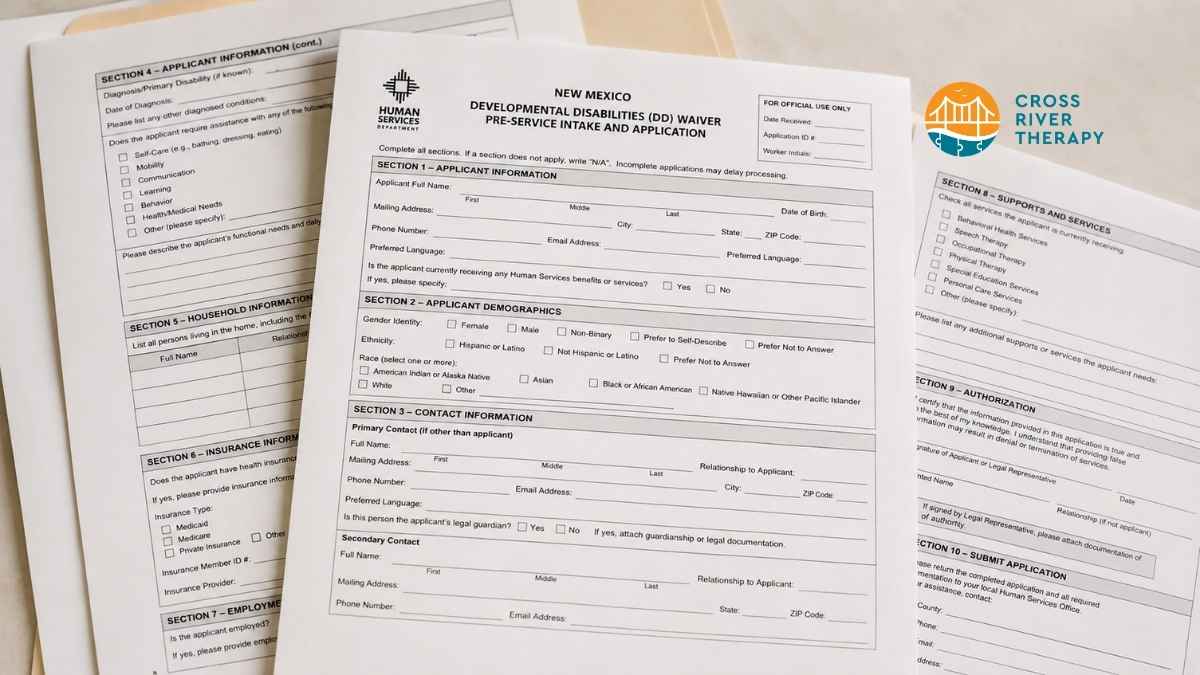
How to Apply for the New Mexico DD Waiver
Your NM DD waiver application starts with state intake. The steps cover records, submission, and enrollment.

Does Insurance Cover ABA Therapy in New Jersey?
ABA therapy insurance in New Jersey varies by plan. Learn what NJ FamilyCare covers and how to check costs.

How ABA Therapy Builds Communication for Nonverbal Children Without Forcing Speech
ABA therapy communication for nonverbal children starts with AAC, signs, and daily routines. See how kids ask, refuse, choose, and get help.

How to Start ABA Therapy in New Jersey With a Checklist
Your guide explains how to start ABA therapy in New Jersey. A first-call checklist covers records and next steps.

How to Get an Autism Evaluation in Arkansas Before Starting ABA Therapy
How to get an autism evaluation in Arkansas starts with a referral, provider choice, and key records. Use this parent checklist before ABA intake.