








What Is The Autism Wheel?
The autism wheel is a visual representation of the different aspects of autism and how they are interconnected.


Understanding The Autism Wheel
Understanding autism can be a complex and challenging task, especially for those who are not familiar with the condition.
One of the tools that can help people better understand autism is the autism wheel. The autism wheel is a visual representation of the different aspects of autism and how they are interconnected.
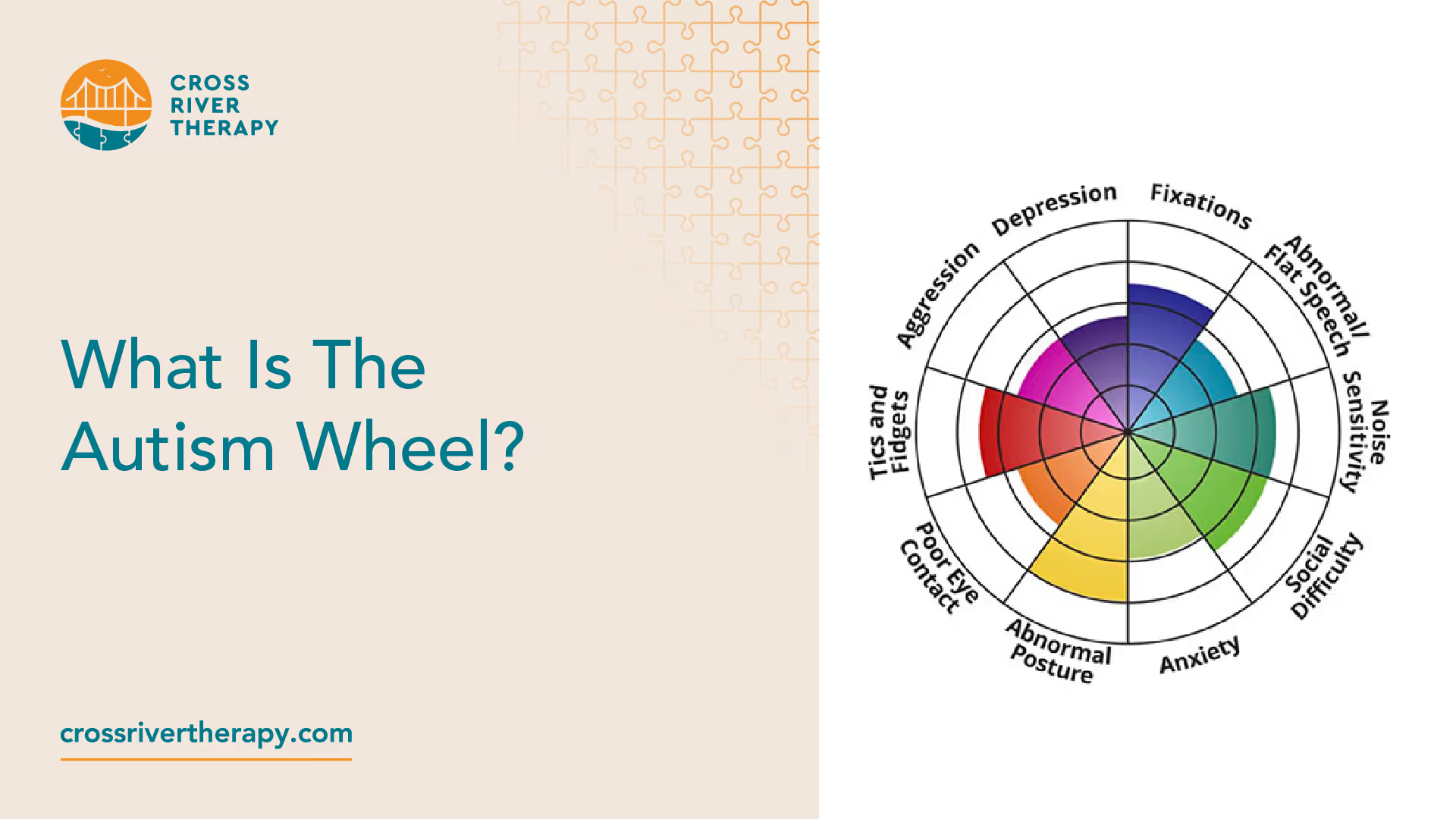
At the center of the autism wheel is the core deficit of autism, which is difficulty with social communication and interaction. This can manifest in a variety of ways, including difficulty with eye contact, understanding social cues, and engaging in reciprocal conversation.
Surrounding the core deficit are other areas that are commonly affected by autism.
These include sensory processing, which can lead to hypersensitivity or hyposensitivity to certain stimuli, and repetitive behaviors and interests, which can manifest as a need for routine or a fixation on a particular topic.
Another area that is often included in the autism wheel is executive functioning, which refers to the cognitive processes that allow us to plan, organize, and carry out tasks. People with autism may struggle with executive functioning, which can make it difficult to complete tasks or adapt to changes in routine.
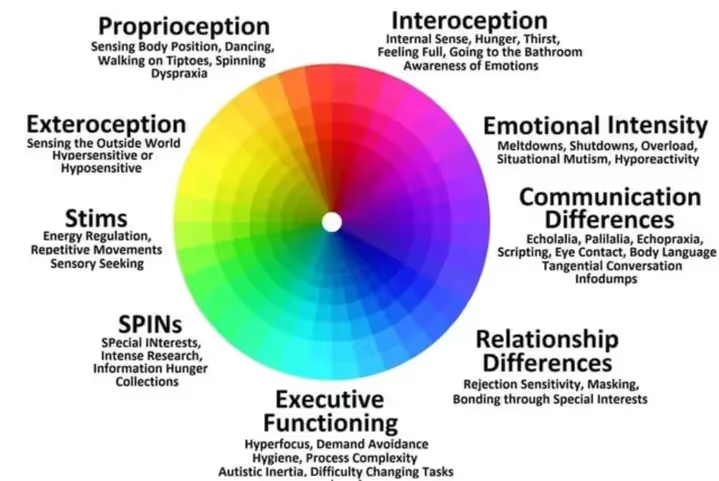
Finally, the autism wheel may also include factors that can impact a person's experience of autism, such as co-occurring conditions like anxiety or ADHD, or environmental factors like sensory overload or social isolation.
Overall, the autism wheel can be a helpful tool for understanding the complex and interconnected aspects of autism. By visualizing the different areas that are commonly affected by autism, we can better appreciate the challenges that people with autism face and work to create more supportive and inclusive environments.
Recent News
Related articles

6 Arkansas Medicaid ABA Therapy Rules Families Need to Know
Arkansas Medicaid ABA therapy has age, diagnosis and approval rules. Families can check six requirements before care.

Arizona Autism Laws for ABA Coverage and School Rights
Arizona autism laws for ABA coverage vary by plan. Families can check insurance, appeal options, and school rights.

ABA Therapist Salary in Arkansas for RBTs and BCBAs
Compare ABA therapist salary in Arkansas by role. See how paid hours and benefits affect earnings before applying.

5 Autism Support Groups and Family Resources in New Mexico
Autism support groups in New Mexico connect families. Local resources offer events, parent support, and school help.

Where to Get an Autism Evaluation in New Mexico
Autism evaluation options in New Mexico include UNM and NMSU. Age and referral details help parents prepare.

7 North Carolina Autism Resources to Contact Before ABA Therapy Starts
Autism resources North Carolina families can call for diagnosis, early intervention, rights, and parent support. Start ABA intake with Cross River.

Does Indiana Medicaid Cover ABA Therapy? A Parent Checklist
Indiana Medicaid ABA therapy may cover care for eligible children. The checklist covers coaching and renewals.
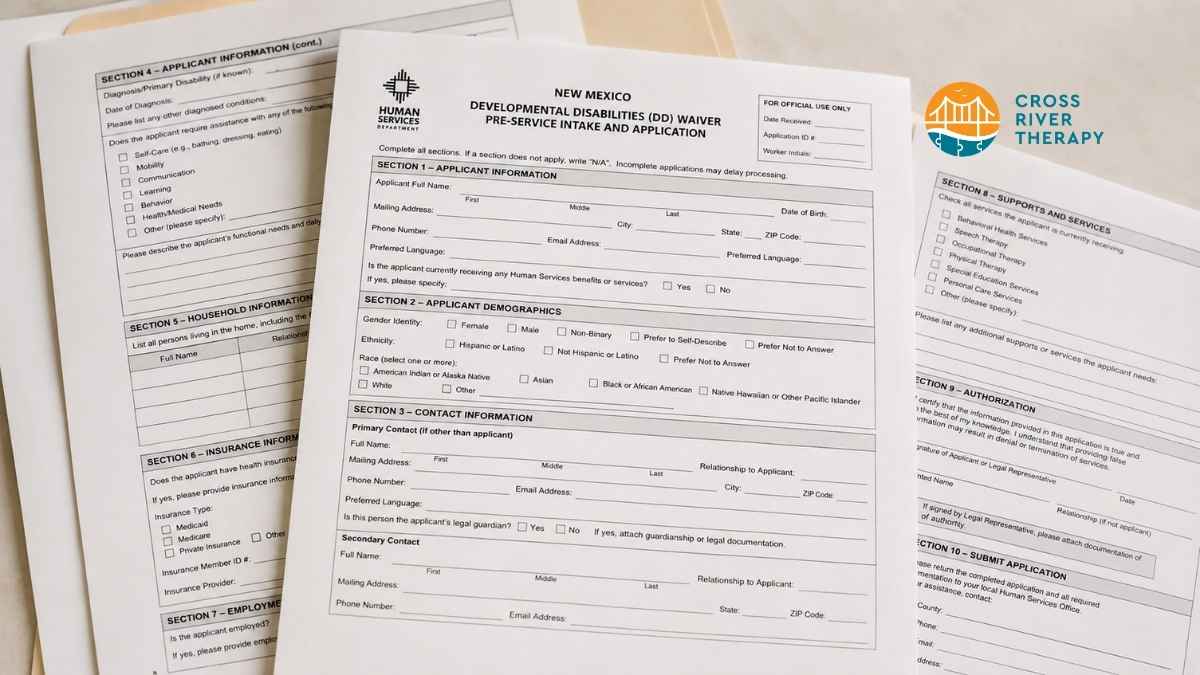
How to Apply for the New Mexico DD Waiver
Your NM DD waiver application starts with state intake. The steps cover records, submission, and enrollment.

Does Insurance Cover ABA Therapy in New Jersey?
ABA therapy insurance in New Jersey varies by plan. Learn what NJ FamilyCare covers and how to check costs.

How ABA Therapy Builds Communication for Nonverbal Children Without Forcing Speech
ABA therapy communication for nonverbal children starts with AAC, signs, and daily routines. See how kids ask, refuse, choose, and get help.

How to Start ABA Therapy in New Jersey With a Checklist
Your guide explains how to start ABA therapy in New Jersey. A first-call checklist covers records and next steps.

How to Get an Autism Evaluation in Arkansas Before Starting ABA Therapy
How to get an autism evaluation in Arkansas starts with a referral, provider choice, and key records. Use this parent checklist before ABA intake.