








Which Parent Carries The Autism Gene?
Research suggests that autism genes are usually inherited from the father, despite some research showing it's passed down from the mother.


Which Parent Carries The Autism Gene?
Although the exact cause of autism is still unknown, there is evidence to suggest that genetics play a significant role. Since autism is less prevalent in females, autism was always thought to be passed down from the mother. However, research suggests that autism genes are usually inherited from the father.
One of the most common questions asked by parents of children with autism is which parent carries the autism gene. The answer, however, is not so simple. There is no single autism gene that has been identified, and research suggests that multiple genes are involved in the development of autism.

Studies have shown that there is a strong genetic component to autism. Researchers have identified many different genes that may contribute to the development of the disorder.
Some of these genes are inherited from parents, while others may be de novo mutations, which means they occur spontaneously during the development of the embryo.
Autism is not caused by a single gene mutation, but rather a combination of genetic and environmental factors. In fact, research has shown that environmental factors, such as prenatal exposure to toxins, may also play a role in the development of autism.
While there is no single gene responsible for autism, there are certain genetic factors that may increase the risk of developing the disorder.
For example, studies have shown that siblings of children with autism are more likely to develop the disorder themselves. This suggests that there is a genetic component to autism that is passed down through families.
Recent research has also identified several genes that may be associated with an increased risk of developing autism. One such gene is the SHANK3 gene, which is involved in the development of synapses in the brain. Mutations in this gene have been linked to autism in some individuals.
Another gene that has been linked to autism is the CHD8 gene, which is involved in the regulation of gene expression. Mutations in this gene have been identified in individuals with autism, and studies have shown that these mutations may increase the risk of developing the disorder.
Summary
In conclusion, there is no single gene responsible for autism, and multiple genes are believed to contribute to the development of the disorder.
While there is evidence to suggest that genetics play a significant role in the development of autism, environmental factors may also play a role.
It is important for parents to understand that there is no way to predict with certainty whether their child will develop autism, and that early intervention and therapy can greatly improve outcomes for children with the disorder.
Recent News
Related articles

6 Arkansas Medicaid ABA Therapy Rules Families Need to Know
Arkansas Medicaid ABA therapy has age, diagnosis and approval rules. Families can check six requirements before care.

Arizona Autism Laws for ABA Coverage and School Rights
Arizona autism laws for ABA coverage vary by plan. Families can check insurance, appeal options, and school rights.

ABA Therapist Salary in Arkansas for RBTs and BCBAs
Compare ABA therapist salary in Arkansas by role. See how paid hours and benefits affect earnings before applying.

5 Autism Support Groups and Family Resources in New Mexico
Autism support groups in New Mexico connect families. Local resources offer events, parent support, and school help.

Where to Get an Autism Evaluation in New Mexico
Autism evaluation options in New Mexico include UNM and NMSU. Age and referral details help parents prepare.

7 North Carolina Autism Resources to Contact Before ABA Therapy Starts
Autism resources North Carolina families can call for diagnosis, early intervention, rights, and parent support. Start ABA intake with Cross River.

Does Indiana Medicaid Cover ABA Therapy? A Parent Checklist
Indiana Medicaid ABA therapy may cover care for eligible children. The checklist covers coaching and renewals.
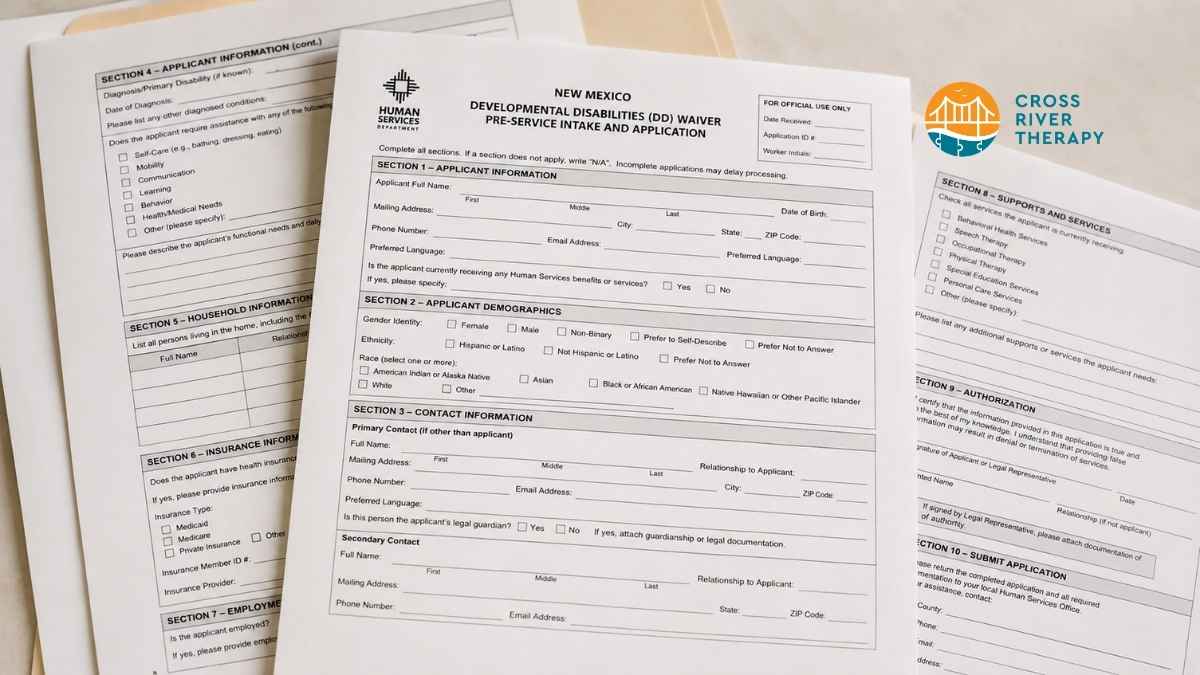
How to Apply for the New Mexico DD Waiver
Your NM DD waiver application starts with state intake. The steps cover records, submission, and enrollment.

Does Insurance Cover ABA Therapy in New Jersey?
ABA therapy insurance in New Jersey varies by plan. Learn what NJ FamilyCare covers and how to check costs.

How ABA Therapy Builds Communication for Nonverbal Children Without Forcing Speech
ABA therapy communication for nonverbal children starts with AAC, signs, and daily routines. See how kids ask, refuse, choose, and get help.

How to Start ABA Therapy in New Jersey With a Checklist
Your guide explains how to start ABA therapy in New Jersey. A first-call checklist covers records and next steps.

How to Get an Autism Evaluation in Arkansas Before Starting ABA Therapy
How to get an autism evaluation in Arkansas starts with a referral, provider choice, and key records. Use this parent checklist before ABA intake.