








Why ABA Therapy is Effective in Reducing Meltdowns in Children
The Impact of ABA Therapy on Childhood Meltdowns


Understanding ABA Therapy and Its Role in Managing Meltdowns
Applied Behavior Analysis (ABA) therapy offers a structured, evidence-based approach to managing and reducing meltdowns in children, especially those on the autism spectrum. By focusing on individualized treatment plans, it helps children develop skills necessary for emotional self-regulation, communication, and behavior management. This article explores the mechanisms through which ABA therapy aids in replacing negative behaviors with positive actions, emphasizing the therapy's holistic impact not only on the child but also on their families.
Mechanisms of ABA Therapy in Addressing Meltdowns
Behavior Modification Through Positive Reinforcement
ABA therapy effectively reduces the frequency and intensity of meltdowns in children with autism by focusing on behavior modification through positive reinforcement. By reinforcing desired behaviors, therapists guide children to engage in positive actions that replace the negative behaviors leading to meltdowns. Immediate feedback during interactions enables children to recognize the consequences of their actions, which fosters more responsible behavior.
Teaching Self-Regulation Techniques
Another vital aspect of ABA therapy is teaching self-regulation techniques. Through a structured approach, children learn to identify their emotions, manage overwhelming situations, and apply coping strategies that prevent emotional outbursts. This emphasis on self-regulation not only helps to reduce meltdowns but also enhances the child’s overall emotional resilience. The individualized treatment plans set specific goals tailored to each child's unique experiences and challenges, fostering efficiency in their progress.
Enhancing Communication Skills
Effective communication is paramount for reducing frustration that often leads to meltdowns. ABA therapy breaks down language and social skills into manageable components, teaching children how to articulate their needs and emotions. This focused approach empowers children to express themselves appropriately, enhancing their interactions with peers and caregivers. As children become more adept at communicating their desires and feelings, the likelihood of meltdowns occurring diminishes significantly.
Does ABA therapy help with meltdowns?
ABA therapy can significantly help with meltdowns by equipping children with emotional self-regulation skills and fostering self-control. This evidence-based approach emphasizes collaborative goal setting, where therapists, parents, and children work together to identify specific areas of focus tailored to each child's unique needs. Goals are broken down into measurable objectives, allowing families to track progress effectively and adjust strategies as necessary. The use of visual supports and positive reinforcement further aids communication and encourages positive behavior changes. Overall, ABA therapy not only reduces meltdowns but also promotes increased independence and confidence in children.
The Role of Individualized ABA Treatment Plans

Importance of personalized therapy
Individualized ABA (Applied Behavior Analysis) treatment plans are essential for children with autism. Tailoring therapy to meet each child's unique needs allows therapists to focus on specific challenges and strengths. This personalized approach improves the effectiveness of the treatment, ensuring that children receive relevant skills that directly address their behavior issues.
By analyzing each child's behavior patterns, therapists can develop specific goals. This might include enhancing communication skills, improving social interactions, or teaching self-regulation techniques. When therapy is customized, children are more likely to engage actively, which fosters a supportive learning environment.
Addressing unique needs of each child
Addressing the unique needs of every child is crucial for successful ABA therapy outcomes. Each child's experiences, preferences, and responses to different stimuli vary, and a one-size-fits-all approach is often ineffective. An individualized treatment plan allows therapists to implement strategies that resonate with each child, thereby minimizing meltdowns and promoting positive behavior.
For instance, by identifying triggers of frustration or anxiety, therapists can equip children with coping mechanisms tailored to those specific situations. This proactive approach not only aids in reducing behavior problems but also enhances overall emotional well-being.
Does ABA therapy help with behavior problems?
Yes, ABA therapy can significantly help with behavior problems. It is a structured, evidence-based approach that teaches children with various developmental disabilities, including autism and ADHD, new skills and coping strategies. By employing techniques such as positive reinforcement and systematic teaching, ABA therapy addresses negative behaviors like aggression and tantrums while promoting emotional regulation. It also enhances social skills, communication abilities, and independence, which are crucial for building relationships and managing behavioral challenges. Overall, the individualized nature of ABA allows it to be tailored to each child's specific needs, making it effective for improving behavior and supporting overall development.
Additional benefits of individualized ABA therapy
The individualized nature of ABA therapy extends beyond behavior modification. Children learn essential life skills, such as self-care routines and academic task management, tailored to their learning styles. Moreover, these plans reduce family stress, as personalized strategies often lead to improved child behavior and family dynamics.
With a focus on each child’s specific needs, ABA therapy becomes a powerful tool not just for behavior management but for empowering children in various aspects of their lives.
Teaching Communication and Emotional Articulation
Communication Skill Enhancement
ABA therapy significantly improves communication skills in children with autism. By breaking down language into smaller, manageable components, children learn how to express themselves more effectively. This targeted approach leads to reduced frustration and enables better interactions with caregivers and peers.
Addressing Frustration Through Better Articulation
Effective communication reduces feelings of frustration that can lead to meltdowns. With the skills learned in ABA therapy, children can identify, articulate, and express their needs and emotions appropriately. This empowerment helps replace destructive behavioral expressions with healthier communication methods, ultimately contributing to their overall emotional well-being.
Developing Social and Emotional Skills

Understanding and Practicing Social Rules
ABA therapy plays a crucial role in teaching children with autism about social skills. It offers structured learning that helps them understand and practice social protocols. By gradually introducing these rules, children can engage better with their peers and reduce feelings of confusion, which may lead to emotional outbursts.
This process includes learning to recognize social cues, such as facial expressions and body language, enabling smoother interactions within group settings. As they master these skills, the likelihood of meltdowns decreases significantly, giving children greater confidence in social situations.
Self-Control and Emotional Expression Techniques
Self-regulation is a foundational element of ABA therapy, equipping children with techniques to manage their emotions effectively. Therapists employ positive reinforcement to encourage self-control skills, helping children express their feelings appropriately instead of resorting to disruptive behaviors.
Through focused practices, children learn to identify and articulate their emotions, replacing anger with constructive communication.
Does ABA therapy help with anger issues?
Applied Behavior Analysis (ABA) can be helpful in managing behaviors associated with anger, although it does not directly address the emotion itself. ABA utilizes operant conditioning methods to encourage socially acceptable outlets for anger and replace negative behaviors with positive ones. Techniques such as deep breathing and physical exercises are often included in this approach.ABA is frequently used alongside other therapies, such as Cognitive Behavior Therapy (CBT), for a comprehensive approach to anger management.
Promoting Behavioral Changes and Responsibility
What is the goal of behavior reduction in ABA?
The goal of behavior reduction in ABA is to decrease or extinguish behaviors that interfere with learning or functioning, such as tantrums, aggression, or elopement. This process often begins with a focus on skill acquisition and gradually integrates behavior reduction strategies.
Reinforcement Principles
ABA therapy centers on reinforcement principles, which involve rewarding positive behaviors to encourage their recurrence. This approach is instrumental in guiding children toward desirable actions instead of negative outbursts. When children receive immediate reinforcement for appropriate behavior, they are more likely to repeat those actions in the future.
Immediate and Consistent Feedback
Providing immediate and consistent feedback is crucial in ABA therapy. Therapists observe children's behaviors closely and respond quickly to both positive and negative actions. This timely feedback helps children understand the consequences of their behavior, promoting accountability and responsible choices.
Through the combination of reinforcement principles and consistent feedback, ABA therapy fosters a safe learning environment that mitigates meltdowns and nurtures essential life skills.
Holistic Benefits of ABA Therapy to Families
Reducing stress for parents
ABA therapy not only directly benefits children with autism but also significantly alleviates stress for parents and caregivers. By providing structured support, parents feel more empowered and equipped to handle meltdowns and challenging behaviors. The immediate feedback and strategies provided by ABA therapists enable families to create a more harmonious home environment.
Overall family well-being
The positive outcomes of ABA therapy extend to family units, enhancing overall well-being. As children learn to communicate their needs and regulate their emotions, families often experience reduced frustration and increased communication. This improvement fosters stronger relationships among family members, promoting a supportive atmosphere that contributes to everyone’s emotional health. Moreover, parents can invest more quality time with their children, leading to enriched familial bonds.
Benefits for Families Impact Importance Reduced parental stress Better coping mechanisms Increases family harmony Improved communication Enhanced understanding Strengthens family relationships Enhanced emotional health Positive familial atmosphere Promotes overall family well-being Empowerment in handling behaviors Boosts confidence in parenting Fosters cooperation and support
Conclusion: The Lasting Positive Impact of ABA Therapy
ABA therapy demonstrates profound effectiveness in reducing meltdowns in children by instilling crucial behavioral and emotional skills. Through individualized strategies, children not only learn to manage their emotions but also improve communication and social interactions, leading to a better quality of life. The ripple effect of these improvements extends to families, fostering a supportive and less stressful home environment. As an evidence-based practice, ABA therapy continues to prove its efficacy in facilitating developmental progress and enhancing the overall life experience of children and their families.
References
- how aba therapy can help a child with autism who has meltdowns
- How ABA Therapy Can Help Prevent Another Meltdown
- 7 Surprising Benefits of ABA Therapy for Kids You Need to Know
- Who Benefits From ABA Therapy? - Empower Behavioral Health
- Benefits of ABA Therapy for Autism - Empower Behavioral Health
- ABA Therapy for Social Skills - Empower Behavioral Health
- Applied Behavior Analysis in Anger Management Therapy
- Starting the New Year with ABA Therapy
Recent News
Related articles

6 Arkansas Medicaid ABA Therapy Rules Families Need to Know
Arkansas Medicaid ABA therapy has age, diagnosis and approval rules. Families can check six requirements before care.

Arizona Autism Laws Every Parent Should Know Before Starting ABA Therapy
Autism laws Arizona parents should know cover ABA insurance, AHCCCS appeals, IEPs, and Section 504 rights. Check ABA coverage with Cross River.

ABA Therapist Salary in Arkansas: What BCBAs and RBTs Actually Earn in 2026
ABA therapist salary Arkansas figures compare RBT and BCBA rates, benefits, guaranteed hours, and contract terms. Explore careers at Cross River.

5 Autism Support Groups and Family Resources in New Mexico Alongside ABA Therapy
Autism support groups New Mexico families can use offer peer support, local events, and school help. Cross River can explain ABA therapy options.

Where to Get an Autism Evaluation in New Mexico Before Starting ABA Therapy
Autism evaluation New Mexico options include UNM, NMSU, FIT, and private providers. Compare providers, records, and ABA steps with Cross River.

7 North Carolina Autism Resources to Contact Before ABA Therapy Starts
Autism resources North Carolina families can call for diagnosis, early intervention, rights, and parent support. Start ABA intake with Cross River.

Does Indiana Medicaid Cover ABA Therapy? A Step-by-Step Eligibility Checklist for Parents
Medicaid ABA therapy Indiana covers eligible children under 21 with prior authorization. Your five-step coverage review can start with Cross River.
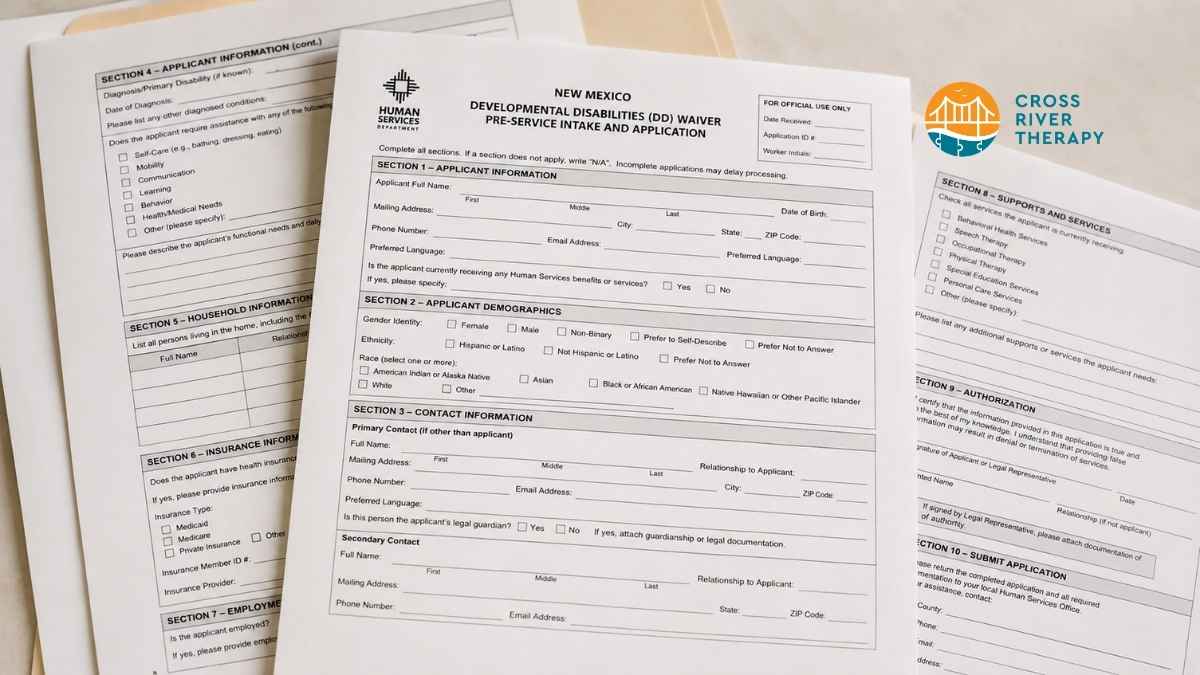
How to Apply for New Mexico’s DD Waiver While Starting ABA Therapy
Autism waiver New Mexico applications need DD Waiver records and proof of daily support needs. Your next step is to start ABA intake with Cross River.

Is ABA Therapy Covered by Insurance in New Jersey? What Every Parent Should Know
ABA therapy insurance New Jersey may cover medically necessary care based on plan type, network, and authorization. Verify benefits with Cross River.

How ABA Therapy Builds Communication for Nonverbal Children Without Forcing Speech
ABA therapy communication for nonverbal children starts with AAC, signs, and daily routines. See how kids ask, refuse, choose, and get help.

How to Start ABA Therapy in New Jersey With a First-Call Checklist
How to start ABA therapy in New Jersey begins with records, insurance details, and intake questions. Use this first-call checklist before you call.

How to Get an Autism Evaluation in Arkansas Before Starting ABA Therapy
How to get an autism evaluation in Arkansas starts with a referral, provider choice, and key records. Use this parent checklist before ABA intake.