








Why Social Skills Are a Focus in Center-Based ABA Therapy
Exploring the Significance of Social Skills in Autism Therapy


Understanding Social Skills in ABA Therapy
Social skills are an essential aspect of development, particularly for individuals with autism spectrum disorder (ASD), as they play a crucial role in facilitating effective communication and relationship building. In center-based Applied Behavior Analysis (ABA) therapy, significant emphasis is placed on nurturing these skills, given their profound impact on the quality of life for individuals with ASD. This narrative explores why social skills are a focus in such therapeutic settings, highlighting the methods, benefits, and overall outcomes associated with this approach.
The Crucial Role of Social Skills in Autism
Why are social skills important in autism?
Social skills are crucial for individuals with autism spectrum disorder (ASD) because they directly impact their ability to communicate effectively and build relationships. Difficulties in understanding social cues, such as facial expressions and body language, can lead to social isolation and feelings of loneliness.
Communication Challenges
Communication barriers are prevalent in those with ASD, manifesting as speech delays or difficulties with figurative language. These challenges complicate social interactions further, making it challenging for children to initiate conversations or respond appropriately in social settings.
Social Isolation and Mental Health
The lack of social skills can contribute to higher rates of anxiety and depression among individuals with ASD. Many face bullying and exclusion due to their unique behaviors, which can impede their social development. Creating a supportive environment that fosters social skills is essential for mitigating these issues.
Impact of ABA Therapy on Social Skills
Clinic-based Applied Behavior Analysis (ABA) therapy significantly enhances communication skills, not just for verbal interactions but also nonverbal ones. Through structured interventions, preschoolers learn to initiate and maintain friendships, understand conflict resolution, and regulate their emotions.
- Therapeutic Techniques: ABA employs modeling, role-playing, and reinforcement to teach appropriate social behaviors.
- Center-Based Benefits: Children in center-based programs show markedly higher rates of skill acquisition, mastering social skills in structured settings.
By prioritizing social skills training, parents and therapists can significantly improve the quality of life for children with autism, ensuring they foster meaningful relationships and improve their overall mental well-being.
How ABA Therapy Addresses Social Skill Development

Methods used in ABA therapy for developing social skills
ABA therapy employs a variety of effective strategies to enhance social skills in preschoolers, particularly those with Autism Spectrum Disorder (ASD). Some of the core methods include:
- Modeling: Therapists demonstrate appropriate social behaviors for children to observe and imitate.
- Role-Playing: Children practice social scenarios, allowing them to rehearse interactions in a safe environment.
- Positive Reinforcement: Rewarding children for displaying socially acceptable behaviors encourages repetition of these actions.
- Structured Activities: Settings are tailored to minimize distractions while providing opportunities for peer interactions to practice skills.
- Parental Involvement: Parents receive training to reinforce skills at home, creating a cohesive support system for the child.
These methods are customized based on individual assessments, ensuring that each child receives the support they need to progress effectively.
Impact of these methods on individuals with ASD
The impact of ABA therapy on social skills development is significant and multifaceted:
- Improved Communication: Preschoolers learn both verbal and non-verbal communication cues, vital for expressing themselves.
- Enhanced Friendships: Children are taught how to initiate and maintain friendships, crucial for their social networks.
- Conflict Resolution: Skills in negotiation and compromise lead to healthier relationships and less aggressive behavior.
- Emotional Regulation: Therapists guide children in managing emotions, which supports emotional well-being and stronger social interactions.
- Academic Readiness: The therapy prepares kids to follow directions and actively participate in group activities, aiding future academic success.
The structured approach of ABA therapy, particularly in center-based settings, has been shown to accelerate learning and improve developmental outcomes significantly. This comprehensive support fosters a stable foundation for social skill attainment, allowing individuals to thrive socially and academically.
Goals of Social Skills Training in ABA
What are the goals of social skills training in ABA therapy?
The primary objectives of social skills training in ABA therapy vary widely but are fundamentally aimed at enhancing social interaction and communication skills among preschoolers, especially those with autism spectrum disorder (ASD).
One key goal is improving topic maintenance. This skill allows individuals to keep conversations flowing by grasping what behaviors are expected in social situations versus those that are unexpected.
Training also focuses on helping individuals identify both expected and unexpected social behaviors. Clinicians use prompts and media examples to reinforce learning, ensuring that these concepts are understood in practical scenarios. Visual aids often accompany lessons, showcasing how actions affect others’ thoughts and feelings, highlighting the interconnectedness of social interactions.
Specific skills targeted during training
Another critical area of focus involves understanding and using non-literal language. Children learn to recognize idioms, metaphors, and other forms of figurative expression—skills essential for nuanced communication. This understanding is fortified through tailored strategies that boost early learners' play and language skills, encouraging more natural interactions with peers.
Furthermore, ABA therapy emphasizes the importance of emotional regulation. Teaching preschoolers strategies to manage their emotions leads to healthier relationships and enhances the chance for successful friendships.
In conclusion, social skills training within ABA therapy captures a multifaceted approach to help preschoolers develop essential interaction abilities that lay the groundwork for their future social engagement and academic success.
The Central Focus of ABA Therapy and Social Skills
What is the focus of ABA therapy, and how does it relate to social skills?
The primary focus of Applied Behavior Analysis (ABA) therapy is to systematically change socially significant behaviors to enhance the quality of life for individuals, especially those on the autism spectrum. Key to this is teaching meaningful skills that can adapt as individuals grow and develop.
ABA emphasizes that behaviors must be observable and measurable, allowing practitioners to objectively track progress. Through diligent data collection, interventions can be customized to each child's unique needs, making it particularly effective in the realm of social skills. This individualized approach ensures that children learn essential skills, including communication and peer interactions.
How does ABA enhance social skills development?
Using various techniques such as modeling, role-playing, and positive reinforcement, ABA facilitates social skills development in preschoolers. Many components support this process:
- Positive Reinforcement: Encouraging socially appropriate behaviors through rewards helps children repeat those behaviors.
- Structured Environment: The clinic-based setting reduces distractions and anxiety, making it easier for children to focus on learning.
- Parent Involvement: Parents receive training to support their child’s social development outside of therapy sessions, enhancing consistency in skill application.
By fostering emotional regulation and teaching conflict resolution, ABA therapy addresses practical social interactions and promotes healthier relationships. Each session is designed to not only teach skills but also to prepare children for meaningful engagement with peers in various settings. Through ongoing assessment and tailored interventions, ABA remains responsive to the evolving social skills needs of children, significantly contributing to their long-term academic and social success.
Structured Environments Enhance Social Learning
Benefits of Structured Environments in ABA Therapy
Structured environments play a crucial role in enhancing the effectiveness of Applied Behavior Analysis (ABA) therapy for preschoolers. In center-based settings, children benefit from a controlled atmosphere that minimizes distractions and anxiety, thereby allowing them to focus more intently on learning and practicing social behaviors.
The predictability of a structured setting also supports emotional regulation. Children with Autism Spectrum Disorder (ASD) thrive when they know what to expect, which fosters a sense of security and enhances their ability to engage with peers. Positive reinforcement is often employed in these environments, encouraging socially appropriate behaviors through rewards, which reinforces learning and boosts confidence.
Impact on Social Skill Development
Center-based ABA therapy significantly improves social skills among preschoolers. Children engage in numerous opportunities for social interaction, allowing them to practice the social skills they learn during therapy sessions. Studies indicate that children in these structured programs master 100% more skills per hour compared to home settings, showcasing the effectiveness of this approach.
The curriculum is tailored to meet individual needs, ensuring that each child receives the specific support necessary for their social skills development. By focusing on communication, interaction, and daily living skills, structured environments facilitate meaningful peer engagements. The collaborative efforts of teams trained in ABA methods also ensure comprehensive support tailored to each child’s unique needs, enhancing their overall social capabilities.
Techniques and Strategies in Social Skills Training
Role of behavioral techniques
In social skills training, behavioral techniques are essential for fostering appropriate interactions among preschoolers. Methods such as modeling, where caregivers or therapists demonstrate desired behaviors, allow children to see social interactions in action. Role-playing is another effective strategy, enabling preschoolers to practice social scenarios in a safe environment. This hands-on approach gives children a chance to rehearse communication techniques and explore the nuances of initiating or maintaining friendships.
Additionally, behavior generalization is a focus, training children to apply learned behaviors in real-world settings. By practicing in structured environments, children can develop confidence and translate those skills to less controlled situations.
Importance of reinforcement in learning
Positive reinforcement plays a critical role in encouraging socially appropriate behaviors. This technique involves rewarding children when they display desired social skills, whether through verbal praise, tokens, or small incentives. This method not only motivates children to repeat the behavior but also helps solidify their learning.
By utilizing reinforcement consistently, ABA therapists create an environment where children can thrive socially. This approach, combined with tailored strategies, enhances the overall effectiveness of social skills training, preparing preschoolers for successful interactions with their peers.
The Benefits of Emphasizing Social Skills in ABA
Impact on Emotional Regulation
Emotional regulation is a fundamental aspect of Applied Behavior Analysis (ABA) therapy, particularly for preschoolers with Autism Spectrum Disorder (ASD). Through carefully structured interventions, ABA therapy provides children with strategies to understand and manage their emotions. These techniques include identifying feelings, coping mechanisms, and appropriate responses to emotional triggers. As children learn to navigate their emotions, they experience fewer outbursts and improved interactions with peers.
Strategies such as role-playing and positive reinforcement enhance their ability to express feelings constructively, which is crucial for building friendships and interacting comfortably in group settings.
Long-Term Benefits for Individuals with ASD
Focusing on social skills within ABA therapy not only benefits immediate interactions but sets the groundwork for long-term success. Children who develop stronger social competencies are better equipped for academic settings, increasing their ability to follow directions and engage in collaborative activities.
Research highlights that early intensive ABA therapy, especially in center-based environments, results in significantly improved developmental outcomes. The combination of peer interactions and structured learning environments fosters resilience and adaptability, enabling individuals with ASD to maintain friendships and navigate social complexities throughout life.
Benefits of Emphasizing Social Skills in ABA Description Impact Emotional Regulation Teaches strategies to manage emotions Fewer outbursts, better peer interactions Long-Term Social Competencies Prepares for academic and social challenges Enhanced adaptability and friendship maintenance
Parental Involvement and Its Importance
Role of parents in ABA therapy
Parental involvement is a cornerstone of effective ABA therapy. In center-based environments, parents receive training that empowers them to support their child's growth and development at home. This involvement helps parents understand techniques used in therapy, ensuring consistency between sessions and daily life.
Support for social skill development at home
Parents play a vital role in reinforcing social skills learned during sessions. By engaging in role-playing and using positive reinforcement strategies, parents can create opportunities for their children to practice these skills in a safe environment. Additionally, collaboration with therapists allows for adjustments tailored to the child’s evolving needs, enhancing the overall effectiveness of the intervention.
Enhancing Developmental Outcomes Through Social Skills Training
Impact of social skills on developmental outcomes
Social skills are essential for preschoolers, as they contribute significantly to building future relationships and achieving academic success. For children with Autism Spectrum Disorder (ASD), developing social skills through ABA therapy lays the groundwork for positive peer interactions. This therapy emphasizes essential aspects such as communication, conflict resolution, and emotional regulation.
By teaching preschoolers strategies for initiating and maintaining friendships, ABA therapy fosters healthier relationships, crucial for their overall emotional well-being. Parents play a pivotal role in this process, receiving training to reinforce social learning at home.
Research findings on center-based ABA
Center-based ABA therapy has demonstrated remarkable efficacy. Research from the National Institute of Health highlights that children in these settings mastered social skills at twice the rate per hour compared to those in home environments. The structured layout of these centers provides predictability, reduces anxiety, and facilitates better learning conditions.
Moreover, center-based programs typically offer a broader range of therapeutic interventions, including speech and occupational therapy. This multi-faceted approach not only enhances social skills but also encourages collaboration among ABA professionals to provide tailored and effective support.
Research Findings Impact on Social Skills Development Additional Notes Intensive center-based ABA leads to better outcomes Children exhibit improved communication and emotional regulation Highlights the benefit of structured peer interactions Interaction opportunities in controlled settings Encourages practical application of social behaviors Reduces distractions, enhancing focus on learning
Conclusion: The Importance of Social Skills in ABA
The focus on social skills within center-based ABA therapy underscores the importance of these abilities for individuals on the autism spectrum. By utilizing structured environments, evidence-based techniques, and involving parents in the process, ABA therapy helps individuals with ASD improve their communication and interaction skills, leading to better developmental outcomes. The emphasis on social skills not only fulfills short-term objectives but also sets the stage for long-term success, enhancing overall quality of life for those undergoing therapy.
References
- Building Social Skills Through Clinic-Based ABA Therapy: A Focus ...
- How ABA Therapy Improves Social Skills for Children with Autism
- Applied Behavior Analysis (ABA) | Autism Speaks
- Choosing Between Home-Based and Center-Based ABA
- Center-Based Benefits - Ally Behavior Centers
- 15 Benefits of Center-Based ABA Therapy for Individuals
- Impact of Center-Based ABA Therapy Curriculum
- Applied Behavior Analysis: A Focus on Outcomes: Articles
- Motivating Students Who Have Autism Spectrum Disorders
- Ever Had a Crisis Kind of Day?: Articles
Recent News
Related articles

6 Arkansas Medicaid ABA Therapy Rules Families Need to Know
Arkansas Medicaid ABA therapy has age, diagnosis and approval rules. Families can check six requirements before care.
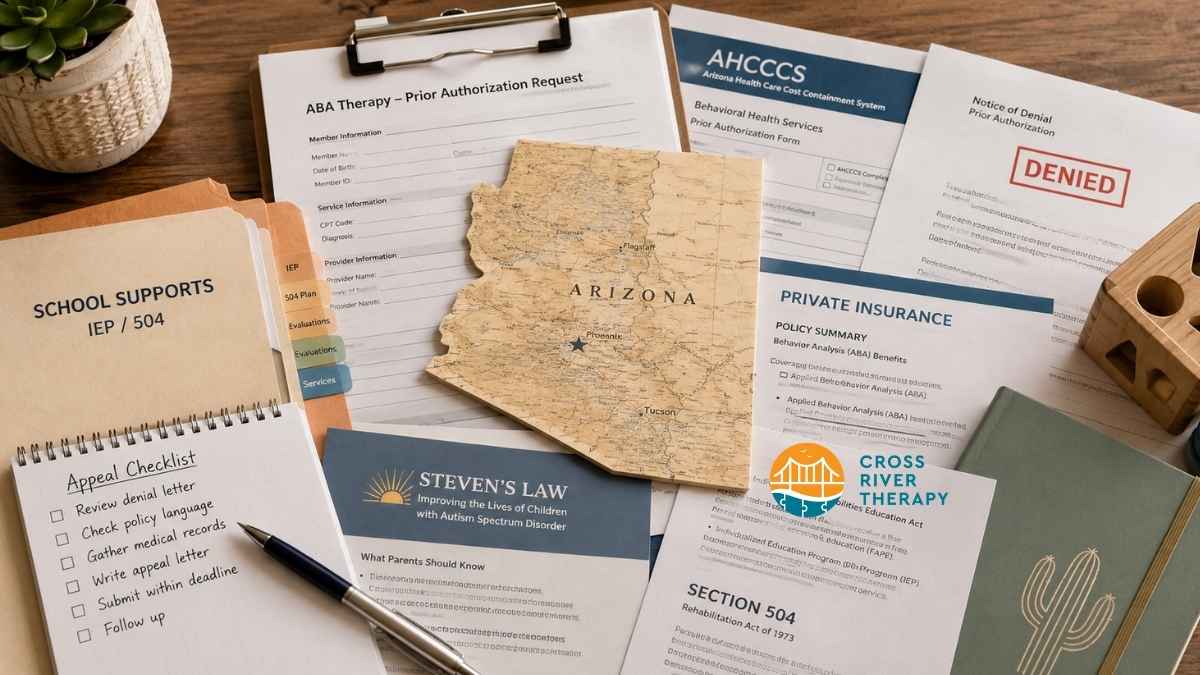
Arizona Autism Laws Every Parent Should Know Before Starting ABA Therapy
Autism laws Arizona parents should know cover ABA insurance, AHCCCS appeals, IEPs, and Section 504 rights. Check ABA coverage with Cross River.

ABA Therapist Salary in Arkansas: What BCBAs and RBTs Actually Earn in 2026
ABA therapist salary Arkansas figures compare RBT and BCBA rates, benefits, guaranteed hours, and contract terms. Explore careers at Cross River.

5 Autism Support Groups and Family Resources in New Mexico Alongside ABA Therapy
Autism support groups New Mexico families can use offer peer support, local events, and school help. Cross River can explain ABA therapy options.
Where to Get an Autism Evaluation in New Mexico Before Starting ABA Therapy
Autism evaluation New Mexico options include UNM, NMSU, FIT, and private providers. Compare providers, records, and ABA steps with Cross River.

7 North Carolina Autism Resources to Contact Before ABA Therapy Starts
Autism resources North Carolina families can call for diagnosis, early intervention, rights, and parent support. Start ABA intake with Cross River.

Does Indiana Medicaid Cover ABA Therapy? A Step-by-Step Eligibility Checklist for Parents
Medicaid ABA therapy Indiana covers eligible children under 21 with prior authorization. Your five-step coverage review can start with Cross River.
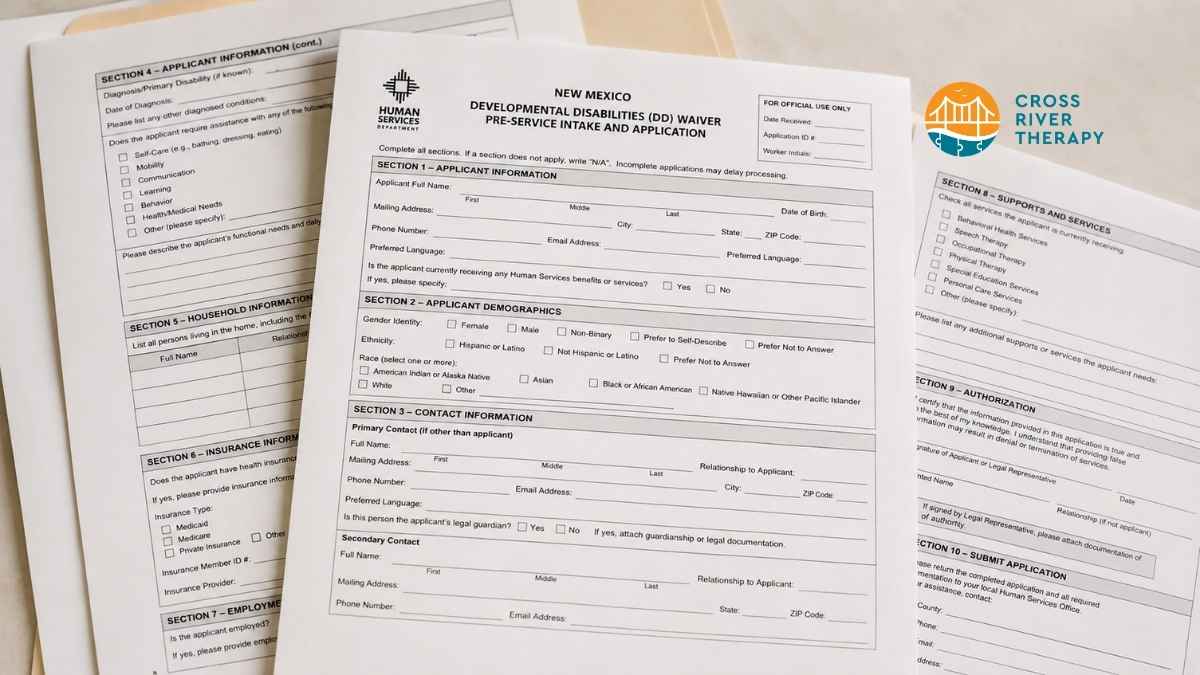
How to Apply for New Mexico’s DD Waiver While Starting ABA Therapy
Autism waiver New Mexico applications need DD Waiver records and proof of daily support needs. Your next step is to start ABA intake with Cross River.

Is ABA Therapy Covered by Insurance in New Jersey? What Every Parent Should Know
ABA therapy insurance New Jersey may cover medically necessary care based on plan type, network, and authorization. Verify benefits with Cross River.

How ABA Therapy Builds Communication for Nonverbal Children Without Forcing Speech
ABA therapy communication for nonverbal children starts with AAC, signs, and daily routines. See how kids ask, refuse, choose, and get help.

How to Start ABA Therapy in New Jersey With a First-Call Checklist
How to start ABA therapy in New Jersey begins with records, insurance details, and intake questions. Use this first-call checklist before you call.

How to Get an Autism Evaluation in Arkansas Before Starting ABA Therapy
How to get an autism evaluation in Arkansas starts with a referral, provider choice, and key records. Use this parent checklist before ABA intake.