






Can an RBT Become a BCBA?
Yes, you can work for a while as an RBT and then become a BCBA.


If you're interested in becoming a board-certified behavior analyst (BCBA) as an RBT, you've come to the right place. It is possible for a behavior technician to become a behavior analyst. Follow the steps below and you'll become a certified behavior analyst!
How RBTs Can Become BCBAs
In the ABA therapy industry, RBTs are paraprofessionals and BCBAs are professionals. If you are currently an RBT and you'd like to become a BCBA, you must do the following:
- You will need to obtain an undergraduate degree and then work toward a graduate degree or complete relevant educational requirements which are defined by the BACB. It will take multiple years to complete the coursework, so you can gain experience as an RBT while you do this.
- You will need to pass the BCBA certification exam. We have a guide on how to pass the BCBA exam that you can read on our site.
Considering Your Options
Before switching to become a BCBA, there are a few things to consider. As an RBT, you might work in a school, clinician's office, or as an in-home ABA practitioner. Choose the option which appeals to you and your goals most as you complete your graduate studies.
Recent News
Related articles
RBT Resume: Registered Behavior Tech Examples
Working with children as an RBT is tough but rewarding. Find out how to write your RBT resume to land your dream job.
What is an RBT?
Learn what is an RBT, what they do, and more in this guide.
Is RBT Certification Worth It?
Find out if RBT certification is worth it in this guide. Spoiler: it is!
How To Become an RBT (Step-by-Step)
Learn how to become a registered behavior technician (RBT) in this step-by-step guide.
How Long Does It Take To Get RBT Certification?
It doesn’t take long to become an RBT. You're required to complete a 40-hour training course and then pass the RBT exam, which many people can complete in less than a month.
RBT Renewal Application: How To Apply & Prepare
This is a complete guide on the RBT renewal application process. Learn how to apply and prepare today.
Registered Behavior Technician Interview Questions & Answers
Find the most common RBT interview questions + answers to them in this guide.
Find Free RBT Training Near You
RBT training opens up the door for therapists to easily start up their careers in the field of Applied Behavior Analysis.
RBT Exam Study Guide: How To Pass
This RBT exam study guide should help you prepare for (and pass) the RBT exam.
Best RBT Career Path: Is RBT A Good Career?
The best RBT career path is one that pertains to Applied Behavior Analysis.
Registered Behavior Technician (RBT) Cover Letter [Guide]
Here is a guide to making an RBT cover letter, and some examples of incredible behavior technician cover letters we’ve seen.
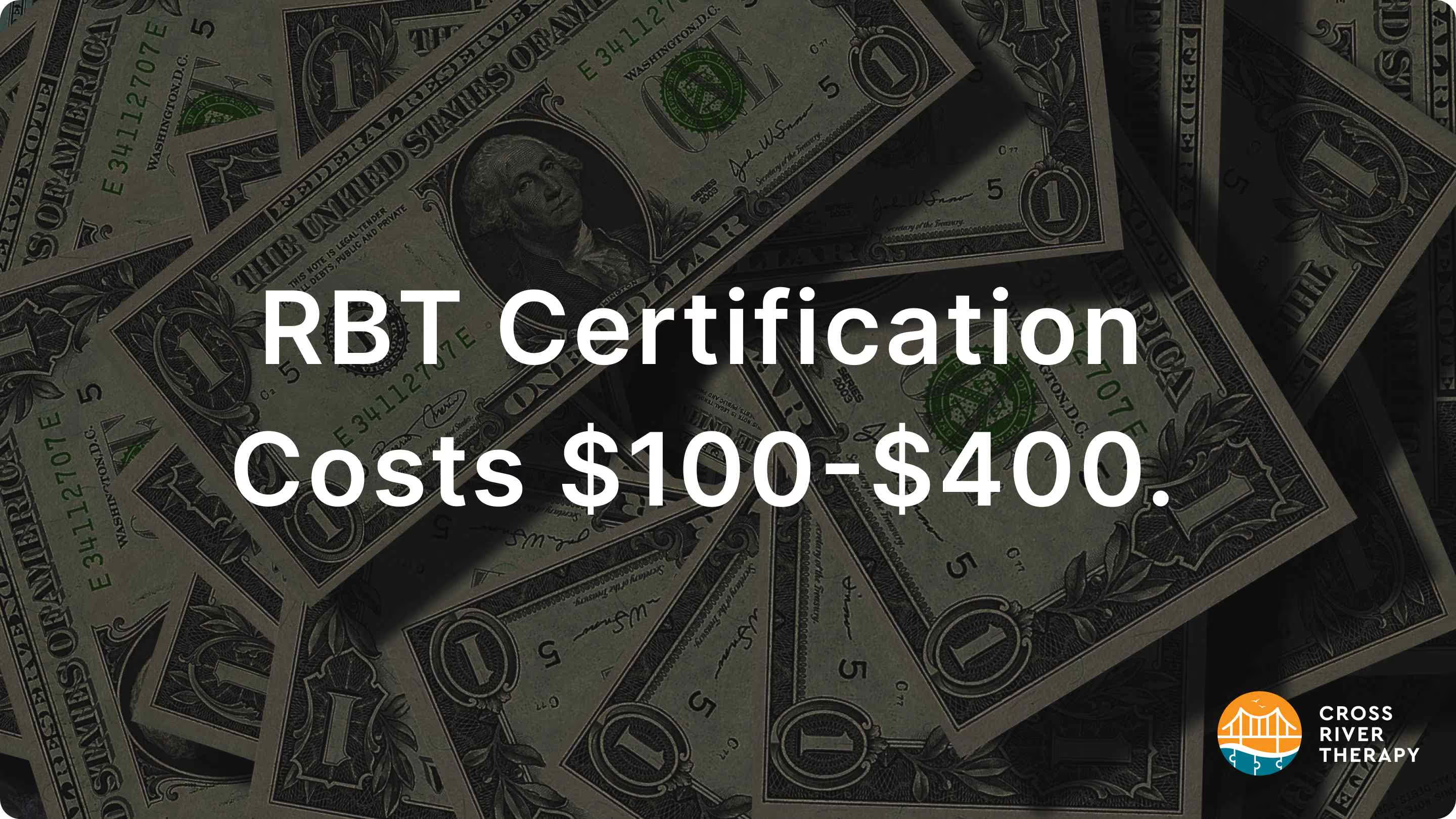
RBT Certification Cost: What To Know
The average cost of RBT certification is between $100 to $400.