








Can EMFs Cause Autism?
While there is still much debate about the effects of EMFs, there is no clear evidence that they cause autism.


EMFs and Autism
Electromagnetic fields (EMFs) have been a controversial topic for years. Some people believe that exposure to EMFs can cause a range of health problems, including cancer and autism. While there is still much debate about the effects of EMFs, there is no clear evidence that they cause autism.
Autism is a developmental disorder that affects communication, social interaction, and behavior. The causes of autism are not yet fully understood, but it is believed to be the result of a combination of genetic and environmental factors.
EMFs are a type of radiation that are produced by electronic devices such as cell phones, Wi-Fi routers, and power lines. There is no doubt that exposure to EMFs can have an effect on the body.
EMFs have been linked to a range of health problems, including headaches, fatigue, and sleep disturbances.
However, there is no clear evidence to suggest that exposure to EMFs causes autism. Some studies have suggested a link between autism and exposure to EMFs, but the results have been inconclusive.
One study conducted by the University of California, Los Angeles found that children who were exposed to high levels of EMFs in the womb were more likely to develop autism. However, the study was small and has not been replicated.
Another study conducted by the National Institute of Environmental Health Sciences found no link between exposure to EMFs and autism. The study looked at children who lived near power lines and found no increase in the rate of autism.
While there is no clear evidence to suggest that exposure to EMFs causes autism, it is still important to be cautious. EMFs are a type of radiation, and exposure to high levels of radiation can have a range of health effects.
It is important to limit your exposure to EMFs whenever possible. This can be done by using a wired internet connection instead of Wi-Fi, using a headset instead of holding your phone to your ear, and keeping electronic devices away from your bed while you sleep.
The Potential Health Effects of Long-Term Exposure to EMFs
While there is no clear evidence to suggest that exposure to EMFs causes autism, there are still concerns about the potential health effects of long-term exposure.
One concern is the risk of cancer. Some studies have suggested a link between exposure to high levels of EMFs and an increased risk of certain types of cancer, including leukemia and brain tumors. However, these studies have been inconclusive and more research is needed to determine the true risks.
Another concern is the effect on fertility. Studies have shown that exposure to high levels of EMFs can reduce sperm count and motility in men, which can make it more difficult for them to conceive. In women, there is some evidence to suggest that exposure to EMFs may interfere with ovulation.
Exposure to high levels of EMFs has also been linked to a range of other health problems, such as headaches, fatigue, and sleep disturbances. While these symptoms are not necessarily serious, they can have a significant impact on quality of life.
It is important to note that the risks associated with long-term exposure to EMFs are still not fully understood. However, it is generally recommended that people take steps to limit their exposure whenever possible. This can be done by using wired internet connections instead of Wi-Fi, keeping electronic devices away from your bed while you sleep, and limiting cell phone use as much as possible.
FAQs
Can exposure to EMFs cause autism?
There is no clear evidence to suggest that exposure to EMFs causes autism. While some studies have suggested a link between the two, the results have been inconclusive.
What are the effects of EMF exposure on the body?
Exposure to high levels of EMFs can have a range of health effects, including headaches, fatigue, and sleep disturbances. However, the effects of low-level exposure are not yet fully understood.
How can I limit my exposure to EMFs?
You can limit your exposure to EMFs by using a wired internet connection instead of Wi-Fi, using a headset instead of holding your phone to your ear, and keeping electronic devices away from your bed while you sleep.
Are there any regulations in place for EMF exposure?
Different countries have different regulations in place for EMF exposure. In the United States, the Federal Communications Commission (FCC) sets guidelines for safe levels of radiation emitted by electronic devices. However, these guidelines are based on outdated research and do not take into account long-term exposure or non-thermal effects.
Summary
In conclusion, while there is no clear evidence to suggest that exposure to EMFs causes autism, it is still important to limit your exposure to EMFs whenever possible. More research is needed to fully understand the effects of EMFs on the body, but in the meantime, it is better to be safe than sorry.
Recent News
Related articles

6 Arkansas Medicaid ABA Therapy Rules Families Need to Know
Arkansas Medicaid ABA therapy has age, diagnosis and approval rules. Families can check six requirements before care.

Arizona Autism Laws for ABA Coverage and School Rights
Arizona autism laws for ABA coverage vary by plan. Families can check insurance, appeal options, and school rights.

ABA Therapist Salary in Arkansas for RBTs and BCBAs
Compare ABA therapist salary in Arkansas by role. See how paid hours and benefits affect earnings before applying.

5 Autism Support Groups and Family Resources in New Mexico
Autism support groups in New Mexico connect families. Local resources offer events, parent support, and school help.

Where to Get an Autism Evaluation in New Mexico
Autism evaluation options in New Mexico include UNM and NMSU. Age and referral details help parents prepare.

7 North Carolina Autism Resources to Contact Before ABA Therapy Starts
Autism resources North Carolina families can call for diagnosis, early intervention, rights, and parent support. Start ABA intake with Cross River.

Does Indiana Medicaid Cover ABA Therapy? A Parent Checklist
Indiana Medicaid ABA therapy may cover care for eligible children. The checklist covers coaching and renewals.
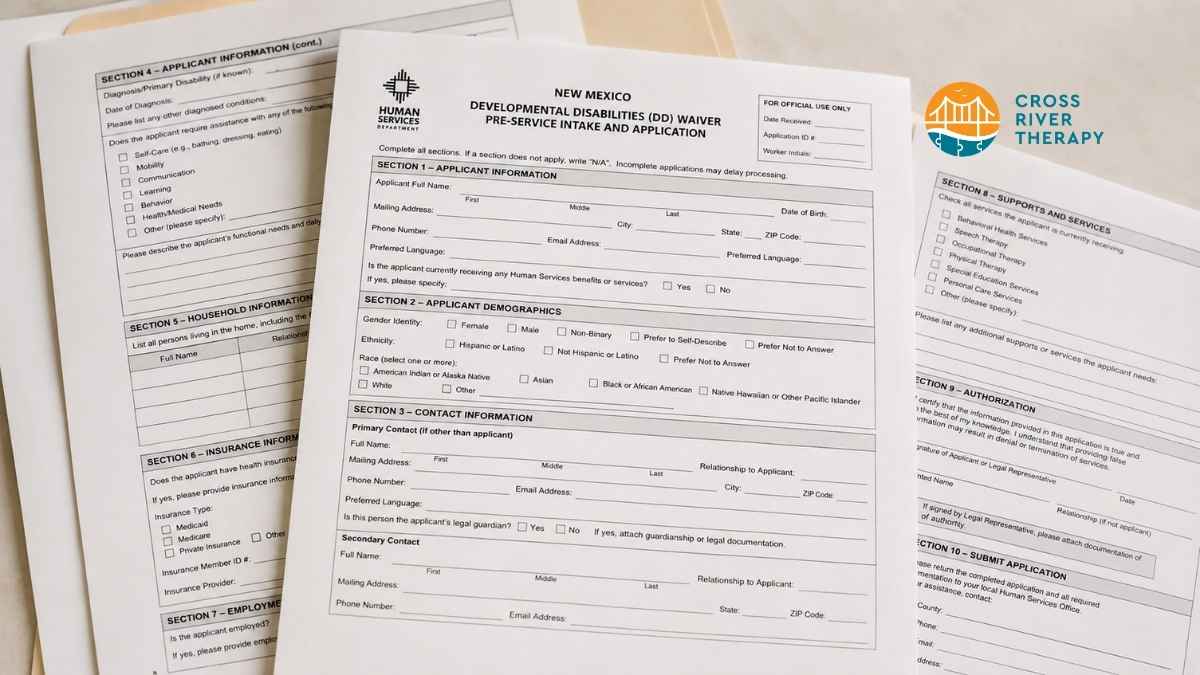
How to Apply for the New Mexico DD Waiver
Your NM DD waiver application starts with state intake. The steps cover records, submission, and enrollment.

Does Insurance Cover ABA Therapy in New Jersey?
ABA therapy insurance in New Jersey varies by plan. Learn what NJ FamilyCare covers and how to check costs.

How ABA Therapy Builds Communication for Nonverbal Children Without Forcing Speech
ABA therapy communication for nonverbal children starts with AAC, signs, and daily routines. See how kids ask, refuse, choose, and get help.

How to Start ABA Therapy in New Jersey With a Checklist
Your guide explains how to start ABA therapy in New Jersey. A first-call checklist covers records and next steps.

How to Get an Autism Evaluation in Arkansas Before Starting ABA Therapy
How to get an autism evaluation in Arkansas starts with a referral, provider choice, and key records. Use this parent checklist before ABA intake.