








Serotonin and Autism: The Important Connection
Several studies have found that individuals with autism have altered levels of serotonin in their brains.


Serotonin's Link To Autism
Although the exact causes of autism are still not fully understood, researchers have identified that several factors contribute to its development, including genetics, environmental factors, and brain chemistry.
One of the key neurotransmitters that have been implicated in autism is serotonin. Serotonin is a chemical messenger that is responsible for regulating mood, appetite, sleep, and other functions in the body.

It is synthesized in the brain and is mainly found in the gastrointestinal tract, where it plays a crucial role in regulating gut motility and digestion.
Several studies have found that individuals with autism have altered levels of serotonin in their brains. Specifically, they have lower levels of serotonin in the blood and cerebrospinal fluid, which suggests that serotonin dysfunction may play a role in the development of autism.
One of the ways that serotonin affects autism is through its impact on social behavior. Serotonin is involved in social cognition, empathy, and emotional regulation, all of which are impaired in individuals with autism.
Studies have shown that increasing serotonin levels in the brain can improve social behavior in individuals with autism, such as increasing eye contact and reducing repetitive behaviors.
Additionally, serotonin is involved in sensory processing, which is often disrupted in individuals with autism. Serotonin regulates the processing of sensory information, including touch, taste, smell, and sound.
It is also involved in the regulation of mood and anxiety, which can affect how individuals with autism perceive sensory information.
Serotonin also plays a role in the development and maintenance of the brain's neural connections. Studies have shown that serotonin is involved in the process of synaptogenesis, which is the formation of new connections between neurons.
Impaired synaptogenesis has been implicated in the development of autism, and serotonin dysfunction may contribute to this impairment.
Furthermore, serotonin is involved in the development of the cerebellum, which is a part of the brain that is important for motor coordination, balance, and cognitive processing. Individuals with autism often have abnormalities in the cerebellum, which may be linked to serotonin dysfunction.
FAQs
Is serotonin the only neurotransmitter involved in autism?
No, there are several neurotransmitters that have been implicated in autism, including dopamine, glutamate, and GABA. However, serotonin is one of the most studied neurotransmitters in relation to autism.
Is there a serotonin medication for autism?
While there is no medication specifically designed to treat autism, medications that affect serotonin levels have been used to manage some of the symptoms associated with the disorder.
Selective serotonin reuptake inhibitors (SSRIs), which are commonly used to treat depression and anxiety, have been shown to improve repetitive behaviors and social functioning in individuals with autism. However, not all individuals with autism respond to SSRIs in the same way, and more research is needed to determine their effectiveness for treating autism.
Other medications that affect serotonin levels, such as atypical antipsychotics and stimulants, have also been used to manage certain symptoms of autism. It is important for individuals with autism to work closely with their healthcare providers when considering medication options.
Can increasing serotonin levels cure autism?
No, there is currently no cure for autism. However, increasing serotonin levels in the brain through medication or other interventions can improve certain symptoms of autism, such as social behavior.
Is everyone with autism affected by serotonin dysfunction?
No, not all individuals with autism have altered levels of serotonin. However, studies have found that a significant number of individuals with autism do have lower levels of serotonin than neurotypical individuals.
Is there a genetic component to serotonin dysfunction in individuals with autism?
Yes, some genetic mutations that are associated with autism are also involved in the regulation of serotonin. Additionally, some medications used to treat depression and anxiety by increasing serotonin levels can be less effective in individuals with certain genetic variations.
What are some ways to increase serotonin levels naturally?
Some natural ways to increase serotonin levels include exercise, exposure to sunlight, eating foods rich in tryptophan (an amino acid that is a precursor to serotonin), and practicing mindfulness meditation. However, it's important to note that these methods may not be effective for everyone and should not be used as a substitute for medical treatment.
Summary
In conclusion, serotonin plays a crucial role in the development and maintenance of the brain, and its dysfunction has been implicated in the development of autism. Increasing our understanding of how serotonin affects autism may lead to the development of new treatments that target serotonin and improve social behavior and sensory processing in individuals with autism.
Recent News
Related articles

6 Arkansas Medicaid ABA Therapy Rules Families Need to Know
Arkansas Medicaid ABA therapy has age, diagnosis and approval rules. Families can check six requirements before care.

Arizona Autism Laws for ABA Coverage and School Rights
Arizona autism laws for ABA coverage vary by plan. Families can check insurance, appeal options, and school rights.

ABA Therapist Salary in Arkansas for RBTs and BCBAs
Compare ABA therapist salary in Arkansas by role. See how paid hours and benefits affect earnings before applying.

5 Autism Support Groups and Family Resources in New Mexico
Autism support groups in New Mexico connect families. Local resources offer events, parent support, and school help.

Where to Get an Autism Evaluation in New Mexico
Autism evaluation options in New Mexico include UNM and NMSU. Age and referral details help parents prepare.

7 North Carolina Autism Resources to Contact Before ABA Therapy Starts
Autism resources North Carolina families can call for diagnosis, early intervention, rights, and parent support. Start ABA intake with Cross River.

Does Indiana Medicaid Cover ABA Therapy? A Parent Checklist
Indiana Medicaid ABA therapy may cover care for eligible children. The checklist covers coaching and renewals.
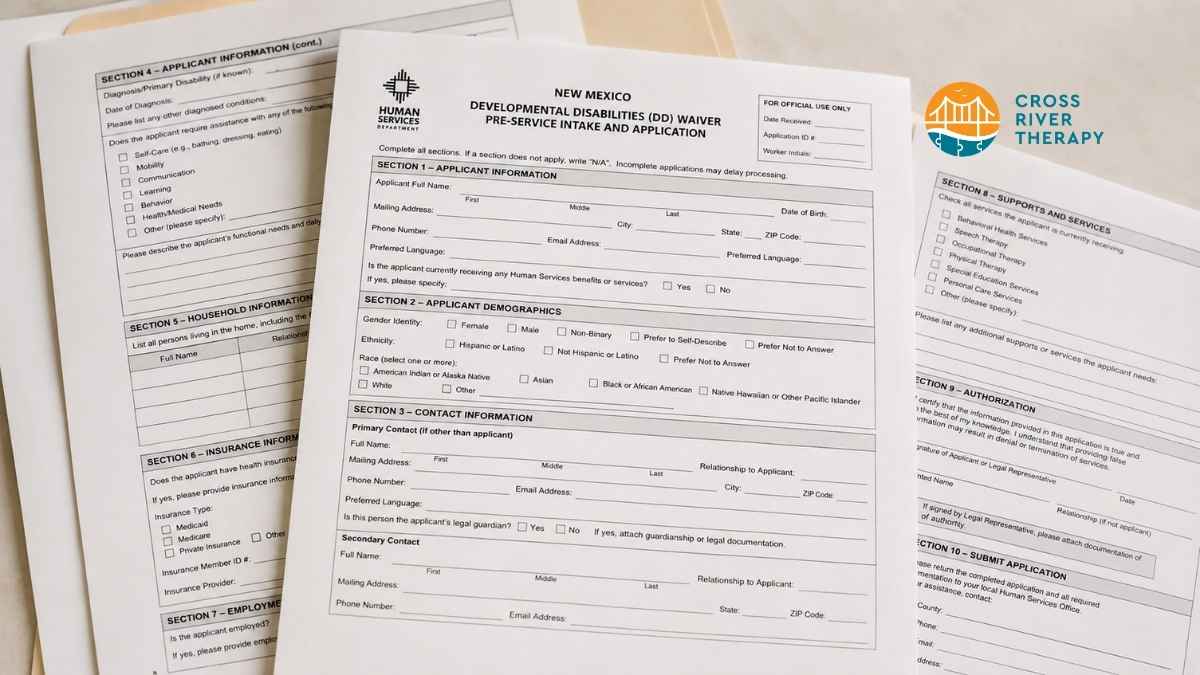
How to Apply for the New Mexico DD Waiver
Your NM DD waiver application starts with state intake. The steps cover records, submission, and enrollment.

Does Insurance Cover ABA Therapy in New Jersey?
ABA therapy insurance in New Jersey varies by plan. Learn what NJ FamilyCare covers and how to check costs.

How ABA Therapy Builds Communication for Nonverbal Children Without Forcing Speech
ABA therapy communication for nonverbal children starts with AAC, signs, and daily routines. See how kids ask, refuse, choose, and get help.

How to Start ABA Therapy in New Jersey With a Checklist
Your guide explains how to start ABA therapy in New Jersey. A first-call checklist covers records and next steps.

How to Get an Autism Evaluation in Arkansas Before Starting ABA Therapy
How to get an autism evaluation in Arkansas starts with a referral, provider choice, and key records. Use this parent checklist before ABA intake.