








Why ABA Therapy Centers Emphasize Social Reinforcement
Unlocking Social Skills: The Central Role of Reinforcement in ABA


Understanding the Foundation of Effective Autism Interventions
Applied Behavior Analysis (ABA) is a structured, evidence-based therapeutic approach widely used to support individuals with Autism Spectrum Disorder (ASD). Central to its success is the strategic use of social reinforcement, which helps foster social skills, communication, and positive behaviors. This article explores why ABA centers emphasize social reinforcement, the methods they employ, and the substantial benefits this approach offers for developmental progress.
The Fundamental Significance of Social Reinforcement in ABA Therapy
Why is social reinforcement vital for developing social skills and communication in individuals with autism?
Social reinforcement plays a crucial role in ABA therapy by encouraging individuals with autism to develop better social skills and communication abilities. It works by providing positive feedback—such as praise, smiles, or social approval—that motivates individuals to repeat desirable behaviors.
In ABA, social reinforcement is based on the principle that interactions with others act as natural motivators. When a person receives positive responses for engaging in social behaviors, they are more likely to practice and adopt those behaviors in the future. This can include simple actions like making eye contact, taking turns, or greeting others.
Furthermore, individuals can also engage in self-reinforcement, where they recognize and praise their own progress. This internal motivation helps sustain the learning process.
Overall, social reinforcement shapes social behaviors by making interactions rewarding. This not only increases social engagement but also improves communication skills, which are vital for successful social integration and independence. By encouraging repeated practice of social skills, ABA therapy supports meaningful progress in how individuals with autism relate to others.
Implementation Strategies in ABA Centers: How Social Reinforcement Is Applied
How do ABA therapy centers typically implement social reinforcement strategies?
ABA therapy centers focus heavily on social reinforcement techniques to shape and strengthen social skills in children with ASD. Typically, therapists provide immediate and consistent positive feedback when a child demonstrates a desired behavior, such as making eye contact, taking turns, or greeting others. This feedback often includes verbal praise, high fives, smiles, or claps, which serves to motivate the child and reinforce the behavior.
In addition to verbal praise, many centers incorporate activities like role-playing and modeling to teach social interactions in a controlled, engaging environment. For example, a therapist might role-play a social scenario, demonstrating how to ask for help or share toys, then encourage the child to imitate these behaviors. Social stories and visual aids are also used to help children understand social cues, expectations, and appropriate responses.
Natural social reinforcement plays a vital role in generalizing skills beyond therapy sessions. This means relying on social attention and approval from peers, family, and teachers as reinforcing factors. To make reinforcement more effective and personalized, programs often tailor rewards and tokens to individual preferences, helping children stay motivated and engaged.
Family participation is emphasized as well, with caregivers trained to apply similar reinforcement strategies at home, creating a consistent learning environment. Modern methods may also include the use of technology, such as social robots or personalized reinforcement plans, to enhance motivation and skill development.
Overall, the integration of these reinforcement strategies makes social learning dynamic, personalized, and applicable to everyday social settings, which is critical for the child's social success and independence.
Principles and Rationale Behind Emphasizing Social Reinforcement
What are the principles behind emphasizing social reinforcement in ABA therapy?
In ABA therapy, social reinforcement is a foundational element used to encourage and develop social skills in individuals with ASD. The core idea is to strengthen desired behaviors by leveraging positive social interactions like praise, smiles, high fives, or attention. These responses act as rewards that motivate the individual to repeat socially appropriate behaviors.
Effective social reinforcement depends heavily on timing, contingency, and personal preferences. Reinforcements should immediately follow the target behavior to establish a clear connection. For example, immediately praising a child for making eye contact enhances the likelihood that they will repeat this behavior.
Reinforcements are also tailored to what the individual finds motivating. What works for one person might not be effective for another, so customizing reinforcement strategies is essential. Natural social cues—such as a friendly tone, a smile, or a high five—are used as reinforcers to make social interactions feel more genuine and meaningful.
The rationale for this approach is that when children experience positive social responses, they develop a stronger motivation to engage socially. This not only increases the frequency of desired behaviors but also promotes trust and confidence in social settings.
Finally, reinforcing social behaviors helps generalize skills across different environments and social partners, which is crucial for everyday life. The ultimate goal is to produce lasting behavior change, enabling individuals to interact more naturally and comfortably within their community.
Benefits and Positive Outcomes of Social Reinforcement in ABA
What are the benefits of using social reinforcement in ABA treatment for children with autism?
Applying social reinforcement in ABA therapy produces several positive effects that significantly impact a child's development. One of the primary advantages is the increase in motivation and engagement. Positive social interactions such as praise, smiles, or attention serve as powerful rewards that encourage children to participate in learning activities and practice desired behaviors.
This method aids in developing crucial social and communication skills. When children receive consistent praise or acknowledgment for appropriate social behaviors, they are more likely to imitate and internalize these actions. For example, making eye contact, taking turns, and initiating interactions become more frequent as they associate these behaviors with positive outcomes.
Social reinforcement also helps in reducing problematic behaviors like aggression, withdrawal, or tantrums. When children find their efforts rewarded with positive attention, they are less inclined to seek attention through undesirable actions.
Fostering independence and confidence is another vital benefit. As children learn to communicate effectively and engage socially, they gain skills that empower them to navigate daily life more autonomously. The sense of achievement from receiving social reinforcement boosts their confidence and willingness to try new skills.
Moreover, social reinforcement supports overall family and social integration. When children demonstrate better social skills and reduce problematic behaviors, they tend to integrate more smoothly into family routines, peer groups, and community settings, laying a strong foundation for meaningful relationships.
Research underscores that early and consistent use of social reinforcement within ABA enhances learning efficiency and fosters lasting behavioral changes. It creates a positive, motivating environment that aligns with the child's developmental needs, paving the way for meaningful progress.
In summary, utilizing social reinforcement in ABA therapy not only advances social and communication skills but also promotes behavioral improvements, independence, and social participation, all of which are critical for the child's broader success.
The Broader Impact: Social Reinforcement and Developmental Growth
How does social reinforcement promote positive behaviors and overall development?
Social reinforcement plays a vital role in encouraging positive behaviors and supporting overall growth in individuals with ASD. By providing tangible social feedback—such as praise, warmth, approval, or attention—therapists and caregivers motivate individuals to repeat desirable actions. This approach is grounded in social reinforcement theory, which suggests that the presence and responses of others act as powerful motivators.
Research shows that recognition from parents, teachers, peers, or the individual themselves boosts motivation, self-esteem, and social skills. For example, when a child receives praise for making eye contact or taking turns, they are more likely to engage in these behaviors again. Programs like the Incredible Years utilize strategic reinforcement to strengthen positive actions, helping children develop moral reasoning, social confidence, and a sense of identity.
In practice, social reinforcement fosters emotional stability by rewarding adaptive behaviors and creating a supportive environment for growth. Whether through verbal praise, tokens, or physical gestures, this method facilitates the generalization of learned skills across different settings, making behaviors more consistent and meaningful in everyday life.
Embracing the Power of Reinforcement in Building Social Brilliance
In conclusion, social reinforcement remains a cornerstone of effective ABA therapy, guiding children with autism toward meaningful social engagement, improved communication, and independent living. Its principles of timely, individualized, and natural reinforcement foster genuine motivation and lasting behavioral change. As ABA centers continue to innovate and tailor their approaches, emphasizing social reinforcement ensures children not only acquire skills but thrive socially and emotionally in real-world environments. Embracing these strategies offers hope for families seeking impactful, respectful, and empowering support for their loved ones.
References
- ABA Therapy for Social Skills: Building Connections
- ABA Therapy Techniques and Usage - First Step Arkansas
- Benefits of ABA Therapy for Children with Autism
- ABA Therapy Controversy | Autism Center of Excellence - AutismCOE
- Center-Based Benefits - Ally Behavior Centers
- Why More Social Workers are Specializing in (ABA) Applied ...
- Reinforcement: What it is & Why it's Important to ABA
- [PDF] FACT SHEET - REINFORCEMENT
- Exploring Types of Reinforcement in ABA
Recent News
Related articles

6 Arkansas Medicaid ABA Therapy Rules Families Need to Know
Arkansas Medicaid ABA therapy has age, diagnosis and approval rules. Families can check six requirements before care.

Arizona Autism Laws for ABA Coverage and School Rights
Arizona autism laws for ABA coverage vary by plan. Families can check insurance, appeal options, and school rights.

ABA Therapist Salary in Arkansas for RBTs and BCBAs
Compare ABA therapist salary in Arkansas by role. See how paid hours and benefits affect earnings before applying.

5 Autism Support Groups and Family Resources in New Mexico
Autism support groups in New Mexico connect families. Local resources offer events, parent support, and school help.

Where to Get an Autism Evaluation in New Mexico
Autism evaluation options in New Mexico include UNM and NMSU. Age and referral details help parents prepare.

7 North Carolina Autism Resources to Contact Before ABA Therapy Starts
Autism resources North Carolina families can call for diagnosis, early intervention, rights, and parent support. Start ABA intake with Cross River.

Does Indiana Medicaid Cover ABA Therapy? A Parent Checklist
Indiana Medicaid ABA therapy may cover care for eligible children. The checklist covers coaching and renewals.
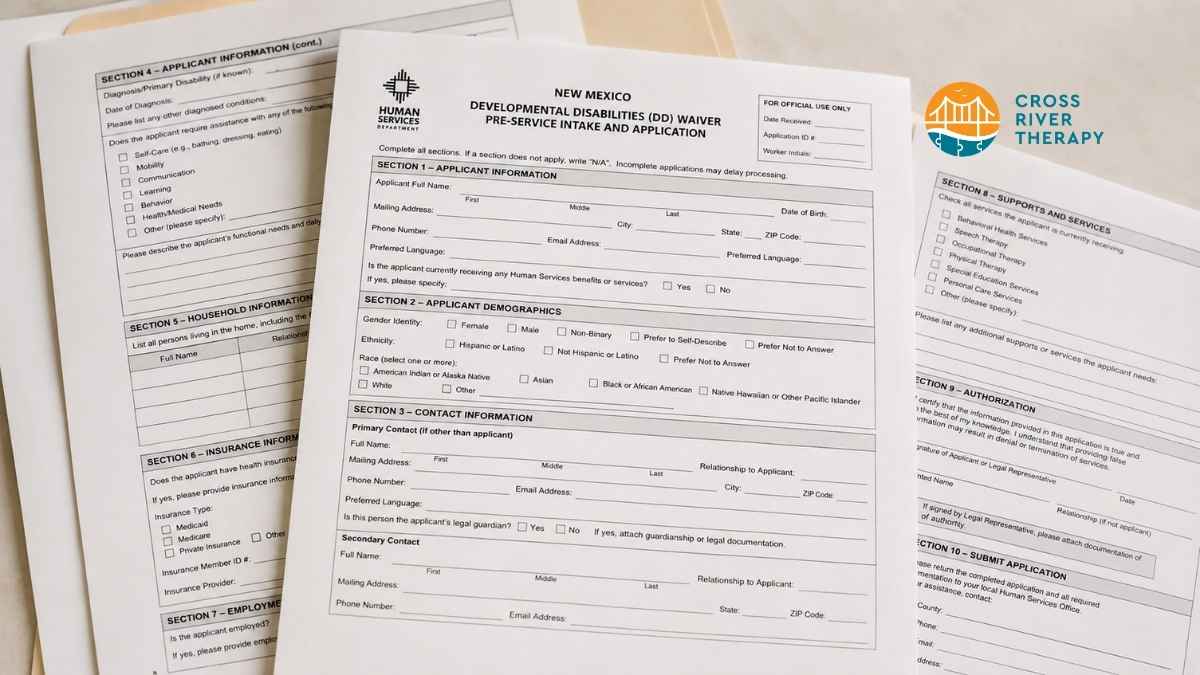
How to Apply for the New Mexico DD Waiver
Your NM DD waiver application starts with state intake. The steps cover records, submission, and enrollment.

Does Insurance Cover ABA Therapy in New Jersey?
ABA therapy insurance in New Jersey varies by plan. Learn what NJ FamilyCare covers and how to check costs.

How ABA Therapy Builds Communication for Nonverbal Children Without Forcing Speech
ABA therapy communication for nonverbal children starts with AAC, signs, and daily routines. See how kids ask, refuse, choose, and get help.

How to Start ABA Therapy in New Jersey With a Checklist
Your guide explains how to start ABA therapy in New Jersey. A first-call checklist covers records and next steps.

How to Get an Autism Evaluation in Arkansas Before Starting ABA Therapy
How to get an autism evaluation in Arkansas starts with a referral, provider choice, and key records. Use this parent checklist before ABA intake.