








15 Accommodations For Students With Autism
Here are 15 accommodations that can help students with autism succeed in school.


15 Accommodations For Students With Autism
Autism is a neurological disorder that affects communication and social interaction. Students with autism often struggle in traditional classroom settings, but with the right accommodations, they can thrive academically and socially.

1. Sensory Breaks
Sensory overload can be overwhelming for students with autism. Providing sensory breaks throughout the day can help students regulate their sensory needs and improve their focus.
2. Visual Schedules
Visual schedules can help students with autism understand the structure of their day and reduce anxiety. A visual schedule can include pictures or symbols that represent different activities throughout the day.
3. Quiet Spaces
Quiet spaces can provide a safe and calming environment for students with autism to take a break from sensory overload or social interactions.
4. Noise-Cancelling Headphones
Noise-cancelling headphones can help students with autism block out distracting sounds and focus on their work.
5. Fidget Toys
Fidget toys can provide a sensory outlet for students with autism and improve their focus.
6. Preferential Seating
Placing students with autism in a quiet area of the classroom or away from distractions can help them focus on their work.
7. Positive Reinforcement
Positive reinforcement can motivate students with autism to complete tasks and improve their behavior. This can include verbal praise or rewards.
8. Clear Expectations
Clear expectations can reduce anxiety and confusion for students with autism. Teachers can provide clear instructions and expectations for assignments and classroom behavior.
9. Social Skills Training
Social skills training can help students with autism improve their communication and social interactions with peers.
10. Peer Mentors
Peer mentors can provide social support and guidance for students with autism in the classroom.
11. Breaks Between Activities
Breaks between activities can help students with autism transition between tasks and reduce anxiety.
12. Assistive Technology
Assistive technology, such as speech-to-text software or digital organizers, can help students with autism complete assignments and stay organized.
13. Modified Assignments
Modified assignments can help students with autism complete tasks at their own pace and level of understanding.
14. Individualized Education Plans (IEPs)
Individualized Education Plans (IEPs) can provide a customized education plan for students with autism that includes specific accommodations and goals.
15. Sensory-Friendly Classrooms
Sensory-friendly classrooms can create a safe and supportive environment for students with autism. This can include sensory-friendly lighting, seating, and materials.
In conclusion, providing accommodations for students with autism can help them succeed academically and socially. These 15 accommodations are just a few examples of the many ways that teachers can support students with autism in the classroom. By creating a supportive and inclusive environment, teachers can help students with autism reach their full potential.
What Is Autism Accommodation?
Accommodations for students with autism are modifications made to the learning environment or teaching methods to provide support and help them overcome challenges.
These accommodations can include changes in the classroom setup, instructional materials, communication, and behavior management strategies. The goal of accommodations is to create an inclusive learning environment that meets the unique needs of each student with autism.
Who Is Eligible To Receive Accommodations?
Any student with autism who is enrolled in a public or private school is eligible to receive accommodations under the Individuals with Disabilities Education Act (IDEA).
The law requires schools to provide free and appropriate public education (FAPE) to all students, including those with disabilities. To receive accommodations, students must first be evaluated by a qualified professional to determine their individual needs.
Once identified, the school must work with the student and their family to create an Individualized Education Program (IEP) that outlines specific accommodations and goals for academic and social success.
Recent News
Related articles

AHCCCS ABA Therapy: Coverage and Approval in Arizona
AHCCCS ABA therapy covers medically necessary care. Plan rules determine provider access and treatment approval.

How to Coordinate School-Based ABA Therapy in Arkansas
School-based ABA therapy in Arkansas needs shared routines. Team roles and progress notes help explain daily support.

6 Tour Checks for Center-Based ABA Therapy in Arkansas
Center-based ABA therapy in Arkansas varies by provider. A tour helps parents check staff, safety, and progress.

How to Start In-Home ABA Therapy in Arkansas in 6 Steps
In-home ABA therapy in Arkansas begins with intake and a care plan. The steps explain records and the assessment.

6 Arkansas Medicaid ABA Therapy Rules Families Need to Know
Arkansas Medicaid ABA therapy has age, diagnosis and approval rules. Families can check six requirements before care.

Arizona Autism Laws for ABA Coverage and School Rights
Arizona autism laws for ABA coverage vary by plan. Families can check insurance, appeal options, and school rights.

ABA Therapist Salary in Arkansas for RBTs and BCBAs
Compare ABA therapist salary in Arkansas by role. See how paid hours and benefits affect earnings before applying.

5 Autism Support Groups and Family Resources in New Mexico
Autism support groups in New Mexico connect families. Local resources offer events, parent support, and school help.

Where to Get an Autism Evaluation in New Mexico
Autism evaluation options in New Mexico include UNM and NMSU. Age and referral details help parents prepare.

7 North Carolina Autism Resources to Contact Before ABA Therapy Starts
Autism resources North Carolina families can call for diagnosis, early intervention, rights, and parent support. Start ABA intake with Cross River.

Does Indiana Medicaid Cover ABA Therapy? A Parent Checklist
Indiana Medicaid ABA therapy may cover care for eligible children. The checklist covers coaching and renewals.
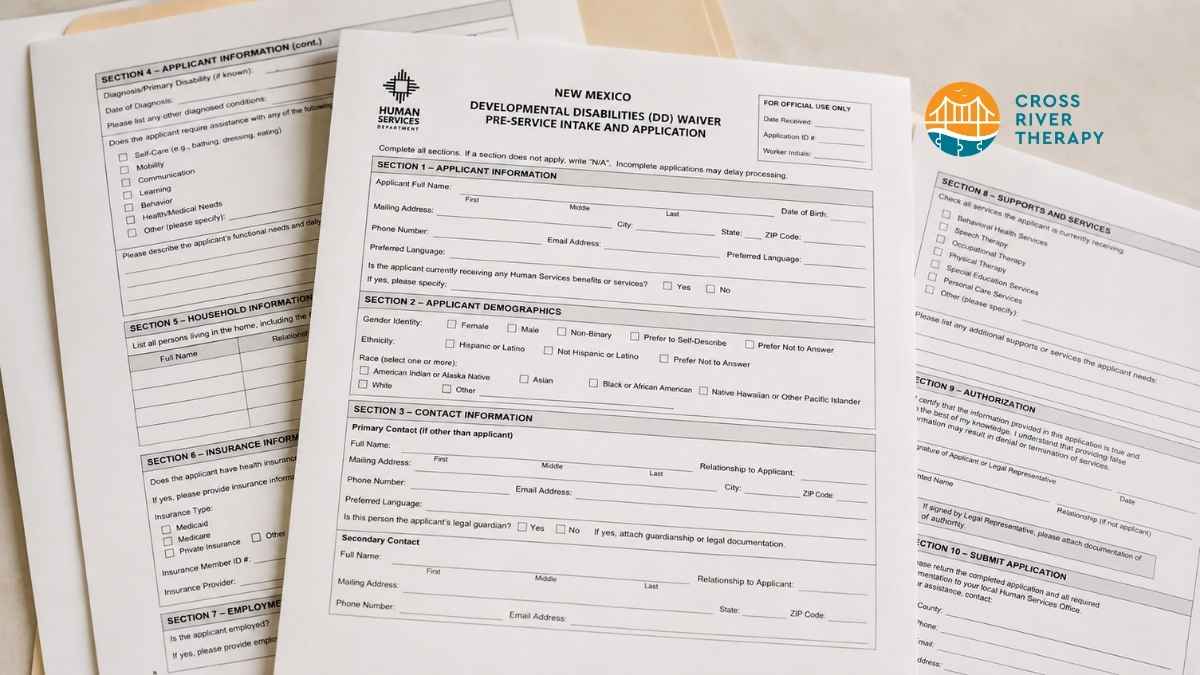
How to Apply for the New Mexico DD Waiver
Your NM DD waiver application starts with state intake. The steps cover records, submission, and enrollment.