








5 Activities for Autistic Teenagers
As a parent or caregiver of an autistic teenager, you may be looking for activities that can help your child develop social skills, improve communication, and increase their overall well-being.


5 Fun Activities For Teenagers With Autism
Being a teenager is a challenging time for everyone, but it can be especially difficult for teenagers with autism. They may struggle with social interactions, communication, and sensory issues.
However, there are many fun activities that can help them develop their skills and enjoy their teenage years. Here are five fun activities for teenagers with autism:
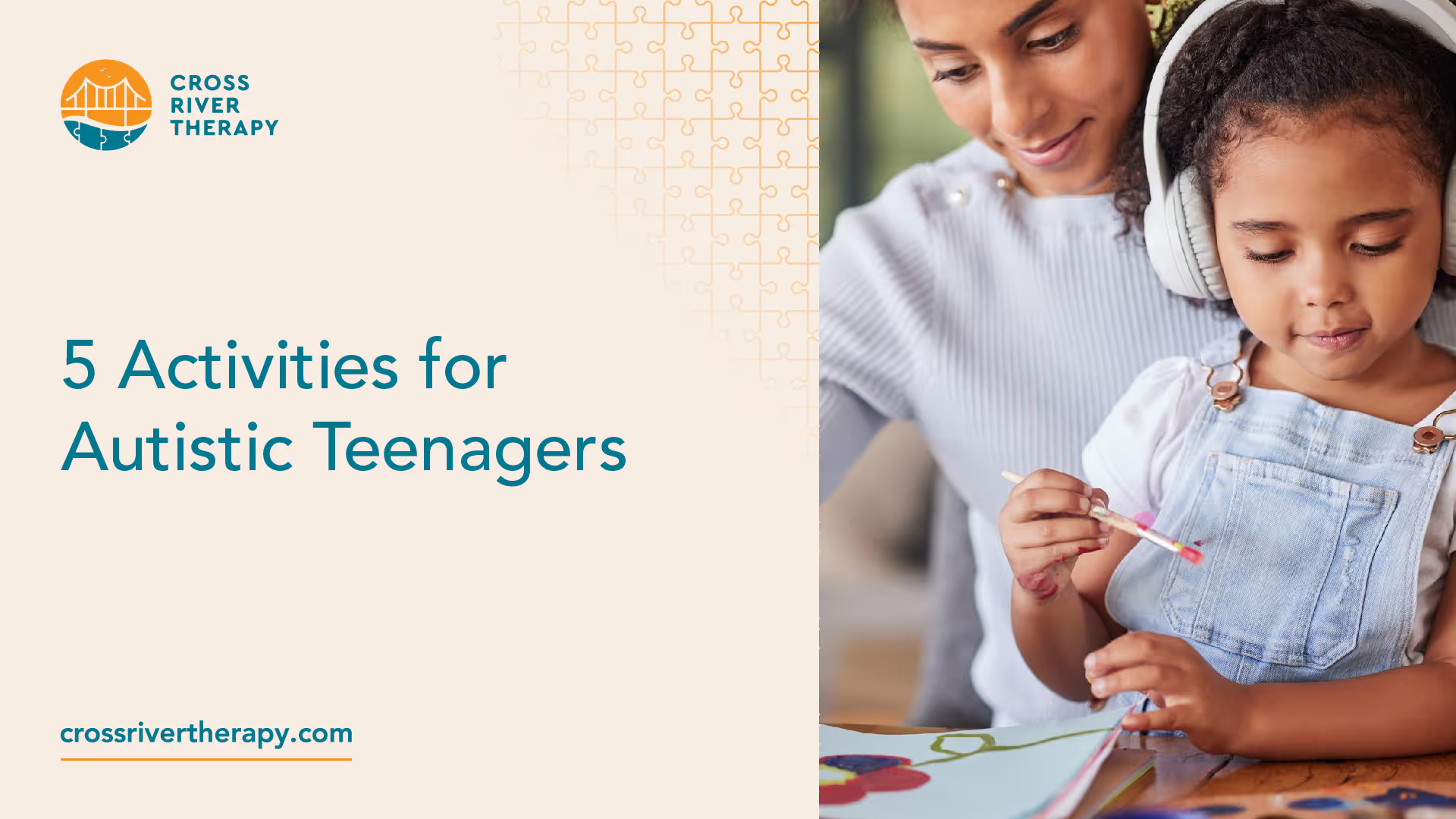
1. Art Therapy
Art therapy is a great way for teenagers with autism to express themselves and develop their creativity. It can also help them improve their fine motor skills and hand-eye coordination. Art therapy can take many forms, such as painting, drawing, sculpting, or collage making. It can be done individually or in a group setting. The focus is on the process of creating art, rather than the final product.
2. Music Therapy
Music therapy is another great way for teenagers with autism to express themselves and develop their social skills. It can also help them improve their communication and language skills. Music therapy can take many forms, such as singing, playing an instrument, or listening to music. It can be done individually or in a group setting. The focus is on the therapeutic benefits of music, rather than the performance.
3. Outdoor Activities
Outdoor activities are a great way for teenagers with autism to get exercise, fresh air, and sensory stimulation. They can also help them develop their social skills and communication. Outdoor activities can take many forms, such as hiking, biking, scuba diving, swimming, or playing sports. It's important to choose activities that are appropriate for the teenager's abilities and interests.
4. Cooking and Baking
Cooking and baking are great activities for teenagers with autism to develop their life skills and independence. They can also help them improve their fine motor skills and sensory processing. Cooking and baking can be done individually or in a group setting. The focus is on the process of preparing food, rather than the final product.
5. Game Nights
Game nights are a fun way for teenagers with autism to develop their social skills and communication. They can also help them improve their problem-solving and decision-making skills. Game nights can take many forms, such as board games, card games, or video games. It's important to choose games that are appropriate for the teenager's abilities and interests.
Choosing The Best Activity
Fortunately, there are many activities available for autistic teenagers that can help them develop their social skills, improve their communication, and promote their independence. Here are some tips on how to choose the right activity for your autistic teenager.
1. Consider your teenager's interests
The first step in choosing an activity for your autistic teenager is to consider their interests. Autistic teenagers often have specific interests that they are passionate about, such as music, art, or sports. By choosing an activity that aligns with your teenager's interests, you can increase the chances that they will enjoy and engage in the activity.
2. Look for programs that are tailored to autistic teenagers
Many organizations offer programs that are specifically designed for autistic teenagers. These programs often have trained staff who understand the unique needs of autistic individuals and can provide support and guidance. Look for programs that offer small group sizes, visual aids, and clear instructions.
3. Consider sensory needs
Autistic teenagers often have sensory processing issues that can make certain environments overwhelming or uncomfortable. When choosing an activity, consider your teenager's sensory needs. Look for activities that have a calm and structured environment, and avoid activities that are loud or chaotic.
4. Involve your teenager in the decision-making process
It's essential to involve your autistic teenager in the decision-making process when choosing an activity. Ask them what they would like to do and consider their preferences. Autistic teenagers often have a strong sense of what they do and don't like, and involving them in the decision-making process can help ensure that they will enjoy and engage in the activity.
5. Consider the level of support needed
Autistic teenagers often require additional support to participate in activities. Consider the level of support needed for your teenager and look for programs that can provide the necessary support. This may include one-on-one support or specialized equipment.
Summary
In conclusion, there are many fun activities for teenagers with autism that can help them develop their skills and enjoy their teenage years.
Art therapy, music therapy, outdoor activities, cooking and baking, and game nights are just a few examples.
It's important to choose activities that are appropriate for the teenager's abilities and interests, and to focus on the process rather than the final product. With the right activities and support, teenagers with autism can thrive and enjoy their teenage years.
Recent News
Related articles

Arizona Autism Laws Every Parent Should Know Before Starting ABA Therapy
Autism laws Arizona parents should know cover ABA insurance, AHCCCS appeals, IEPs, and Section 504 rights. Check ABA coverage with Cross River.

ABA Therapist Salary in Arkansas: What BCBAs and RBTs Actually Earn in 2026
ABA therapist salary Arkansas figures compare RBT and BCBA rates, benefits, guaranteed hours, and contract terms. Explore careers at Cross River.

5 Autism Support Groups and Family Resources in New Mexico Alongside ABA Therapy
Autism support groups New Mexico families can use offer peer support, local events, and school help. Cross River can explain ABA therapy options.

Where to Get an Autism Evaluation in New Mexico Before Starting ABA Therapy
Autism evaluation New Mexico options include UNM, NMSU, FIT, and private providers. Compare providers, records, and ABA steps with Cross River.

7 North Carolina Autism Resources to Contact Before ABA Therapy Starts
Autism resources North Carolina families can call for diagnosis, early intervention, rights, and parent support. Start ABA intake with Cross River.
Does Indiana Medicaid Cover ABA Therapy? A Step-by-Step Eligibility Checklist for Parents
Medicaid ABA therapy Indiana covers eligible children under 21 with prior authorization. Your five-step coverage review can start with Cross River.
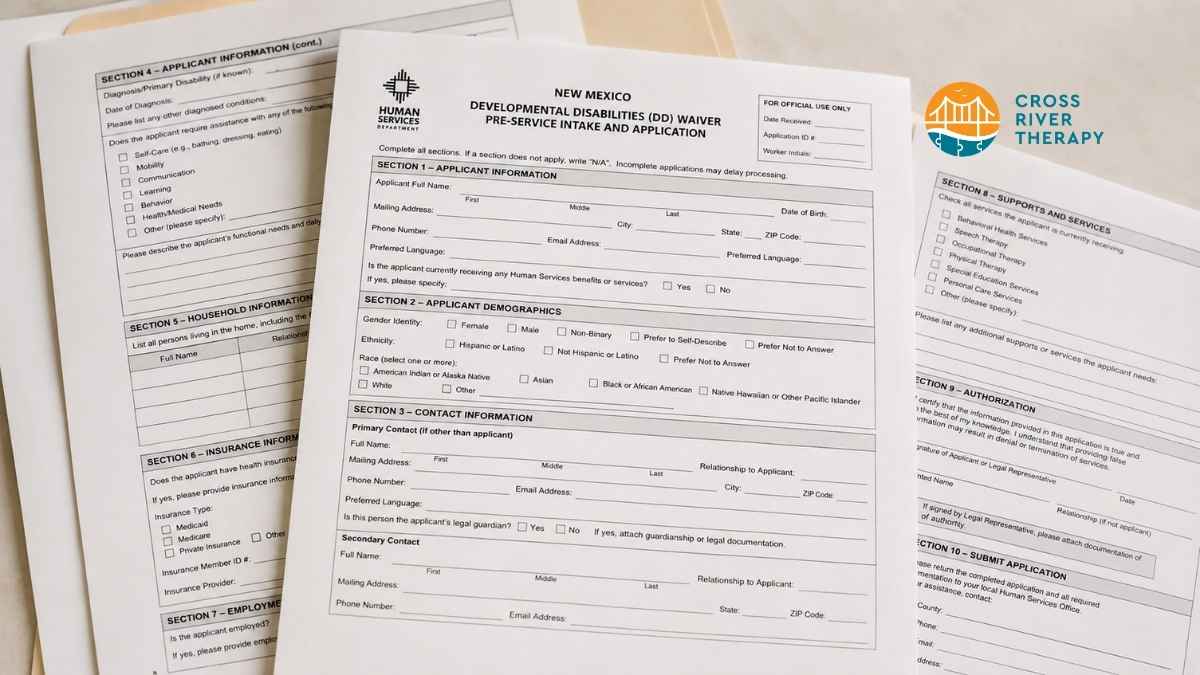
How to Apply for New Mexico’s DD Waiver While Starting ABA Therapy
Autism waiver New Mexico applications need DD Waiver records and proof of daily support needs. Your next step is to start ABA intake with Cross River.

Is ABA Therapy Covered by Insurance in New Jersey? What Every Parent Should Know
ABA therapy insurance New Jersey may cover medically necessary care based on plan type, network, and authorization. Verify benefits with Cross River.

How ABA Therapy Builds Communication for Nonverbal Children Without Forcing Speech
ABA therapy communication for nonverbal children starts with AAC, signs, and daily routines. See how kids ask, refuse, choose, and get help.

How to Start ABA Therapy in New Jersey With a First-Call Checklist
How to start ABA therapy in New Jersey begins with records, insurance details, and intake questions. Use this first-call checklist before you call.

How to Get an Autism Evaluation in Arkansas Before Starting ABA Therapy
How to get an autism evaluation in Arkansas starts with a referral, provider choice, and key records. Use this parent checklist before ABA intake.

Center-Based vs In-Home vs School-Based ABA Therapy and How to Choose the Right Fit
Center-based, in-home, and school-based ABA therapy each fit different goals, routines, and settings. Compare options before your intake call.