








Does Radiation Cause Autism?
The possible link between autism and radiation exposure is an increasingly debated topic within the scientific community.



Does Radiation Cause Autism?
There is a lot of controversy surrounding the possible link between autism and radiation exposure. Some people believe that there is a connection, while others argue that there is no evidence to support this claim. So, what does the science say? Let's take a closer look at the research to see if there is any validity to this claim.

The possible link between autism and radiation exposure
The possible link between autism and radiation exposure is an increasingly debated topic within the scientific community. Research has suggested that families exposed to radiation such as radioactive iodine after the Chernobyl nuclear disaster in 1986 are more likely to have children with autism spectrum disorder (ASD).
This evidence has caused many experts to hypothesize that radiation exposure could be an environmental factor that contributes to the onset of ASD.
However, other researchers suggest there is a lack of evidence connecting both radiation and autism, claiming that people are choosing to jump to conclusions before any substantial proof can be found.
As studies continue, it becomes ever more important for those studying the subject to remain objective and weigh all evidence rather than simply relying on individual circumstances.
Why some experts believe there is a connection
It is well known that the mind and body are closely connected, and many experts believe that there is an undeniable relationship between mental illness and physical health.
Traumatic events or extreme stress can trigger both mental and physical illnesses, resulting in conditions such as depression, anxiety disorders, chronic pain, fatigue, headaches, and digestive issues.
While research into the connection between these two influences is ongoing, some experts believe that treatments for physical issues must take into consideration potential mental health aspects in order to effectively address the problem.
In this way, full recovery from physical ailments might not be possible without also addressing the underlying mental health issues. Each case is unique, but there appears to be a distinct correlation in a majority of cases between mental illness and physical health which cannot be ignored.
What the research says about the matter
The research on the matter offers many compelling insights. Scientific studies have shown that this phenomenon is a complex one and requires a multifaceted approach in order to be successfully managed.
Studies suggest that action taken at both an individual and a policy level can help to bring improvements in this area, thus making a positive difference to some of the most vulnerable members of society.
It is also important to recognize that such interventions may not have immediate results but require time and dedication in order for their full potential to be realized.
How parents can protect their children from potential risks
Protecting children from potential risks can be difficult for parents, but there are steps that parents can take to ensure their safety.
Utilizing parental monitoring and filtering software is a key tool for monitoring children's activity on computers and phones, as well as being aware of the websites and apps that children use.
Additionally, having an open dialogue with your children about the risks posed by the digital world is important in allowing them to become responsible internet users.
Taking steps such as setting boundaries on device usage, alerting a child when reaching their limit of screen time, understanding peer pressure situations both online and offline, recognizing signs of cyberbullying, teaching age-appropriate Internet etiquette like not sharing passwords with others, providing them with safe environments both online and offline are essential components to keeping your kids safe in our increasingly connected world.
The bottom line - what we know and don't know about the link between autism and radiation
The link between autism and radiation has been the subject of much debate and research in recent years.
The news media is flooded with headlines proclaiming the potential dangers; however, the evidence backing these claims can be weak at best.
Studies on both humans and animals have yet to conclusively determine a causal relationship between exposure to radiation and autism. While some research indicates that certain types of radiation may be linked to an increased risk of developing autism, more robust studies are needed before we can definitively implicate radiation as a contributing factor.
Further investigation is also required in order to understand the extent of this potential link, including what types, amounts, and duration of exposure could increase the risk for individuals. Until then, we must continue to approach this topic cautiously with an eye towards skepticism instead of sensationalism.
While there is still much unknown about the link between autism and radiation exposure, there are some steps that parents can take to protect their children. By being aware of the potential risks and doing what they can to reduce exposure, parents can help give their children the best chance at a healthy life.
Sources
Recent News
Related articles
AHCCCS ABA Therapy: Coverage and Approval in Arizona
AHCCCS ABA therapy covers medically necessary care. Plan rules determine provider access and treatment approval.

How to Coordinate School-Based ABA Therapy in Arkansas
School-based ABA therapy in Arkansas needs shared routines. Team roles and progress notes help explain daily support.

6 Tour Checks for Center-Based ABA Therapy in Arkansas
Center-based ABA therapy in Arkansas varies by provider. A tour helps parents check staff, safety, and progress.

How to Start In-Home ABA Therapy in Arkansas in 6 Steps
In-home ABA therapy in Arkansas begins with intake and a care plan. The steps explain records and the assessment.

6 Arkansas Medicaid ABA Therapy Rules Families Need to Know
Arkansas Medicaid ABA therapy has age, diagnosis and approval rules. Families can check six requirements before care.

Arizona Autism Laws for ABA Coverage and School Rights
Arizona autism laws for ABA coverage vary by plan. Families can check insurance, appeal options, and school rights.

ABA Therapist Salary in Arkansas for RBTs and BCBAs
Compare ABA therapist salary in Arkansas by role. See how paid hours and benefits affect earnings before applying.

5 Autism Support Groups and Family Resources in New Mexico
Autism support groups in New Mexico connect families. Local resources offer events, parent support, and school help.

Where to Get an Autism Evaluation in New Mexico
Autism evaluation options in New Mexico include UNM and NMSU. Age and referral details help parents prepare.

7 North Carolina Autism Resources to Contact Before ABA Therapy Starts
Autism resources North Carolina families can call for diagnosis, early intervention, rights, and parent support. Start ABA intake with Cross River.

Does Indiana Medicaid Cover ABA Therapy? A Parent Checklist
Indiana Medicaid ABA therapy may cover care for eligible children. The checklist covers coaching and renewals.
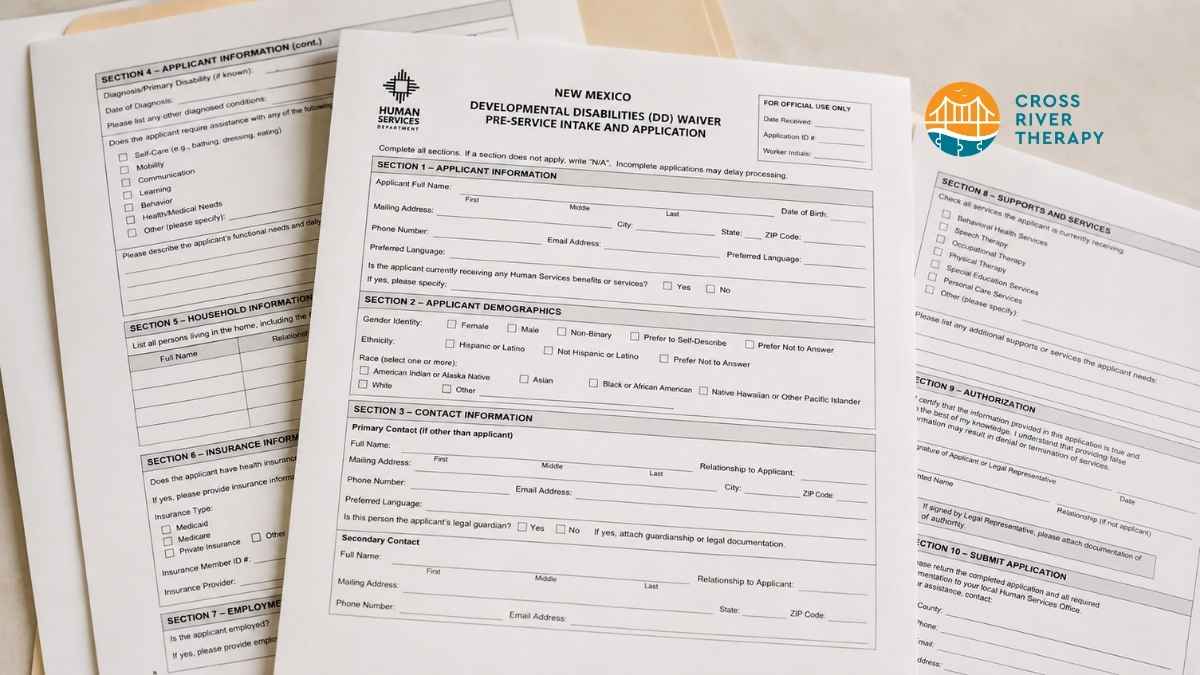
How to Apply for the New Mexico DD Waiver
Your NM DD waiver application starts with state intake. The steps cover records, submission, and enrollment.