








How To Become an Autism Support Teacher
One of the key professionals who provide this support is the autism support teacher. In this article, we will explore what it takes to become an autism support teacher and how you can make a difference in the lives of individuals with ASD.


What is an Autism Support Teacher?
An autism support teacher is a specialized educator who works with individuals with ASD to help them develop social, communication, and behavioral skills.
They work with students in both individual and group settings and collaborate with other professionals, such as speech therapists, occupational therapists, and psychologists, to create a comprehensive support plan for each student.

Education and Training Requirements
To become an autism support teacher, you typically need a bachelor's degree in education or a related field.
Many universities offer specialized programs in autism education or special education that provide coursework and practical experience in working with individuals with ASD.
In addition to a bachelor's degree, many states require a teaching certification or license to work as a teacher in a public school setting.
Continuing education and professional development are also important for autism support teachers.
Many organizations, such as the Autism Society and the National Autism Center, offer training and certification programs that provide specialized knowledge and skills in working with individuals with ASD.
Skills and Qualities
Autism support teachers need a variety of skills and qualities to be effective in their role. These include:
- Patience and empathy: Individuals with ASD may have difficulty communicating and may exhibit challenging behaviors. Autism support teachers need to be patient and empathetic to understand their students' needs and provide appropriate support.
- Creativity and flexibility: Each student with ASD is unique and requires an individualized approach to support. Autism support teachers need to be creative and flexible in their teaching strategies to meet each student's needs.
- Collaboration and communication: Autism support teachers work with a variety of professionals, including parents, therapists, and other educators. Effective collaboration and communication skills are essential to provide comprehensive support for each student.
Job Outlook and Salary
According to the Bureau of Labor Statistics, the median annual salary for special education teachers, including autism support teachers, was $61,420 in May 2020. The job outlook for special education teachers is also positive, with a projected growth rate of 3% from 2020 to 2030.
What degree do you need to teach autistic students?
To become an autism support teacher, a bachelor's degree in education or a related field is typically required. However, some states may require additional coursework or certification in special education or autism education.
It's important to check the specific requirements of your state if you're interested in pursuing a career as an autism support teacher.
Additionally, continuing education and professional development are essential for staying up-to-date on the latest research and best practices in working with individuals with ASD. Many organizations offer training and certification programs that can help you gain specialized knowledge and skills in this area.
Is it challenging to teach autistic students?
Teaching autistic students can be challenging, but it can also be incredibly rewarding. Each student with ASD is unique and requires an individualized approach to support. Autism support teachers need to develop a deep understanding of each student's strengths, challenges, and learning style to provide effective instruction.
Additionally, individuals with ASD may have difficulty with communication and social interaction, which can make it challenging for them to participate in classroom activities. Autism support teachers need to be patient and creative in finding ways to engage their students and help them succeed.
Despite the challenges, many autism support teachers find their work incredibly fulfilling. They have the opportunity to make a real difference in the lives of their students by helping them develop skills that will enable them to lead more independent and fulfilling lives.
If you're interested in working as an autism support teacher, it's important to have a passion for working with individuals with ASD and a commitment to ongoing learning and professional development.
Credentials for Working with Autistic Children
To work with autistic children, you typically need to have a bachelor's degree in education or a related field, and additional training or certification in autism education or special education. Some employers may also require experience working with individuals with ASD.
There are several organizations that offer certifications and credentials for professionals who work with individuals with ASD. For example, the Behavior Analyst Certification Board offers the Board Certified Behavior Analyst (BCBA) certification, which requires a master's degree in behavior analysis or a related field, as well as supervised experience working with individuals with ASD.
In addition to formal credentials, it's important to have a passion for working with individuals with ASD and a commitment to ongoing learning and professional development. This can include attending conferences and workshops, reading research articles, and collaborating with other professionals in the field.
By obtaining the necessary credentials and continuing your education and professional development, you can ensure that you are providing the best possible support for autistic children and helping them reach their full potential.
Making a Difference
Becoming an autism support teacher is a rewarding career that allows you to make a difference in the lives of individuals with ASD. By providing specialized support and education, you can help individuals with ASD reach their full potential and lead fulfilling lives. If you are passionate about working with individuals with ASD and have the necessary skills and qualifications, consider pursuing a career as an autism support teacher.
Recent News
Related articles

Arizona Autism Laws Every Parent Should Know Before Starting ABA Therapy
Autism laws Arizona parents should know cover ABA insurance, AHCCCS appeals, IEPs, and Section 504 rights. Check ABA coverage with Cross River.

ABA Therapist Salary in Arkansas: What BCBAs and RBTs Actually Earn in 2026
ABA therapist salary Arkansas figures compare RBT and BCBA rates, benefits, guaranteed hours, and contract terms. Explore careers at Cross River.

5 Autism Support Groups and Family Resources in New Mexico Alongside ABA Therapy
Autism support groups New Mexico families can use offer peer support, local events, and school help. Cross River can explain ABA therapy options.

Where to Get an Autism Evaluation in New Mexico Before Starting ABA Therapy
Autism evaluation New Mexico options include UNM, NMSU, FIT, and private providers. Compare providers, records, and ABA steps with Cross River.

7 North Carolina Autism Resources to Contact Before ABA Therapy Starts
Autism resources North Carolina families can call for diagnosis, early intervention, rights, and parent support. Start ABA intake with Cross River.

Does Indiana Medicaid Cover ABA Therapy? A Step-by-Step Eligibility Checklist for Parents
Medicaid ABA therapy Indiana covers eligible children under 21 with prior authorization. Your five-step coverage review can start with Cross River.
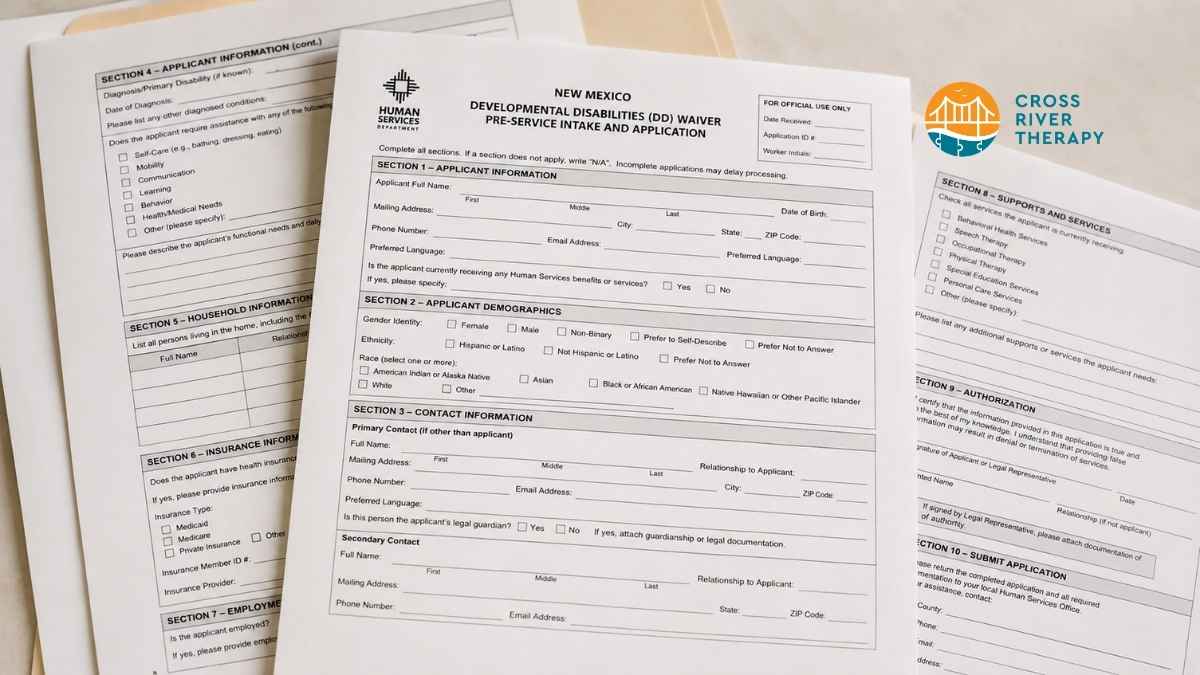
How to Apply for New Mexico’s DD Waiver While Starting ABA Therapy
Autism waiver New Mexico applications need DD Waiver records and proof of daily support needs. Your next step is to start ABA intake with Cross River.

Is ABA Therapy Covered by Insurance in New Jersey? What Every Parent Should Know
ABA therapy insurance New Jersey may cover medically necessary care based on plan type, network, and authorization. Verify benefits with Cross River.

How ABA Therapy Builds Communication for Nonverbal Children Without Forcing Speech
ABA therapy communication for nonverbal children starts with AAC, signs, and daily routines. See how kids ask, refuse, choose, and get help.

How to Start ABA Therapy in New Jersey With a First-Call Checklist
How to start ABA therapy in New Jersey begins with records, insurance details, and intake questions. Use this first-call checklist before you call.

How to Get an Autism Evaluation in Arkansas Before Starting ABA Therapy
How to get an autism evaluation in Arkansas starts with a referral, provider choice, and key records. Use this parent checklist before ABA intake.

Center-Based vs In-Home vs School-Based ABA Therapy and How to Choose the Right Fit
Center-based, in-home, and school-based ABA therapy each fit different goals, routines, and settings. Compare options before your intake call.