








Types Of Autism & How To Identify Them
Today we’ll cover the types of autism spectrum disorder, as well as how to identify them.

Types Of Autism: Myths Debunked
Before 2013, children were often diagnosed with one of four types of autism:
- Autism Spectrum Disorder (ASD)
- Asperger's Syndrome
- Childhood Disintegrative Disorder (CDD)
- Pervasive Developmental Disorder - Not Otherwise Specified (PDD-NOS)
According to the American Psychiatric Association (APA), the four "types" of autism are best grouped as a single diagnosis because of their similarities, and because they are all categorized by severity, this was another reason the APA decided to group them.
Now, when a child is classified as autistic, the broad term that is used is Autism Spectrum Disorder or ASD.
However, the previous autism diagnosis still has a place in how a child with ASD is treated.
So, we will discuss the previous type of diagnosis to help you better understand the differences and how they might be treated.
Autism Spectrum Disorder (ASD)
Autism was not considered to be a diagnosis until 1980 when it appeared in the DSM-III, and three essential features needed to be present for the disorder to be diagnosed.
Plus, all of these features had to be present within the first 30 months of life. Here are the three essential features that were needed to be diagnosed with autistic disorder:
- Having a bizarre response to the environment - This could be a resistance to change or a particular interest in objects.
- Lack of interest in people or socialization - This could be with siblings, parents, or peers.
- Severe impairments in language and communication areas - For instance, if a child had speech, but they used peculiar speech patterns, like echolalia.
Asperger's Syndrome
Asperger's Syndrome/Disorder was first recognized and diagnosed in 1994, and the stipulations for this diagnosis were revised later in 2000.

Unlike other autistic disorders, people who were diagnosed with Asperger's Disorder often had average or above-average intelligence.
However, despite their intelligence level, these children still had a lot of challenges, but their challenges dealt more with emotional regulation, repetitive interests, and socializing with others.
Asperger's Disorder is often not caught or diagnosed until a child is placed in a situation where their socializing reveals the disorder, like preschool or elementary school.
However, in some cases, Asperger's Disorder could be diagnosed earlier, but like most autism disorders, depending on the severity of the diagnosis, it could be noticed earlier in life.
Childhood Disintegrative Disorder (CDD)
Childhood Disintegrative Disorder wasn't included in the DSM until the DSM-IV was released in 1994. CDD was considered to be a late-onset form of ASD because it included severe regressive signs of the autism spectrum.
Unlike many autistic children who had issues in socializing, language skills, or other emotional issues, children who were diagnosed with CDD often didn't start with the same issues.

Many of these children seemed to be developing naturally like the average child, but at some point in their development, they would begin to regress, meaning the loss of skills they had already mastered, whether it be in language, emotional, or social skills.
Children who were diagnosed with CDD were considered to be severely more impaired than children who were diagnosed with ASD.
They typically suffered from lower IQs, and they were at a higher risk of being diagnosed with epilepsy. However, CDD is no longer considered a viable autism diagnosis.
Pervasive Developmental Disorder - Not Otherwise Specified (PDD-NOS)
Pervasive Developmental Disorder - Not Otherwise Specified was added as an autism disorder in 1987 in the DSM-III, which featured several significant changes in how professionals diagnosed autism.
PDD-NOS was a diagnosis on the mild end of the autism spectrum, even though the word "spectrum" wasn't used at the time.

The addition of PDD-NOS was a turning point in professionals' understanding of autism, and it started the shift in that understanding for subsequent years.
Before the changes in 2013, PDD-NOS was the go-to diagnosis for individuals who appeared o the autism spectrum but didn't meet the individual criteria for the other diagnosis, like autistic disorder or Asperger's disorder.
For example, someone who was diagnosed with PDD-NOS, might not have issues with socializing with other individuals, but they didn't experience repetitive behaviors or other signs of ASD. Therefore, they were diagnosed with PDD-NOS.
References
Recent News
Related articles

Arizona Autism Laws Every Parent Should Know Before Starting ABA Therapy
Autism laws Arizona parents should know cover ABA insurance, AHCCCS appeals, IEPs, and Section 504 rights. Check ABA coverage with Cross River.

ABA Therapist Salary in Arkansas: What BCBAs and RBTs Actually Earn in 2026
ABA therapist salary Arkansas figures compare RBT and BCBA rates, benefits, guaranteed hours, and contract terms. Explore careers at Cross River.

5 Autism Support Groups and Family Resources in New Mexico Alongside ABA Therapy
Autism support groups New Mexico families can use offer peer support, local events, and school help. Cross River can explain ABA therapy options.

Where to Get an Autism Evaluation in New Mexico Before Starting ABA Therapy
Autism evaluation New Mexico options include UNM, NMSU, FIT, and private providers. Compare providers, records, and ABA steps with Cross River.

7 North Carolina Autism Resources to Contact Before ABA Therapy Starts
Autism resources North Carolina families can call for diagnosis, early intervention, rights, and parent support. Start ABA intake with Cross River.

Does Indiana Medicaid Cover ABA Therapy? A Step-by-Step Eligibility Checklist for Parents
Medicaid ABA therapy Indiana covers eligible children under 21 with prior authorization. Your five-step coverage review can start with Cross River.
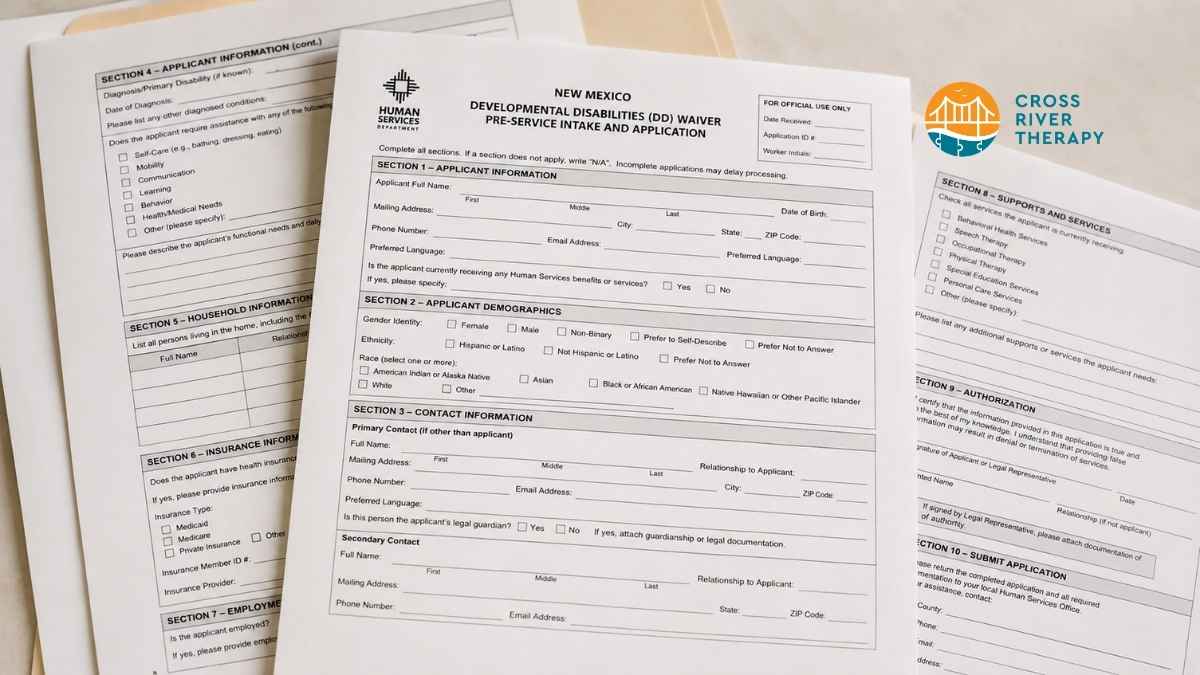
How to Apply for New Mexico’s DD Waiver While Starting ABA Therapy
Autism waiver New Mexico applications need DD Waiver records and proof of daily support needs. Your next step is to start ABA intake with Cross River.

Is ABA Therapy Covered by Insurance in New Jersey? What Every Parent Should Know
ABA therapy insurance New Jersey may cover medically necessary care based on plan type, network, and authorization. Verify benefits with Cross River.

How ABA Therapy Builds Communication for Nonverbal Children Without Forcing Speech
ABA therapy communication for nonverbal children starts with AAC, signs, and daily routines. See how kids ask, refuse, choose, and get help.

How to Start ABA Therapy in New Jersey With a First-Call Checklist
How to start ABA therapy in New Jersey begins with records, insurance details, and intake questions. Use this first-call checklist before you call.

How to Get an Autism Evaluation in Arkansas Before Starting ABA Therapy
How to get an autism evaluation in Arkansas starts with a referral, provider choice, and key records. Use this parent checklist before ABA intake.

Center-Based vs In-Home vs School-Based ABA Therapy and How to Choose the Right Fit
Center-based, in-home, and school-based ABA therapy each fit different goals, routines, and settings. Compare options before your intake call.